Back in the 80s and 90s, quarters used to mean something. Do you have nostalgic childhood memories spending your Saturday afternoons dumping endless stacks of quarters into your favorite arcade cabinets? Long before modern console giants dominated living rooms, one legendary publisher ruled local arcades with an iron fist: Midway Games.
From humble beginnings crafting target rifles and pinball tables in Illinois to conquering global arcade rankings, Midway defined the golden age of gaming. But how did a Midwest amusement company grow into the fourth-largest game publisher on Earth, spark nationwide political panics, and yet ultimately fall into bankruptcy? Strap in as we take a deep dive into the rise and fall of Midway, the quarter-crunching arcade empire that changed gaming history forever.
1958–1969: The Early Years of Midway
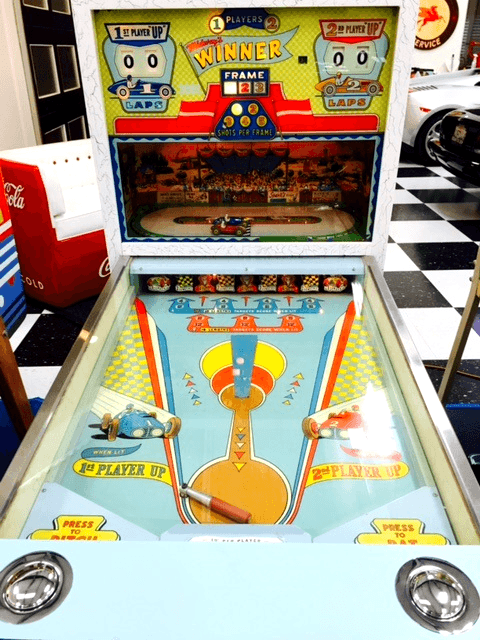
Back in 1958, Henry Ross and Marcin Wolverton founded Midway Manufacturing in Franklin Park, Illinois. The ambitious duo built a coin-op titan from the ground up by crafting electro-mechanical novelties. Arcade patrons quickly flocked to local venues to test their aim on target rifles, swing away on baseball bat games, and chase high scores on flashing pinball tables. These mechanical marvels put Midway Manufacturing on the map, laying a rock-solid foundation for decades of arcade dominance.
Just eleven years after Midway opened its doors, the company’s independence came to an end—but honestly? It couldn’t have happened to a better outcome. In 1969, slot machine giant Bally Entertainment bought Midway Manufacturing, and this wasn’t just some random business deal. Bally was already a heavyweight in the casino world, churning out slot machines and raking in serious cash. Pairing that kind of financial muscle with Midway’s coin-op expertise? That’s a recipe for expansion.
With fresh capital and Bally’s backing, Midway had the resources to pivot into an industry that was about to explode: video games. Recognizing that gaming was going global, Midway forged a crucial cross-pacific partnership with Japan’s Taito. This strategic licensing alliance is where things really start to get interesting.
1974–1975: From Pinball to Pixels
Midway and Taito had a genuinely great working relationship, and it went both ways. Instead of competing against each other in separate markets, they licensed games to one another, letting hits from Japan land in the US and vice versa. It’s basically the arcade equivalent of two friends swapping mixtapes—except the mixtapes made millions of dollars. Take Speed Race for example, one of Taito’s early hits. Midway picked it up, reworked it, and released it stateside as Racer.
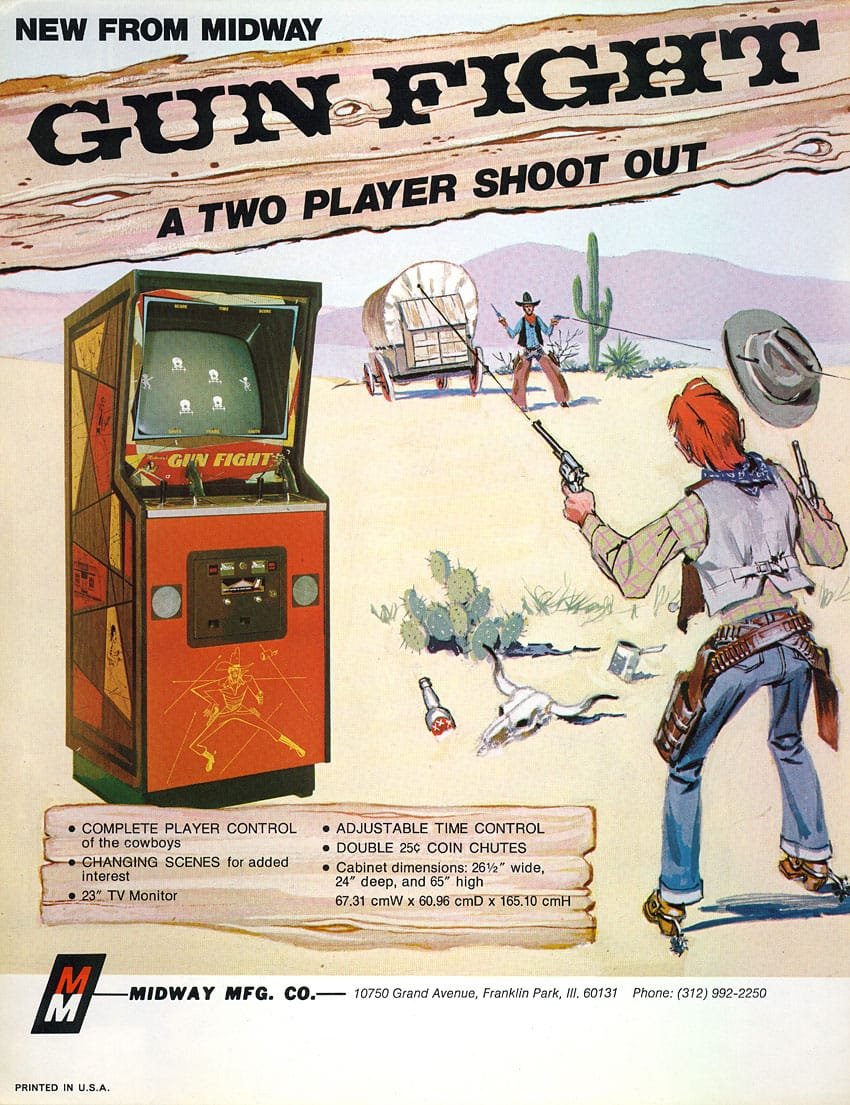
Meanwhile, Taito’s Western Gun crossed the ocean too, landing in American arcades under a new name: Gun Fight. While Taito’s Western Gun ran on traditional discrete logic circuits, Midway’s engineeers decided to completely overhaul the cabinet’s internal hardware for the American release by swapping out those static circuits for a cutting-edge Intel 8080 microprocessor.
Powered by its new CPU, Gun Fight delivered smoother character animation, sharper graphics, and faster gameplay than anything else on the market. This technological leap set a brand-new standard for the entire arcade industry and proved that microprocessors were the future of interactive entertainment. But nothing—and I mean nothing—could’ve prepared arcades for what was coming next.
1978–1982: Space Invaders and Pac-Man Fever
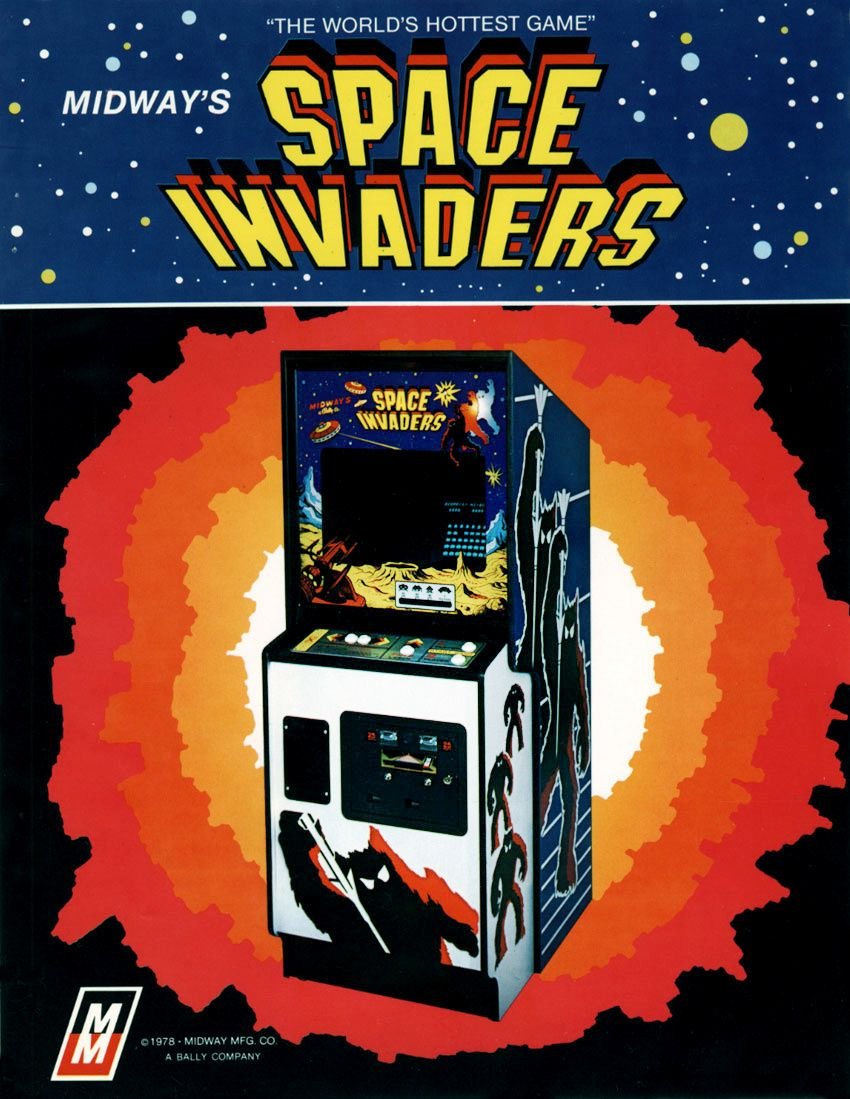
Every once in a while, a single game comes along and rewrites the rules for an entire industry. In 1978, that game was Taito’s phenomenal arcade hit, Space Invaders—and Midway was the one who brought it to America. This game was a huge phenomenon, and it marked the first real breakthrough hit in Midway’s history. Suddenly, this Franklin Park company wasn’t just another arcade manufacturer.
What made Space Invaders so different from everything before it? For starters, it introduced something players had never really experienced: open-ended play. Up until that point, earlier arcade games relied on fixed timer clocks that kicked you off when time ran out. But with Space Invaders, as long as you had the skill to survive the marching alien grid, your quarter kept running!
Lines formed outside arcades. Quarters ran dry in machines faster than owners could refill them. Space Invaders didn’t just make money; it kicked off the golden age of arcade video games and permanently established Japan as a powerhouse in game design. It inspired a whole generation of designers who grew up idolizing what Taito had built and spawned a wave of copycats and spiritual successors, like Galaxian and Gorf.
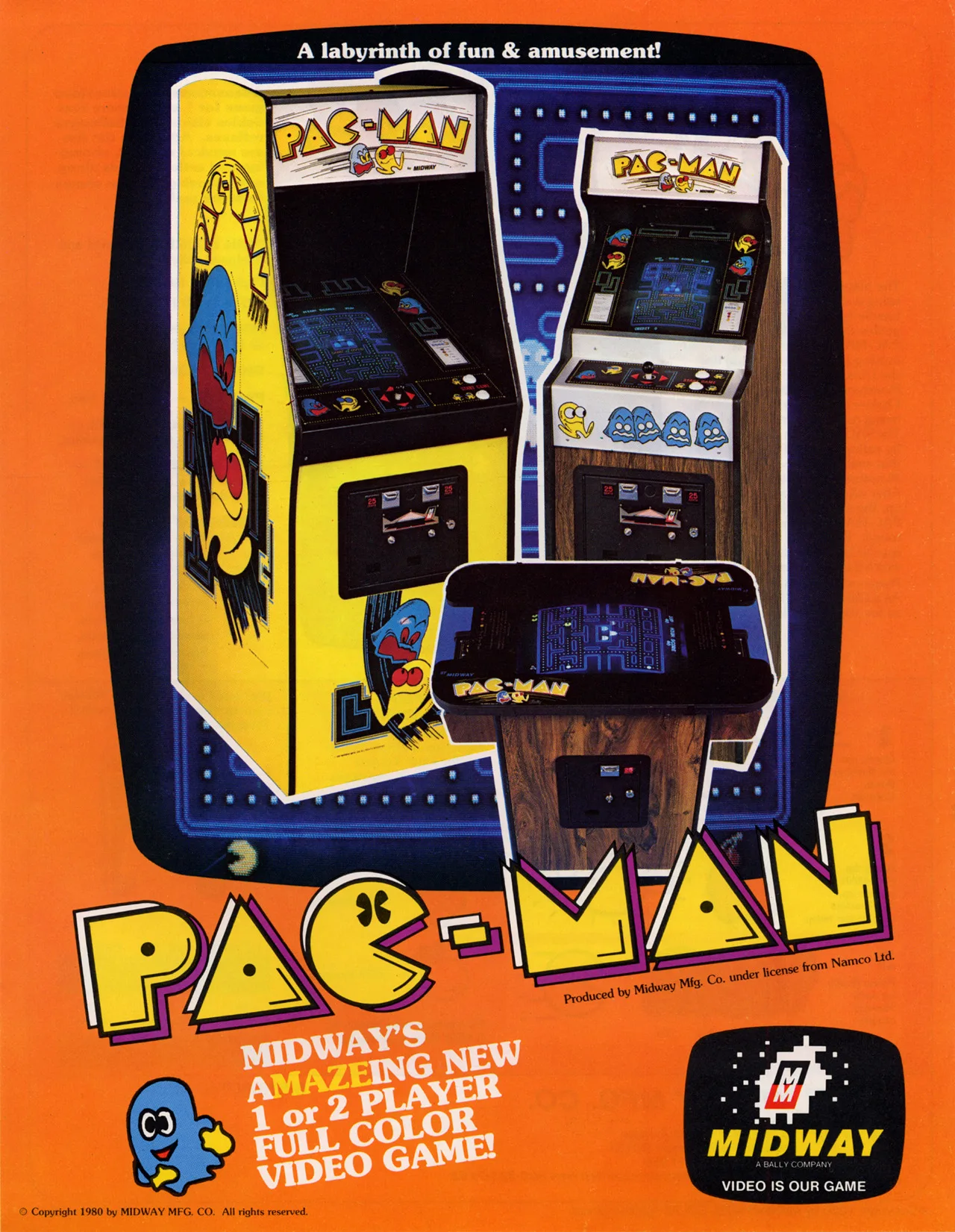
If Space Invaders proved Midway could strike gold with a Japanese import, their next move proved it wasn’t a fluke. In 1980, Midway licensed and distributed a game from Namco that would go on to become one of the most iconic titles in video game history: Pac-Man.
Within a single year, Midway had sold more than 100,000 arcade units, flooding Midway’s bank accounts with endless rivers of change. Players couldn’t get enough of the yellow maze runner, generating over $1 billion in quarters. Remember, this is in the early 1980s, so that number hits even harder when you adjust for the era.
It overtook Atari’s Asteroids to become the best-selling arcade game of all time, which was no small feat considering how dominant Atari was at that point. And it didn’t stop there. Pac-Man’s revenue actually surpassed the box office earnings of Star Wars. Yeah, you read that right—a coin-operated arcade cabinet out-earned one of the biggest movie franchises ever made.
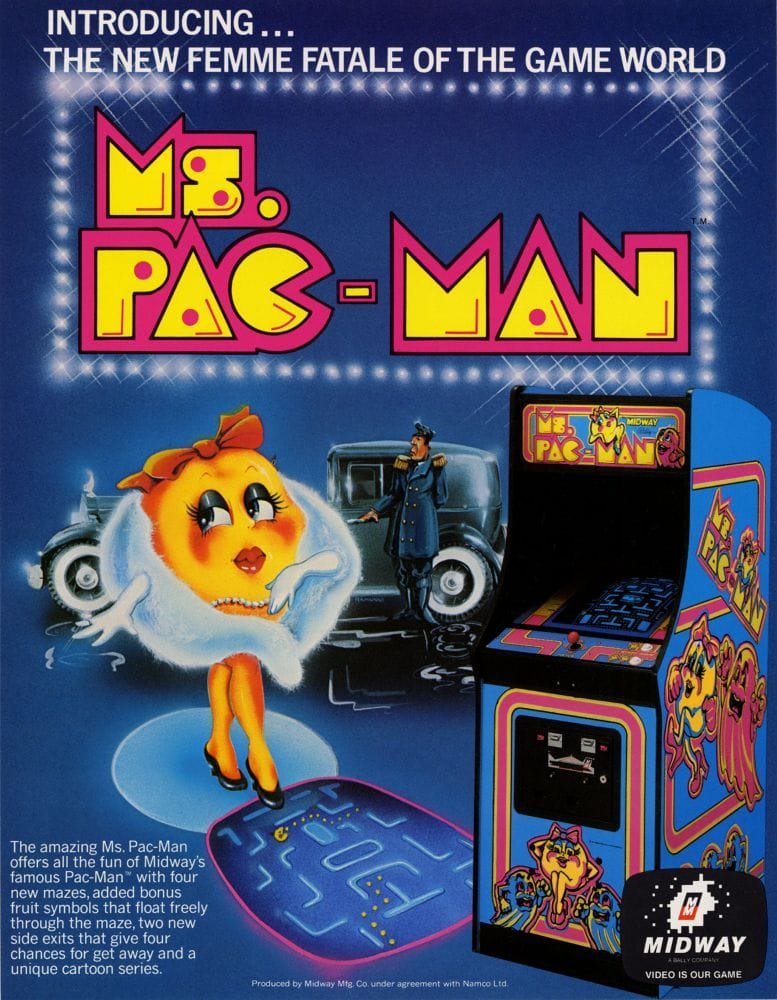
Naturally, Midway wanted to capitalize on that success, and in 1982, they released Ms. Pac-Man. The sequel improved on the original formula with new maze designs, faster gameplay, and a genuinely beloved new protagonist. Players adored the upgrades, turning Ms. Pac-Man into one of the most successful American arcade games ever created. There’s just one small problem: Namco never actually approved it.
Midway developed Ms. Pac-Man without getting Namco’s consent first, which—shocker—didn’t sit well once Namco found out. The dispute eventually got sorted, and Namco ended up gaining the rights to the Ms. Pac-Man IP. It’s a messy footnote in an otherwise massive success story, but it’s also a pretty telling sign of things to come.
For now, though, Midway was riding high. Two Japanese licensing deals, two billion-dollar hits. Nothing could stop them… except maybe the entire industry collapsing. And unfortunately, that’s exactly what happened next.
1983–1986: Surviving The Infamous Video Game Crash
Riding high off Pac-Man and Space Invaders, Midway probably felt untouchable in the early ’80s. Then 1983 happened, and the entire video game industry nearly imploded. Ever hear the phrase “too much of a good thing”? That’s basically what caused the infamous video game crash. The market got flooded with low-quality games, consumer trust cratered, and companies dropped like flies. This wasn’t just a home console problem, either—the arcade industry took a serious hit too, and plenty of once-thriving manufacturers never recovered.
So how did Midway manage to survive when so many competitors didn’t? IMO, it comes down to one smart decision they’d made years earlier: diversifying through partnerships. While home console manufacturers folded left and right, Midway’s rock-solid publishing and distribution deals with Japanese powerhouses Namco and Taito became a financial safety net and kept them steady during the chaos.
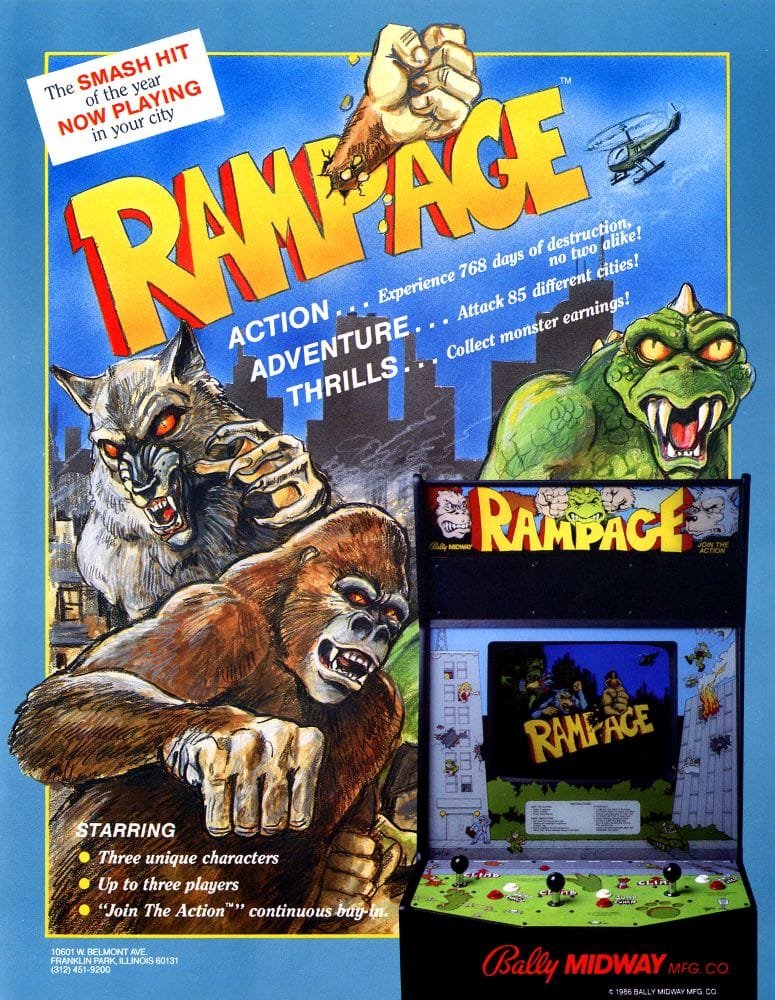
After clawing their way through the industry crash, Midway unleashed the monster-smashing arcade hit Rampage in 1986. Players took control of three giant mutating beasts—George the gorilla, Lizzie the dinosaur, and Ralph the giant werewolf. Together, these titanic creatures leveled skyscraper after skyscraper while dodging relentless military fire.
The simple yet wildly addictive gameplay of smashing concrete, devouring citizens, and swatting helicopters proved insanely addictive. Rampage racked up massive arcade earnings, proving that gamers loved playing the villainous monster. Its runaway financial success prompted ports to 11 different home video game consoles over the next few years.
1988–1991: New Ownership and Judgement Day
Pinball manufacturer Williams purchased Bally Midway in 1988, officially uniting two arcade powerhouses. The new corporate leadership immediately relocated all of Midway’s offices and production facilities directly to Chicago. This marked the start of a new chapter for a company that had already been through more ownership changes than most people go through jobs. On paper, this acquisition made a lot of sense. Two companies rooted in coin-op entertainment, joining forces under one roof. What could go wrong?
Well, here’s the twist: pinball itself was on its way out. As the 1990s crept closer, pinball’s once-unshakeable popularity started to fade fast. Williams/Midway watched their pinball division bleed revenue, and recognized that flashing pinball tables were losing their luster among younger arcade patrons. So, they did what any smart business does when the ground shifts beneath them—they adapted. Williams/Midway made a deliberate pivot, shifting their primary focus toward arcade video games as the company’s new main cash cow.
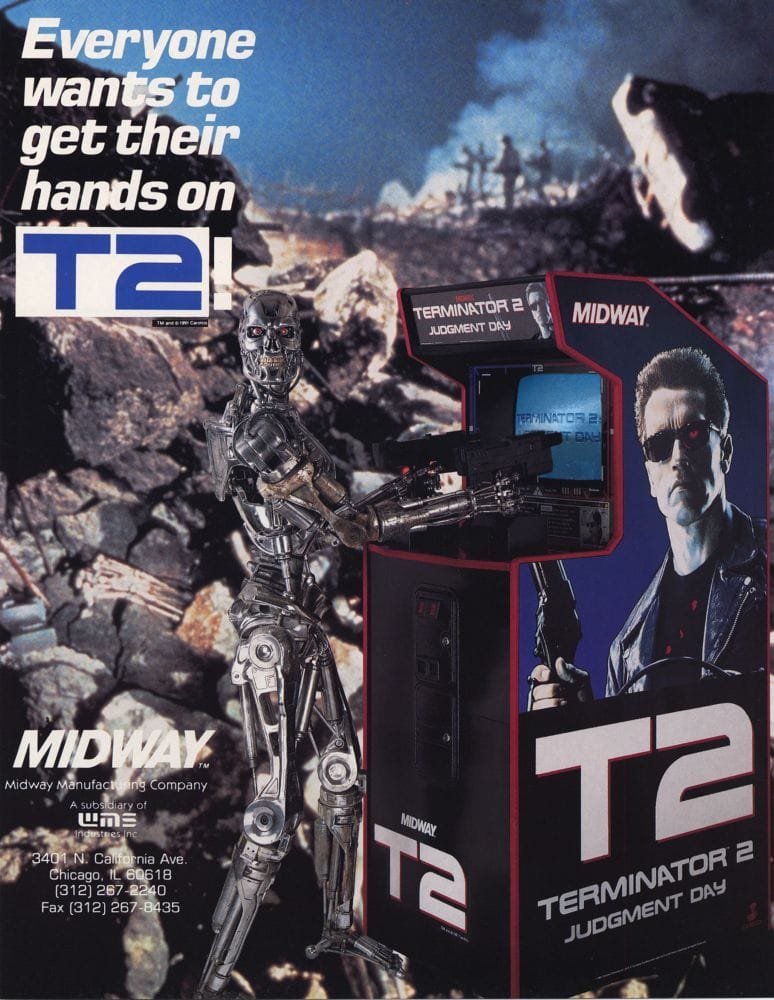
With arcade games now front and center, Williams/Midway needed something big to prove the pivot was worth it. In 1991, they found it with Terminator 2: Judgment Day, a light-gun shooter based on Arnold Schwarzenegger’s smash-hit sci-fi movie. The cabinet let two players step into the metal boots of reprogrammed T-800 cyborgs fighting Skynet’s relentless machine army. Players mowed down endoskeletons and hunter-killers to protect John Connor, Sarah Connor, and the human resistance.
T2 became an absolute sensation, topping US arcade earnings charts continuously from December 1991 through April 1992. It even briefly dethroned Capcom’s juggernaut Street Fighter II during the height of fighting game mania! Critics showered praise on the game’s photorealistic digitized graphics, and gamers still revere it as one of the best movie tie-in games ever created. But T2 was really just a warm-up. Because the very next year, Midway was about to release a game so violent, so controversial, that it would end up in front of the United States Congress.
1992–1993: Fatalities and Slam Dunks
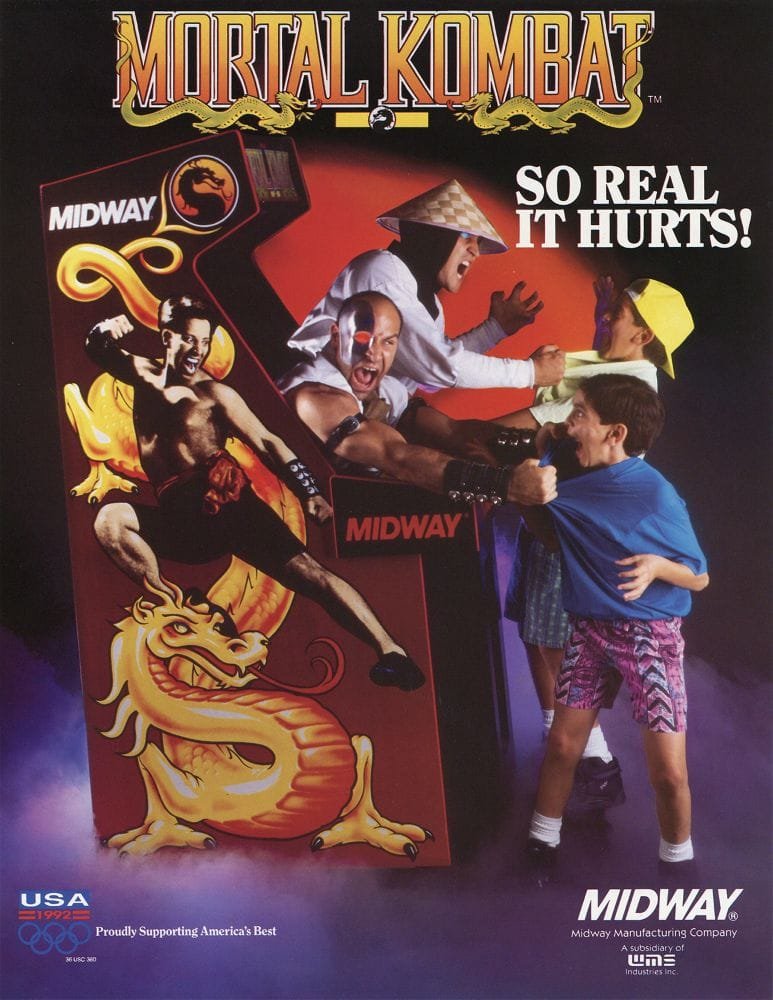
In 1992, Midway released Mortal Kombat, a fighting game that immediately took arcades by storm. Utilizing digitized real-life actors, compelling characters, and shockingly violent graphic effects, the title redefined fighting games overnight. When home console ports arrived, Nintendo scrubbed the Super Nintendo version clean due to its strict anti-gore policy. However, Sega allowed players to unlock the full, uncensored experience on the Sega Genesis using a simple cheat code, which led the Genesis port to outsold the SNES version five to one.
Naturally, all that pixelated blood sparked a full-blown moral panic around violent video games, and Mortal Kombat became public enemy number one. Senator Joe Lieberman led the charge, and in 1993, it culminated in a highly publicized congressional hearing. How did the gaming industry survive such intense political pressure? Rather than accepting government censorship, publishers banded together to establish the Entertainment Software Rating Board (ESRB), giving parents a standardized way to know exactly what they were buying for their kids.
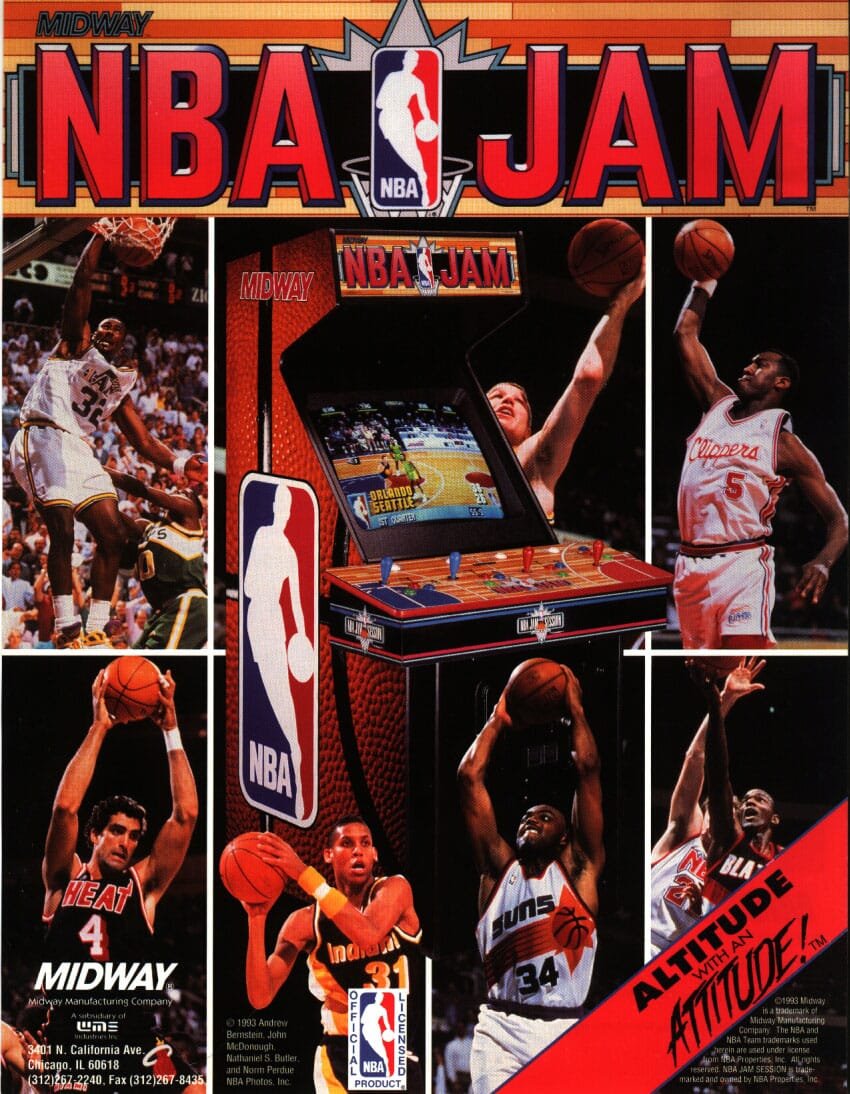
After the bloody spectacle of Mortal Kombat, Midway pivoted to something completely different—and somehow just as addictive. In 1993, they released NBA Jam, and it instantly became one of the most beloved sports games ever made. The arcade sensation stood out as one of the first titles featuring authentic NBA rosters, official team logos, and real player likenesses. Despite steep play costs of $1 to $2 per game, players happily paid premium arcade prices to launch high flying dunks, generating over $1 billion in quarters.
Naturally, a hit this big needed to come home, and NBA Jam got ported to consoles fast. By March 1994, it was the top-selling game on Sega Genesis, SNES, and Game Gear. Impressive, right? Well, here’s where the story takes a frustrating turn. Midway’s publishing deal with Acclaim was, to put it bluntly, lopsided. While Midway kept the arcade earnings, Acclaim secured full control over the NBA Jam IP, pumping out mediocre sequels without Midway’s involvement. Midway responded by releasing its own superior spiritual sequels, NBA Hangtime and NBA Showtime, though neither quite replicated the original’s explosive charm.
Fun Fact: Lead designer Mark Turmell—a hardcore Detroit Pistons fan—secretly programmed the original game so the Chicago Bulls would always miss last-second shots against the Pistons!
1994–1999: The 3D Era and Atari Games Acquisition
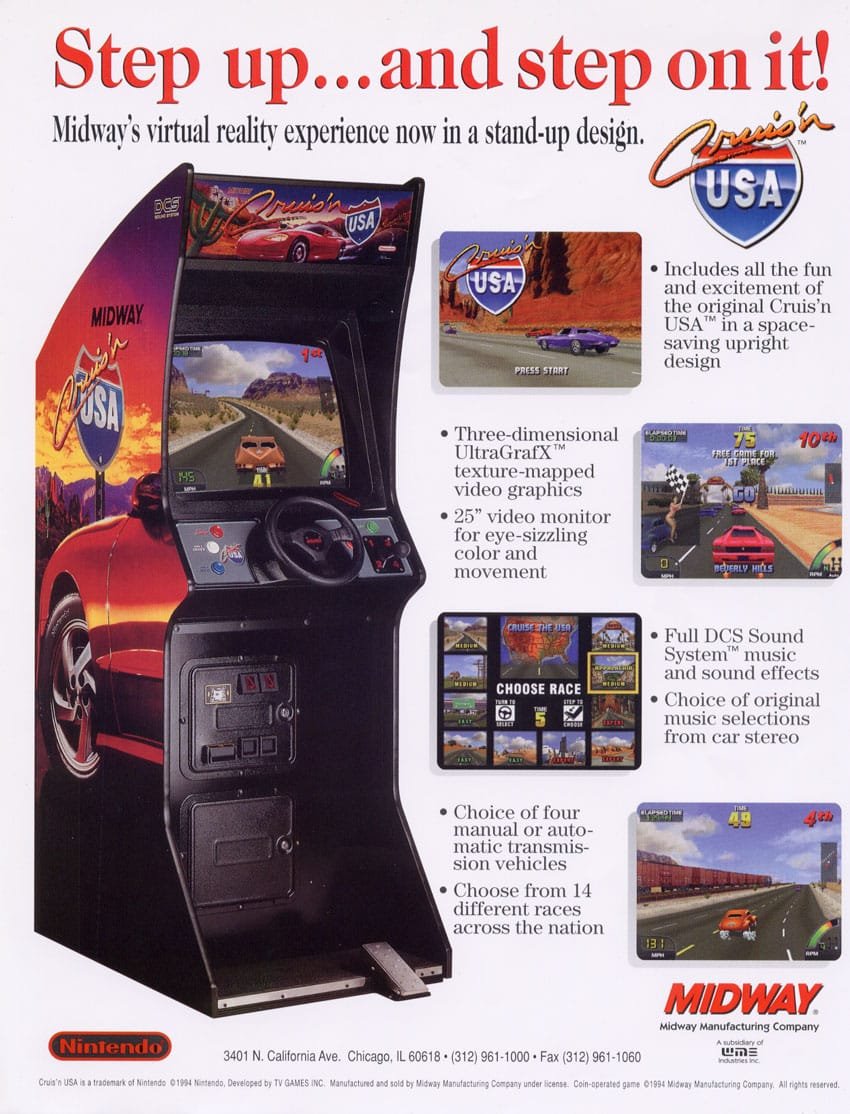
Fresh off the NBA Jam explosion, Midway shifted gears—literally—in 1994 by collaborating with Nintendo to develop the racing game Cruis’n USA. The arcade title proudly featured the “Nintendo Ultra 64” logo on the start screen, a sneaky advertising stunt to promote a console that wouldn’t even launch for another two years. Marketing gimmick aside, the arcade version of Cruis’n USA became an immediate commercial smash, ranking as one of America’s top five best-selling arcade games of 1994 and spawning hit sequels Cruis’n World and Cruis’n Exotica.
This powerful partnership with Nintendo opened even more doors for Midway’s arcade dominance. Midway secured the rights to distribute Rare’s coin-operated titles across North America. That strategic agreement brought arcade classics like Battletoads and the combo-heavy fighter Killer Instinct to arcade floors nationwide.
Midway had spent years licensing other companies’ hits, but in 1996, they flipped the script entirely. Instead of borrowing someone else’s catalog, Midway pulled off a massive power move in 1996 by purchasing legendary arcade pioneer Atari Games, eventually rebranding the studio as Midway Games West in 2000.
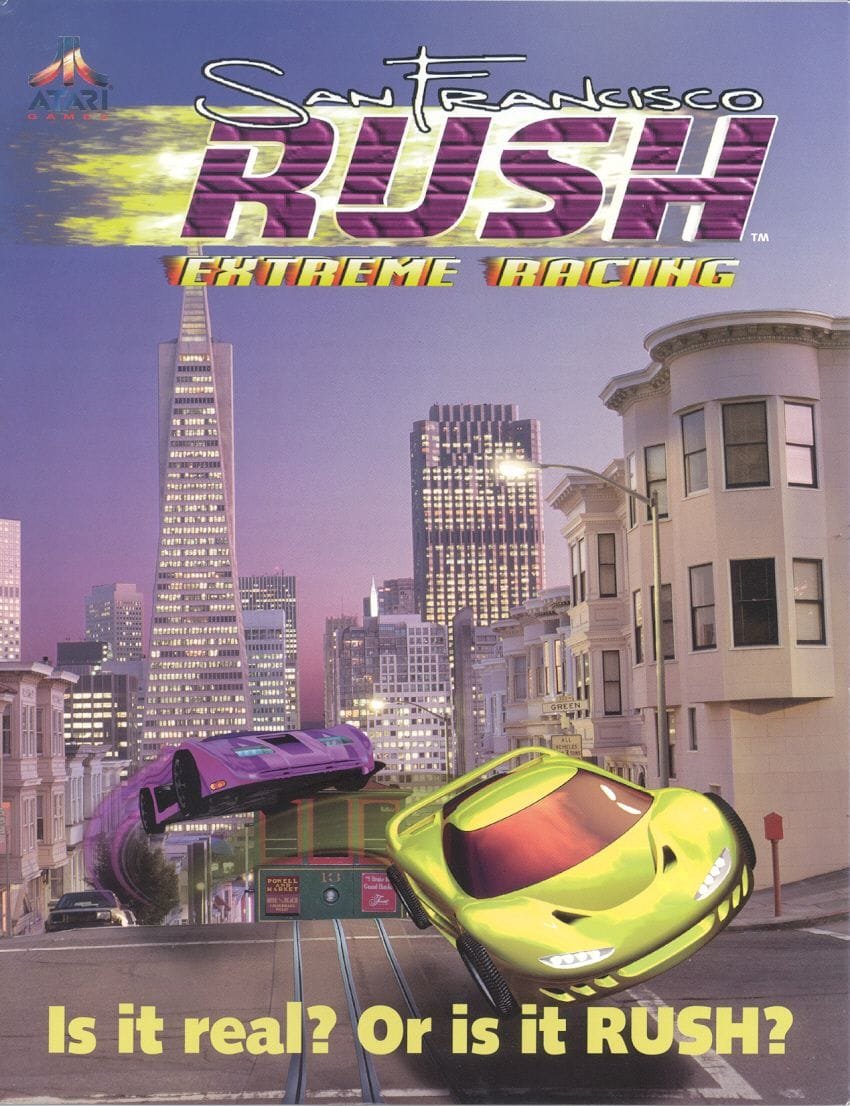
This wasn’t some small side deal, either. Midway inherited every single game Atari Games had produced from 1984 to 1996. Overnight, Midway expanded its catalog with legendary franchises such as Rampart, Gauntlet, Cyberball, Primal Rage, as well as San Francisco Rush: Extreme Racing, a racer that soon became one of Midway’s most successful arcade ganes of the late ’90s.
Midway pushed arcade hardware to its absolute limits in 1996 with the release of San Francisco Rush: Extreme Racing, combining cutting-edge tech with racing gameplay so addictive it kept players glued to the cabinet. The engineering team built the arcade board around dual 3dfx Voodoo Graphics chips. This hardware setup delivered jaw-dropping 3D visuals, physics-defying stunt jumps, and secret shortcuts across hilly city tracks.
Arcades ate it up, and like any good arcade success story, it didn’t stop at one game. The arcade smash hit spawned an incredible series of acclaimed console ports and sequels, including Rush 2: Extreme Racing USA and the futuristic San Francisco Rush 2049. Ever wonder why some racing games from the ’90s still get brought up in nostalgic arcade conversations decades later? San Francisco Rush is exactly the kind of title people mean when they say that.
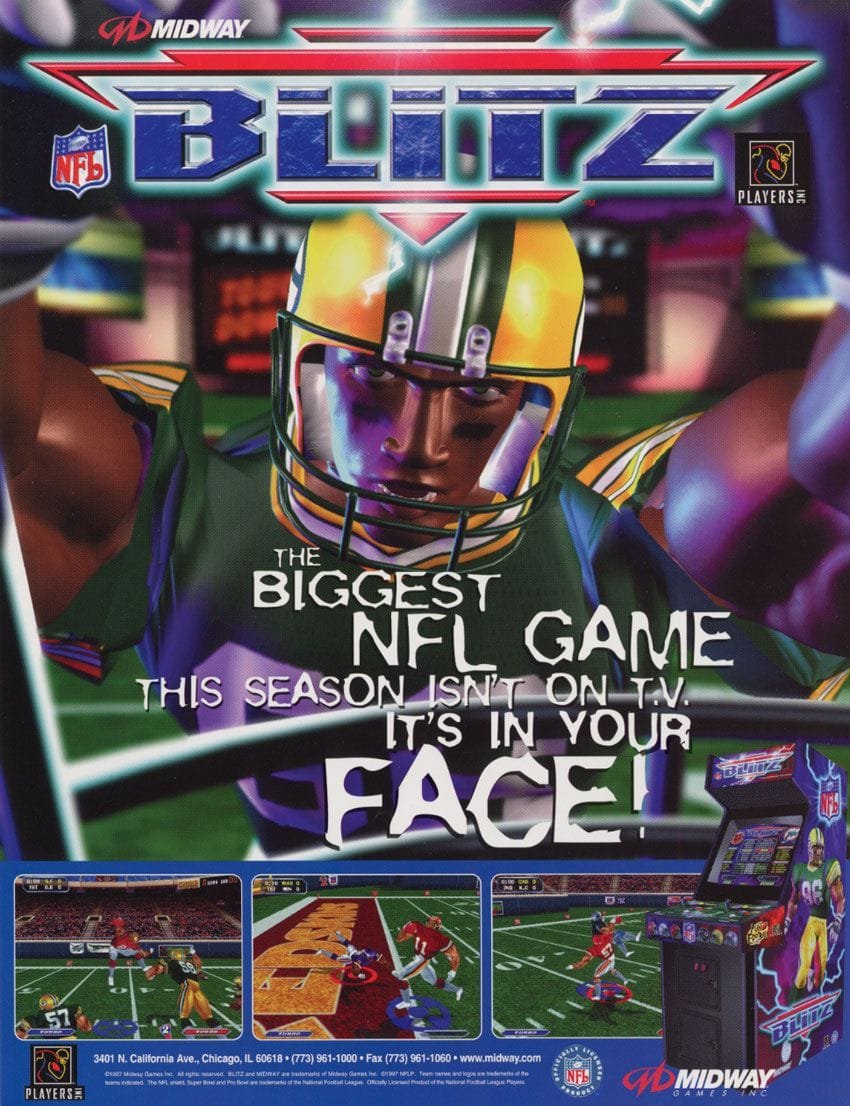
Developed by the same team behind NBA Jam, Midway brought us NFL Blitz in 1997, which prioritized fast-paced, aggressive 7-on-7 action over strict simulation that hooked football diehards and casual gamers alike. Featuring late hits, no penalties, and hits that would get a real NFL player fined into oblivion, the game was violent and gleefully unrealistic. IMO, that’s exactly why it worked so well.
The hard-hitting formula proved insanely lucrative for Midway’s arcade and home console divisions. The franchise ultimately spawned 12 total titles to its name, with Midway developing 11 of those entries across multiple console generations. That’s a serious run for a franchise built entirely on ignoring the rulebook.
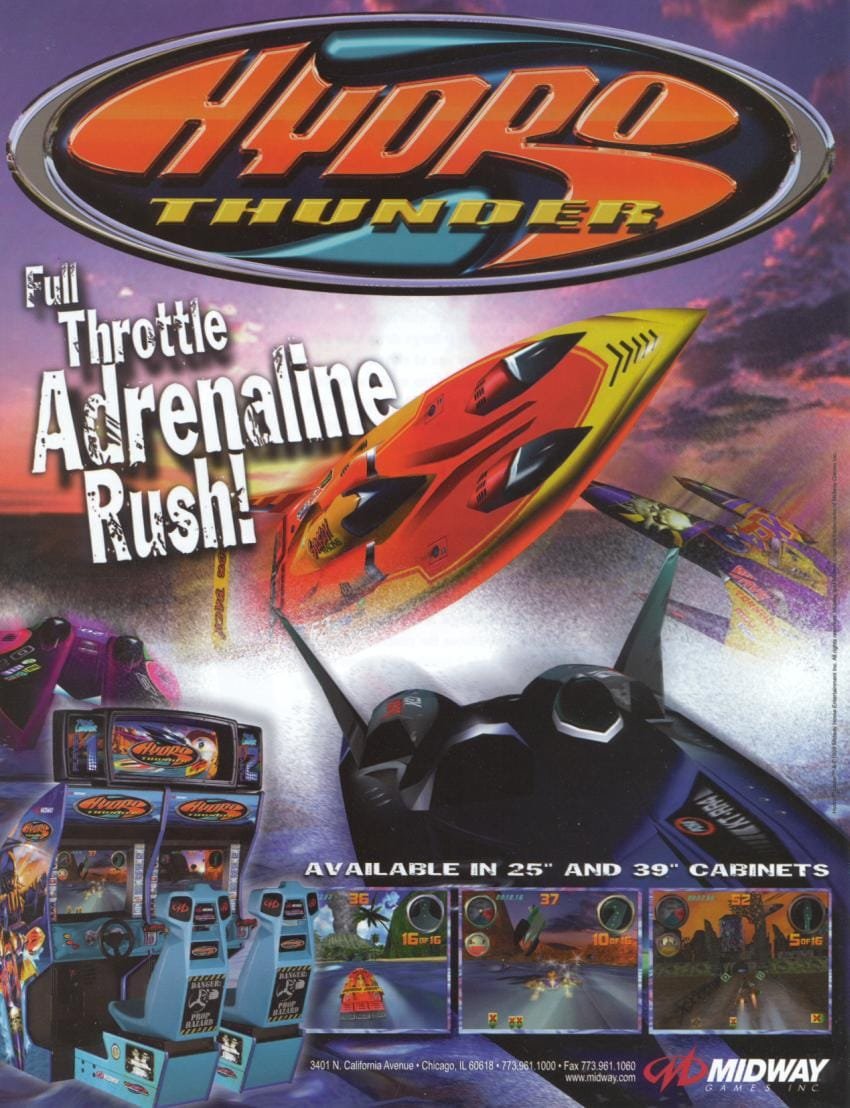
Football wasn’t the only place Midway found late-’90s success. In 1999, Midway released Hydro Thunder, a powerboat racer that draws inspiration by Sega’s Daytona USA by throwing players into turbo-charged aquatic tracks packed with gigantic ramps and hidden shortcuts. Fast, flashy, and built for arcade thrills, it fit right into Midway’s wheelhouse.
But Hydro Thunder’s biggest moment came when it made the jump to home consoles. When Midway ported Hydro Thunder to the Sega Dreamcast for its iconic 9/9/99 launch lineup, console gamers were blown away. The Dreamcast conversion delivered a silky-smooth framerate alongside arcade-perfect graphics. That home port truly demonstrated what the next generation of console hardware could deliver in living rooms everywhere.
2000–2007: Cracks in the Empire
David Zucker
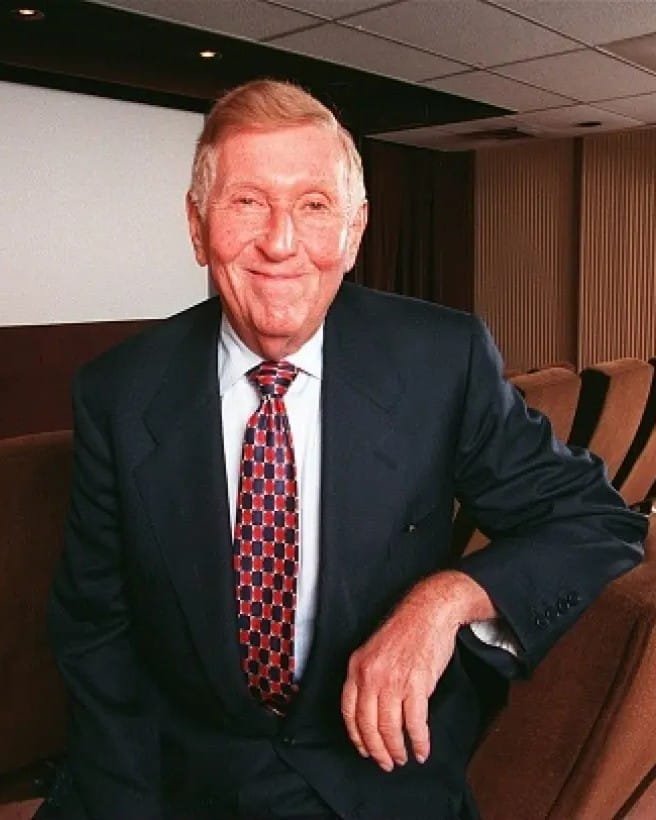
Sumner Redstone (1923-2020)
Despite standing as the fourth-largest video game publisher in the year 2000, cracks were already forming beneath the surface—and they were about to spread fast. The Nintendo 64 was rapidly reaching the end of its lifecycle, which hit Midway hard since the platform served as their primary home console goldmine. Meanwhile, the company wasn’t exactly tightening its belt. Executive management spent money recklessly on publishing deals without evaluating whether those projects would actually turn a profit.
In 2001, Midway made a devastating decision that signaled the end of an era: they permanently shuttered their legendary arcade division. Think about that for a second—arcades had been Midway’s ultimate bread and butter for decades. Closing down the physical coin-op business was like cutting off the roots of Midway’s own identity, proving that even giant industry titans could get crushed when market trends shifted.
Midway hired David Zucker as CEO in 2003, hoping he would steer the ship back toward profitability. Around that same time, billionaire businessman Sumner Redstone bought up roughly 87% of Midway’s stock. Redstone’s massive financial backing effectively shielded the publisher from seven straight years of brutal financial losses.
Zucker’s leadership unfortunately produced the exact opposite of a corporate turnaround. Midway lost $18.5 million in 2005, $72 million in 2006, and a staggering $78 million in 2007. What drove these crippling deficits even higher? Zucker mandated that every upcoming AAA title adopt Epic’s Unreal Engine 3, forcing Midway to pay hefty license royalties out on hit games and commercial flops alike.
2008–2010: Bankruptcy and the End of an Era
By March 2008, executive patience completely wore out. David Zucker resigned as CEO after consistently failing to pull Midway out of its deep financial spiral and mounting debt. During the summer of 2008, Midway attempted to trim runaway costs by closing its smaller development studios in Los Angeles and Austin. This move left the publisher with just four active studios in Chicago, Seattle, San Diego, and Newcastle, England. Did trimming the fat actually fix anything? Not really. Shuttering these branch locations did little to stem the massive tide of red ink.
Sumner Redstone was losing millions of dollars and desperately needed an exit strategy, so Redstone sold his entire 87% controlling stake to private investor Mark Thomas for a shocking $100,000. Why would anyone sell a massive publisher for less than the price of a luxury sports car? The bizarre deal raised serious industry eyebrows, especially since Thomas also acquired $70 million of Midway’s corporate debt owed to Redstone.
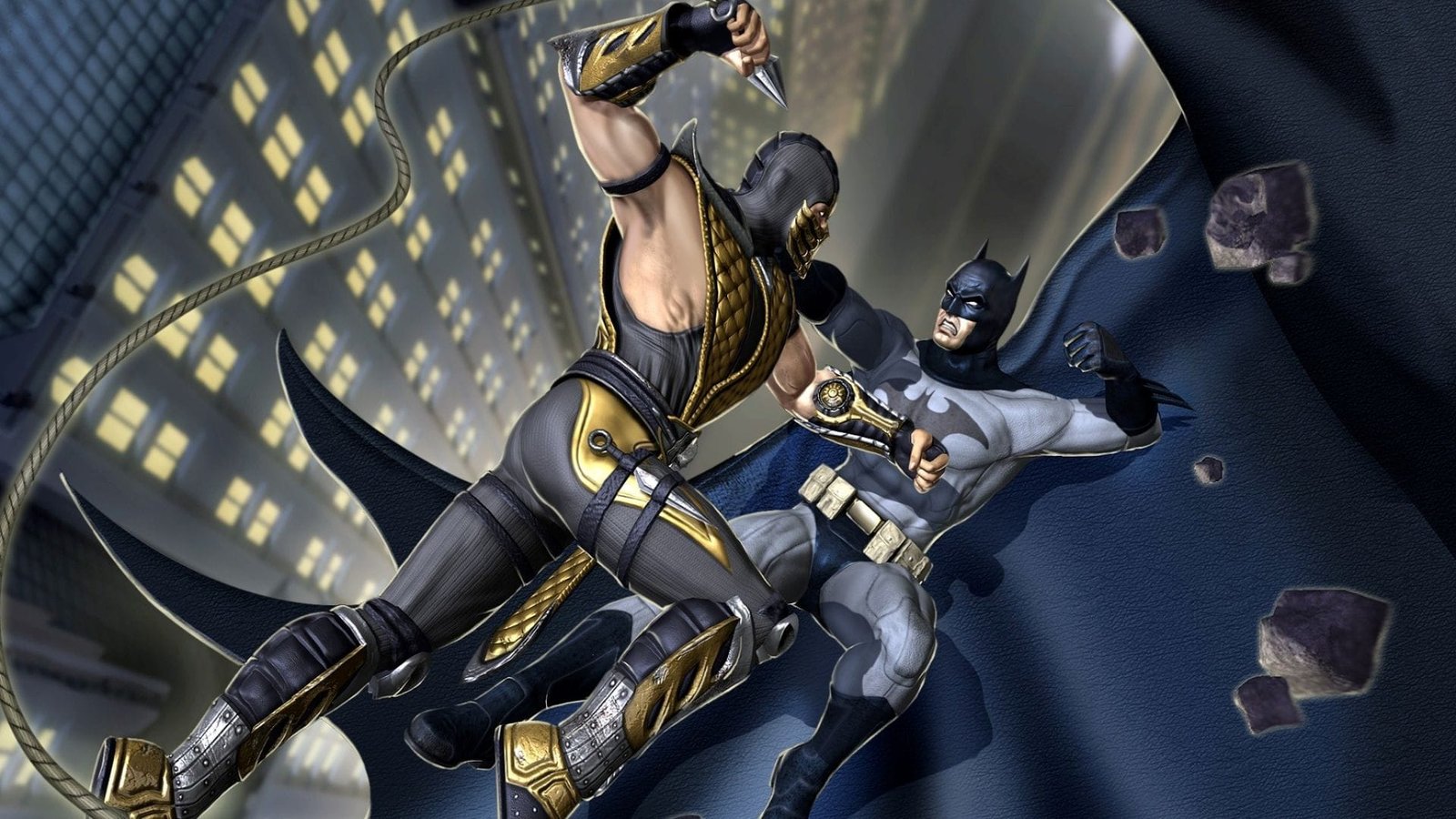
Even as the walls were closing in financially, Midway still had one more swing left in them. In late 2008, Midway launched Mortal Kombat vs. DC Universe, a massive crossover fighting game built on Epic’s Unreal Engine 3. The irony here is almost poetic, isn’t it? The engine that helped bury Midway in royalty fees was also powering what would become one of their last genuinely successful releases.
The high-profile fighter marked the franchise’s full debut on seventh-generation consoles like the Xbox 360 and PlayStation 3. Players loved pitting Scorpion against Batman, turning the game into a fast commercial hit. Unfortunately, strong store sales could not stop Midway’s massive financial bleeding. Midway abruptly canceled all planned DLC content for the game as cash reserves completely dried up.
By the end of 2008, Midway suffered a crushing net loss of $190 million on roughly $220 million in game sales. The overwhelming debt proved too heavy to carry. Midway officially filed for Chapter 11 bankruptcy in February 2009, bringing an agonizing end to fifty years of gaming history when the company permanently shut its doors in 2010.
Entertainment giant Warner Bros. recognized the incredible value buried beneath Midway’s corporate wreckage. Warner Bros. stepped in and purchased Midway’s iconic brand name, game rights, Seattle studio, and primary Chicago headquarters. Warner Bros. transformed Midway’s main Chicago development team into NetherRealm Studios, keeping franchise co-creator Ed Boon at the helm.
The newly formed studio didn’t waste a single second lamenting Midway’s corporate downfall. NetherRealm immediately got to work rebuilding their signature Mortal Kombat franchise from the ground up, and created the blockbuster superhero fighting series Injustice: Gods Among Us, proving their fighting game mastery reached far beyond Earthrealm. Today, NetherRealm Studios reigns supreme in the fighting game community, and continues to carry the torch for Midway’s legendary arcade legacy.
Final Thoughts
Looking back, Midway’s story is a genuinely wild ride. From pioneering CPU microprocessors in Gun Fight to spawning billion-dollar juggernauts like Space Invaders and Pac-Man, Midway repeatedly reshaped pop culture. They pushed boundaries with Mortal Kombat and NBA Jam, forcing the creation of the ESRB rating system and proving that video games had evolved far beyond simple kids’ toys.
While financial missteps, risky licensing deals, and the death of traditional arcades ultimately brought the company down in 2010, Midway’s rebellious DNA proved completely indestructible. Is it a little bittersweet that a company with this much influence couldn’t survive its own ambition? Absolutely. But even after Midway Games closed its doors after five wild decades, their incredible influence still echoes through every flawless victory today.
At HyperComboGamer, we believe great games deserve great coverage. That means no filler, no clickbait, or fanboyism—just honest, high-quality reviews, features, and guides that put gamers first. Whether you’re a lifelong enthusiast or just starting your gaming journey, you’ll find interesting gaming perspectives that will leave you fully satisfied.