Stop me if you’ve heard this one: a chef, a caveman, and a Russian strongman walk into an arcade. No, it isn’t the setup for a mediocre joke; it’s just a typical Tuesday in the 1980s thanks to Data East. Data East didn’t just follow trends; they threw everything at the wall to see what stuck, often pioneering tech that was years ahead of its time. They were the ultimate wild card of the arcade era—a company that pivoted from gambling machines to saving the President from ninjas without breaking a sweat.
From the revolutionary DECO Cassette System to the legendary legal brawls that literally defined the rules of the gaming industry, their story is anything but boring. But how did a company that survived lawsuits against giants like Capcom and helped launch the NES Black Box era end up with a $19 million debt and a silent exit? Grab a roll of quarters and maybe a burger—we’re taking a deep dive into the rise and fall of Data East, one of gaming’s most eccentric pioneers.
1976:From Graduation to Gambling
When you think of a legendary gaming studio, you probably imagine a group of college kids coding in a garage. But Data East’s origin story is a bit more… sophisticated. It all started on April 20, 1976, when Tetsuo Fukuda, a fresh graduate from Takei University, decided to plant his flag in the electronics world.
In a move that might surprise modern fans, the company’s debut wasn’t a video game at all. Instead, they dropped Jack Lot, a business-use medal game based on the rules of Blackjack. If you aren’t a regular at Japanese arcades, medal games are those coin-operated machines where you win tokens instead of cash, usually split into two vibes: high-stakes gambling simulations or the classic coin pushers.
Fukuda’s decision to start with gambling-style machines like slots and horse racing sims was a savvy business move. While competitors were still trying to figure out if this “video game fad” would last, Data East was already busy mastering the art of the arcade payout. It provided the financial bedrock the company needed to eventually pivot into the world of arcade entertainment.
1978-1979:Breaking into the Arcade
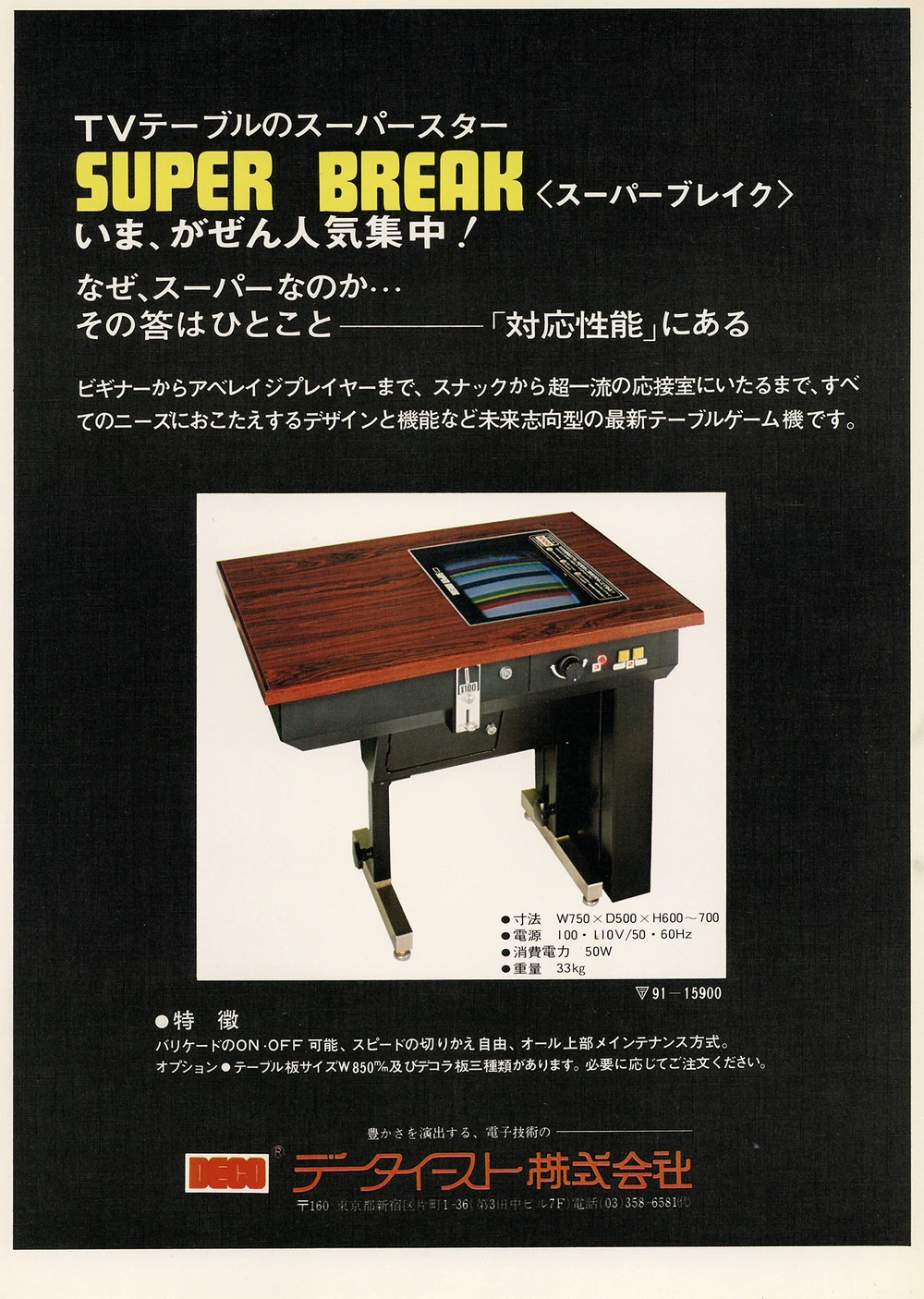
By 1978, the digital siren song of the arcade became too loud for Tetsuo Fukuda to ignore. Data East finally dipped its toes into the video game pool with Super Break, their first official foray into the medium. While it followed the established brick breaker blueprint of the era, it signaled a massive shift in the company’s internal philosophy. They weren’t just making gambling cabinets anymore; they were crafting entertainment.
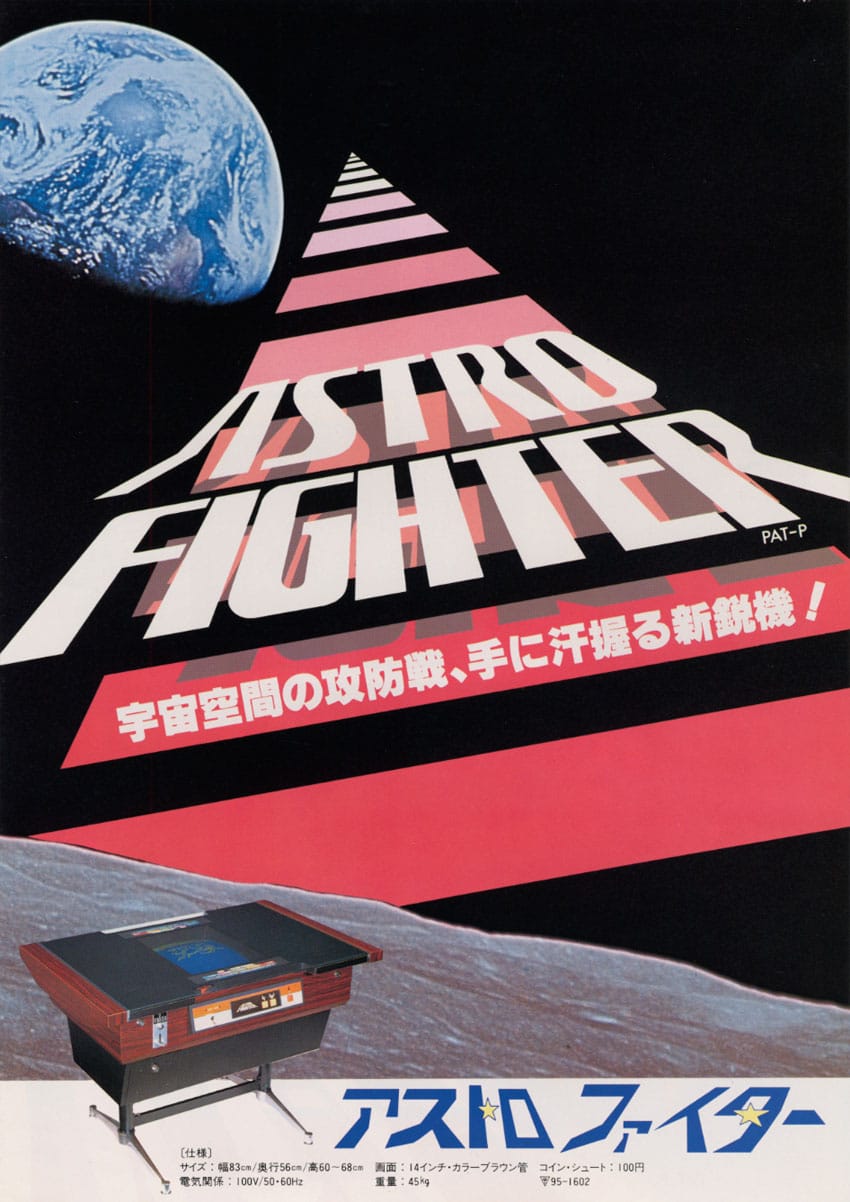
The real breakthrough, however, arrived in 1979 with the release of Astro Fighter. This wasn’t just another generic space romp; it was a high-stakes, multi-wave shooter that demanded genuine skill. You controlled a lone ship at the bottom of the screen, tasked with obliterating swarms of encroaching aliens. Each wave spiked the difficulty, forcing you to dodge a plethora of missiles and bombs while managing your fuel—a mechanic that added a lovely layer of stress to the experience.
Astro Fighter’s success was so massive that it caught the eye of the big players across the Pacific, acting as a bridge between Japan and the West. Data East didn’t go it alone; they teamed up with San Diego’s own Gremlin Industries and Sega—yes, that Sega—to handle distribution in the United States. This collaboration put Data East on the map internationally, proving that their design sensibilities had a universal appeal.
1980:The DECO Cassette System
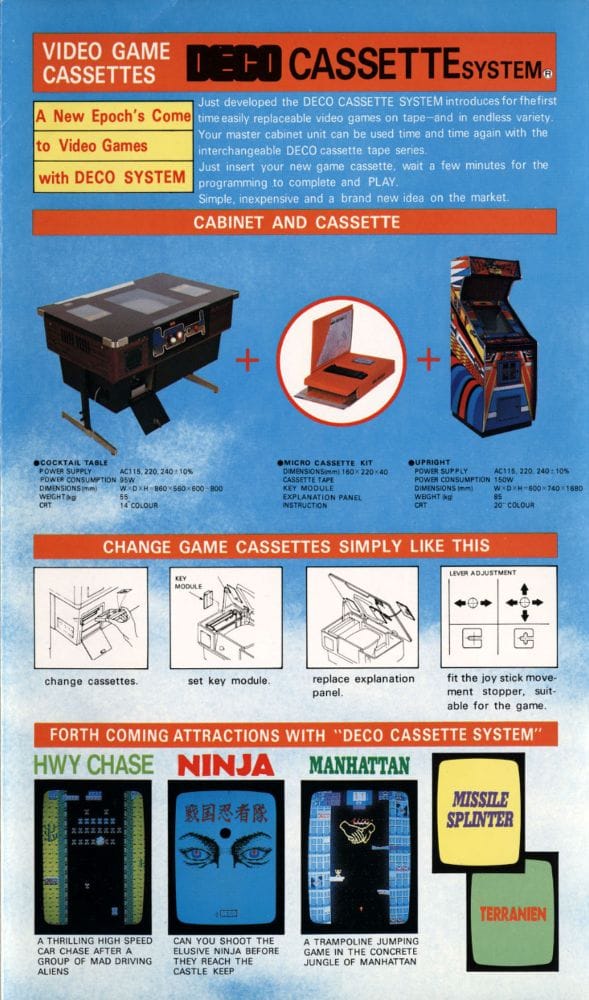
By 1980, Data East decided they were tired of the “one cabinet, one game” rule that forced arcade owners to buy massive, expensive wooden boxes every time a trend died. Their solution? The DECO Cassette System. This was arguably the world’s first standardized arcade platform. Instead of swapping out heavy motherboards or entire machines, operators just popped in a standard cassette tape and a specialized security dongle.
On paper, this was a stroke of absolute genius. However, the transition from theory to practice was, shall we say, a bit rocky. Imagine being an arcade owner in 1980, excited to show off the latest hit, only to realize the game takes several minutes to load from a tape. Talk about a buzzkill! To make matters worse, those tapes were incredibly fragile. The constant heat and magnetic interference inside an arcade cabinet meant tapes were frequently demagnetized or simply snapped.
Data East tried to give us the future on a piece of plastic tape, but the tape jam was just too real for most operators to handle. Still, you have to admire the hustle—Data East was out here trying to disrupt the industry while everyone else was still worried about joystick tension. The DECO system also hosted some genuine gems, and it proved that the industry wanted a multicart-style system, even if the technology of 1980 wasn’t quite sturdy enough to handle it.
1981:The Technōs Split and Legal Fireworks
Workplace breakups usually involve awkward exits and stolen staplers, but Data East took things to a whole new level in 1981. Three ambitious staff members decided they had enough of the corporate grind and jumped ship to form Technōs Japan. Data East didn’t exactly send a “Congratulations” cake to the new Technōs office. Instead, they unleashed their lawyers.
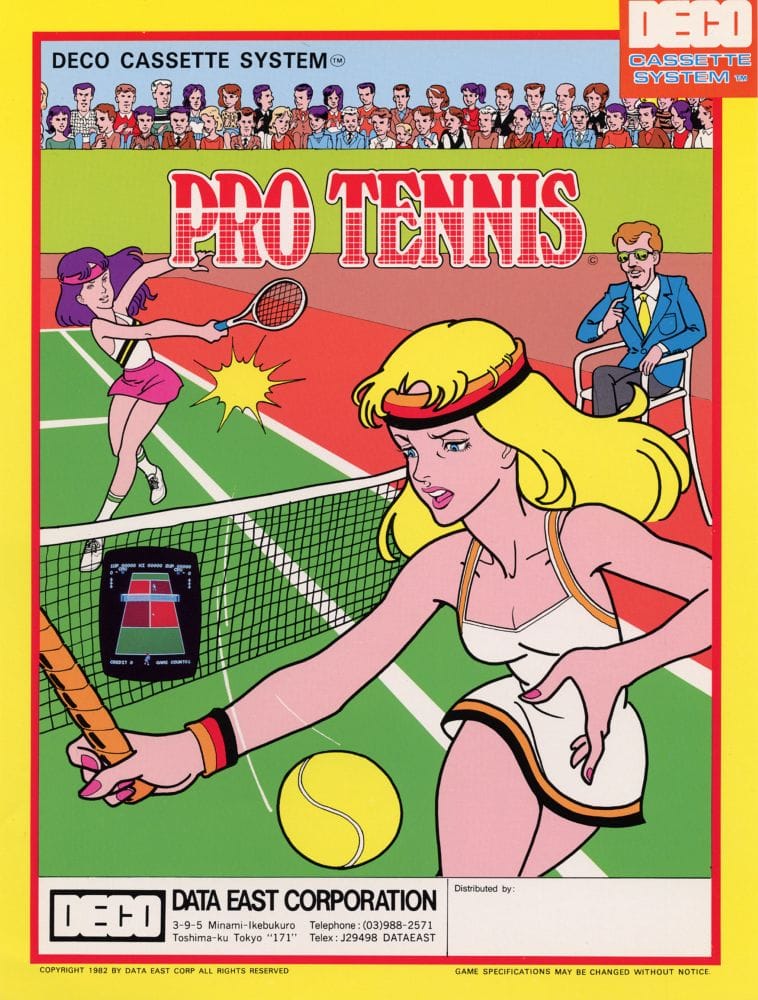
Data East slapped Technōs Japan with a lawsuit, alleging the trio absconded with proprietary data from a game called Pro Tennis. This wasn’t just a minor disagreement over who owned the coffee machine; it was a full-blown war that turned the arcade industry into a courtroom drama.
Data East didn’t take the desertion lightly and immediately reached for the nearest lawyer. They filed a massive lawsuit claiming that Technōs stole proprietary data from their arcade hit Pro Tennis. The two companies eventually settled out of court in 1983, ending the litigious fervor for a moment. Technōs Japan would go on to earn reputation for excellence on both arcades and home consoles alike.
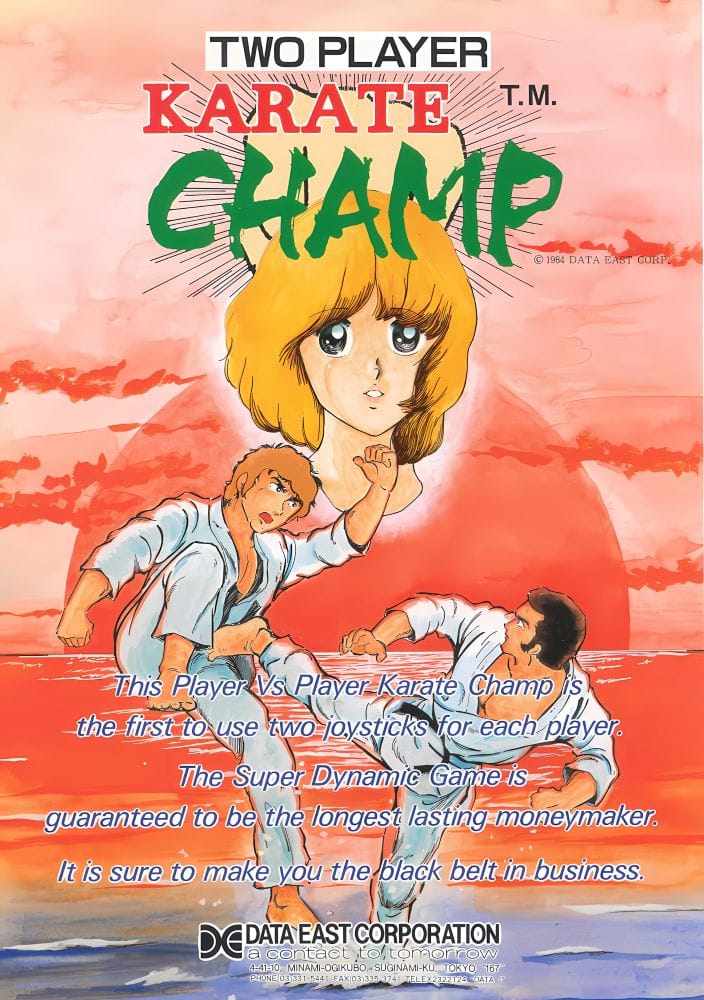
Technōs Japan developed Tag-Team Wrestling, a title that helped define the early arcade sports genre. They also developed Karate Champ, the game that practically invented the competitive fighting genre as we know it. In a weird twist of fate, Data East actually published these games, proving that even the bitterest rivals can find common ground when profits are on the line.
1982-1984:Cooking Up Golden Age Classics
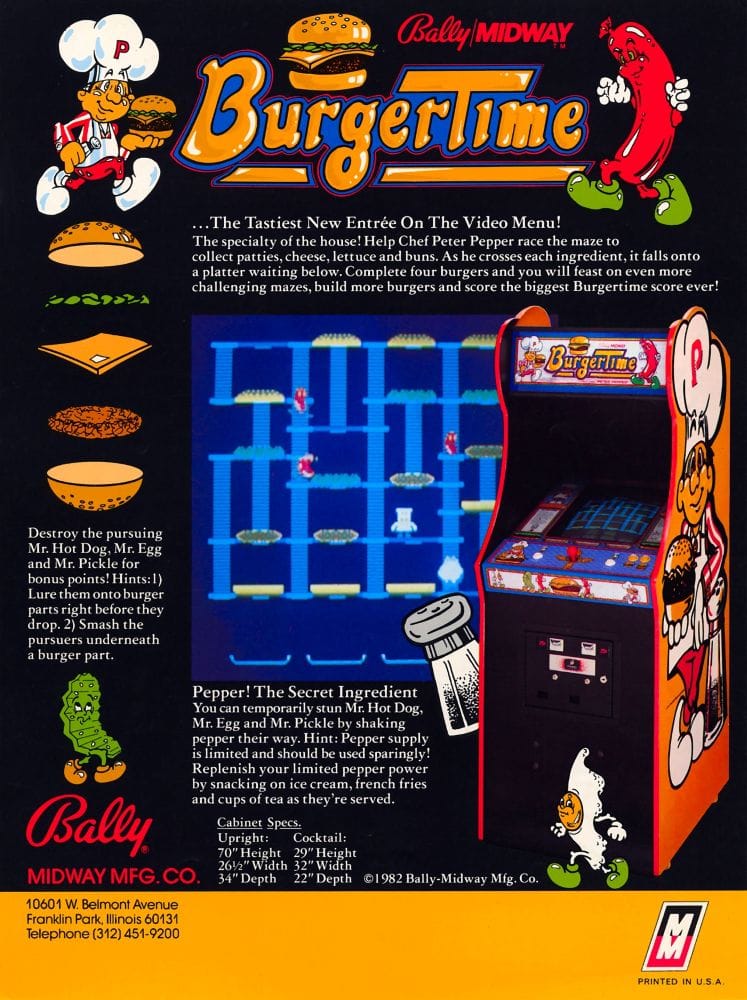
Data East hit a creative stride in 1982 with the release of the undeniably weird and wonderful BurgerTime. You had to navigate a series of platforms, walking over giant ingredients to drop them into place, all while using your limited supply of pepper to stun enemies like Mr. Egg and Mr. Pickle. Originally titled Hamburger in Japan, the company wisely changed the name to avoid potential trademark headaches before shipping it west. Bally Midway handled the US distribution, turning Peter Pepper’s culinary nightmare into a massive arcade sensation.
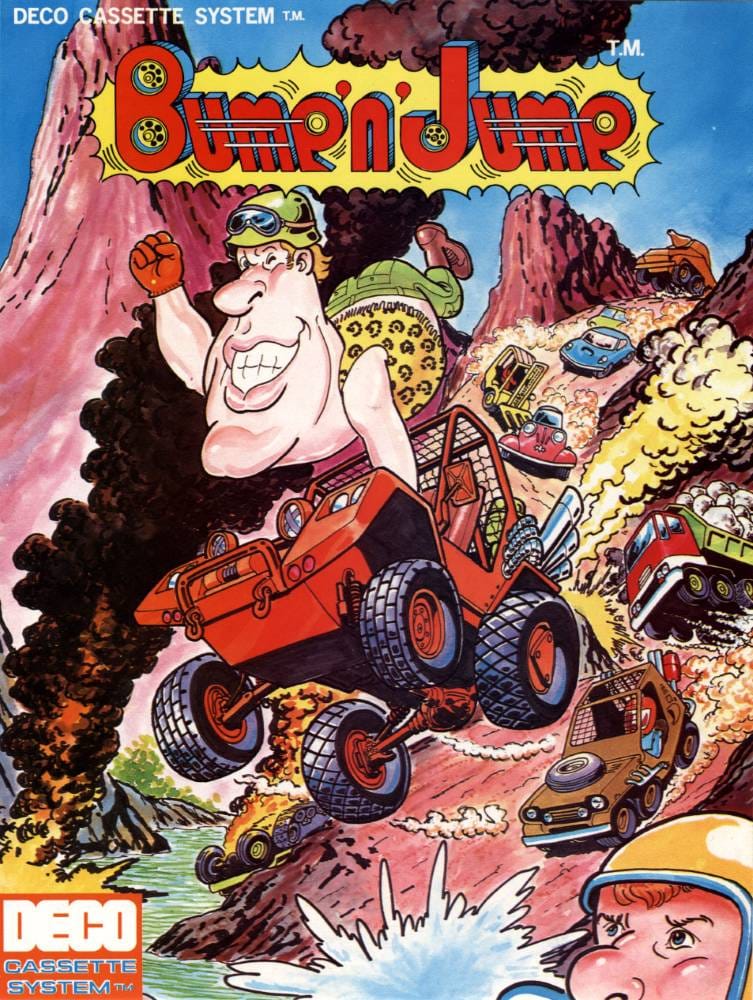
That same year, Data East unleashed Bump ‘n’ Jump, known to Japanese gamers as Burnin’ Rubber. This wasn’t your typical Sunday drive; this overhead racer valued aggression over clean driving lines. The game forced you to balance high-speed navigation with tactical leaps over massive highway gaps, bumping enemy vehicles into obstacles for extra points. It’s the kind of road rage that actually feels rewarding rather than just stressful.
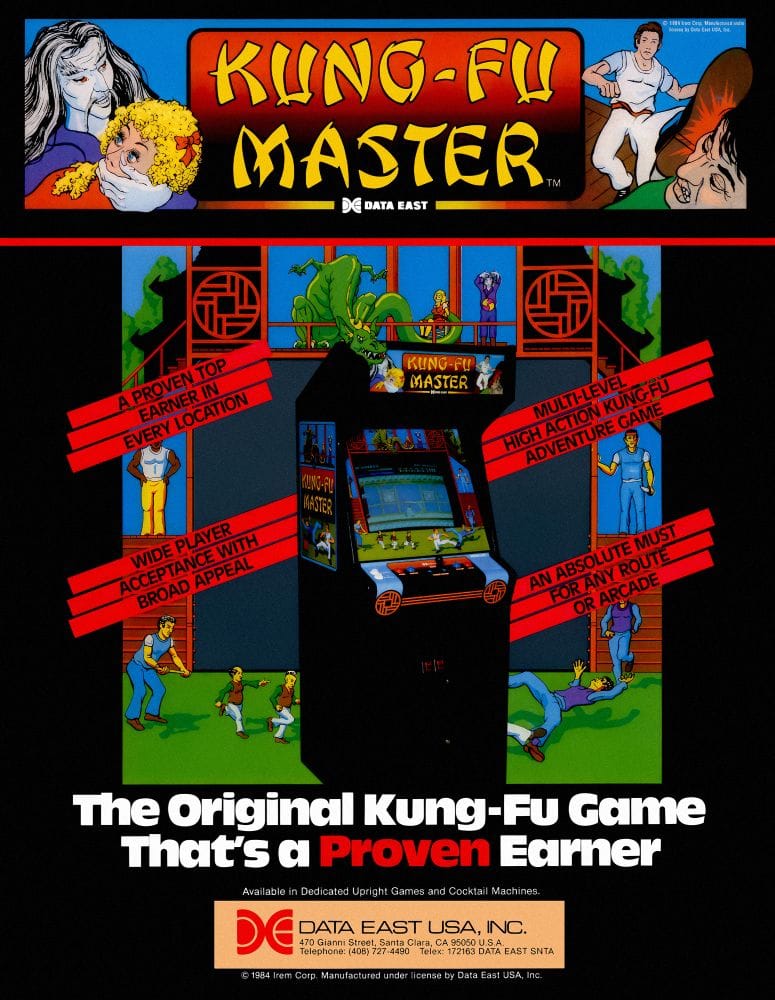
By 1984, Data East teamed up with Irem to bring the legendary Kung-Fu Master to the States. You fought through waves of thugs and knife-throwers across multiple floors to rescue your kidnapped girlfriend, Sylvia. While Data East dominated the arcades with the distribution rights, Nintendo eventually stepped in to license and develop the home version. This move landed the game a spot in the prestigious NES Black Box lineup, cementing its legacy forever.
1986: Entering the Home Console Market
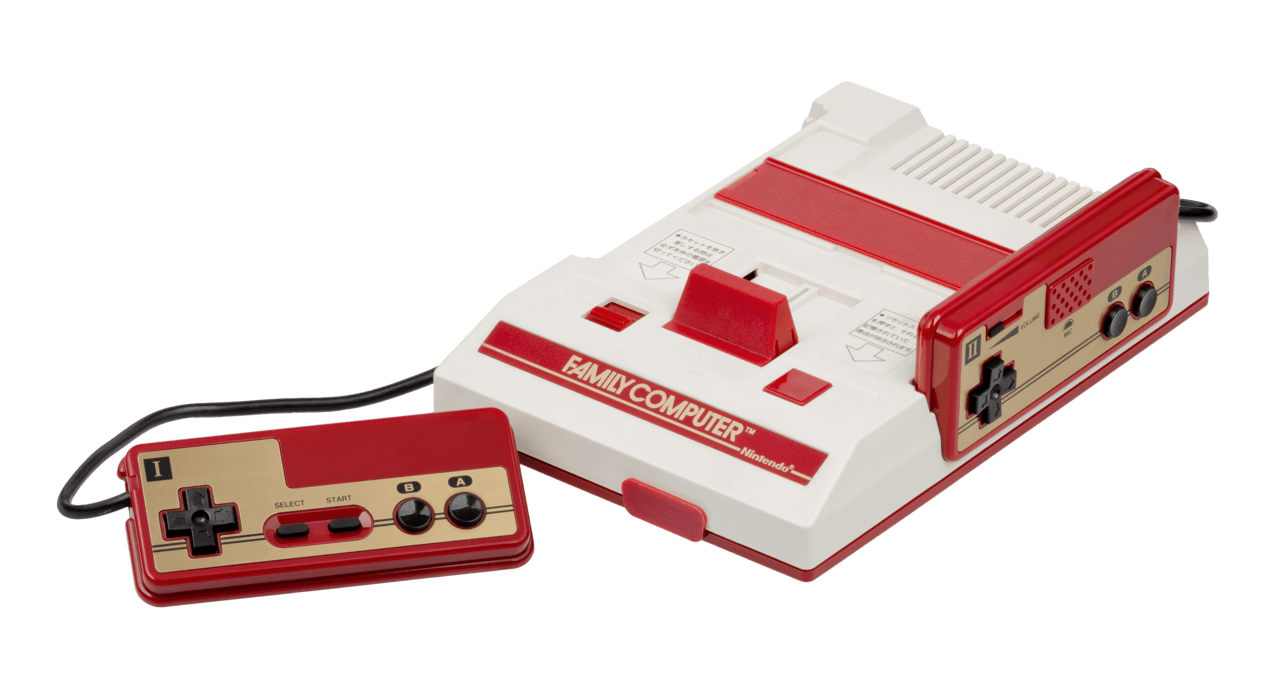
While everyone was busy pumping quarters into machines, the Nintendo Family Computer (Famicom) was taking over living rooms. Data East saw the writing on the wall and decided it was time to bring the arcade experience home, starting a run of hits that would define the 8-bit era.
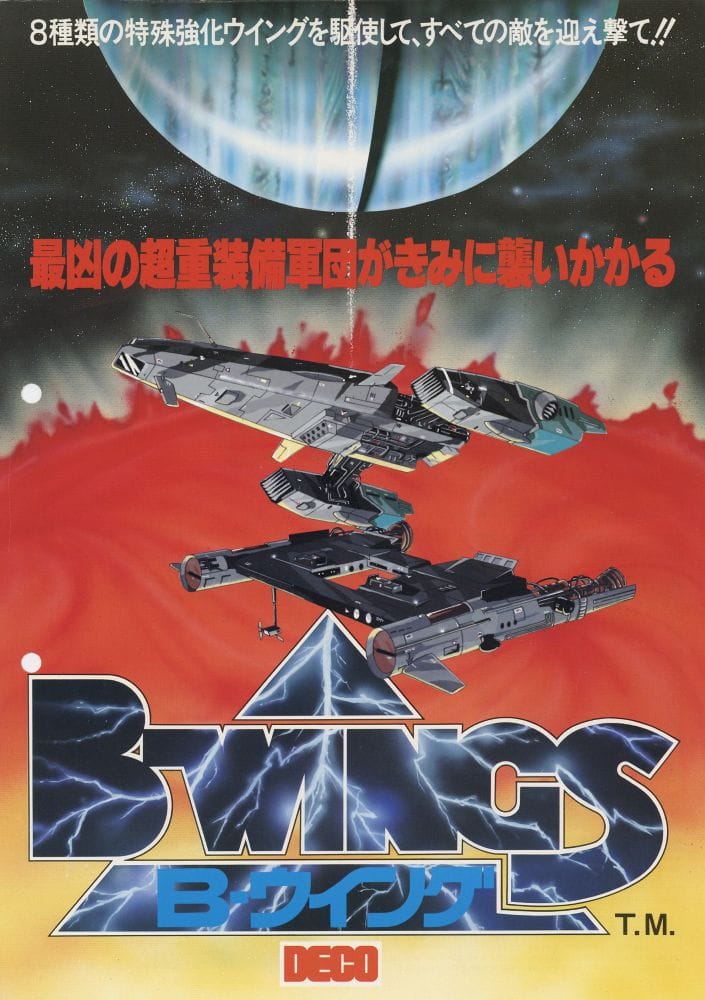
Data East officially crashed the home console party in 1986 with a port of their arcade hit B-Wings. This vertical scrolling shmup marked a massive milestone as the first game they developed and published themselves for the Nintendo Famicom. You piloted an aircraft through 45 grueling levels, swapping out specialized wings to change your firepower. It was a bold move that proved Data East could survive outside the smoke-filled arcade halls.
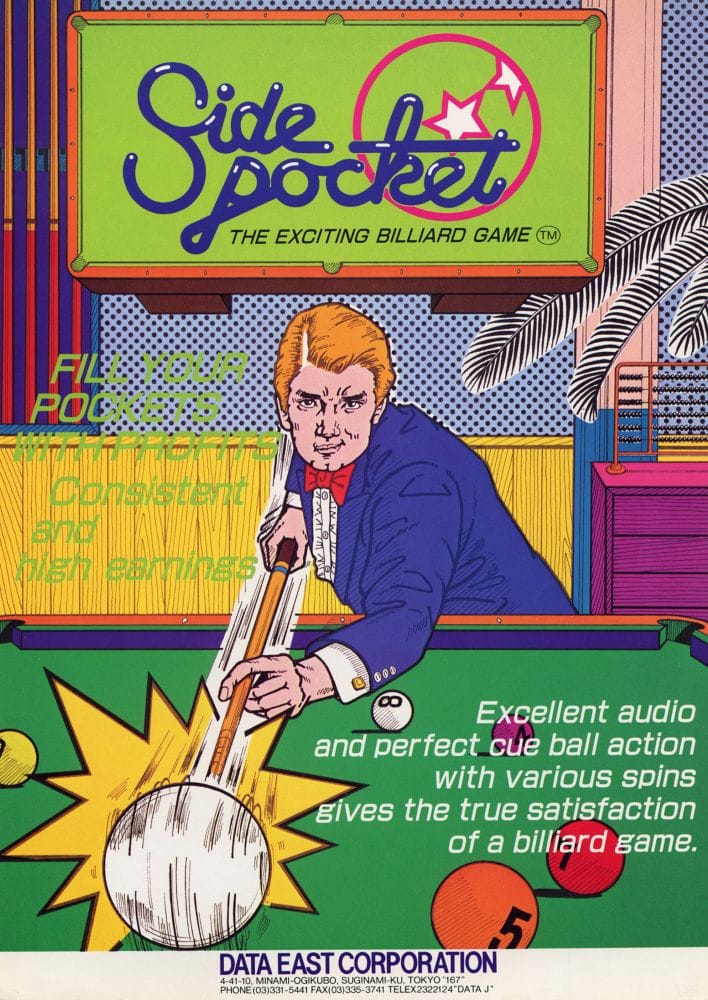
Later in 1986, Data East dropped Side Pocket, and it immediately set the gold standard for digital pool. Computer Gaming World magazine actually called it “far and away the best billiards simulation ever published for any system.” The game eventually graced the NES, Game Boy, and later received 16-bit enhanced remakes on the Sega Genesis and Super Nintendo.
1987: Data East’s BreakThru Year
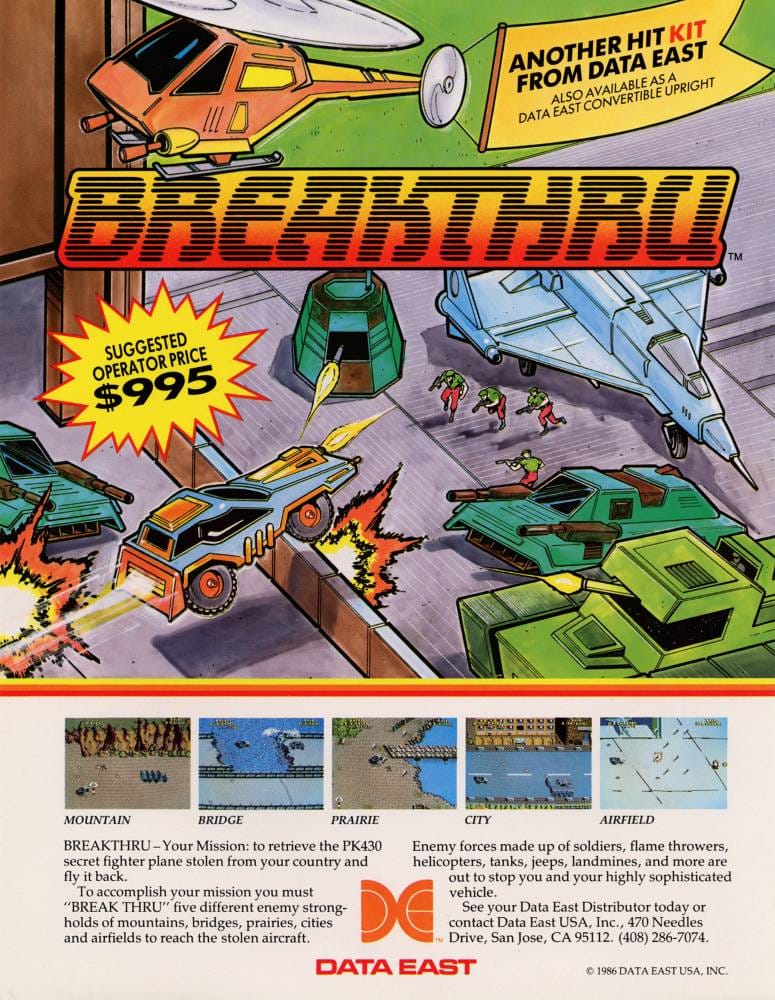
1987 was a total landmark year for Data East. They kicked things off with BreakThru, a side-scrolling vehicle shooter that made its way to the NES. You’re essentially driving a high-tech car through five hostile territories, jumping over obstacles and shooting anything that moves. It was fast, action-packed, and it required the kind of twitch reflexes that only a steady diet of arcade gaming could provide.
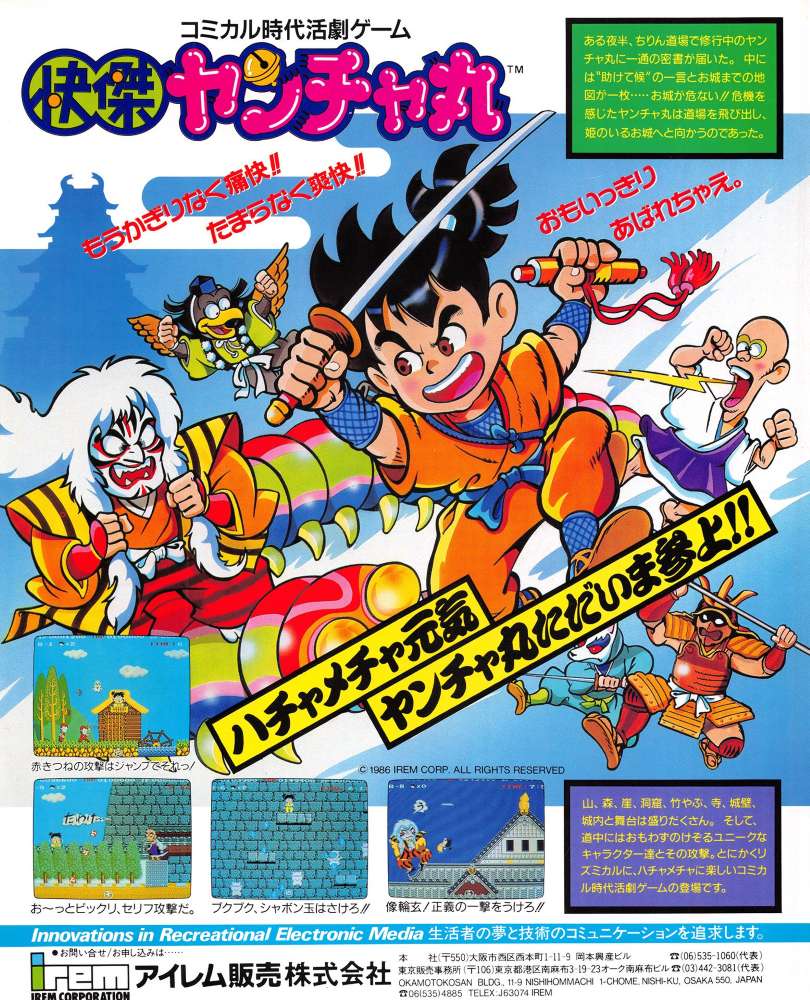
If you walked into a rental store in the late ’80s, you couldn’t miss Kid Niki: Radical Ninja. Teaming up with Irem once again, Data East ported this colorful platformer to the NES, and it became an instant smash. You play as a spunky ninja-in-training on a quest to save Princess Margot. Between the wacky bosses and the spinning sword attack, Kid Niki captured that quirky Japanese charm that gamers were starting to crave. It’s easily one of their most recognizable characters from the era.
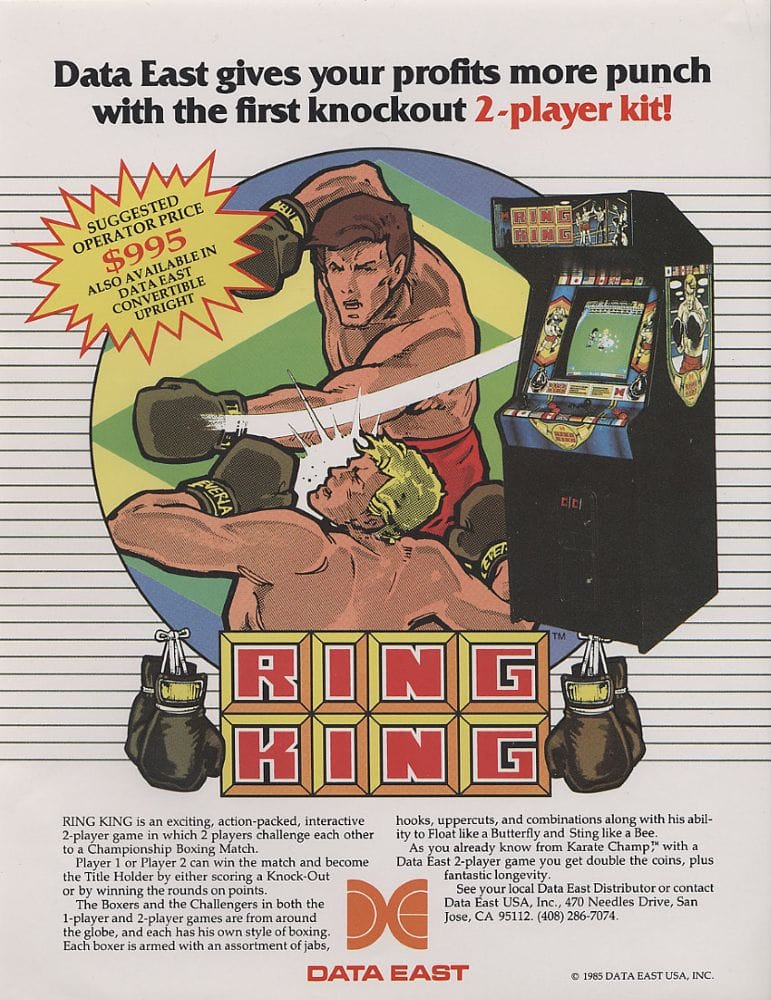
Then came the heavy hitter: Ring King (known as Family Boxing in Japan). This game stood out in a sea of boxing titles because it actually had RPG elements. You could win matches to earn power points and boost your stats—stamina, speed, and punch power. Ring King is one of those games that proves Data East knew exactly how to hook a competitive player.
Data East kept the momentum rolling with Heavy Barrel, an overhead shooter that puts you right in the middle of a terrorist takeover at a nuclear missile site. Throughout the levels, you’d collect pieces of a superweapon—the titular Heavy Barrel. Once you assembled all the parts, you could vaporize every single enemy on the screen with a single shot.
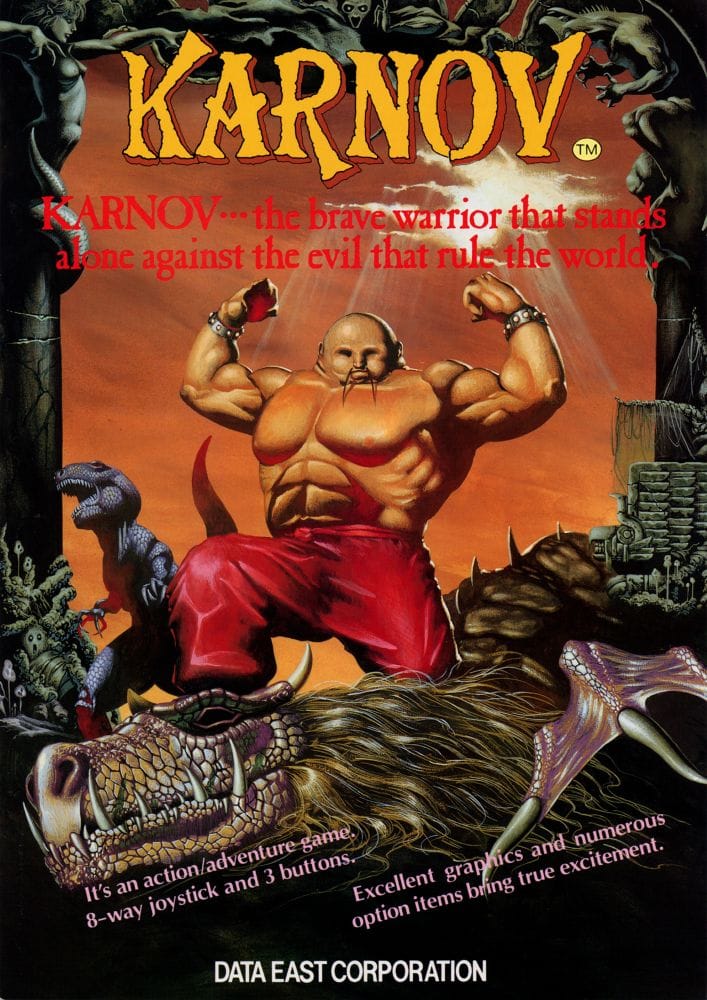
If there was ever a game that captured the radical energy of the 1980s arcade scene, it’s Karnov. You play as Jinborov Karnovski, a massive, fire-breathing strongman from Central Asia on a quest through nine levels to find lost treasures. Aside from spitting fireballs, he could collect items—like ladders to reach high platforms or wings to fly—that added a layer of strategy to the game. Why was he breathing fire? Why was he fighting green dinosaurs? Honestly, don’t ask; just keep hitting the attack button.
1988: Radiation, Ninjas, and the Karate Champ Copyright Dispute
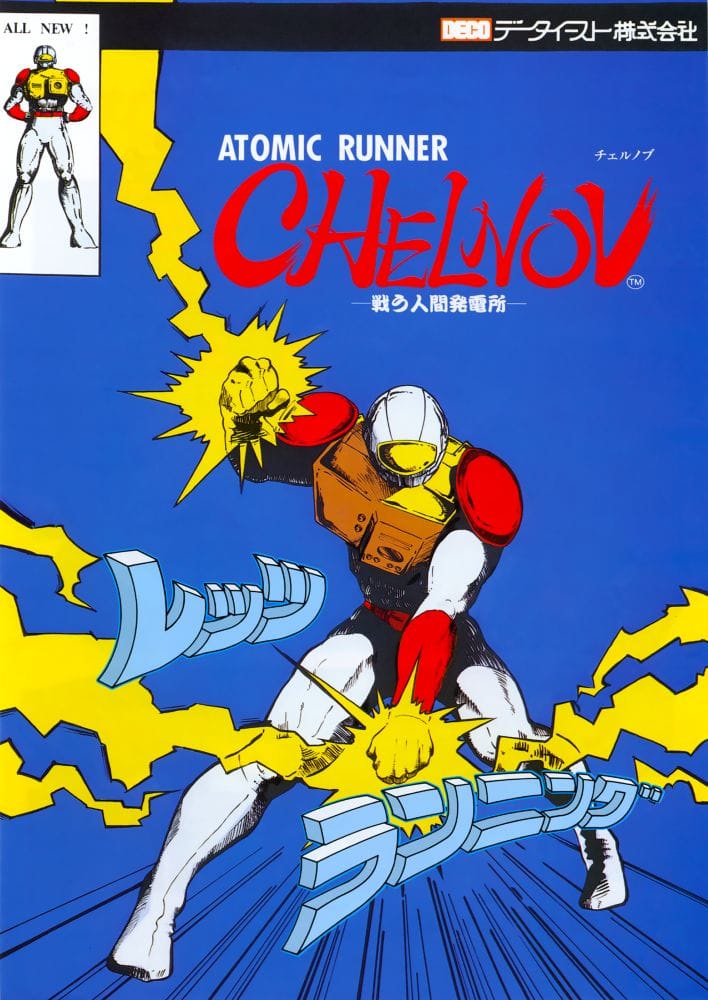
1988 was a total fever dream for the company. They kicked things off with Atomic Runner Chelnov, a game that is—let’s be honest—pretty dark for an arcade platformer. You play as a coal miner who survives a nuclear power plant explosion. Instead of, you know, needing immediate medical attention, the radiation gives him superhuman abilities. It was an intense, auto-scrolling challenge that kept players on their toes.
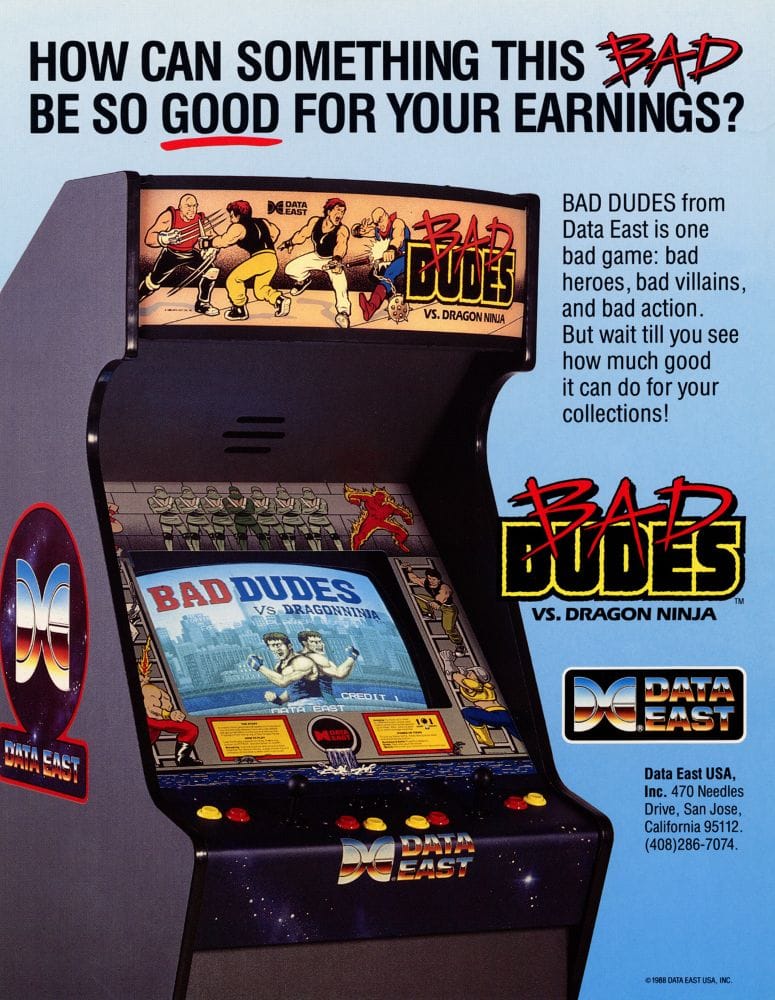
Then came the heavy hitter: Bad Dudes vs. DragonNinja. If you’ve ever seen the meme “Are you a bad enough dude to rescue the President?”, you have this game to thank. It took the side-scrolling beat ’em up formula of Kung Fu Master and cranked it up with two-player co-op and a much-needed dose of ’80s attitude. In the North American NES port, it was simply called Bad Dudes, because apparently, the “Dragon Ninja” part was implied. The intro screen where a fedora-wearing agent asks for your help is peak retro gaming cinema.
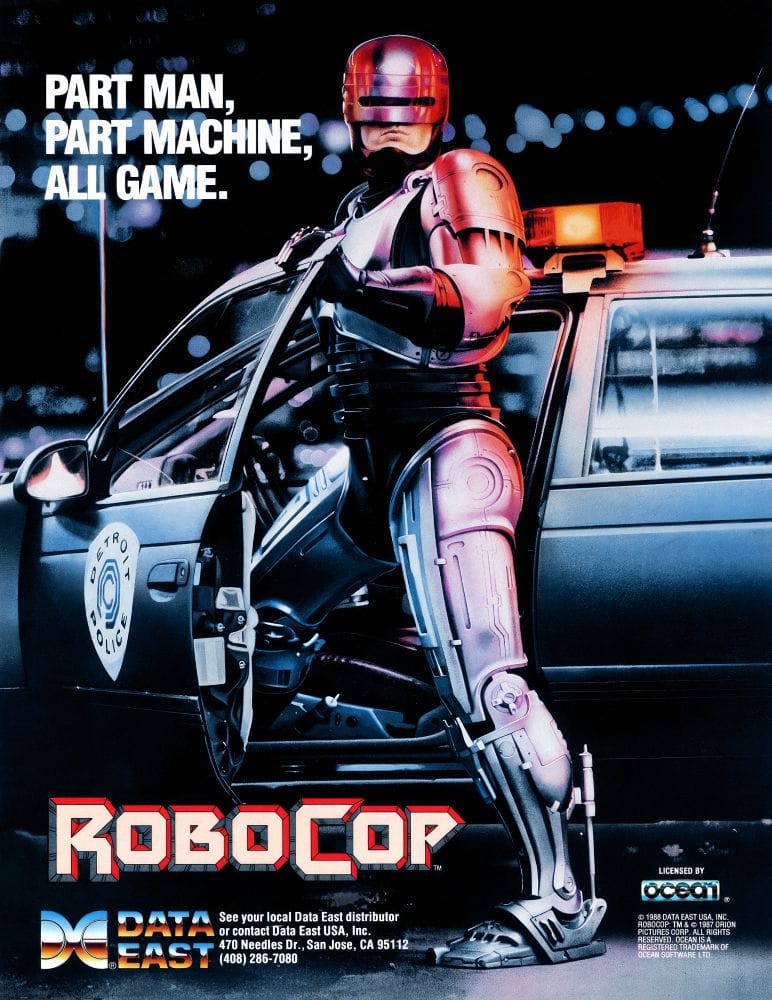
Data East also landed a massive licensed hit by teaming up with Ocean Software for the arcade version of RoboCop, which was one of those rare instances where a licensed game was actually good. This game captured the movie’s vibe perfectly, from the heavy mechanical thud of Murphy’s footsteps to the satisfying “Target Targeted” UI. RoboCop is still one of the best ways to feel like a walking tank without actually being a cyborg.
While Data East was busy dominating the arcade floor, their lawyers were gearing up for a heavyweight bout in the courtroom. They decided to sue a competing company, Epyx, over their game World Karate Championship, which they claimed was a bit too inspired by their own hit, Karate Champ.
At first, things looked great for the home team. The District Court actually sided with Data East, agreeing that the games were suspiciously similar. But Epyx didn’t go down without a fight. They took the case all the way to the United States Court of Appeals in the Ninth Circuit. In a massive twist, the Appeals Court reversed the decision. They ruled that copyright protection can’t be stretched to cover standard elements of an idea.
Think about it: How else do you depict a karate match? You need two fighters in white gi, a referee, and a scoring system. The court decided that while the games looked alike, they were only similar because they were both trying to accurately represent the sport of karate. Ironically, Data East would actually find themselves on the other side of this exact legal argument a few years later.
1991:Prehistoric Beatdownswith Joe & Mac
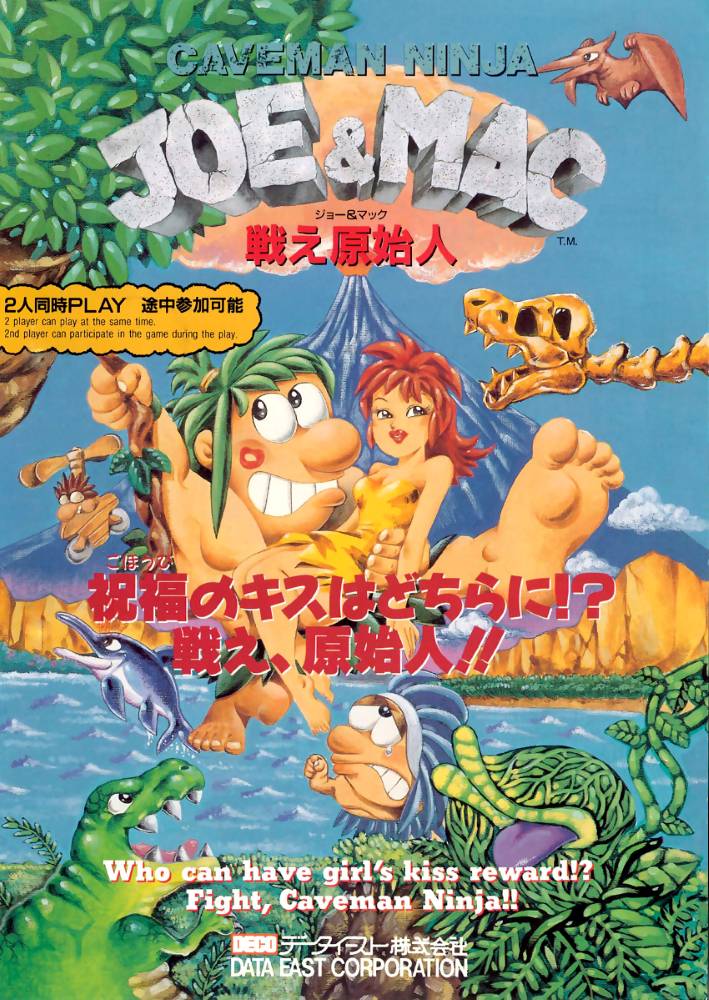
By the time the 90s rolled around, the arcade industry was getting a serious 16-bit makeover, and Data East decided to celebrate by going back to the Stone Age. In 1991, they unleashed Joe & Mac (also known as Caveman Ninja in Japan), a game that proved you don’t need high-tech lasers when you have a really big club and a prehistoric attitude.
You take control of a pair of green and blue-haired cavemen on a mission to rescue the cave babes who have been snatched by a rival tribe. While most heroes were using swords or guns, Joe and Mac relied on a unique set of primordial projectiles. To survive the onslaught of pterodactyls and T-Rexes, you had to master boomerangs, bones, stone wheels, and fire, because nothing says extinction like ancient arson. It featured some of the most expressive sprite work of the era, and the sheer personality in the animations set this apart from the more serious brawlers of the time.
The game was such a massive hit in the arcades that Data East didn’t waste any time. They ported Joe & Mac to the NES that same year, and it eventually found its way onto almost every major platform, including the SNES and Genesis. FYI, the home versions often added extra levels and secrets that weren’t in the original coin-op, making it a rare case where the port was just as essential as the arcade original.
1993:Fighter’s History vs. Capcom
Just when you thought the fighting game genre couldn’t get any more heated, 1993 arrived with a courtroom drama that would make Law & Order look tame. Data East released an arcade fighter called Fighter’s History, and let’s just say it looked… familiar. Have you ever seen two games so similar you had to double-check the logo on the cabinet? Capcom certainly noticed, and they weren’t exactly thrilled.
Capcom immediately filed a massive copyright infringement lawsuit, claiming that Data East basically borrowed the soul of Street Fighter II. They pointed out uncanny similarities in character designs, special moves, and even the control scheme. Data East didn’t just roll over; they walked into court with a chip on their shoulder and some serious receipts.
Data East weaponized their past failure with the Karate Champ lawsuit to build an ironclad defense. Data East argued that their own Karate Champ actually pioneered the competitive fighting genre three years before the original Street Fighter even existed. Capcom eventually produced design documents showing that Data East developers explicitly referenced Street Fighter II during production. You’d think that would be the smoking gun, right? Think again.
A crucial part of Data East’s defense came in the form of a VHS tape—a behind-the-scenes look at the development of Fighter’s History, including early concepts and comparisons between characters and mechanics. It wasn’t just PR fluff. The tape showed that Data East had deliberately tried to differentiate their fighters, even if the end result looked familiar.
The footage also highlighted Fighter’s History’s weak point system, a mechanic that had no direct analog in Street Fighter II, as well as animations and inputs that, while similar in function, were distinct in execution. The message was clear: this wasn’t a copy-paste job—it was an attempt to iterate within a shared design language.
After months of back-and-forth, expert testimonies, and side-by-side gameplay footage, Judge William H. Orrick Jr. ruled in favor of Data East. Judge Orrick’s ruling relied on a legal concept called Scènes à faire, which essentially means that while Fighter’s History did indeed bear a resemblance to Street Fighter II, it didn’t cross the legal threshold for copyright infringement.
IMO, this was actually the best thing that could have happened to the industry. If Capcom had won, the entire fighting game genre would have been a total monopoly. It proved that while you can own your specific characters, you can’t own the “idea” of a genre.
1996-2003:The Silent Collapse of Data East
With home consoles evolving into 32-bit powerhouses, the high-cost world of coin-op cabinets started to feel like a losing bet. For Data East, the 90s didn’t end with a high score; it ended with a heavy silence that still feels a bit eerie for fans of the brand. Usually, when a major player closes shop, there’s a press release or a big “thank you” to the fans. Not here.
In 1996, Data East USA vanished overnight without an official announcement. Marketing manager Jay Malpas ended up leaving a pre-recorded message on the company’s phone system, coolly informing anyone who called that the doors had closed for good before the holiday season. Can you imagine calling your favorite developer about upcoming games, only to hear a voicemail saying they no longer exist?
While the US branch went quiet, the parent company in Japan was struggling under a crushing financial weight. By 1998, Data East officially pulled the plug on its arcade division. They had accumulated a staggering debt of 3.3 billion yen—which translated to about $19 million back then. Even for a company that survived lawsuits and tape jams, that kind of red ink is impossible to swim out of.
In 1999, the weight of that financial anchor became too much to bear, and the company filed for reorganization. To stay afloat, they started selling negative ion generators, all of this in a panicked hope of scrapping together enough cash to return to the big leagues of game development. Unfortunately, the dream of a grand comeback slowly faded as the bills kept piling up.
In April 2003, the company finally admitted defeat and filed for bankruptcy, with the Tokyo district court formally declaring them bankrupt in June 25, 2003. Its properties were scattered, with many being picked up by G-Mode in 2004, a Japanese mobile content company that has since become the unlikely caretaker of Data East’s legacy.
Final Thoughts
Looking back at the wild ride of Data East, it’s clear that they weren’t just another face in the arcade crowd; they were one of the most groundbreaking developers in the arcade industry. Data East was never afraid to take a risk, whether it was on a demagnetized cassette tape or a fire-breathing strongman. From the defining the Black Box era of the NES to fighting Capcom in court, Data East was defiant, and played the game their own way until the very last credit ran out.
It’s a bit of a bummer that Data East disappeared so quietly, but the sheer volume of iconic moments they created is a legacy most companies would kill for. Data East taught us that you could lose a lawsuit but win a genre, and that a prehistoric caveman with a boomerang is always a good idea. They were never the biggest player in the room, but they were definitely the most interesting.
At HyperComboGamer, we believe great games deserve great coverage. That means no filler, no clickbait, or fanboyism—just honest, high-quality reviews, features, and guides that put gamers first. Whether you’re a lifelong enthusiast or just starting your gaming journey, you’ll find interesting gaming perspectives that will leave you fully satisfied.