Do you remember the late 90s? We spent our time rocking oversized flannels, watching Hey Arnold! after school, and praying our Tamagotchis wouldn’t die during math class. Life felt simpler when our biggest stress involved choosing between a Blockbuster rental or a sleepover fueled by Surge soda.
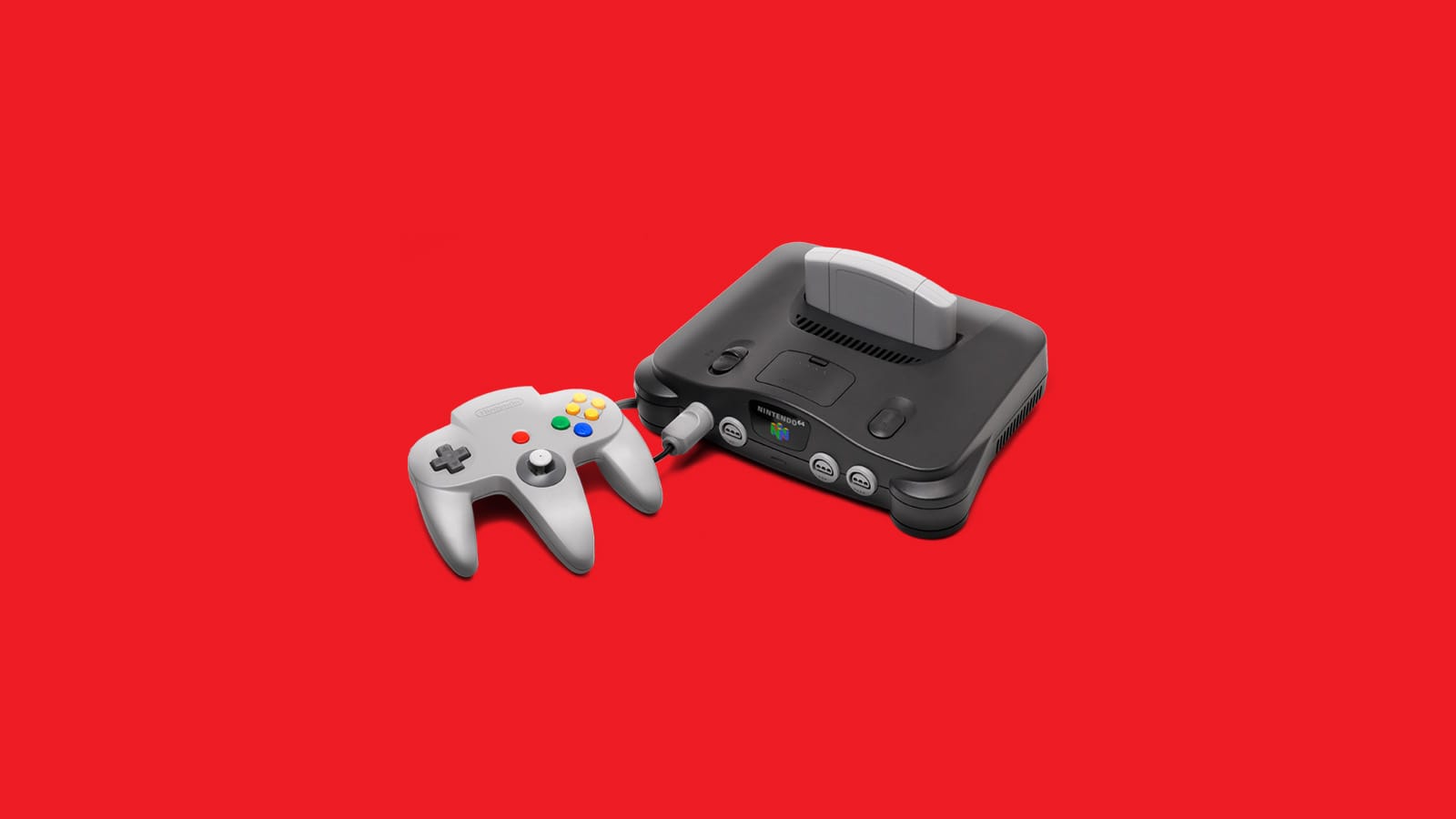
Amidst the sea of pogo sticks and frosted tips, the Nintendo 64 arrived to completely rewrite our reality. Suddenly, the flat worlds of our childhood gained depth, height, and a whole lot of blurry polygons. Ever wondered which of those chunky adventures actually deserve a spot on your modern shelf?
From the masterpieces that defined a generation to the bizarre cult classics that pushed the hardware to its absolute limit, the N64 was a playground of pure imagination. Grab your Expansion Pak and clear some save data—we’re counting down the ultimate, definitive ranking of the 30 best N64 platformers to ever grace our televisions.
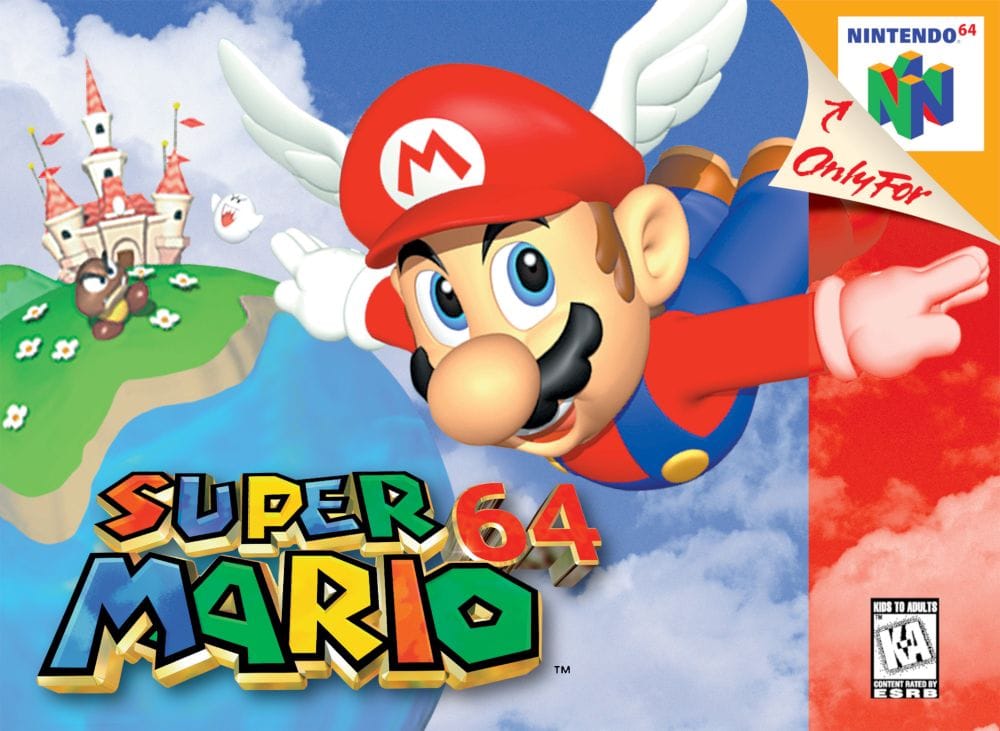
Super Mario 64
- Developer: Nintendo EAD
- Release Date: September 29, 1996
We really can’t talk about the N64 without mentioning Super Mario 64. This game didn’t just transition a franchise into the third dimension; it basically wrote the dictionary for every 3D game that followed. Super Mario 64 utilized Peach’s Castle as an architectural hub, turning every painting into a gateway to a new dimension and eliminating the frustration of rigid level select screens. The triple jump, long jump, and backflip allowed for a level of acrobatic expression that felt tactile and organic. Even the camera—while occasionally acting like it had a mind of its own—represented a monumental leap forward in cinematic gameplay.
Why It’s Worth Playing: Super Mario 64 proved that 3D platformers could be more than just awkward experiments. While the gameplay maybe dated by today’s standards, but the level design offers a sense of discovery that’s still fun to experience today. Plus, hearing the iconic Charles Martinet shout "Yahoo!" as you launch out of a cannon never gets old.
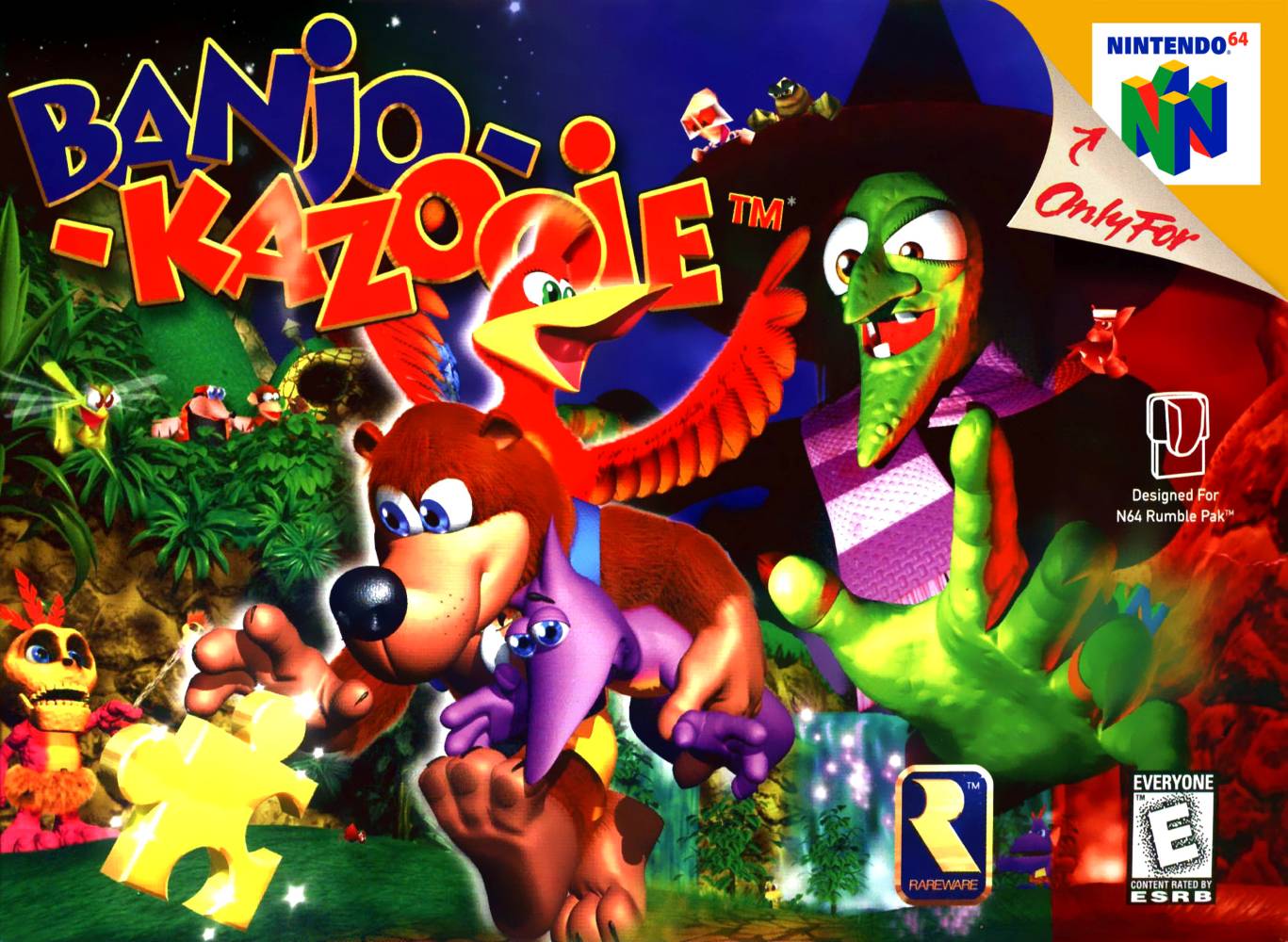
Banjo-Kazooie
- Developer: Rare
- Release Date: June 29, 1998
Banjo-Kazooie represents the peak of British game design, blending collect-a-thon philosophy with a wicked sense of humor. Unlike Mario’s somewhat lonely quest, Banjo and Kazooie feel like a genuine comedy duo, bickering their way through some of the most imaginative worlds ever coded. You don’t just jump; you learn to flap, beak-bust, and wonder-wing through obstacles by visiting Bottles the Mole. The level of detail in the sound design remains unparalleled, with Grant Kirkhope’s score dynamically shifting instruments as you move from underwater tunnels to snowy peaks.
Why It's Worth Playing: Banjo-Kazooie offers a denser, more character-driven experience than its peers, packed with secrets that reward every ounce of your curiosity. It strikes a perfect balance between tough-as-nails challenges and pure, unadulterated whimsy. IMO, it remains the most charming and cohesive experience on the entire Nintendo 64 library.
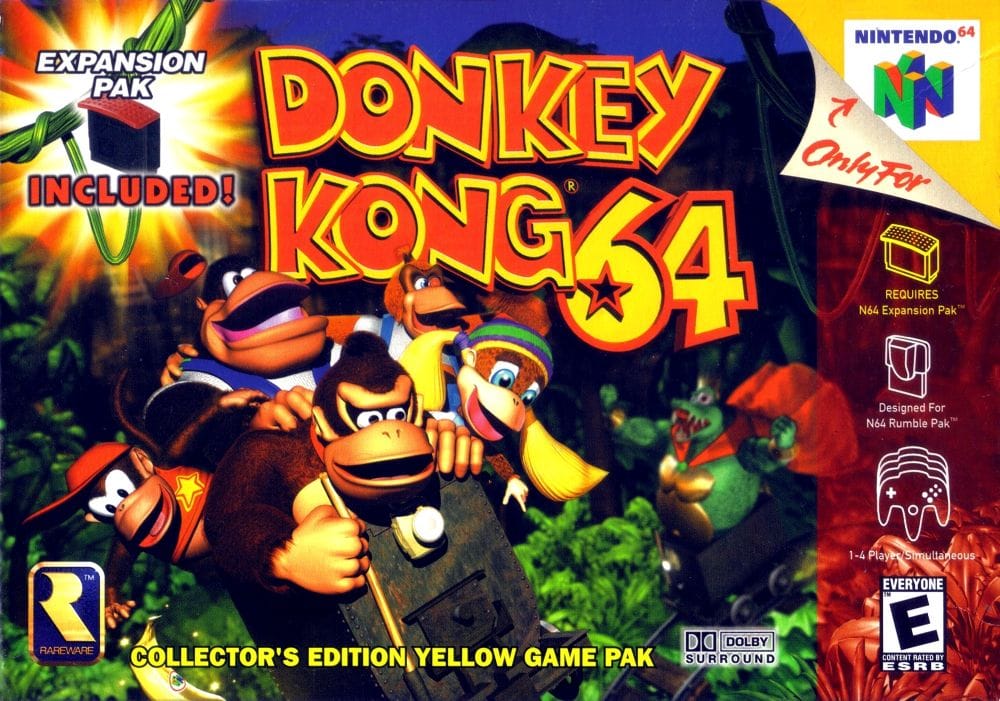
Donkey Kong 64
- Developer: Rare
- Release Date: November 22, 1999
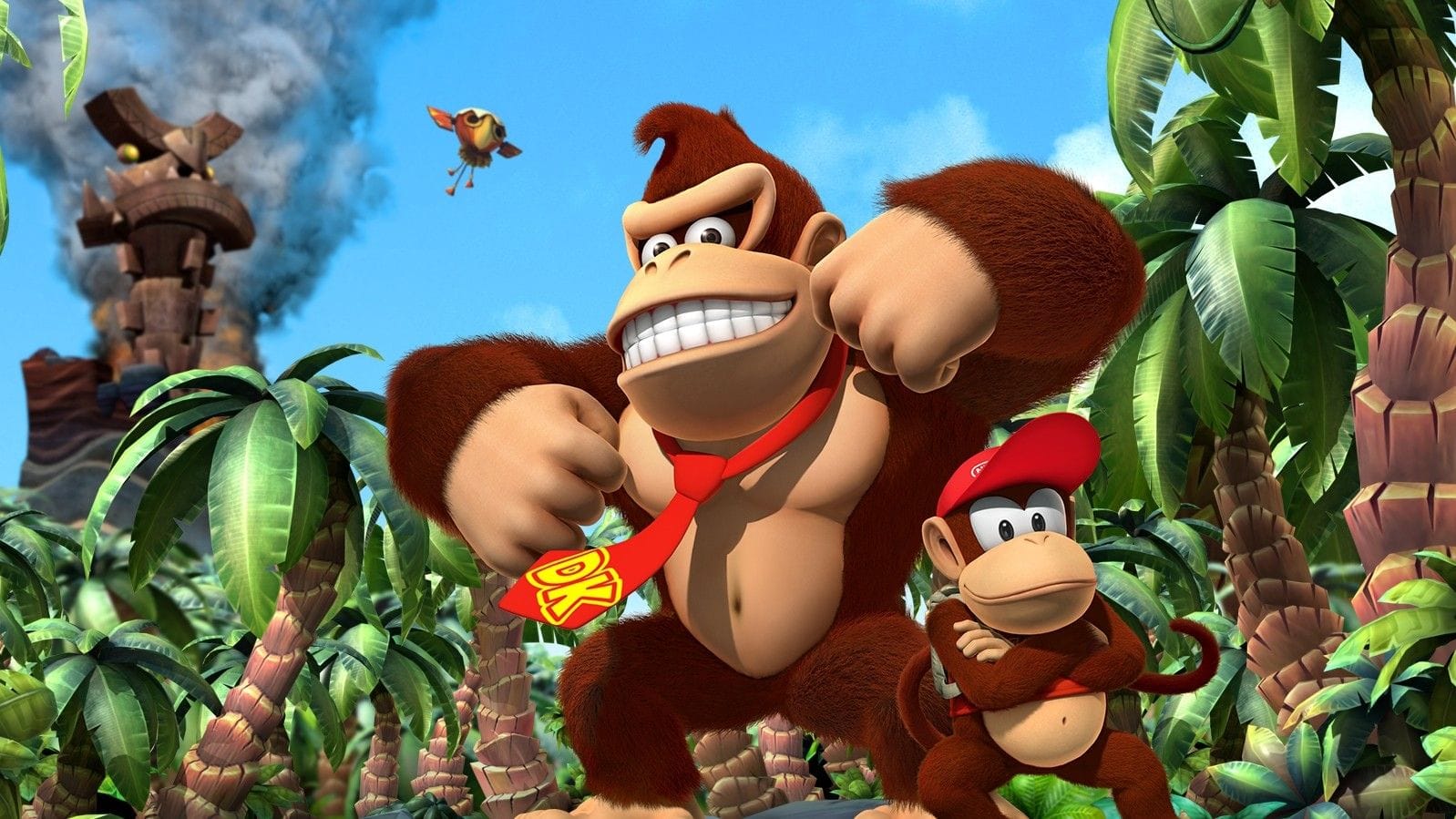
Requiring the Expansion Pak just to function, Donkey Kong 64 pushed the N64’s silicon to its absolute limit with colored lighting and massive, sprawling environments. The core gimmick involves swapping between five different Kongs, each sporting unique weaponry and bizarrely specific abilities. The sheer volume of things to find—Golden Bananas, blueprints, medals, and fairies—creates a completionist’s fever dream. Between the rhythmic popping of the Coconut Shooter and the legendary (and wonderfully campy) DK Rap, the sensory experience is pure 90s experience.
Why It's Worth Playing: Donkey Kong 64 is the ultimate "collect-a-thon" in its purest, most chaotic form. It offered hundreds of hours of gameplay for those who love to scour every corner and the platforming is tight and responsive platforming that Rare perfected during this era. Plus, unlocking the original arcade Donkey Kong hidden within the game remains one of the best internal rewards ever conceived.
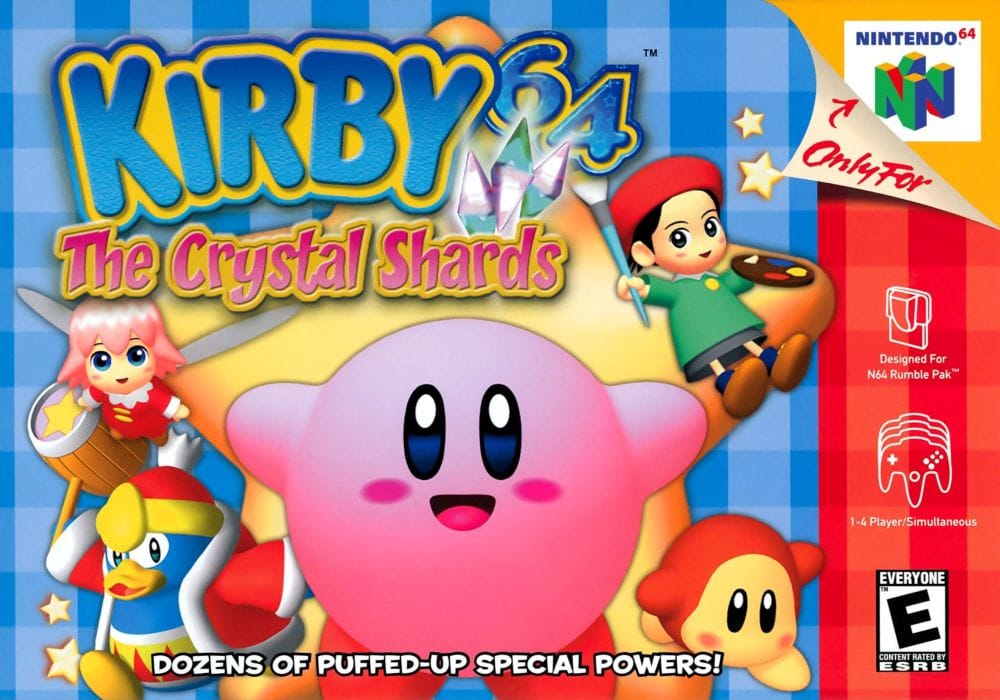
Kirby 64: The Crystal Shards
- Developer: HAL Laboratory
- Release Date: March 24, 2000
Kirby 64: The Crystal Shards is a gorgeous 2.5D adventure that focused on what Kirby does best: eating things and stealing their identity. The Power Combo system is an absolute stroke of genius, allowing you to mix two abilities to create something entirely new and often hilariously overpowered. The game offers tiny environmental puzzles that require specific “recipes” to solve, making it less about pixel-perfect jumps and more about creative problem-solving. The pre-rendered backgrounds and chunky 3D models give the game a dreamlike, pastel aesthetic that hasn’t aged a day.
Why It's Worth Playing: Kirby 64: The Crystal Shards represents the pinnacle of cozy N64 gaming. It lacks the frustration found in more technical 3D platformers and focuses entirely on the joy of discovery. It provides a relaxing break from the dizzying camera angles of the era while offering some of the most creative boss encounters on the system. IMO, it’s a pure dopamine hit to experiment with different elements just to see what wacky transformation pops out next.
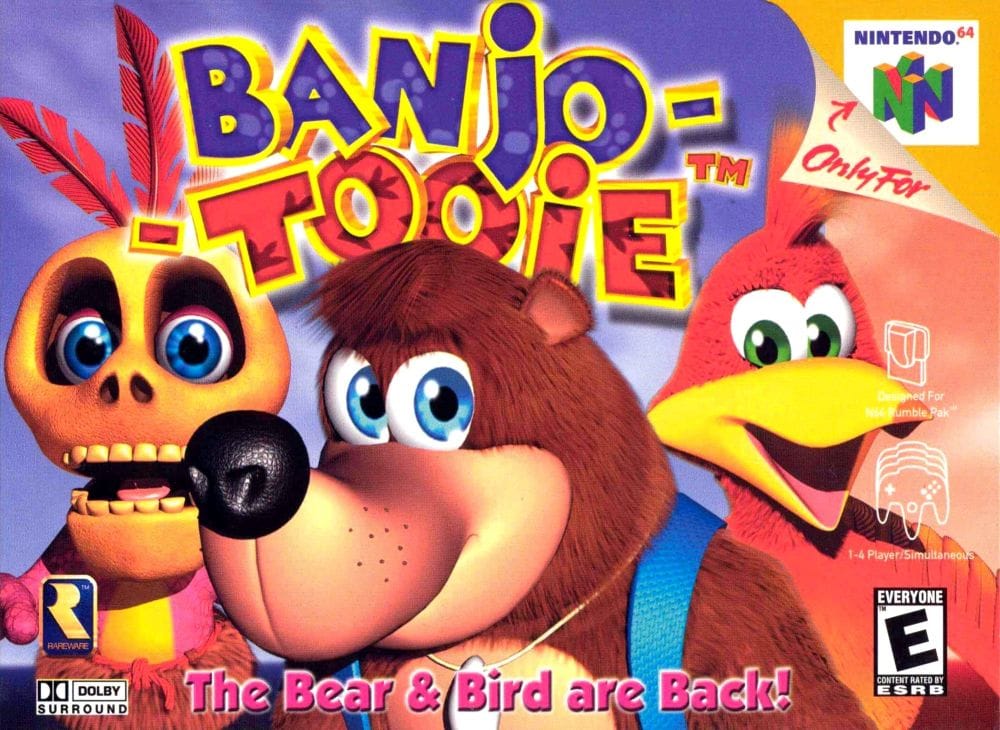
Banjo-Tooie
- Developer: Rare
- Release Date: November 20, 2000
Banjo-Tooie is peak Rareware creativity, giving us interconnected levels and opening up a whole new world of puzzle-solving. The introduction of first-person shooter segments and the ability to split the duo up changed the entire dynamic of the game. You weren’t just a bear with a bird in his backpack anymore; you were a tactical tag-team navigating a dark, often cynical world. The split-up pads allowed you to control the bear and bird independently for the first time. Does the frame rate chug a bit when the action gets intense? Sure, but watching Mumbo Jumbo summon a giant statue to stomp on enemies makes every dropped frame worth it.
Why It’s Worth Playing: Banjo-Tooie is great for gamers who crave complexity and scale in their collect-a-thons. The interconnected world gimmick was way ahead of its time, making the Isle o' Hags feel like a living, breathing ecosystem rather than a series of isolated levels. It’s the ultimate completionist's final boss, offering a depth of gameplay that ensures you’ll never feel like you've seen it all in a single sitting.
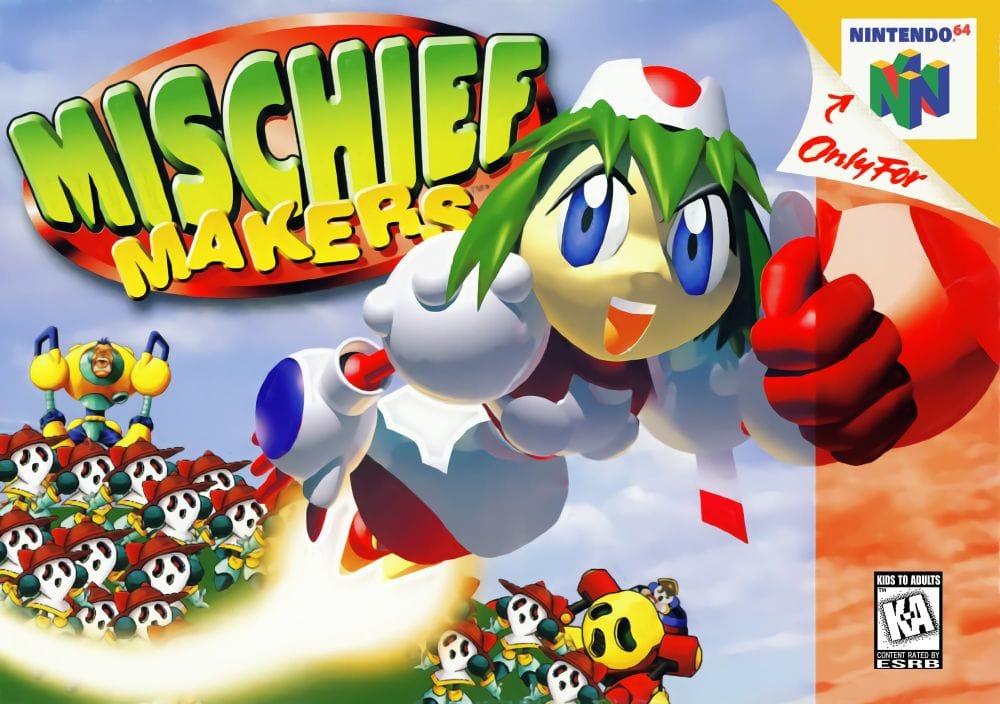
Mischief Makers
- Developer: Treasure
- Release Date: October 1, 1997
Mischief Makers is a rhythmic, tactile 2D side-scroller that feels like a playable 90’s anime. You play as Marina, the Ultra-Intergalactic-Cybot G, who grabs, throws, and shakes everything in sight. The level variety is absolutely bananas, ranging from olympic-style sports meets to intense, screen-filling boss encounters. Don’t let the colorful 2D look fool you; this game is mechanically deep and occasionally nails-tough. The controls are snappy, using the D-pad for dashing in a way that makes Marina feel incredibly agile. But be warned: the “Shake! Shake!” sound bite will live rent-free in your head for the next twenty years.
Why It’s Worth Playing: Mischief Makers is a masterclass in 2D invention on a console known for clunky 3D. The "grab and shake" mechanic feels entirely unique even decades later, offering a tactile satisfaction that modern platformers rarely replicate. It’s a loud, proud, and wonderfully bizarre cult classic that proves imagination beats raw polygon counts every single time.
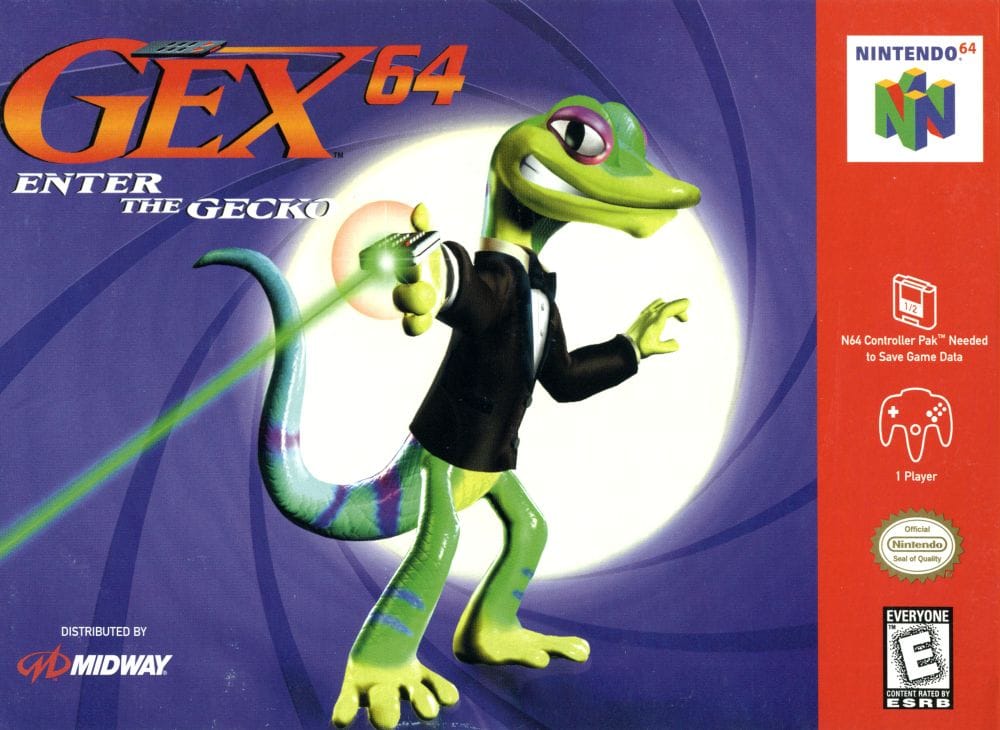
Gex 64: Enter The Gecko
- Developers: Realtime Associates, Crystal Dynamics
- Release Date: August 1, 1998
Gex 64: Enter The Gecko didn’t just borrow from pop culture; it cannibalized it, turning every level into a parody of horror movies, Looney Tunes, or even spy thrillers. Gex 64 swapped the 2D side-scrolling of the original for a fully 3D environment that felt massive at the time. You weren’t just running and jumping; you were using your suction-cup feet to scale walls and ceilings, which added a literal new dimension to the platforming. The mission structure mirrored Mario 64—collecting Remotes to unlock new channels. Is the constant stream of one-liners from comedian Dana Gould a bit much? Probably, but that’s the charm!
Why It’s Worth Playing: Gex 64: Enter The Gecko is a creative 3D platformer that’s a time capsule of 90’s pop culture. The level designs are genuinely imaginative, and the sheer variety of parodies ensures you’re never bored with the scenery. It’s a loud, colorful, and unashamedly weird slice of gaming history that still manages to be a total blast.
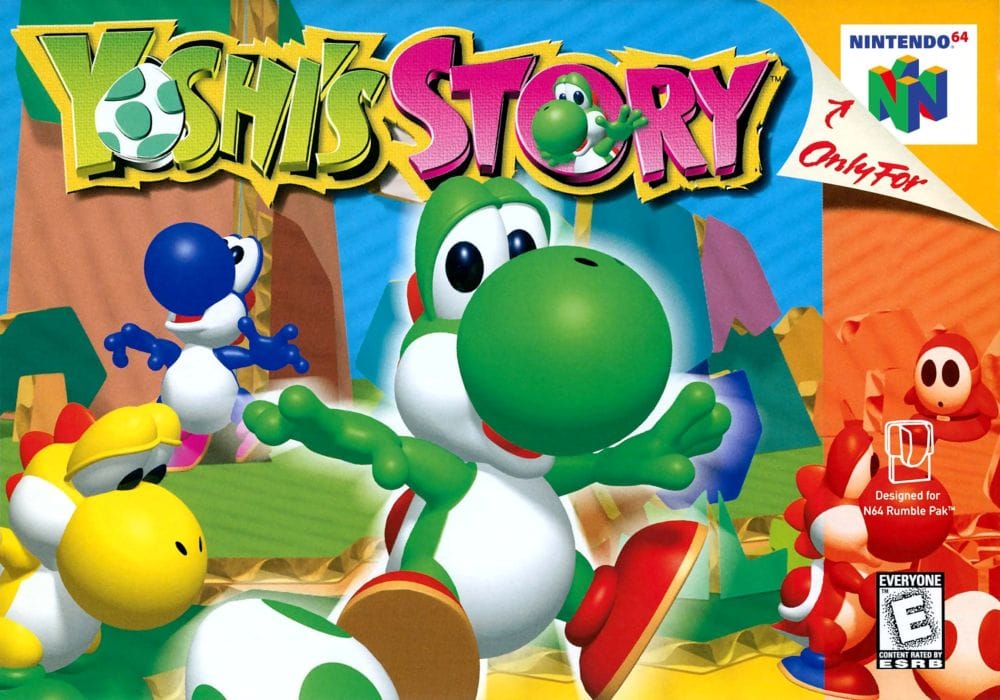
Yoshi’s Story
- Developer: Nintendo EAD
- Release Date: March 10, 1998
Yoshi’s Story is a 2.5D aesthetic triumph, featuring an arts-and-crafts world that feels like nothing else in the N64 library. The gameplay hook here is famously divisive: instead of just reaching the end of a linear path, you have to eat 30 pieces of fruit to clear a stage. It sounds simple, right? But if you’re a perfectionist aiming for the highest score, you’ll find yourself hunting down specific Lucky Fruits while sniff-searching every inch of the fabric-textured ground. The singing Yoshis might be a bit much for the “mature” gamers out there, but the charm is simply undeniable.
Why It’s Worth Playing: In an era where everyone was obsessed with jagged 3D textures, Yoshi's Story leaned into a beautiful, handcrafted look that hasn't aged a day. It’s a vibrant, experimental piece of art that prioritizes feel and atmosphere over traditional challenge. If you want a game that’s perfect for a lazy Sunday afternoon, this hand-crafted world is exactly the vacation you need.
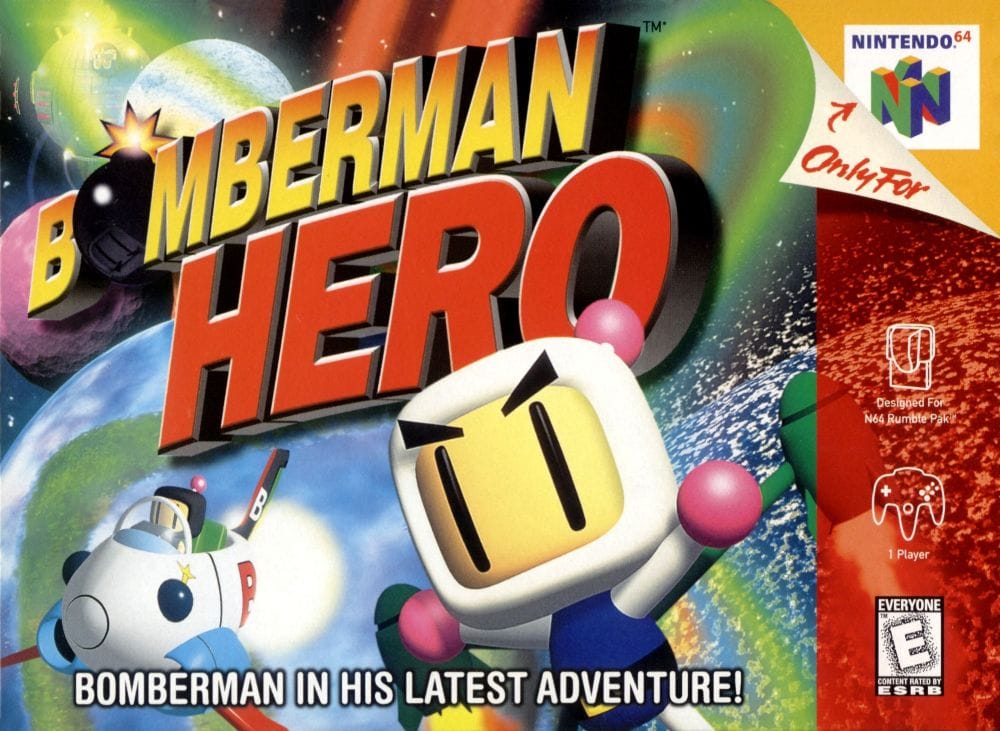
Bomberman Hero
- Developer: Hudson Soft
- Release Date: April 30, 1998
Hudson Soft ditched the multiplayer focus of previous games and gave us Bomberman Hero, a high-speed 3D platformer. The most shocking addition? Bomberman can actually jump without the help of a stray explosion or a specific power-up. You’ll spend your time navigating floating platforms and chucking bombs at enemies with a lock-on system that feels surprisingly modern for 1998. IMO, the level variety is the real star here, shifting from underwater trench runs to sliding down snowy mountains without missing a beat. Composed by June Chikuma, the soundtrack is a breakbeat and drum-and-bass masterpiece that has no business being this good for a game about a cute robot.
Why It’s Worth Playing: Bomberman Hero is an explosive anomaly that we’ll likely never see again in the series. It’s a fascinating look at what happens when a developer takes a legendary IP and forces it into a completely new genre with total confidence. If you love tight platforming mixed with a soundtrack that belongs in a nightclub, this is an essential N64 deep cut.
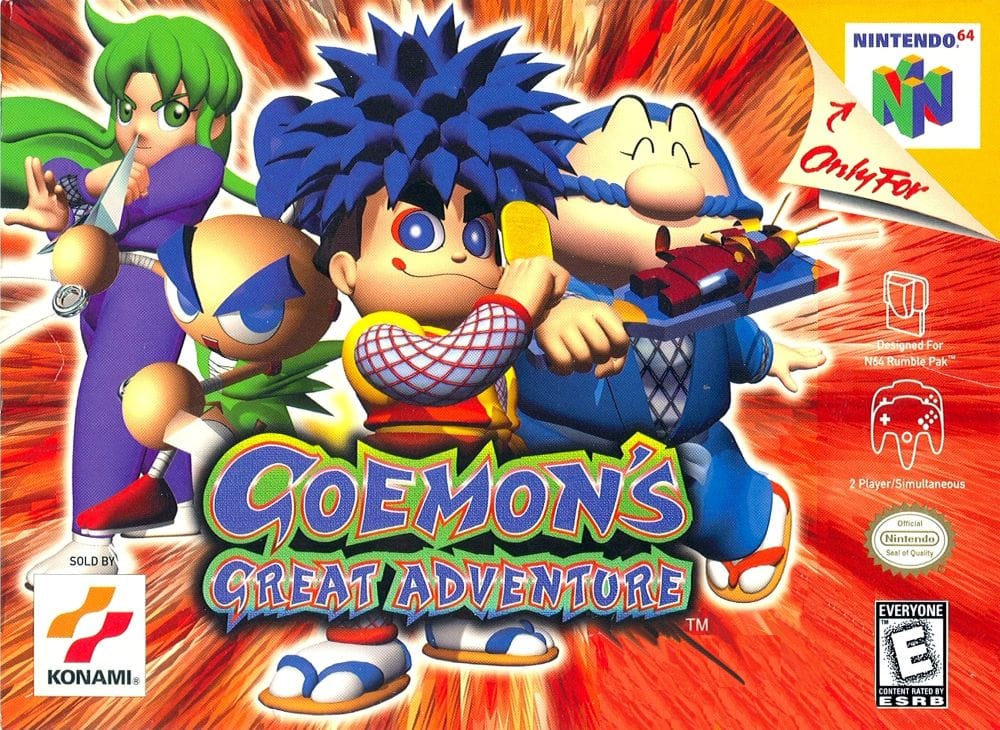
Goemon’s Great Adventure
- Developer: Konami
- Release Date: September 27, 1998
Konami returned to the series’ side-scrolling roots with Goemon’s Great Adventure, an unapologetically Japanese platformer where giant robots and mechanical peach spaceships are just another Tuesday. While most N64 platformers forced you to take turns like it was 1985, Goemon’s Great Adventure let you and a buddy cause mayhem together in real-time. You’ll be hopping over mechanical fish, dodging ghosts, and—most importantly—shouting at your friend for missing a jump. Nothing beats the sheer adrenaline of piloting a mountain-sized clockwork robot while a heavy metal J-pop track screams in the background.
Why It’s Worth Playing: Goemon’s Great Adventure is arguably the best co-op platformer on the Nintendo 64. It perfectly balances challenging level design with a sense of humor that is genuinely bizarre and endearing. If you want a game that focuses on tight jumping, fast combat, and giant robots singing their own theme songs, this is a mandatory addition to your library.
Rayman 2: The Great Escape
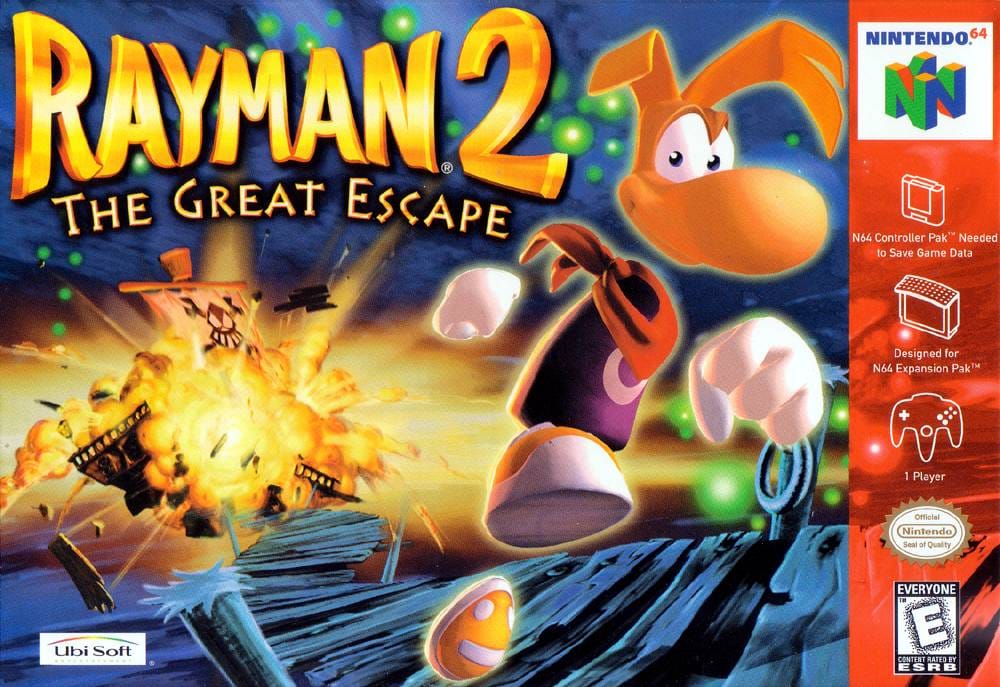
- Developer: Ubisoft
- Release Date: October 29, 1999
Rayman 2: The Great Escape reinvents the very concept of atmospheric platforming, crafting a moody cinematic atmosphere that felt surprisingly mature for a cartoon mascot. The controls feel buttery smooth, which remains a minor miracle given the N64’s awkward trident controller. You glide using Rayman’s hair-copter and lob energy spheres at Admiral Razorbeard’s clunky automaton lackeys with surprising precision. It skips the bloated “collect 500 trinkets to progress” trope that plagued other 90s titles. Instead, every level feels distinct, driving the narrative forward with a genuine sense of urgency and wonder.
Why It’s Worth Playing: Rayman 2 offers a level of polish that most N64 games lacked. Unlike the sprawling, often aimless hubs of the era, it balances whimsical charm with a genuine sense of peril and mystery. If you want a tight, linear adventure that prioritizes responsive movement over aimless wandering, this is your gold standard.
Gex 3: Deep Cover Gecko
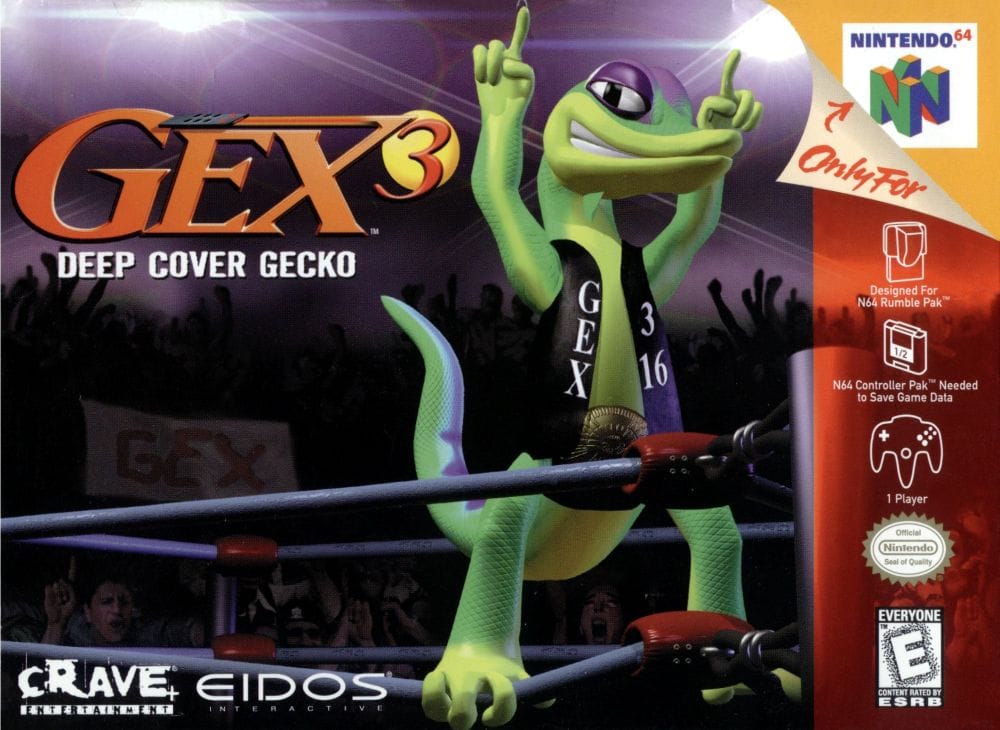
- Developer: Crystal Dynamics
- Release Date: September 28, 1999
Gex 3: Deep Cover Gecko is a relentless barrage of 90s pop-culture references that actually holds up as a solid platformer. Crystal Dynamics leaned heavily into the Bond parody, giving our favorite wise-cracking reptile a literal Gex Cave and a mission to rescue the lovely Agent Xtra. The controls feel significantly more refined than the previous entry, offering a snappier response when you’re tail-spinning through a hoard of enemies. Navigating the Fairytales world feels like a fever dream where you’re constantly waiting for a copyright lawyer to jump out of a bush.
Why It’s Worth Playing: Gex 3 is campy, obnoxious, and remains one of the most surreal moments in N64 history. The level design is dense with secrets, and the sheer number of TV parodies ensures you're never bored with the scenery. If you appreciate a game that doesn't take itself seriously but still delivers tight mechanics, it’s time to enter the media dimension one last time.
Space Station Silicon Valley
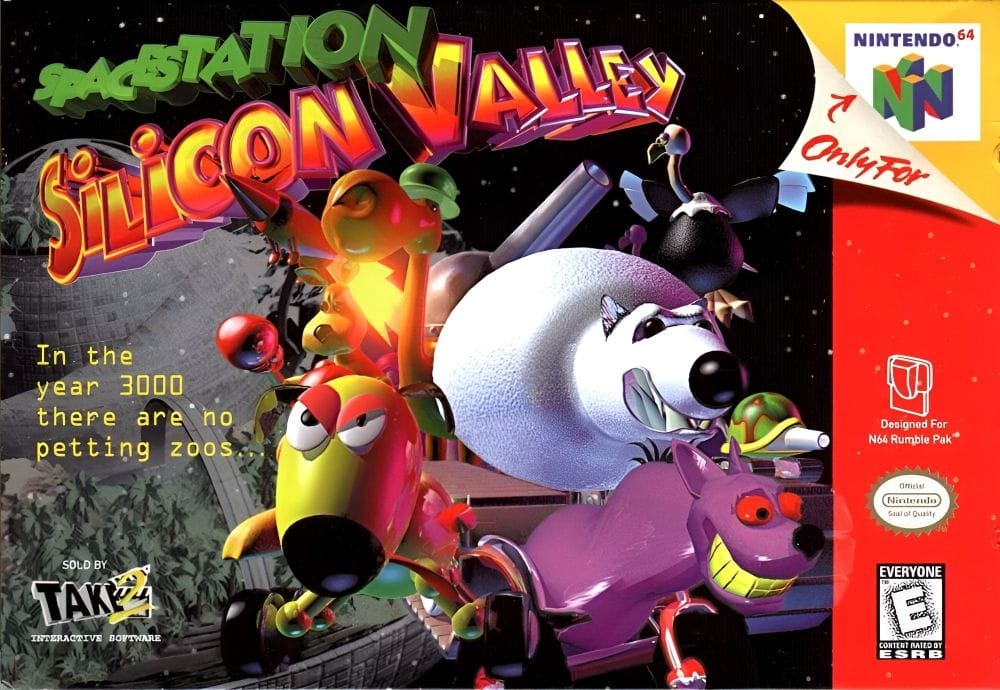
- Developer: DMA Design (now Rockstar North)
- Release Date: October 21, 1998
Ever wondered what the creators of Grand Theft Auto were up to before they conquered the world with crime sims? They made Space Station Silicon Valley, a unique platformer that’s bursting with British humor and a hilarious mechanical ecosystem. You play as Evo, a robot reduced to a crawling processor who must possess over 30 different robo-animals to fix a crashed space station. The game challenges you to think vertically and laterally, often forcing you to abandon a powerful body just to squeeze a tiny mouse through a vent. The soundtrack is an absolute bop, featuring lounge-inspired electronica that fits the “future-retro” vibe perfectly.
Why It’s Worth Playing: Space Station Silicon Valley offers a level of creative freedom rarely seen in the 64-bit era. It completely ditches the tired "jump on heads" trope in favor of a body-swapping mechanic that still feels fresh today. If you want a platformer that challenges your brain as much as your reflexes, this silicon-infused odyssey is essential gaming history.
Lode Runner 3-D
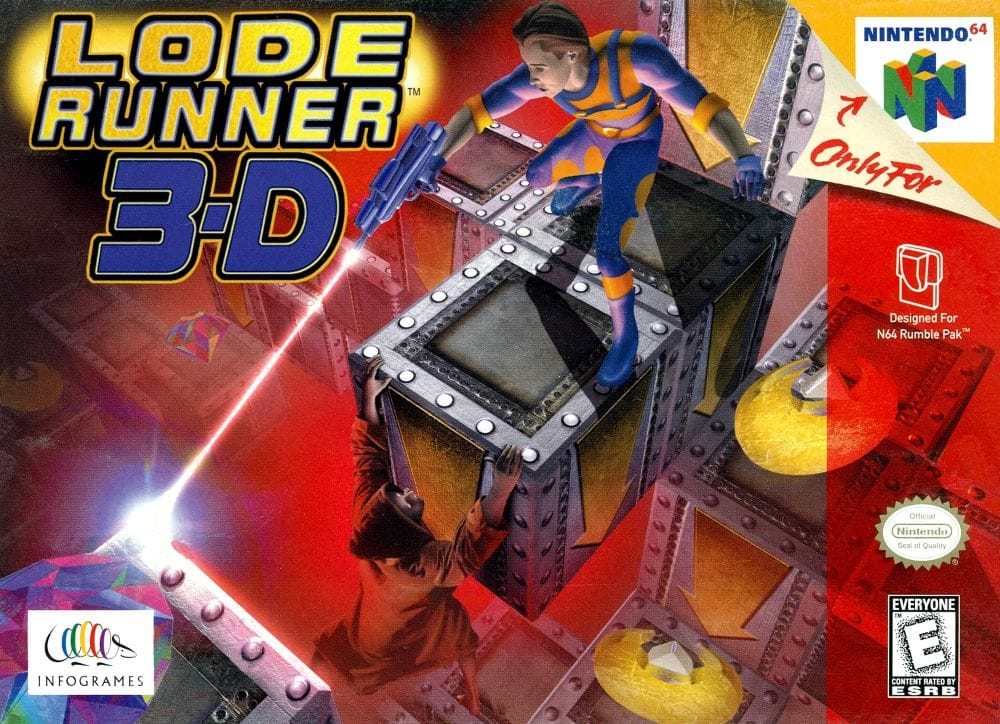
- Developer: Big Bang
- Release Date: March 31, 1999
Based on the 1983 classic, Lode Runner 3-D is a claustrophobic and deeply rewarding puzzle-platformer that forces you to navigate dizzying 3D structures that wrap around themselves. You aren’t just running and digging holes anymore; you’re manipulating the environment by blasting holes in the ground to trap hooded enemies. The transition from 2D to 3D usually kills old-school franchises, but this one managed to keep its soul intact while adding a dizzying layer of depth. It’s atmospheric, almost eerie soundtrack creates a lonely industrial vibe that sets it apart from the colorful mascots of the era.
Why It’s Worth Playing: Lode Runner 3-D offers a cerebral challenge to the typical "hop and bop" platformers of the era. It forces you to think in three dimensions in a way very few games actually achieved on the N64 hardware. If you want a platformer that tests your spatial awareness and patience, Lode Runner 3D is a masterclass in grid-based survival.
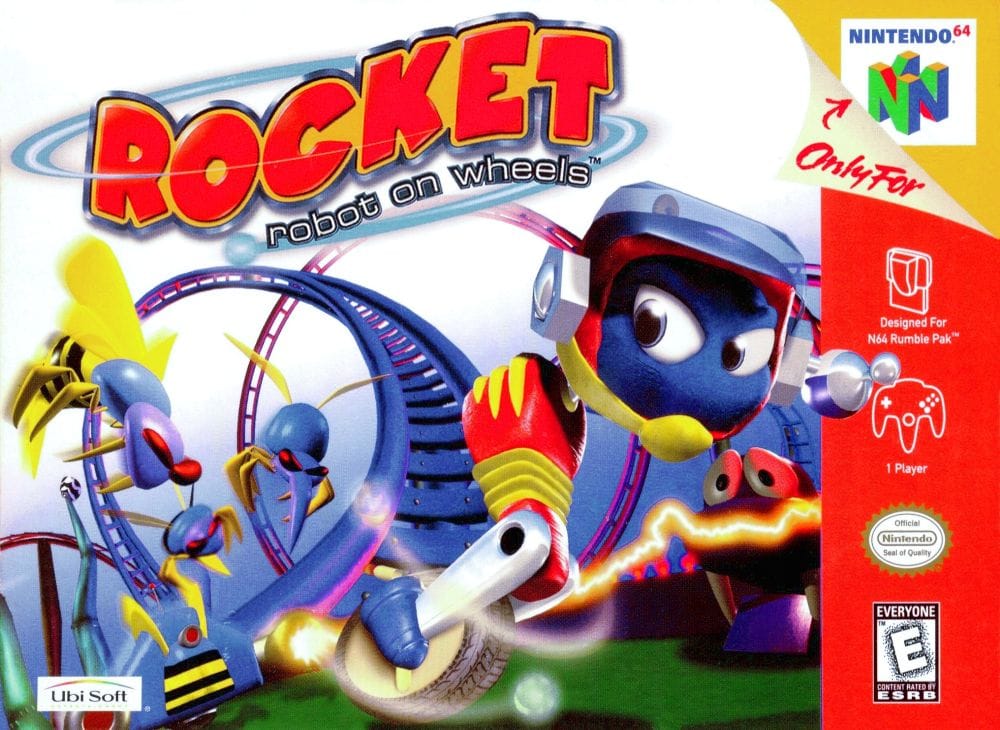
Rocket: Robot On Wheels
- Developer: Sucker Punch Productions
- Release Date: October 31, 1999
Ever wonder where the creators of Sly Cooper got their start? Look no further than Rocket: Robot On Wheels, which basically pioneered realistic physics on the N64. In a sea of floaty platformers, this game introduced a world where objects actually had weight and momentum. You play as Rocket, a red, unicyle-riding bot, who uses a tractor beam to swing girders, hurl heavy rocks, and even build a functioning roller coaster. Solving each puzzle feels like a personal victory, and the Whoopee World theme park setting provides a vibrant backdrop for some of the most creative puzzles on the system.
Why It’s Worth Playing: Rocket: Robot On Wheels is a technical marvel that paved the way for modern physics-based gaming. It replaces generic "go here, collect that" objectives with genuine problem-solving that rewards your curiosity. If you want a platformer that feels truly dynamic and rewards your curiosity with clever mechanical depth, Rocket is your bot.
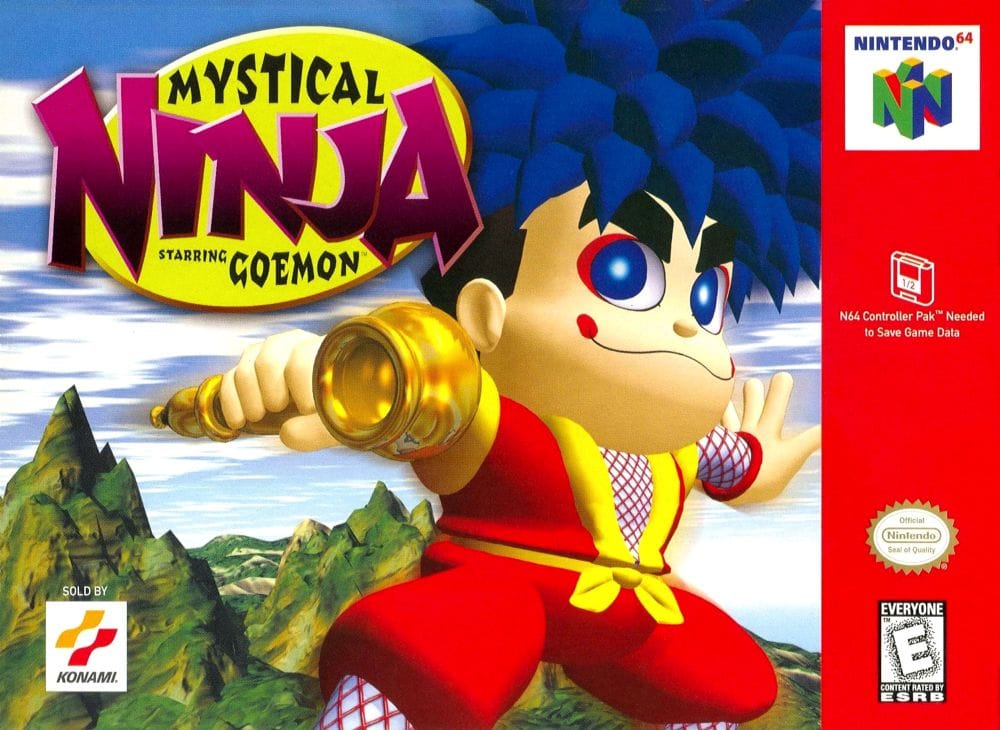
Mystical Ninja Starring Goemon
- Developer: Konami
- Release Date: April 16, 1998
Mystical Ninja Starring Goemon blends wide-open exploratory platforming with RPG-lite towns, creating a sense of scale that rivaled Ocarina of Time in its sheer ambition. The platforming is remarkably fluid, and the switchable character mechanic means you’re constantly swapping between Goemon’s pipe-swinging and Ebisumaru’s… let’s call them “unique” hula hoop attacks. Ever wondered what a musical comedy looks like in N64 cartridge form? The level design often feels like a love letter to Japanese folklore, complete with laugh tracks and breaking-the-fourth-wall humor that felt incredibly fresh.
Why It’s Worth Playing: Mystical Ninja Starring Goemon offers a sprawling adventure that feels like a precursor to the modern action-adventure genre. It’s a rare example of a game that successfully marries multiple genres while maintaining a tight, satisfying platforming core. If you want a journey that is equal parts hilarious, challenging, and utterly surreal, Goemon is waiting for you with a giant golden pipe in hand.
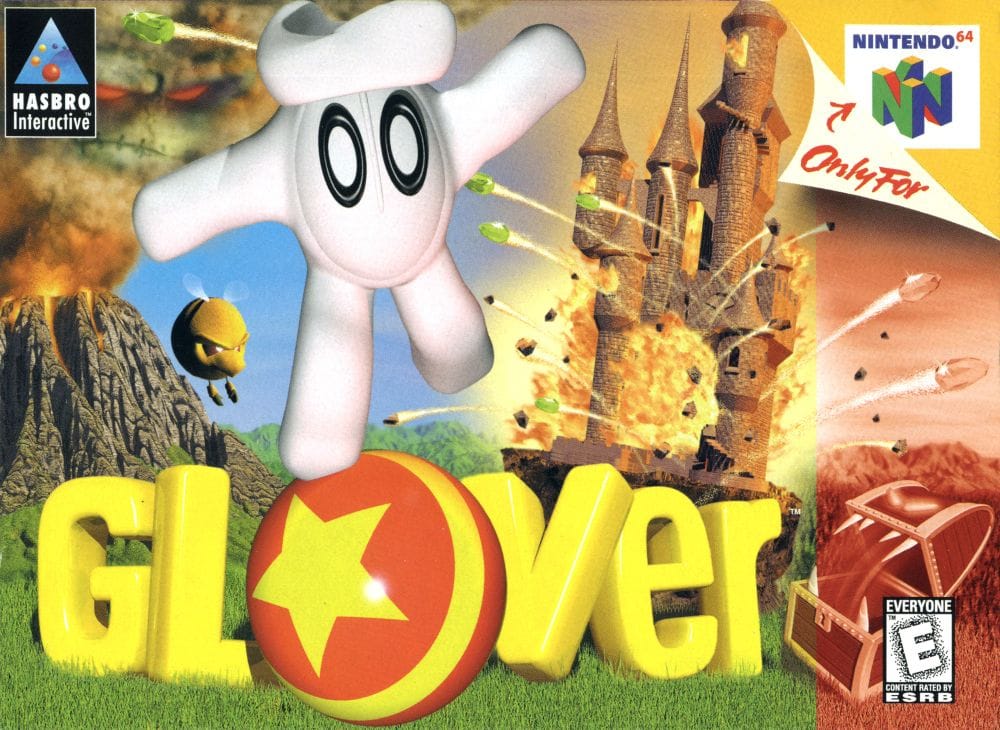
Glover
- Developer: Interactive Studios
- Release Date: October 31, 1998
Glover offers some of the most imaginative worlds on the N64, giving you an incredible amount of unique ways to solve environmental puzzles. Glover cast you as a four-fingered glove on a quest to recover seven lost crystals—which, for safety, he transforms into a bouncy rubber ball. The game allows you to transform the ball into lead, marble, or even a bowling ball to solve environmental puzzles. While the difficulty curve is notoriously steep—seriously, some of these levels feel like a personal attack—the unique tactile feedback makes every successful delivery feel earned.
Why It’s Worth Playing: Glover offers a physics-driven challenge that is fundamentally different from every other run and jump game of its era. It demands a level of focus and coordination that turns standard platforming into a tense, rewarding puzzle. If you want a game that tests your fine motor skills while throwing you into a bizarre, whimsical fever dream, Glover is the heavy hitter you’ve been looking for.
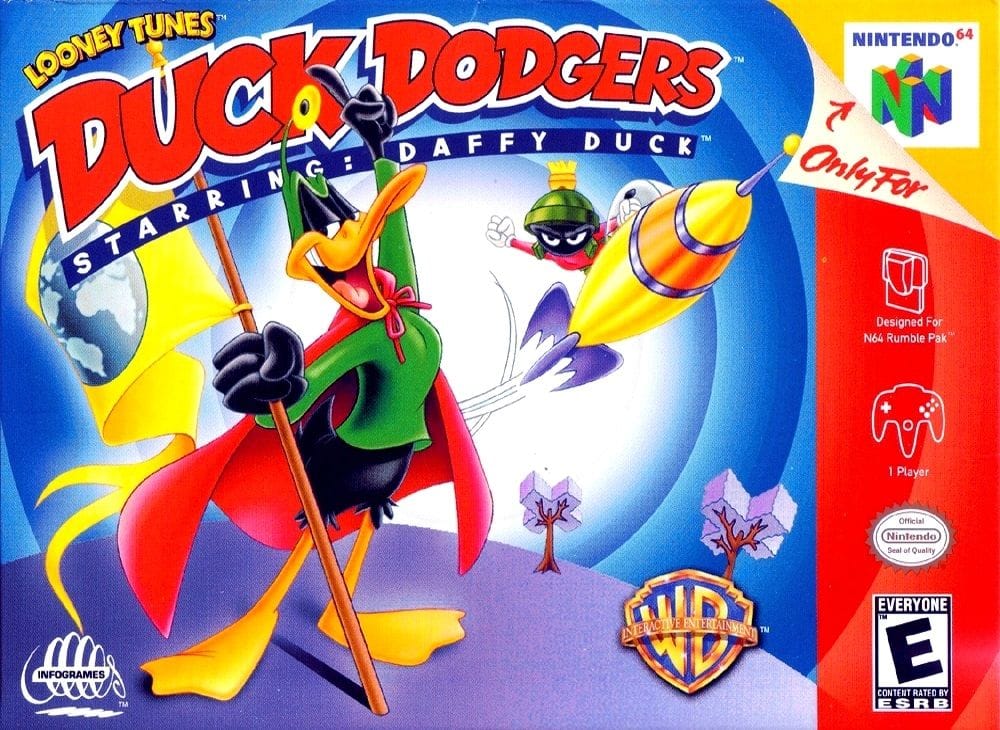
Daffy Duck starring as Duck Dodgers
- Developer: Paradigm Entertainment
- Release Date: January 6, 2000
Daffy Duck starring as Duck Dodgers is a love letter to the classic Chuck Jones cartoons, capturing the slapstick comedy of Looney Tunes with surprising fidelity. You step into the space boots of Duck Dodgers, navigating a series of planet-hopping levels, jetpacking through Martian outposts and dodging ACME-branded hazards that feel ripped straight from a Saturday morning broadcast. The voice clips and orchestral swells make it feel like an interactive episode, even if the camera occasionally has a mind of its own. It’s a bit of a hidden gem for those who crave a more narrative-driven mascot experience that doesn’t skimp on the difficulty.
Why It’s Worth Playing: Daffy Duck starring as Duck Dodgers is one of the few licensed games that actually understands its source material. The level of personality injected into every duck-walk and hover-jump makes it a joy to behold, even when the platforming gets legitimately tough. If you want a dose of nostalgic absurdity paired with some seriously clever boss fights, Duck Dodgers is ready to blast off.
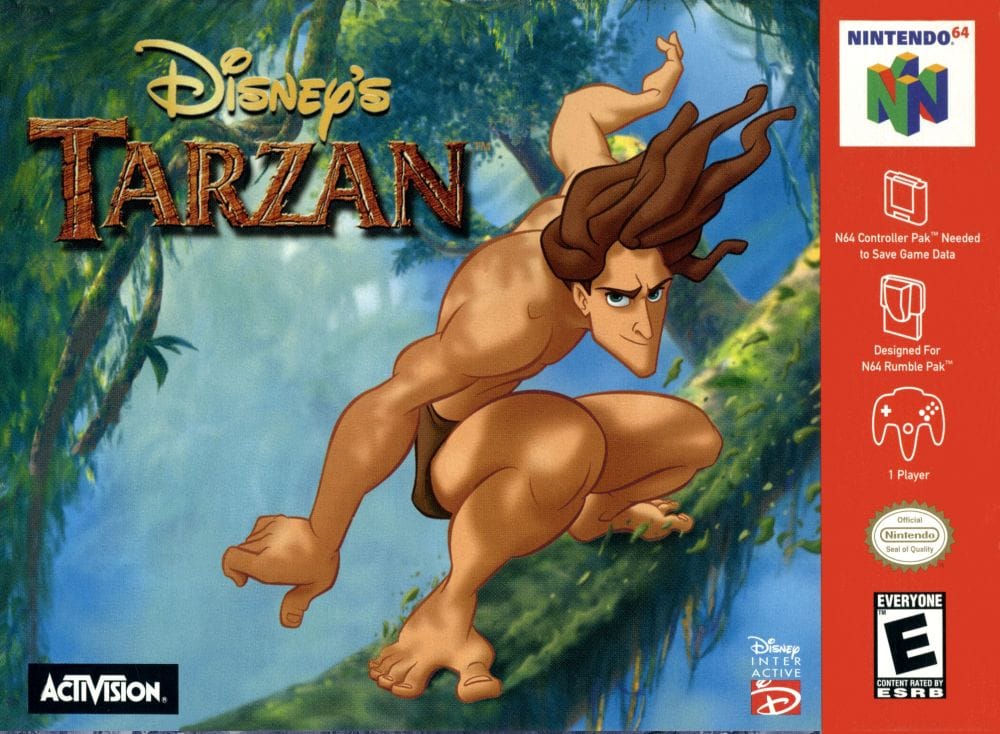
Disney’s Tarzan
- Developer: Eurocom
- Release Date: February 14, 2000
Disney’s Tarzan is a visual powerhouse that pushed the N64’s rendering capabilities to the limit, blending 3D environments with a locked 2.5D perspective that feels incredibly slick. You start as a tiny, loincloth-clad kid and eventually grow into the muscular King of the Jungle, with each stage introducing dynamic mechanics like tree-surfing and vine-swinging. The game uses vibrant, layered backgrounds to create an illusion of depth that makes the jungle feel alive and dense. The set pieces are genuinely thrilling, and the combat—utilizing various fruit as projectiles—is surprisingly satisfying.
Why It’s Worth Playing: Tarzan is a refreshing break from the often-clunky camera work of early 3D platformers. It takes a simple concept and executes it with such high production values and responsive controls that it puts many original IPs to shame. If you want a game that looks spectacular and plays with a frenetic, jungle-swinging pace, this Disney classic is a total win.
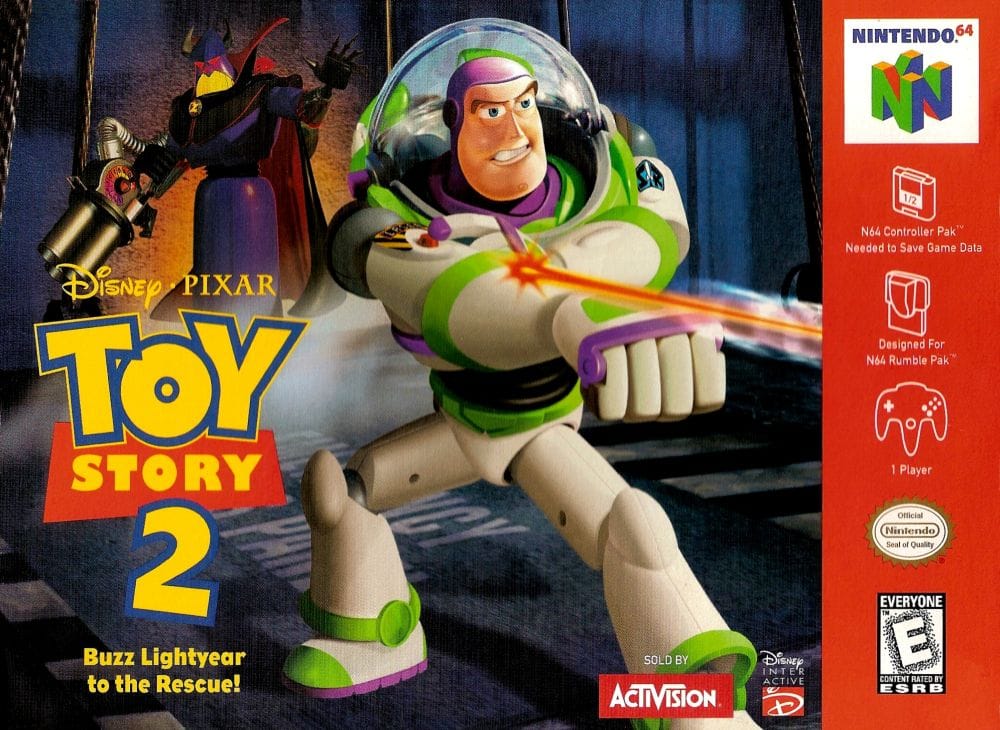
Toy Story 2: Buzz Lightyear to the Rescue
- Developer: Traveller’s Tales
- Release Date: November 30, 1999
Toy Story 2: Buzz Lightyear to the Rescue is a sprawling, open-ended collect-a-thon that rivals the best of Rareware. You take control of Buzz Lightyear across massive, open-ended levels ranging from Andy’s House to Al’s Toy Barn. Each stage is a giant playground where you hunt for Pizza Planet Tokens by completing boss fights, races, and navigation puzzles. The movement is surprisingly robust, giving Buzz a laser, a spin attack, and those iconic wings for hovering across treacherous gaps. The variety of objectives keeps the collect-a-thon fatigue at bay, and the soundtrack is a surprisingly catchy MIDI tribute to the film’s vibes.
Why It’s Worth Playing: Toy Story 2: Buzz Lightyear to the Rescue is arguably one of the best-designed licensed platformers of the fifth generation. The level variety is staggering, and the mission-based structure of each stage gives you a constant sense of accomplishment. If you want a game that offers a massive world to explore with responsive controls and a heavy dose of nostalgia, Buzz is ready to take you to infinity and beyond.
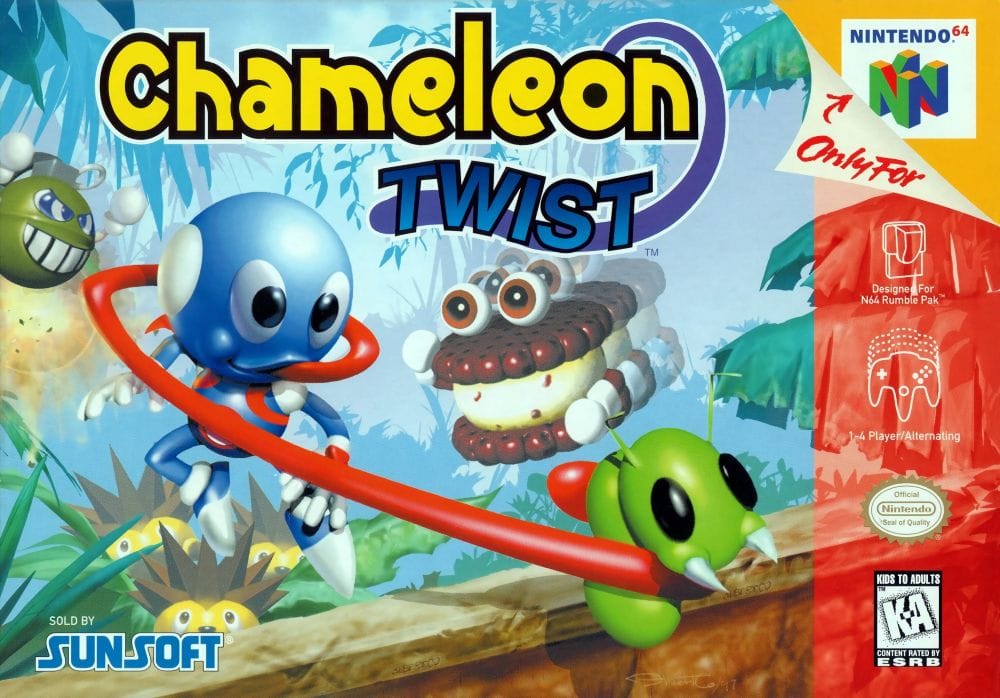
Chameleon Twist
- Developer: VICO
- Release Date: November 30, 1997
Chameleon Twist ditched the standard jump-and-bop mechanics for something way more experimental: a physics-based tongue that that defies the laws of physics. This game centers on Davy, a blue chameleon who uses his tongue to grapple onto poles, vault over massive pits, and swallow enemies whole like a reptilian Kirby. The boss fights are surprisingly inventive, requiring you to swallow enemies and spit them back at giant, polygonal monstrosities. Despite the occasional control quirk, the sheer novelty of the movement keeps you coming back.
Why It’s Worth Playing: Chameleon Twist offers a tactile movement system that you simply won't find in any other N64 title. It’s a quirky, colorful experiment that prioritizes how you move over where you’re going. If you want a platformer that feels like a refreshing palate cleanser between massive collect-a-thons, it’s time to give this tongue-lasher a go.
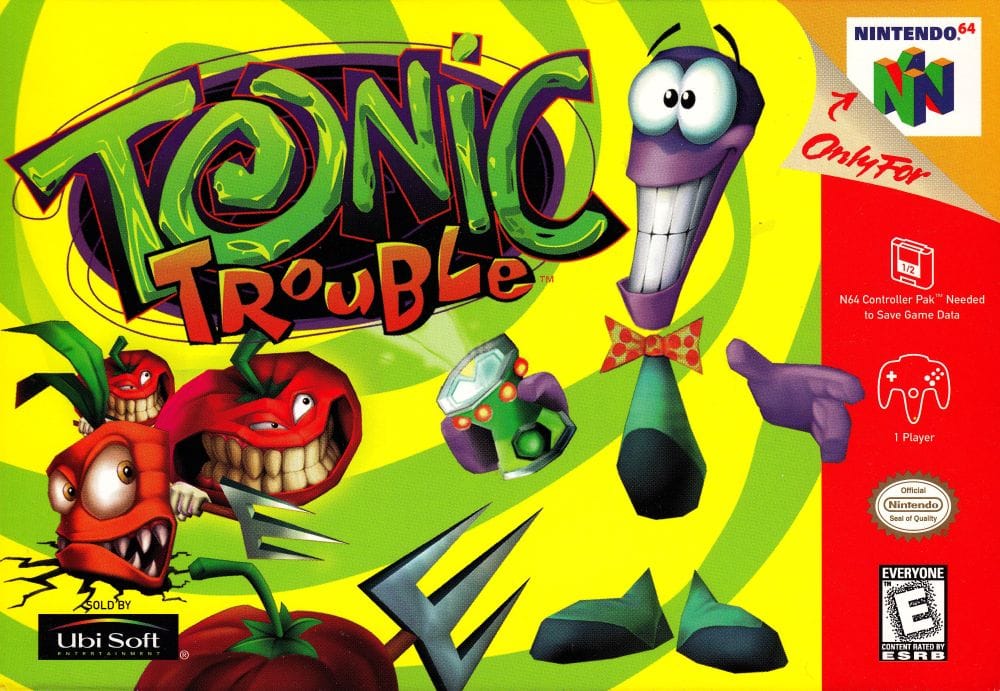
Tonic Trouble
- Developer: Ubisoft Montpellier
- Release Date: August 31, 1999
Tonic Trouble serves as the spiritual and technical precursor to Rayman 2, utilizing an early version of the same engine to create environments that feel remarkably fluid for the N64. You control Ed as he hops through a world filled with angry vegetables and Viking-themed obstacles, all while trying to clean up his literal mess. The platforming is floaty but functional, often requiring you to use Ed’s pogo ability or glide through the air using his bowtie. The humor is weird, the art style is grotesque-adjacent, and the level design is surprisingly vertical.
Why It’s Worth Playing: Tonic Trouble is the evolution of 3D platforming mechanics in real-time. It’s a fascinating look at the creative risks Ubisoft took before they refined the formula into a global masterpiece. If you’re a fan of Ubisoft’s history or just want to explore a world that feels like it was designed by someone who ate too much sugar, Ed’s adventure is a trippy must-play.
Donald Duck: Goin’ Quackers
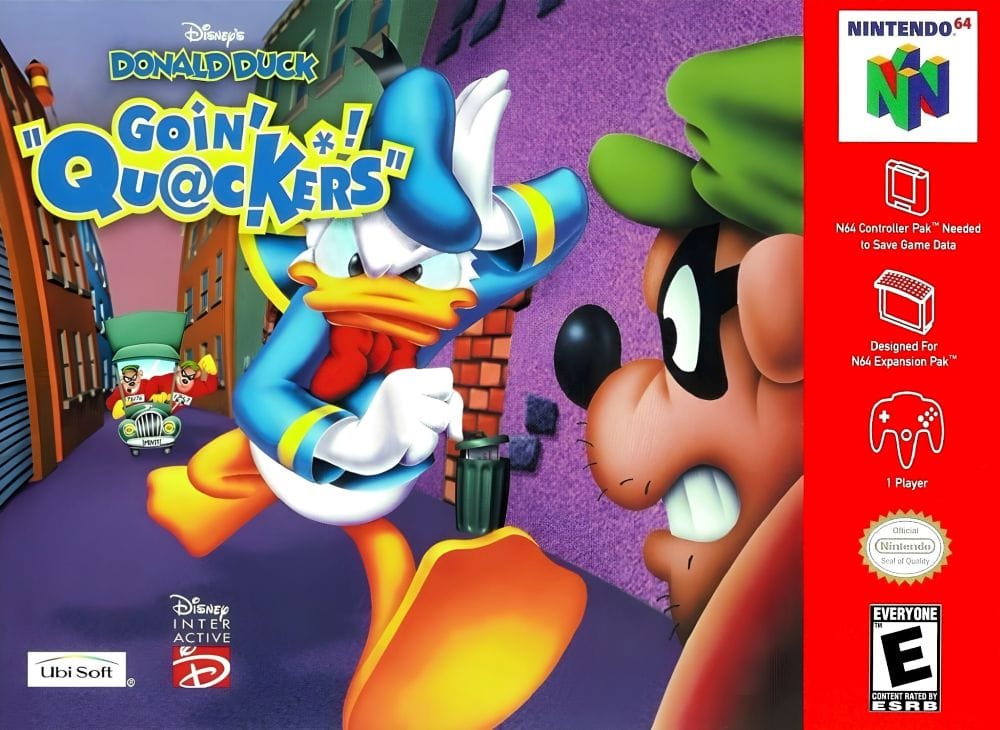
- Developer: Ubisoft Casablanca
- Release Date: December 20, 2000
Donald Duck: Goin’ Quackers is Disney’s answer to Crash Bandicoot, featuring tight, linear paths that swap between side-scrolling and into-the-screen perspectives. You play as a perpetually frustrated Donald Duck, racing through dimensions to rescue Daisy. The animations are bouncy, and Donald’s various moods actually affect how he moves. If you take a hit, he goes into a hilarious, steam-out-the-ears temper tantrum that makes him invincible for a short burst. It’s a shorter experience than your average Rareware epic, but it’s packed with meticulous detail and variety.
Why It’s Worth Playing: Donald Duck: Goin’ Quackers is a refined, high-energy alternative to the slower-paced collect-a-thons of the era. It doesn't ask you to find 500 hidden trinkets; it just asks you to run, jump, and survive a series of beautifully rendered environments. If you want a platformer that you can pick up, play, and actually finish in a weekend while laughing at a duck’s misfortune, this is a top-tier choice.
Taz Express
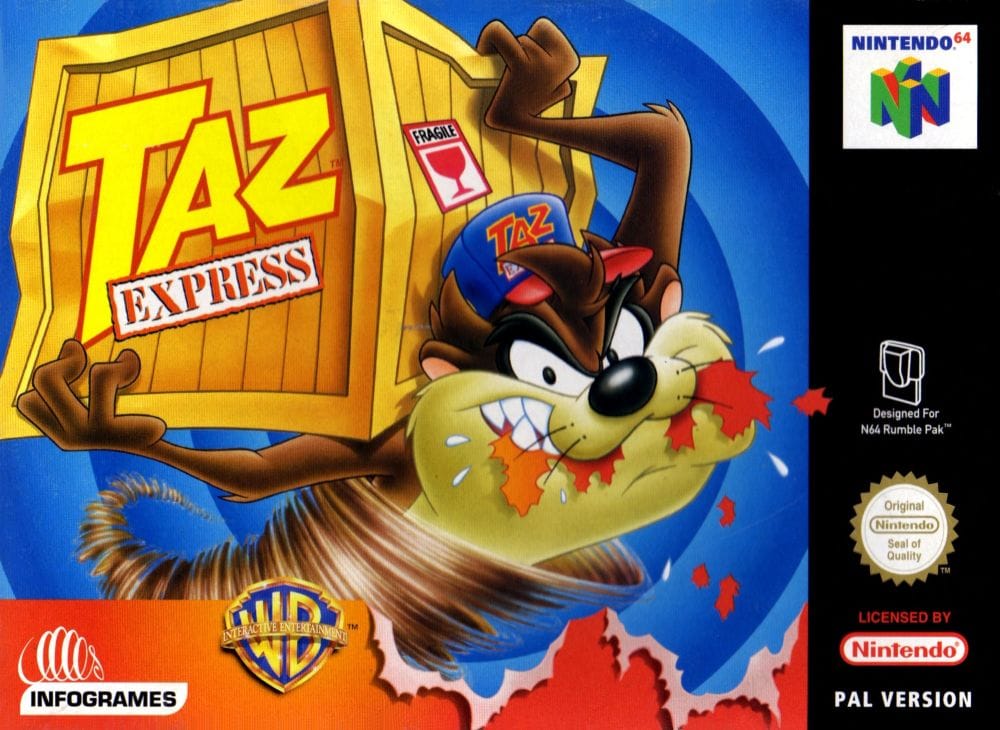
- Developer: Zed Two
- Release Date: August 4, 2000
Taz Express puts a unique spin on the platforming genre by turning the Tasmanian Devil into a high-stakes delivery boy. Instead of just spinning mindlessly through everything in sight, you have to carefully balance crates on your head while navigating treacherous terrain. You have to manage Taz’s momentum perfectly; if you spin too fast, your precious cargo goes flying into a canyon, forcing a frustrating backtrack. The visuals are surprisingly sharp for the N64, utilizing a clean, bright style that holds up better than many of its grainier contemporaries.
Why It’s Worth Playing: Taz Express represents a bold mechanical departure from the mascot platformer norm. It trades mindless combat for weight-based environmental puzzles that require genuine thought and steady thumbs. If you’re a completionist looking for the lost chapters of the N64 library, this European exclusive is a fascinating curiosity that deserves a spot in your collection.
A Bug’s Life
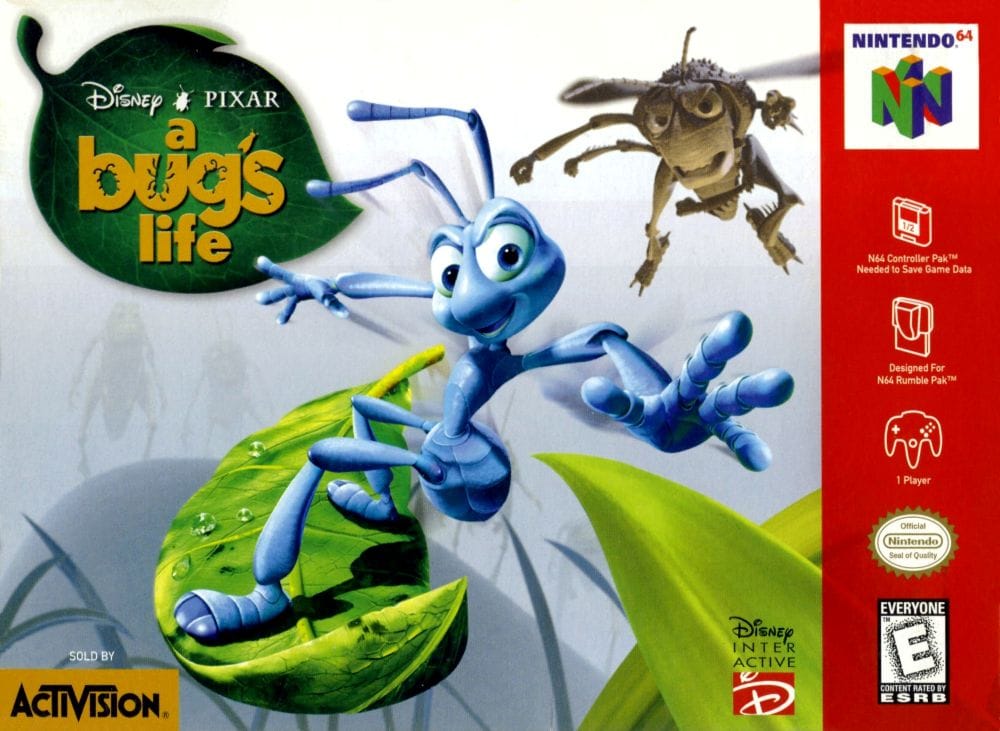
- Developer: Traveller’s Tales
- Release Date: April 30, 1999
Traveller’s Tales—the same busy bees behind the Toy Story 2 game—crafted A Bug’s Life, a surprisingly dense platform-puzzler that forces you to think small to win big. You play as Flik, and instead of just double-jumping your way to victory, you have to harvest and hop on various colored seeds to grow mushrooms for height or leafy platforms for distance. You aren’t just running from point A to point B; you’re cultivating different types of seeds to grow mushrooms for bouncing or dandelions for gliding. The game captures the Pixar aesthetic remarkably well for the late 90s, featuring vibrant, organic levels that feel alive with insect activity.
Why It’s Worth Playing: A Bug's Life is a charming, well-paced adventure that manages to make a massive world feel accessible and fun. The seed-growing mechanics keeps the gameplay from feeling repetitive, and it rewards players who take the time to experiment with the environment. If you want a platformer with some clever, growth-based puzzles, this ant-sized odyssey is a total blast.
Earthworm Jim 3D
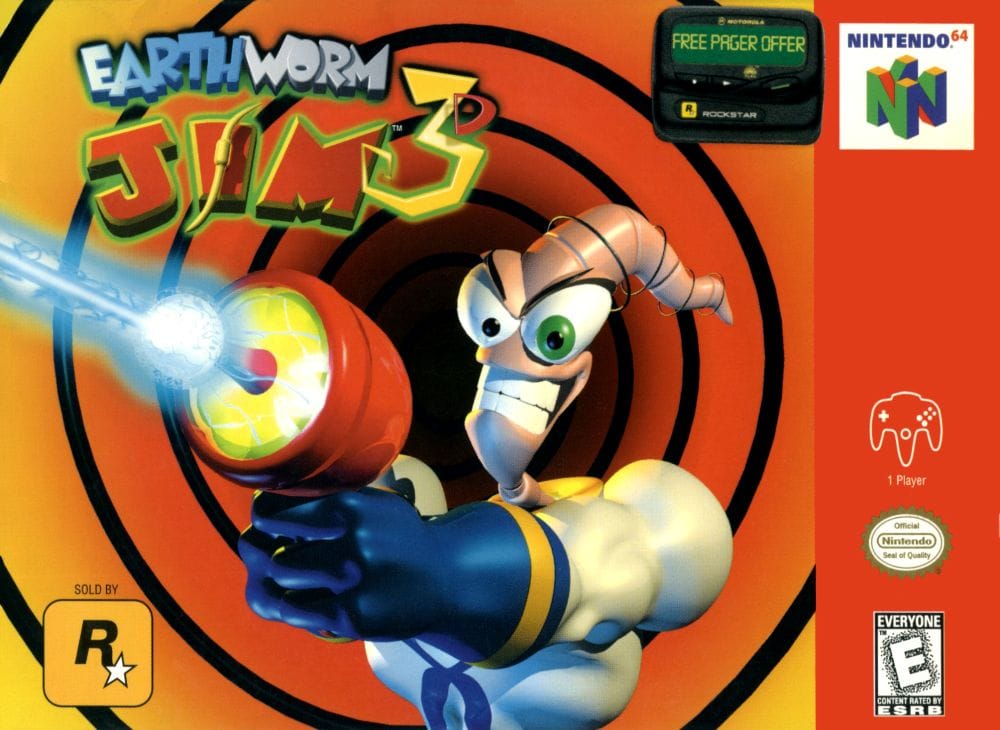
- Developer: VIS Entertainment
- Release Date: October 31, 1999
Earthworm Jim 3D is a literal mind-bending platformer that doubles down on the absurdist humor that made the 16-bit originals legendary. Set inside Jim’s own fractured subconscious after he’s knocked unconscious by a flying cow (classic Jim, right?), you have to navigate the surreal landscapes of his “Brain” to recover his lost sanity and marbles. You’ll spend a lot of time blasting enemies with your blaster and using Jim’s head as a helicopter to reach high-altitude secrets. while the camera occasionally behaves like it’s had one too many espressos, the surrealist humor is still very much intact.
Why It’s Worth Playing: Earthworm Jim 3D is a unique platformer that refuses to play by the rules. While it might not be as tight as Mario 64, its sheer commitment to being weird and hilarious makes it stand out in a sea of generic mascots. If you want a platformer that values creativity and gross-out humor above all else, Jim’s 64-bit brain-heist is a trip worth taking.
Chameleon Twist 2
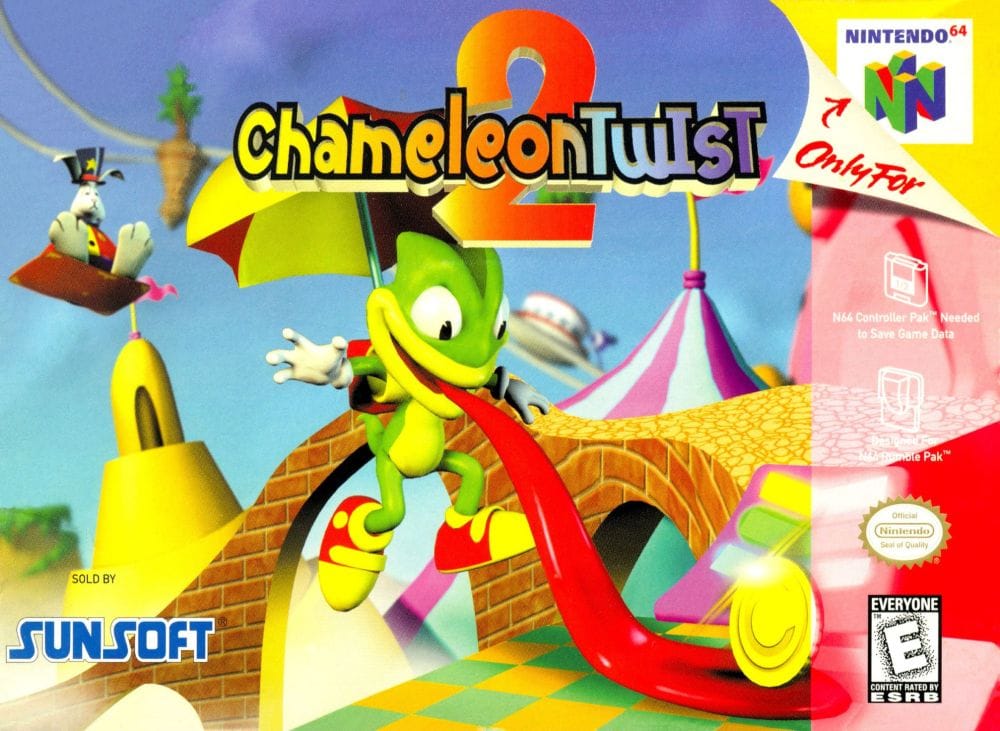
- Developer: Japan System Supply
- Release Date: December 25, 1998
Chameleon Twist 2 takes the tongue-as-a-tool mechanic and polishes it to a mirror shine, giving our reptilian heroes a stylish makeover and much more fluid physics. The environments swap out the generic themes of the first game for surreal, vertical playgrounds like a giant toy box and a sky-high carnival that really test your fear of heights. You’ll spend your time swinging around poles, paragliding with your tongue, and navigating giant toy-filled sky-castles that look like they were pulled from a high-end Japanese toy catalog. The challenge is real, but the tactile satisfaction of a perfect tongue-vault is unmatched on the system.
Why It’s Worth Playing: Chameleon Twist 2 is a rare example of a sequel taking a gimmick and evolving it into a deep, rewarding system. It fixes many of the camera frustrations of the original and replaces them with clever, physics-based puzzles that actually feel intentional. If you want a platformer that rewards spatial awareness and technical skill with a heavy dose of Japanese charm, this is the definitive chameleon experience.
Doraemon: Nobita to Mittsu no Seireiseki
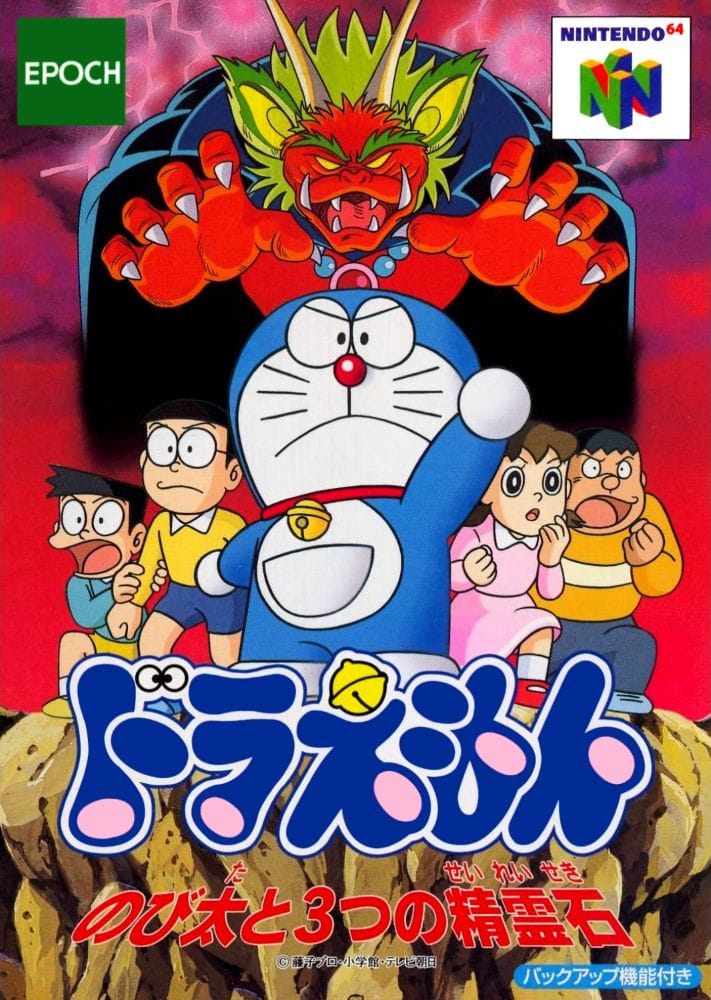
- Developer: Epoch
- Release Date: March 21, 1997
One of the earliest 3D platformers on the system, Doraemon: Nobita to Mittsu no Seireiseki is a bright, cheery, and surprisingly competent 3D adventure that holds its own against some of the heavy hitters. You swap between Nobita and his gang of friends, using Doraemon’s iconic futuristic gadgets—like the Hopter for flight or the Air Cannon for blasting enemies—to navigate sprawling, colorful worlds. The game structure is surprisingly modern, and the level design is so intuitive that you barely need to read the dialogue to know that a giant floating platform is meant to be hopped on.
Why It’s Worth Playing: Doraemon: Nobita to Mittsu no Seireiseki is a delightful hidden gem that captures the whimsical heart of the source material. It’s a breezy, low-stress platformer that focuses on charming visuals and solid, predictable mechanics. If you’re looking to expand your N64 horizons beyond the usual suspects and want a hit of whimsical nostalgia, this import title is a fantastic place to start.
Rugrats in Paris: The Movie
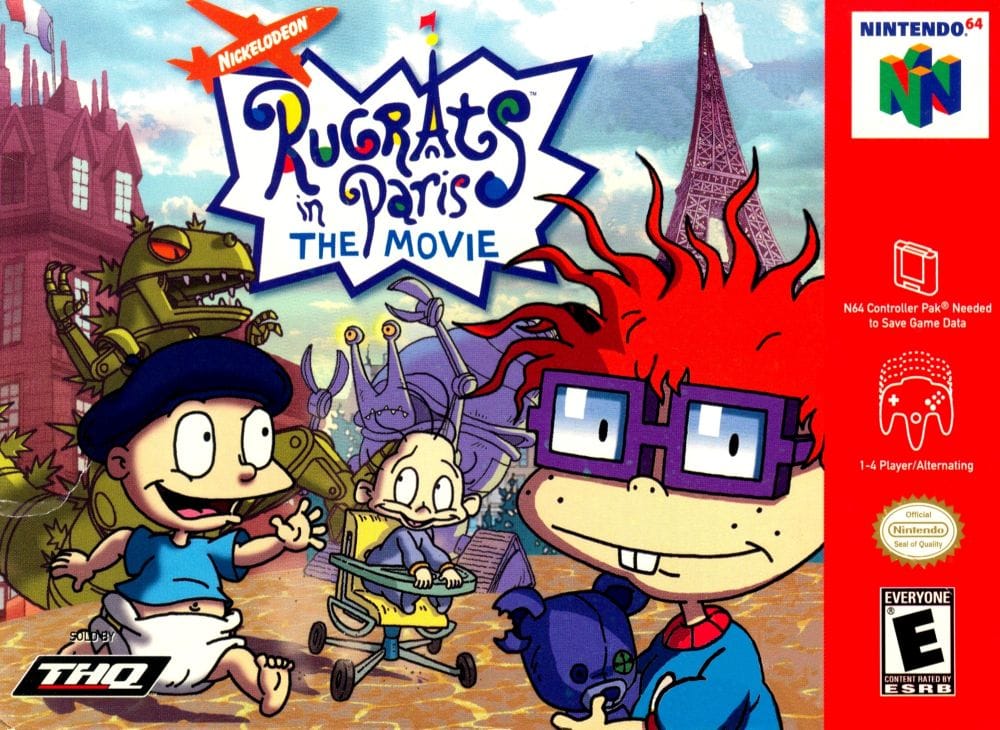
- Developer: Avalanche Software
- Release Date: November 7, 2000
Rugrats in Paris: The Movie takes the beloved Nickelodeon crew and drops them into a giant theme park, blending exploration with a collection of mini-games that range from bumper cars to high-speed slides. You aren’t just wandering around; you’re collecting tickets to unlock new areas and participating in everything from bumper cars to rhythm games. The platforming is simple, sure, but the environmental variety—from the sewers of Paris to the heights of a giant robot Reptar—keeps things moving at a clip.
Why It’s Worth Playing: Rugrats in Paris is a variety-packed nostalgia trip that perfectly captures the bigger is better energy of the second Rugrats film. It manages to avoid the boredom of repetitive platforming by constantly throwing new mini-games and environmental interactions at you. If you want a game that’s easy to pick up, full of character, and offers a delightfully low-stakes adventure through a giant robot-themed park, the Rugrats have you covered.
Doraemon 3: Nobita no Machi SOS!
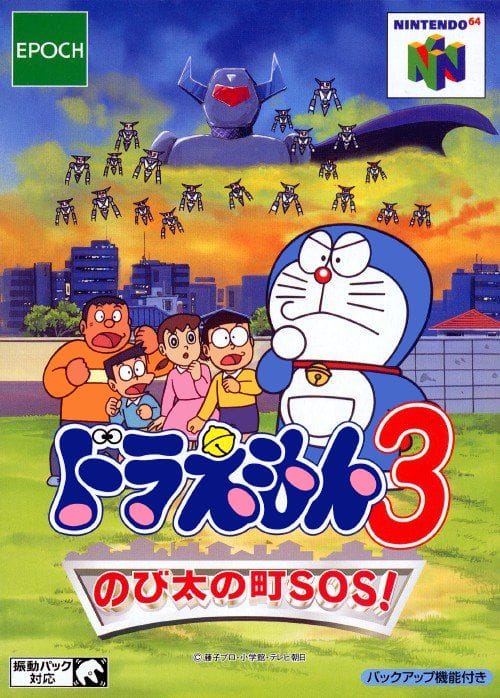
- Developer: Epoch
- Release Date: July 28, 2000
Doraemon 3: Nobita no Machi SOS! represents the absolute peak of the series featuring much more expansive 3D environments and full-blown alien invasion plot. Unlike the earlier games, this one leans into a pseudo-open-world structure, letting you roam through a 3D-rendered Nerima to complete missions and stop the mechanical takeover. The game actually encourages you to experiment with Doraemon’s four-dimensional pocket, allowing you to tackle platforming challenges with air cannons, copter-hats, and even time-manipulating tools. The graphics here are some of the cleanest on the system, benefiting from the late-lifecycle optimization that only a year-2000 release can offer.
Why It’s Worth Playing: Doraemon 3: Nobita no Machi SOS! is the ultimate evolution of the series on the N64. It ditches the linear constraints of the earlier games for a more ambitious, gadget-filled adventure that rewards exploration and curiosity. If you want to see how a kids' game can actually be a technical powerhouse with tons of heart, this SOS call is one you definitely need to answer.
Frequently Asked Questions (FAQ)
Was Banjo-Kazooie always going to be a Bear and a Bird?
Actually, no. Banjo-Kazooie started as an SNES project called Project Dream. The main character was a human boy named Edison who fought pirates with a wooden sword. As the game moved to the N64, the developers felt a human character wasn’t “distinct” enough, leading to the creation of the iconic duo.
Why is Donkey Kong 64 famous for its hardware requirements?
Donkey Kong 64 was the first game to require the N64 Expansion Pak (the 4MB RAM upgrade). Rare famously admitted they didn’t include the Pak for better graphics—they included it because the game had a “game-breaking bug” that caused it to crash randomly, and adding more RAM was the only way they could find to stop the crashing before the ship date!
Which game features a hidden 2nd player mode?
While many think Rayman 2 is strictly single-player, the N64 version has a secret. By collecting enough Yellow Lums, you can unlock a 2-player mini-game called “Ly’s Challenges,” which is a fast-paced race against a friend.
What is the forbidden move in Mischief Makers?
In Mischief Makers, the protagonist Marina can perform a Slide-Jump that allows her to bypass massive sections of levels. It wasn’t an intended feature by the developers at Treasure, but it became the standard way for speedrunners to play the game.
Is there an impossible collectible on this list?
Yes. In Space Station Silicon Valley, there is a famous glitch involving a souvenir trophy in the Desert level. On the original N64 cartridge, it is physically impossible to collect, meaning you can never actually reach a 100% completion rating without using cheat codes.
Final Thoughts
Looking back at these 30 N64 platformers, it’s clear that the Nintendo 64 was a pioneer in 3D game design. We’ve seen everything from the high-budget polish of Super Mario 64 to the quirky, physics-driven innovation of Rocket: Robot on Wheels. This era wasn’t just about moving characters from left to right; it was about defining how we interact with gravity, momentum, and 360-degree space.
These games took risks that modern AAA gaming sometimes shies away from, giving us a library filled with distinct vibes. These 30 N64 platformers prove that even with technical limitations, a strong creative hook and a bit of 90s weirdness can create a masterpiece that stands the test of time. Whether you are a veteran or a curious newcomer, there has never been a better time to dive back into these iconic games.

At HyperComboGamer, we believe great games deserve great coverage. That means no filler, no clickbait, or fanboyism—just honest, high-quality reviews, features, and guides that put gamers first. Whether you’re a lifelong enthusiast or just starting your gaming journey, you’ll find interesting gaming perspectives that will leave you fully satisfied.