Key Takeaways
| Pros | Cons |
| Pioneering Visuals: Still looks vibrant and cartoony even by today’s standards. | Stiff Controls: Crash moves with a tank-like weight that can feel clunky. |
| Iconic Soundtrack: Josh Mancell’s score is an absolute earworm factory. | Brutal Difficulty: Levels like “The High Road” are genuinely soul-crushing. |
| Pure Personality: Vertex animation gives Crash more soul than most 32-bit heroes. | Flawed Save System: You can only save during specific bonus rounds (annoying!). |
| Varied Gameplay: Seamlessly switches between 3D, 2D, and “chase” perspectives. | Unforgiving Physics: Depth perception and hitbox issues lead to many “cheap” deaths. |
| History in a Disc: Represents the birth of Sony’s first true mascot. | Box Completion Stress: Missing one hidden crate means no Gem for you. |
When the PlayStation arrived in 1994, it completely upended the status quo. It brought a certain swag and maturity that the gaming industry desperately craved. Yet, despite the sleek hardware and “U R Not (e)” marketing, Sony missed one vital ingredient: a mascot. Mario and Sonic dominated the landscape, leaving Sony looking like the odd man out.
These failures left a massive opening for a small developer called Naughty Dog. But with zero experience in the genre, could this underdog team actually out-jump the upcoming Super Mario 64? In this review, you will find out whether the orange fuzzball Crash Bandicoot still holds up decades later.
Sony’s Early Attempts With Mascots


Before Crash arrived, SCEA (Sony Computer Entertainment America) pushed a jagged, purple, floating head known as Polygon Man. The idea was to showcase the “transformative” power of 3D graphics, but he looked more like a rejected villain from a low-budget CGI flick than a friendly brand ambassador.
The design was so divisive that when Ken Kutaragi—the legendary “Father of PlayStation”—first saw it at E3, he reportedly went ballistic. Kutaragi hated that it didn’t represent the true potential of the hardware’s sleek, sophisticated architecture. Needless to say, Polygon Man was swiftly escorted to the digital scrapheap.
Sony also toyed with using Sofia, the blonde, whip-wielding fighter from Battle Arena Toshinden, as a potential face for the brand. While the game was a technical marvel for the time, the marketing team took things in a bizarre direction.
They ran a series of weird, suggestive advertisements that were supposed to be “edgy” and “adult.” In reality, they were a massive turnoff for parents who were looking for a reason to buy their kids a PlayStation instead of a Nintendo 64. It was a total identity crisis: Sony wanted to be the cool older brother, but they hadn’t yet figured out how to do that without being creepy.
The Birth of Crash Bandicoot

When the mascot search hit a wall, two guys named Andy Gavin and Jason Rubin decided to take a crack at it. Their studio, Naughty Dog, wasn’t exactly a household name yet, but they had a vision for something the PlayStation lacked: a character with a “silent film” level of expressiveness.
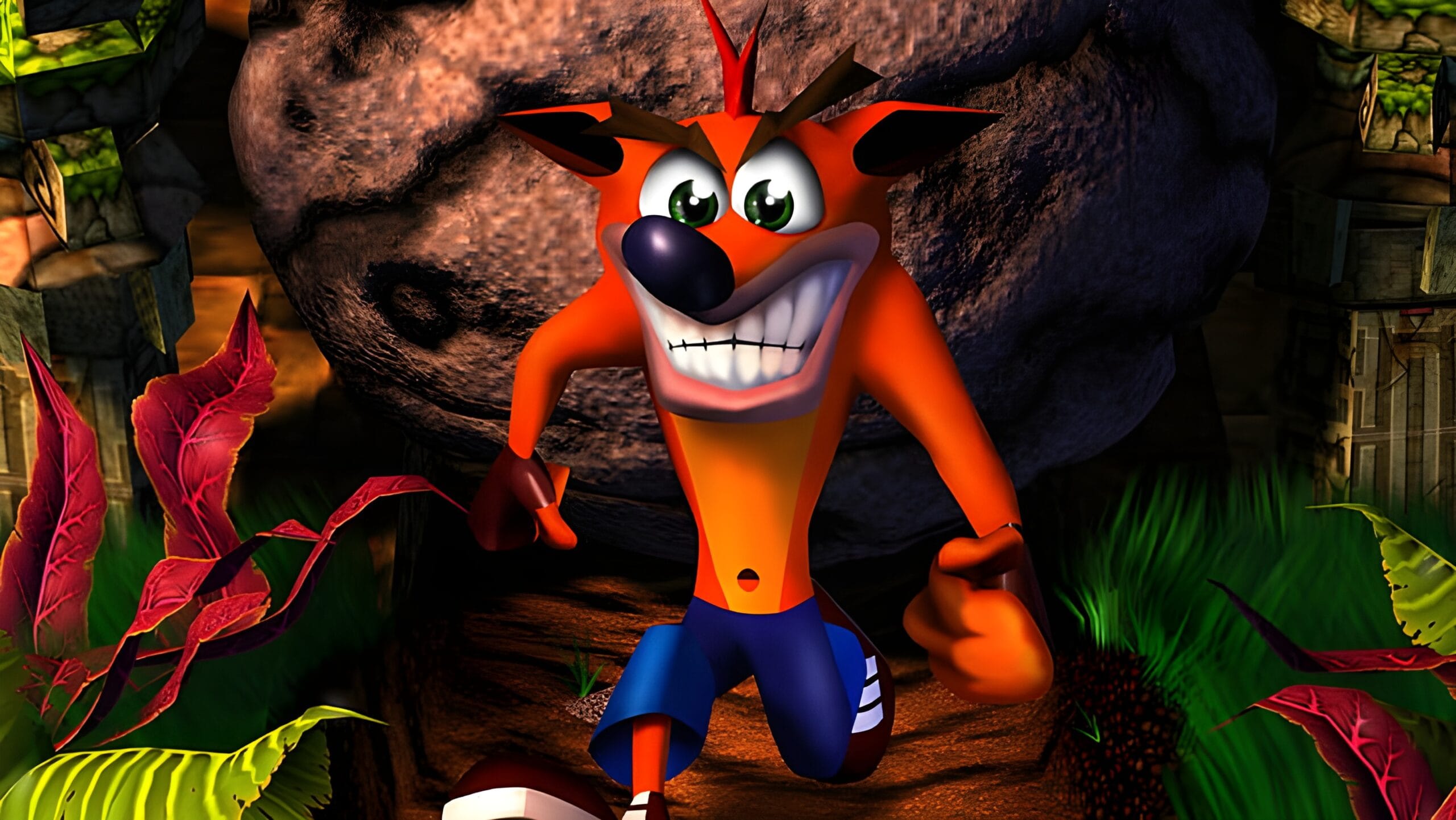
They wanted a hero that felt like a living, breathing cartoon, not just a collection of stiff triangles. To do this, they looked toward the frantic energy of Taz the Tasmanian Devil and the attitude of Sonic the Hedgehog. After a bit of research into quirky Australian fauna, they ditched the idea of a “Willy the Wombat” and settled on Crash Bandicoot.
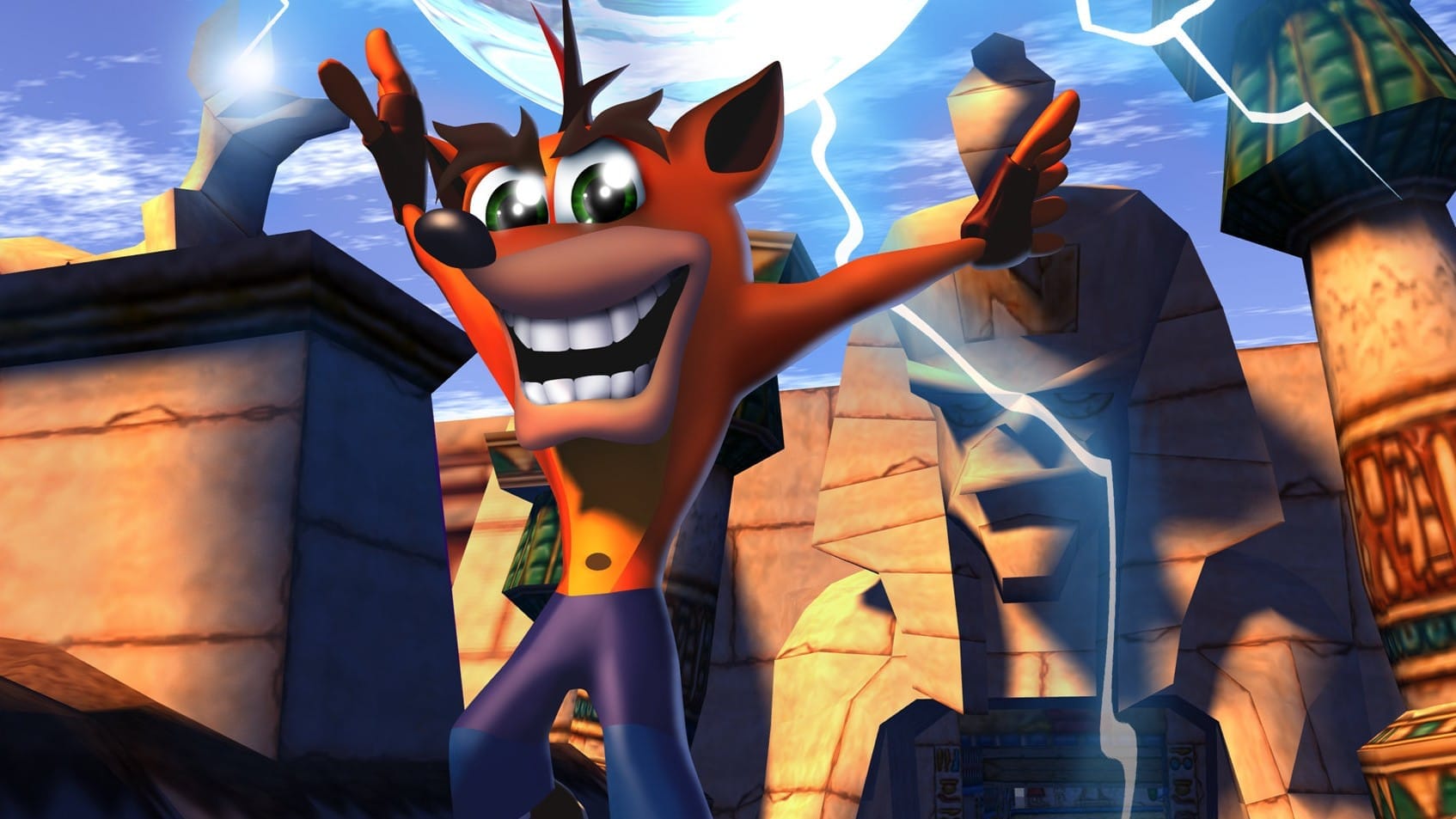
Naughty Dog didn’t just want a character who could jump; they wanted a character who could emote. They hired artist Charles Zembillas to flesh out the design, ensuring the character had a range of “squash and stretch” capabilities. This wasn’t just for show—it was a strategic move to make the player actually care when he fell into a pit or got blown up by a TNT crate.
Making a game in the mid-90s was basically a digital exercise in “making do with nothing.” While modern characters use millions of polygons, Naughty Dog had to build a legend with just 512 polygons. Think about that—your average modern video game tree probably has more processing power dedicated to a single leaf than Crash had for his entire body.
Naughty Dog’s final game model was a masterclass in efficiency. They didn’t just throw shapes together; they meticulously placed every single one to ensure Crash looked smooth and expressive. To keep the frame rate from chugging, they even ditched traditional textures on his body in favor of shaded polygons, giving him that clean, high-end look that stood out from the pixelated mess of other early 3D titles.
How do you make a bunch of rigid triangles look like a bouncy Looney Tunes character? The secret sauce was vertex animation. Most developers at the time used “skeletal animation,” which made characters look stiff and robotic. Naughty Dog took a different path, manually animating the individual points (vertices) of Crash’s model. This level of detail is why Crash had more personality in his pinky finger than most 32-bit heroes had in their entire bodies.
Fun Fact: Did you ever wonder why Crash is so aggressively orange? Back in the day, most of us were playing on bulky CRT televisions that had a nasty habit of "bleeding" colors. If Naughty Dog had stuck with their original idea of making Crash red, he would have turned into a blurry, vibrating smudge on the screen. It was a brilliant bit of technical problem-solving that accidentally created one of the most iconic color palettes in gaming history.
Story Overview

The narrative of Crash Bandicoot feels like a Saturday morning cartoon piped directly into your gray console. It all kicks off with Dr. Neo Cortex, a mad scientist with a serious Napoleon complex and a head shaped like a literal “N.” Cortex isn’t just content with being a genius; he wants a brainwashed super-animal army to do his bidding.
To achieve this, he develops the Evolvo-Ray, a machine designed to accelerate evolution and turn docile island creatures into bipedal henchmen. Our hero, Crash, and his girlfriend, Tawna, end up as the ultimate guinea pigs for this twisted experiment.
Crash actually becomes the first success story of the ray, transforming into a buff, upright marsupial. However, the “brainwashing” part of the process hits a major snag: Crash is way too goofy and free-spirited to take orders from a megalomaniac. Cortex deems Crash a failure and tosses him out of a window, which leads to him waking up on N. Sanity Island, remarkably alive but separated from Tawna.
You now have to trek across three entire islands to storm Cortex’s castle and get her back. It’s a classic “damsel in distress” setup, but the stakes feel personal because of how much personality Naughty Dog crammed into Crash. Watching him spin, dance, and occasionally get flattened by a boulder makes the journey feel more like an interactive animation than a dry list of objectives.
Gameplay

At its core, Crash Bandicoot is a standard 3D platformer with a destructive twist. Your main goal isn’t just to reach the finish line; it’s to smash every single crate in the level. It sounds simple enough, right? Wrong.
Naughty Dog turned box-breaking into a high-stakes obsession. Each level hides these wooden cubes in increasingly devious spots—tucked behind scenery, floating over bottomless pits, or stacked in precarious towers. Missing just one box at the end of a ten-minute gauntlet is enough to make anyone want to chew on their controller.
The path to Cortex is crawling with literal and figurative headaches. You’ll deal with local wildlife like aggressive crabs and turtles, plus hostile tribesmen who aren’t too thrilled about a spin-attacking marsupial invading their space. One thing I love? I never struggled to figure out how to beat an enemy. If it has spikes, don’t jump on it; if it’s spinning, don’t touch it. But the real challenge isn’t the enemies—it’s the platforming.
Level Design

One of the standout features of Crash Bandicoot is the incredible variety packed into its three-island journey. Naughty Dog didn’t just stick to a single perspective; they constantly flipped the script to keep your adrenaline spiking. One minute you’re platforming across bobbing lilypads in a tranquil creek, and the next, you’re scaling the mossy, trap-filled walls of an ancient temple.
The game is famous for its cinematic set pieces that felt groundbreaking for 1996. The Boulder Dash levels are a perfect example—instead of running into the screen, the camera flips to show Crash sprinting toward you as a massive Indiana Jones-style rock threatens to turn him into a marsupial pancake. It’s stressful, exhilarating, and perfectly captures that playable cartoon vibe the developers were chasing.
Just when you think you’ve mastered the art of the spin, the game throws you onto the back of a runaway hog. These high-speed levels remove your ability to stop, forcing you to navigate obstacles, leap over tribesmen, and dodge spit-roasts in a split-second test of twitch reflexes.
While the early levels feel like a tropical vacation, the game eventually takes the gloves off in the later stages, which requires a level of self-control and patience that most of us definitely lacked as kids. The Slippery Climb and temple levels introduce moving platforms and timing-based traps that leave zero room for error. You’ll find yourself holding your breath during every jump, praying that Crash’s shadow lines up perfectly with the ledge.
If there is a specific circle of hell reserved for 90s gamers, it’s definitely paved with the rotting wooden planks of Road to Nowhere and The High Road. These levels are legendary for all the wrong reasons. You aren’t just fighting Dr. Cortex here; you’re fighting the PS1’s limited draw distance and a physics engine that feels like it’s actively rooting for your demise.
The perspective is the real killer. Because the camera sits behind Crash, judging the depth of a jump onto a tiny, vibrating plank is more guesswork than science. One pixel too far to the left and you’re plummeting into the white abyss. It’s the kind of unforgiving gameplay that makes you question your life choices and the structural integrity of your controller.
When the platforming becomes too much to bear, most players resort to the infamous rope glitch. By jumping onto the thin support ropes on the side of the bridge, you can bypass the crumbling planks entirely. It’s a literal tightrope walk that highlights Naughty Dog’s early struggles with 3D boundaries.
Graphics & Sound

While the PS1 was often a breeding ground for muddy textures and jittery polygons, Crash Bandicoot stands out like a neon sign in a dark alley. Naughty Dog did an excellent job optimizing the hardware, creating a world that feels remarkably cohesive even decades later. Even if you aren’t using fancy emulation upscaling, the cartoony character designs and lush environments have aged like a fine wine (or a perfectly ripe Wumpa fruit).
I absolutely love how the team managed to convey Crash’s wacky and eccentric personality within the tight constraints of 1996 tech. Whether he’s doing a victory dance or looking genuinely terrified of a giant boulder, the personality shines through every frame. It’s a visual time capsule that proves style and art direction will always trump raw horsepower.
You can’t talk about the vibe of this game without mentioning the music. Composed by Josh Mancell, the soundtrack is an absolute earworm factory that sounds exactly like the cartoons you grew up watching on a Saturday morning. It captures that specific whimsical and tropical vibe that makes each level feel like its own distinct neighborhood in the jungle.
Final Verdict

Crash Bandicoot was Naughty Dog’s first attempt at a platformer, and the cracks definitely show. The controls can occasionally feel like you’re steering a tank through a minefield, and the difficulty spikes are brutal enough to test anybody’s patience. However, you can’t deny the massive impact this orange marsupial had on the PlayStation’s legacy.
After a string of failed attempts with floating heads and fighting game stars, Crash finally gave Sony the identity it desperately needed. Those iconic guy in a suit ads and the pure charm of the game cemented him as the first true mascot for the platform. While the game shows its age in the physics department, it remains a fun, essential experience for anyone who loves old-school 3D platforming.
Verdict
Crash Bandicoot
Good

At HyperComboGamer, we believe great games deserve great coverage. That means no filler, no clickbait, or fanboyism—just honest, high-quality reviews, features, and guides that put gamers first. Whether you’re a lifelong enthusiast or just starting your gaming journey, you’ll find interesting gaming perspectives that will leave you fully satisfied.