Key Takeaways
| Pros | Cons |
| Incredible Aesthetics: A gorgeous, tactile hand-made art style that still looks fantastic today. | Server Shutdown: Official online servers are dead, making level sharing a manual, DIY process via USB. |
| Masterful Physics: A robust, physics-driven engine that makes every jump and grab feel uniquely weighted. | Floaty Controls: The loose jumping mechanics can feel imprecise to players used to snappier platformers. |
| Endless Creativity: The Moon mode offers some of the most powerful and flexible creation tools in gaming. | Steep Learning Curve: Advanced level creation is highly complex and requires significant time to master. |
| GOTY Value: Includes the brilliant Metal Gear Solid pack and 18 top-tier community-made levels. | Limited Story Length: The main campaign is relatively short and serves more as a tutorial than a deep narrative. |
The late 2000s felt like a somber, grey-toned wake for the platforming genre. We all watched as industry titans systematically erased our favorite childhood mascots to make room for more mature endeavors. Publishers drove Crash and Spyro into a ditch with uninspired, medicore sequels, while Naughty Dog moved on from Jak and Daxter to chase hyper-realistic treasures with Nathan Drake. Even Sucker Punch abandoned poor Sly Cooper, leaving the sneaky raccoon languishing in developmental limbo for many years. It seemed as though every major developer suddenly “grew up.”
Then, Media Molecule—a scrappy indie studio filled with imagination—crashed the PlayStation 3 party with LittleBigPlanet. This wasn’t just another mascot platformer; it stood out by prioritizing community and tactile creativity above all else. But does this handicraft hero still possess that same charming spark? In this review, you’ll find out if LittleBigPlanet: Game of the Year Edition is still a mandatory joyride today.
Campaign
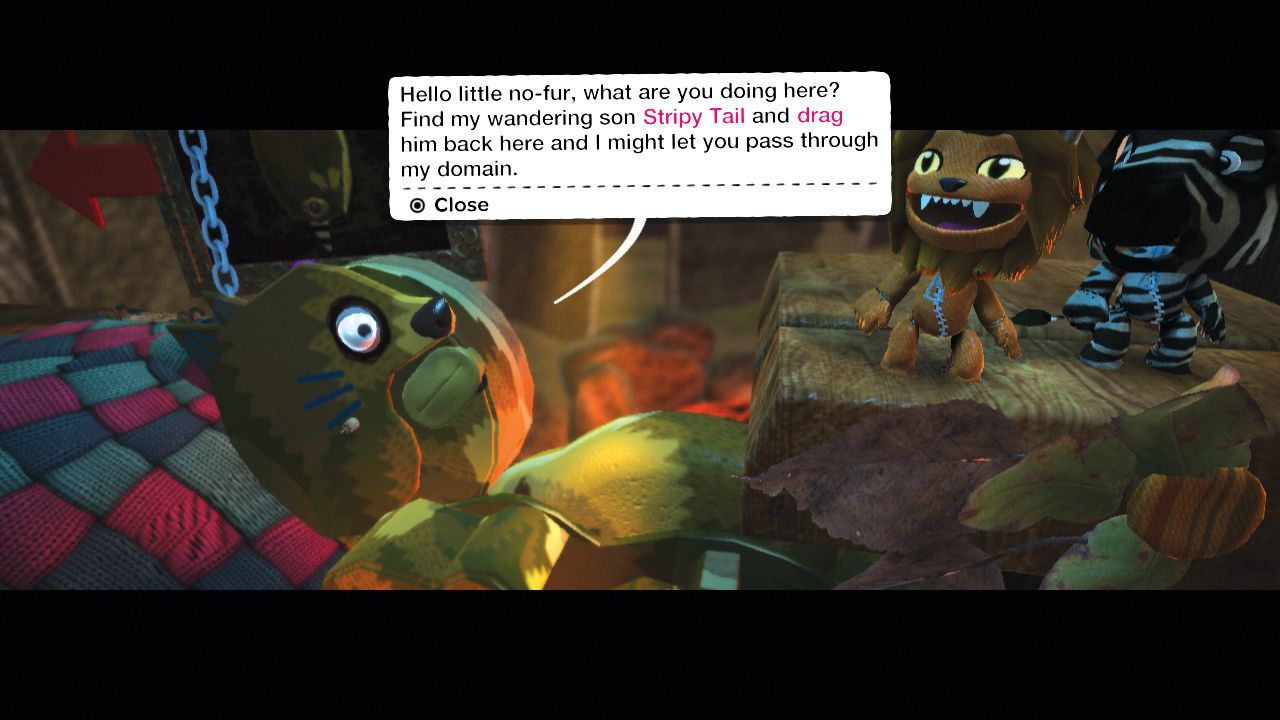
Don’t expect LittleBigPlanet: Game of the Year Edition to have a convoluted plot involving ancient prophecies; there’s barely a premise to speak of here. Instead, Media Molecule crafted a brilliant, lengthy tutorial that doubles as a world-class vacation. It feels like the developers are gently nudging you, whispering, “Look at what we built with these tools—now imagine what you can do.”
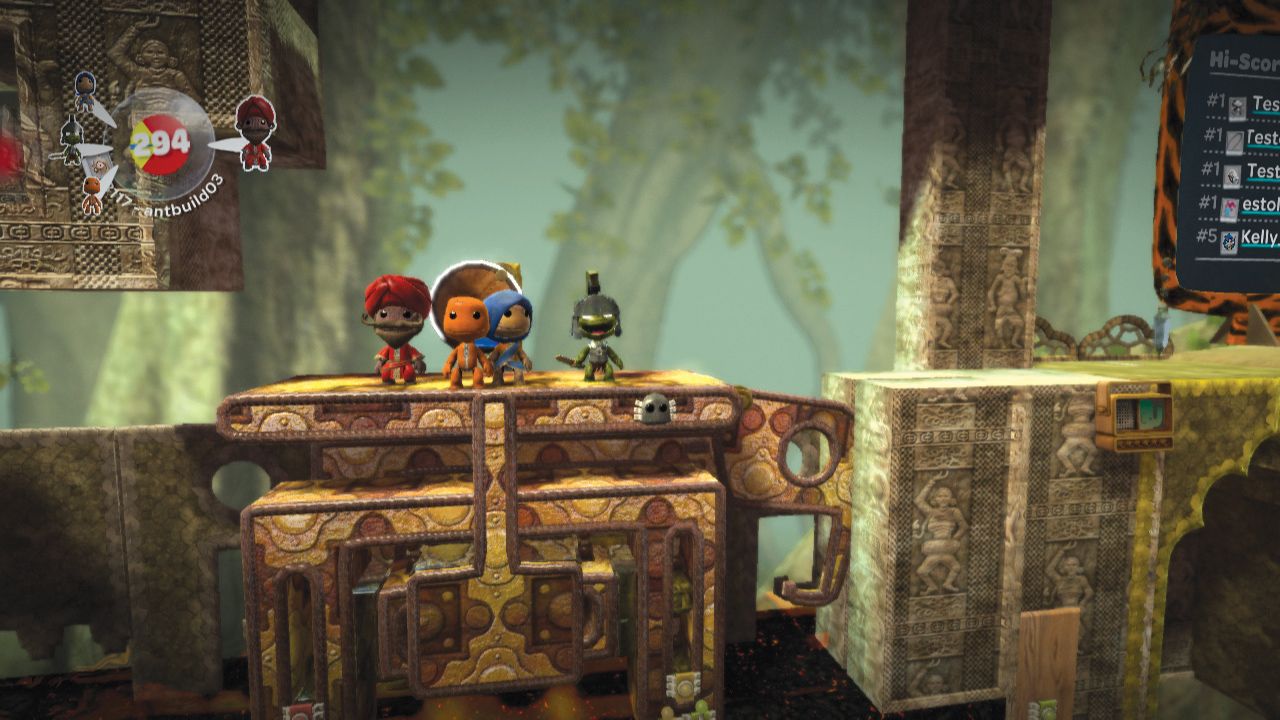
I adore how this game teleports you across the globe without ever leaving your couch. One minute you’re navigating the sun-drenched savannas of Africa, and the next, you’re dodging hazards in the rugged, dusty frontiers of the Old West or trekking through South America. Each level boasts its own self-contained narrative, told through quirky characters and dioramas that feel plucked straight from a child’s daydream.
The aesthetic has this intoxicating, boutique charm that makes every stage feel tactile and lived-in. Everything looks like it was stitched, glued, or taped together by a very talented (and perhaps slightly caffeinated) artist. Best of all, it doesn’t overstay its welcome. You can breeze through the entire campaign in less than a week, leaving you with a brain full of inspiration and a Pop-it tool bursting with collected loot. It’s a masterclass in pacing that prioritizes pure, unadulterated whimsy over unnecessary filler.
Gameplay
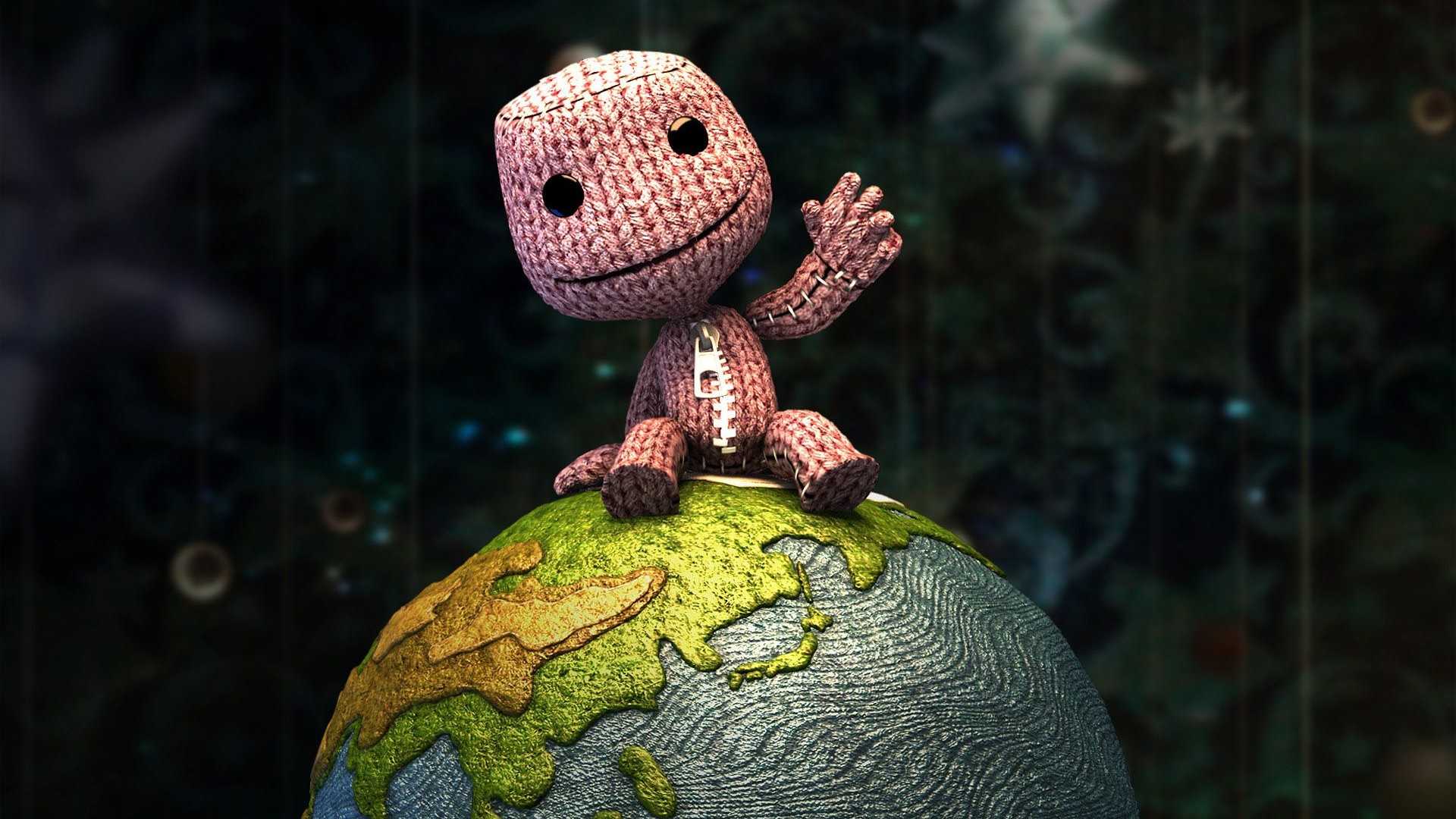
Forget the brooding, gravel-voiced anti-heroes of the era; Sackboy arrived on the scene and immediately stole the spotlight with nothing but some brown burlap and a pair of black button eyes. I still find it impossible not to grin when this little hand-sewn scrap of joy waddles across the screen. He looks exactly like a cherished, handmade toy a child might have stitched together during a particularly inspired rainy afternoon. He is the ultimate blank canvas, yet he oozes more personality from his knitted seams than most protagonists do in an entire trilogy.
The level of control Media Molecule granted us over Sackboy’s physical presence still feels revolutionary. You aren’t just moving a character; you’re performing as one. I spent far too much time using the D-Pad to cycle through his range of facial expressions—from a wide-eyed, toothy grin to a hilariously dramatic pout. Because the PS3’s Six-Axis functionality translates your actual controller tilts into Sackboy’s head and body sways, he feels strangely alive. You can even use the analog sticks to flail his little nubby arms around, which, let’s be honest, is the only proper way to celebrate reaching a scoreboard.
Then there’s the sheer, unadulterated fashion show. You can mix and match ridiculous hats, tiny capes, and intricate costumes until you’ve created a creature that is uniquely yours. This isn’t just cosmetic fluff; it’s the heartbeat of the game’s “Play” philosophy. Every sticker you slap on his head or pair of neon trousers you equip adds another layer to the most charming mascot Sony has ever dared to dream up.
Your little sack person possesses a surprisingly versatile moveset for such a simple-looking creature. You can walk, jump, and—most importantly—grab. The grab mechanic is the secret sauce here; you’ll spend half your time clinging to swinging sponges or dragging blocks to solve clever switch puzzles. You defeat most enemies by bopping their glowing power switches, but the boss battles actually require a bit of genuine tactical thinking.
Level Design
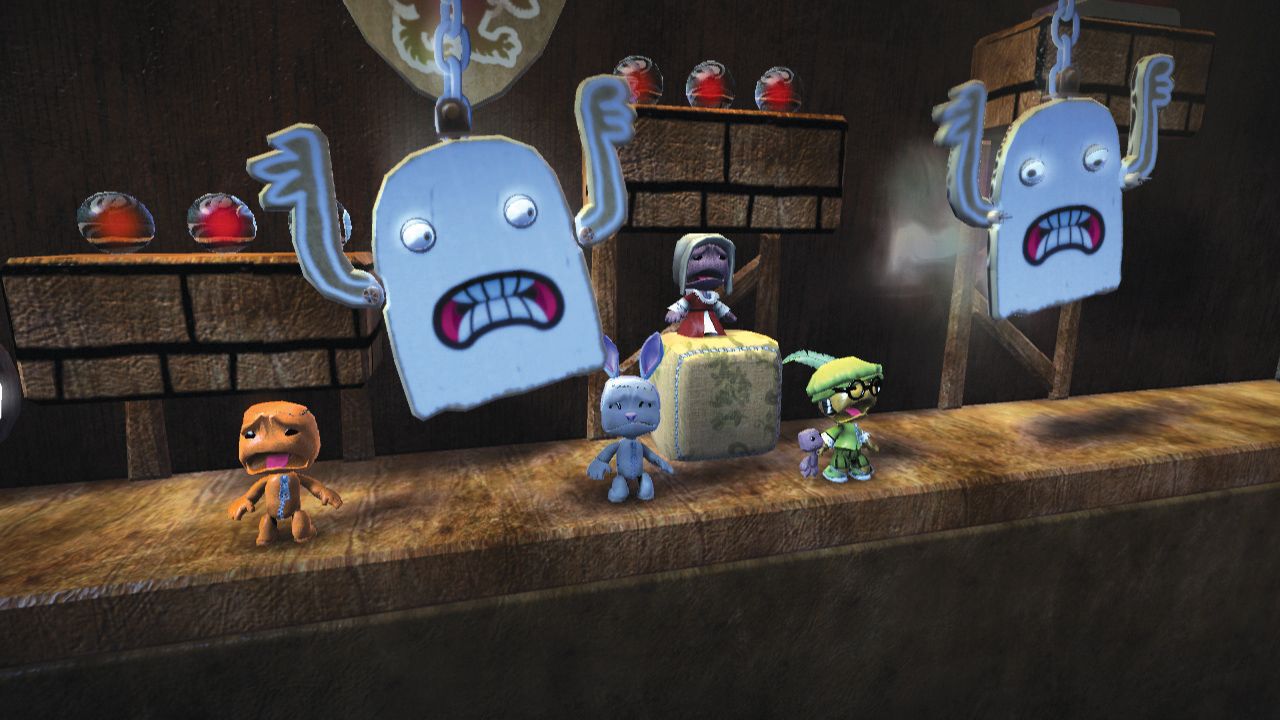
At the very core of LittleBigPlanet lies an amazingly robust physics engine—a concept so deeply embedded within the game’s various elements that its importance is easy to overlook until you’re mid-air, praying for a ledge.
Jumps feel wide and loose, possessing a floaty quality that might catch you off guard if you’re used to the pixel-perfect rigidity of a plumber from the Mushroom Kingdom. Platforms don’t just sit there—they slide, flip, and teeter with a reckless abandon that keeps you on your toes.
The environment isn’t just a backdrop; it’s a living, breathing collage of craft store supplies. I frequently found myself pausing just to admire how a piece of lace becomes a delicate platform or how a simple sponge serves as a grab-point. It’s a masterclass in found-object art, where switch puzzles and jumping obstacles blend seamlessly into the scenery. These puzzles do a fantastic job of testing your dexterity without ever feeling like a chore, constantly rewarding your wits with a shower of collectable prize bubbles.
Media Molecule also loves tossing in gadgets to spice things up; using things like jet packs transforms the platforming into a frantic, thrust-controlled balancing act. It’s a playground where weight and momentum actually matter, turning even a simple pile of blocks into a potential hazard or a makeshift staircase.
Most of your journey takes place in a 2-D plane, but the game cleverly plays with depth, allowing you to jump in and out of the background and foreground layers. This 2.5D approach adds a lovely layer of complexity to the navigation without making it feel overwhelming.
Don’t let the googly eyes fool you, though—this playground has teeth. It’s not punishingly difficult, but it certainly doesn’t hold your hand. You get a limited number of tries per checkpoint before the game sends you back to the start. It strikes that perfect balance of being accessible for a casual afternoon romp while still demanding a bit of gamer dexterity when the spikes start flying.
Graphics & Sound
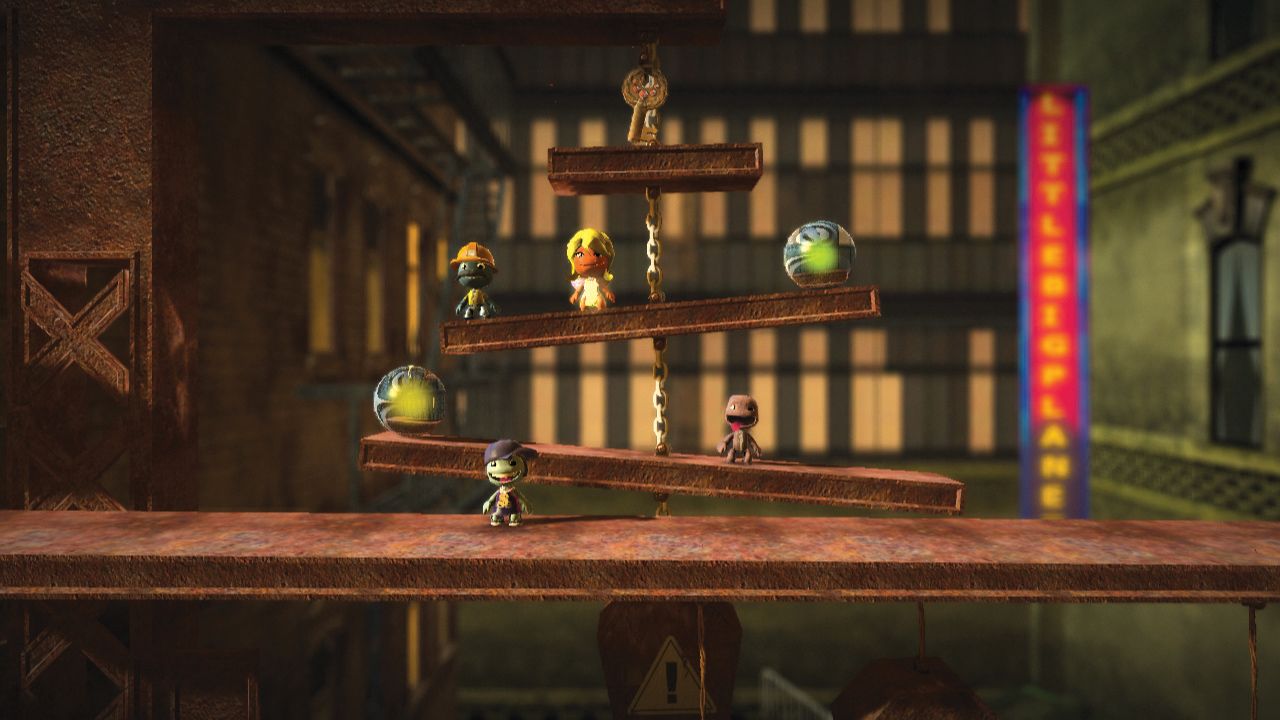
Walking into a level in LittleBigPlanet feels less like booting up a console and more like stumbling into a boutique toy store’s window display after hours. The visual fidelity here remains absolutely staggering; we’re talking about an animated sketchbook brought to life with a tactile, stop-motion aesthetic that still looks great today. Every object possesses a distinct texture—you can practically feel the rough grit of the cardboard, the fuzzy nap of the felt, and the cold, industrial sheen of the metal bolts.
Then, there’s the auditory magic. Media Molecule curated a soundtrack that is, quite frankly, a vibe. It’s an eclectic, globe-trotting mix of artists like The Go! Team, Jim Noir, and DJ Krush. Whether you’re bouncing along to a jaunty indie-pop tune or navigating a moody, atmospheric cavern, the music fits the whimsical energy perfectly.
And we absolutely cannot ignore the voice of the game: the legendary Stephen Fry. His “story-time” narration provides a warm, paternal hug for your ears. His delivery is witty, sophisticated, and just the right amount of cheeky, making even the most basic tutorial instructions feel like a grand, philosophical revelation. It’s the kind of audio-visual synergy that makes you want to crawl inside the TV and live there forever.
Replay Value
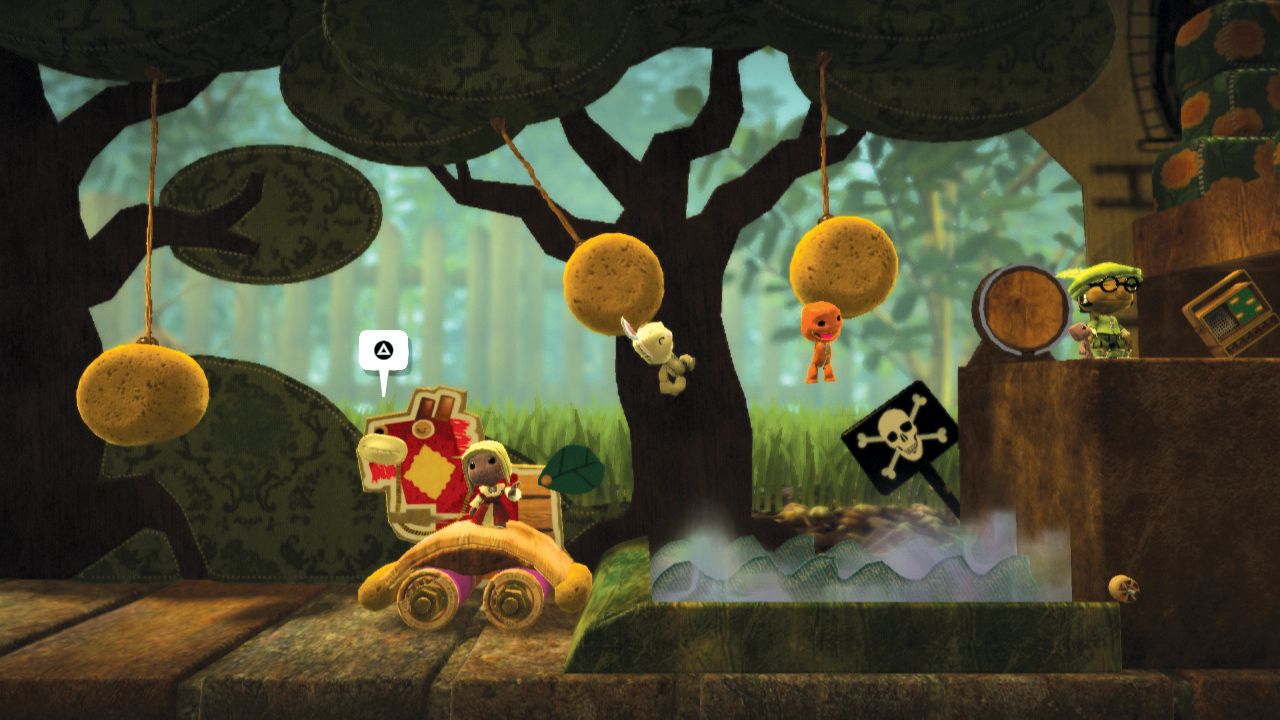
Once you’ve polished off the story mode and filled your pockets with every sticker and material imaginable, it’s time to head to the Moon. This isn’t just a level select screen; it’s your personal workshop in the stars. Media Molecule basically handed us the same dev tools they used to build the game, which is both exhilarating and, if I’m being honest, a little terrifying.
The concept is simple on paper: you take all those trinkets, wood blocks, and clockwork gears you scavenged during your globetrotting adventures and smash them together to create something entirely new. You can even glue objects together to create complex machinery and save them as custom assets to reuse later. It’s a digital hoarder’s dream come true.
However, unless you possess a beautiful mind and a bottomless well of patience, you might find yourself staring at a blank crater for an hour before deciding that maybe you’re better at playing than creating. It’s a robust system, but it definitely demands a level of architectural wizardry that not everyone (myself included, most days) can muster.
LittleBigPlanet’s community levels was a massive mountain of digital madness. Back in the day, diving into the online level browser felt like opening a door to an infinite, chaotic toy box. You’d see thousands of levels—all with helpful community ratings—ranging from pixel-perfect masterpieces to glorious, buggy disasters.
I have vivid, core memories of losing entire Saturday nights to the bomb-survival games. There was nothing quite like the frantic, high-pitched stress of being crammed into a crumbling arena with three other Sack-folk, desperately grabbing onto a sponge block while explosives rained from the sky, hoping to be the last one standing.
The creativity on display was frankly terrifying. You’d find staggering homages to arcade legends like Space Invaders or Breakout, where creators used the physics engine to build functional, retro mini-games that worked better than they had any right to. If you weren’t in the mood for a challenge, you could just hit up a hangout level. These were basically chill-out rooms—Sims-lite social spaces where you could just loiter, show off your rarest DLC costumes, and chat with strangers from across the globe.
Of course, we have to address the elephant in the room: the official servers have been unceremoniously shuttered due to some nasty hacking incidents. It’s a tragedy, really. However, the LBP community is a stubborn, brilliant bunch. To experience this goldmine today, you have to go a bit underground. You can still find massive archives of these levels online, which you then have to sideload onto your PS3 using a USB drive. Is it as seamless as it was in 2010? Of course not. But even with the online part being a bit of a DIY project now, these levels remain a riot to play.
Bonus Content
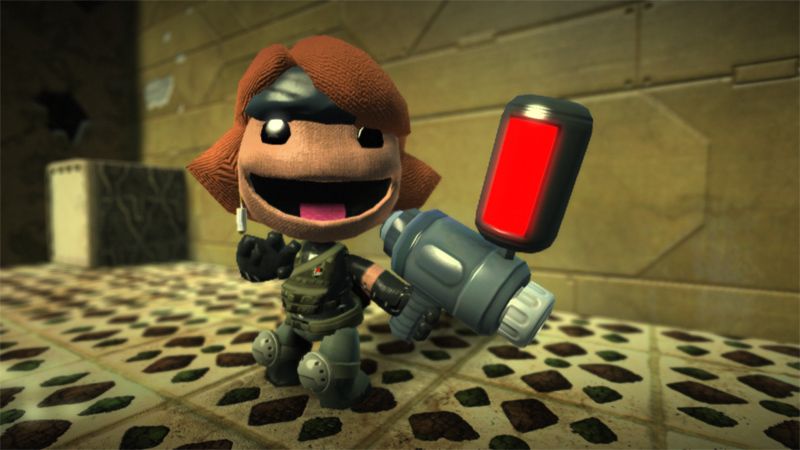
LittleBigPlanet: Game of the Year Edition is a digital treasure chest overflowing with all the bits and bobs that made the original’s post-launch life so legendary. You get a massive injection of extra costumes and sticker packs right out of the gate, which is great for those of us who spent more time in the dressing room than actually platforming.
But the real meat on these bones? The 18 exclusive community levels and the iconic Metal Gear Solid pack. These aren’t just half-baked throwaways; they are definitive proof of Media Molecule’s grand vision. The Metal Gear levels, in particular, introduced the Paintinator—a little paint-ball gun that fundamentally changed how you interacted with the world. Watching Sackboy sneak around in a tiny cardboard box while tactical espionage music swells in the background is a core memory for a reason.
These bonus levels represent exactly what the developers hoped to achieve: a world where the line between player and creator is completely blurred. They showcase that the gaming community, when handed the right set of virtual wrenches and glue, can craft experiences that are just as innovative, polished, and downright fun as anything produced by a room full of suits and high-paid professionals. It’s a beautiful, chaotic tribute to the power of the player.
Final Verdict
When you weigh it all up, LittleBigPlanet: Game of the Year Edition stands as the definitive version of a genuinely astounding achievement. It’s a rare, shimmering gem of a game—a digital time capsule filled with a level of charm that hasn’t aged a day. Sure, the loss of the official servers is a bit of a heartbreak, and having to manually port over community levels feels a bit like performing surgery on a teddy bear. But even without the instant-gratification of the 2010 online scene, the creative wonder at the heart of this game hasn’t dimmed.
Regardless of what some spreadsheet-obsessed gaming CEO might tell you about “market trends,” LBP is a vivid reminder of how the platformer genre can still adapt and innovate without losing its sense of play. Media Molecule proved that if you give people a sack, some stickers, and a dream, they’ll create something that lasts forever. It’s a masterpiece, plain and simple.
Verdict
LittleBigPlanet: Game of the Year Edition
Masterpiece

At HyperComboGamer, we believe great games deserve great coverage. That means no filler, no clickbait, or fanboyism—just honest, high-quality reviews, features, and guides that put gamers first. Whether you’re a lifelong enthusiast or just starting your gaming journey, you’ll find interesting gaming perspectives that will leave you fully satisfied.