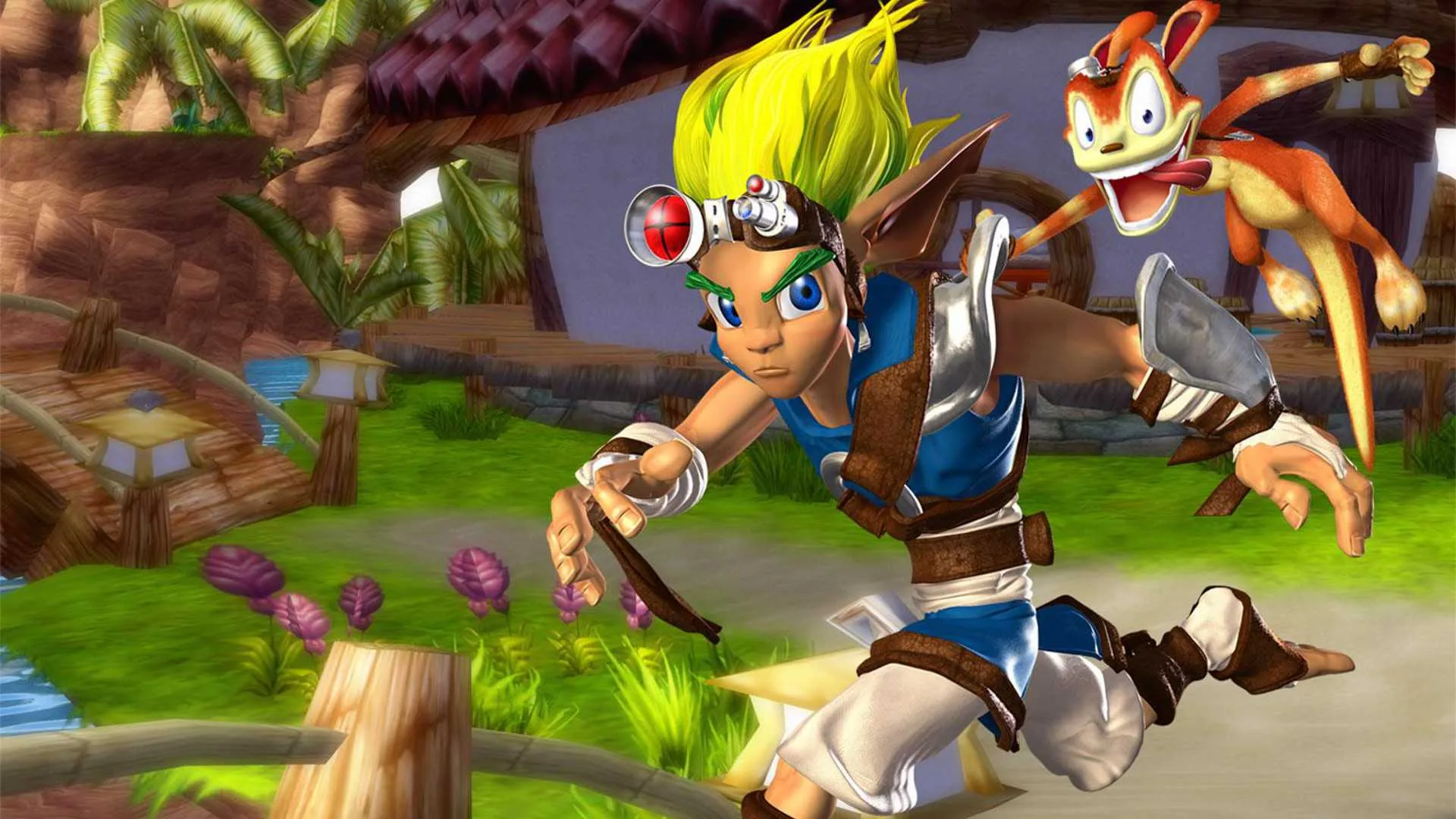
Key Takeaways
| Pros | Cons |
| Excellent Controls: Every jump, spin, and punch feels weighty and precise, removing the frustration found in many 3D platformers. | Low Boss Count: If you’re looking for epic, multi-stage boss fights, you might be disappointed; the environment is the real boss here. |
| Buttery Smooth Performance: Absolutely zero loading screens between massive diverse regions, and runs at a crisp 60 frames per second. | Occasional Camera Snags: While the right-stick control is great, the camera can still get “stuck” in tight indoor corners or behind foliage. |
| High-Quality Animation: The Pixar-like squash-and-stretch animations give Jak and Daxter a level of personality rarely seen on the console. | Simple Difficulty: Experienced players might find the main quest a bit on the easy side compared to the later, more combat-heavy sequels. |
While Crash Bandicoot dominated the charts, Naughty Dog lacked true ownership of their orange mascot. This corporate friction with Universal Interactive sparked a fire that would lead to the birth of “Project Y”, right in the middle of the kart-racing chaos of Crash Team Racing’s development.
They wanted something bigger, bolder, and completely unconstrained by the loading screens of the past. Naughty Dog bet their entire reputation on the brand-new PlayStation 2, taking the open exploration of Banjo-Kazooie, mixing it with the epic scale of The Legend of Zelda, and inject it with the high-octane juice of Crash.
After years of focus testing, planning, and production, Naughty Dog released Jak and Daxter: The Precursor Legacy in 2001. Could this ambitious platformer finally bridge the gap between a video game and a high-budget animated feature? In this review, you’ll discover whether this game still stands the test of time.
Building the Iconic Duo
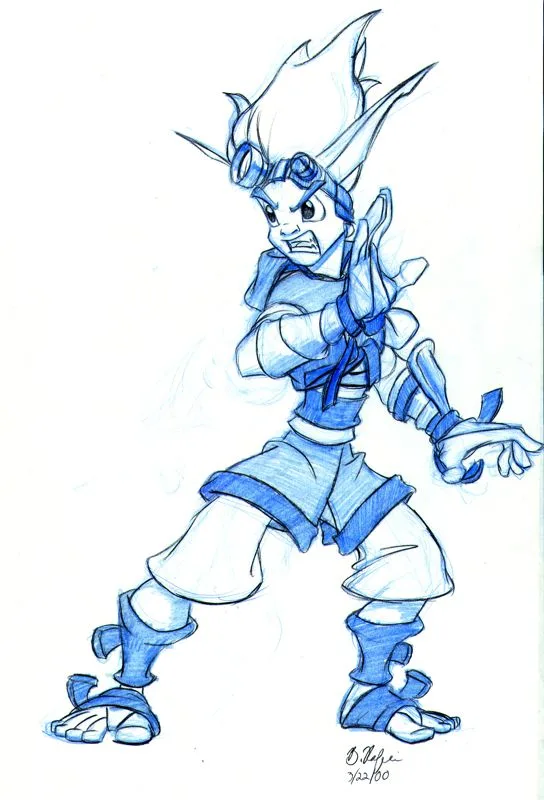
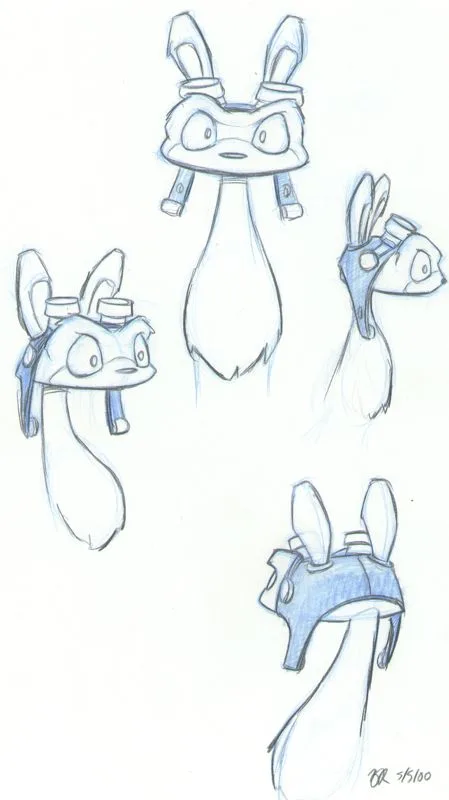
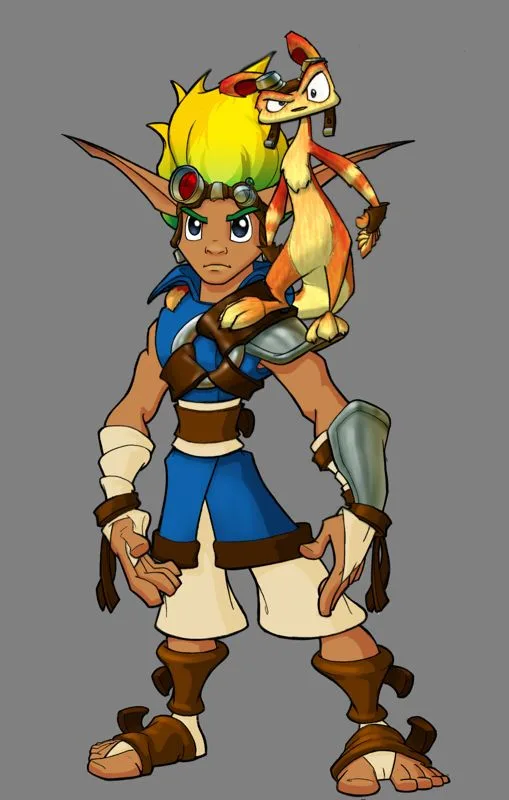
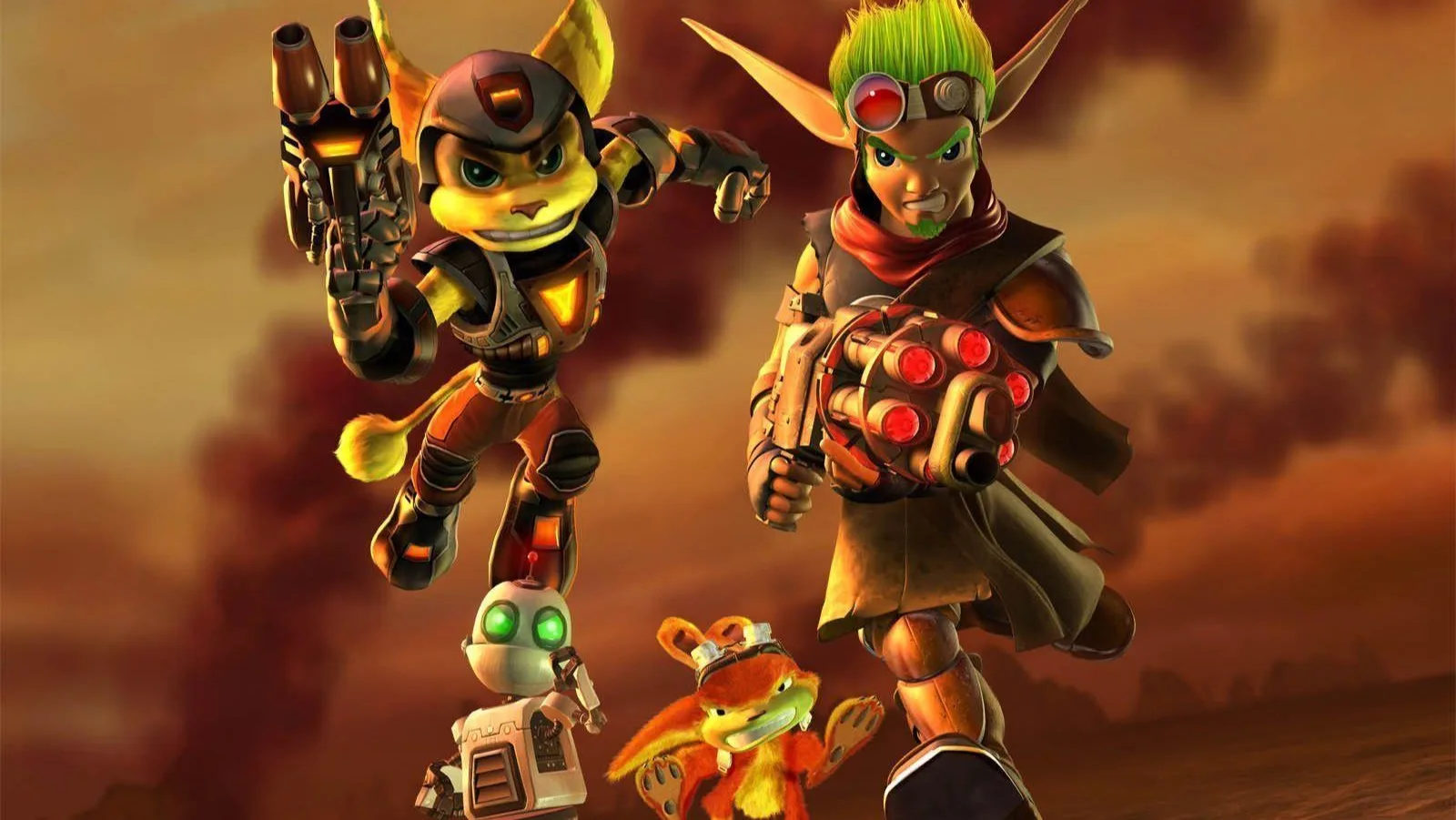
The shift from a hallway-bound marsupial to a free-roaming hero required a total visual overhaul, and Naughty Dog brought in the big guns to make it happen. Character designer Charles Zembillas—the man responsible for the original look of Crash and Spyro—was tasked with finding the face of the PS2 era.
It wasn’t an overnight success. Jak’s design went through a bit of an identity crisis early on. The team experimented with more animal-like features and even played around with “chain physics” for his hair, imagining a protagonist with heavy, swinging ponytails. Eventually, they landed on the iconic long-eared, elfin look we know today: an athletic, silent hero who could let his animations do the talking.
But a silent hero needs a mouthpiece, and that’s where Daxter comes in. Taking a page out of the Disney playbook, the team looked at the fast-talking energy of Mushu from Mulan for inspiration. They settled on the Ottsel—a fictional hybrid of an otter and a weasel—to provide the comedic relief that balanced Jak’s stoic nature. The result was a duo that felt grounded in a unique blend of Western and Eastern aesthetics.
You can see the DNA of Joe Madureira’s Battle Chasers in the chunky, stylized tech, mixed with the whimsical, environmental wonder of Hayao Miyazaki’s Nausicaa of the Valley of the Wind and Princess Mononoke. It was a high-fashion mix of manga and Saturday morning cartoons that gave the game a look unlike anything else on the shelf.
Story Overview
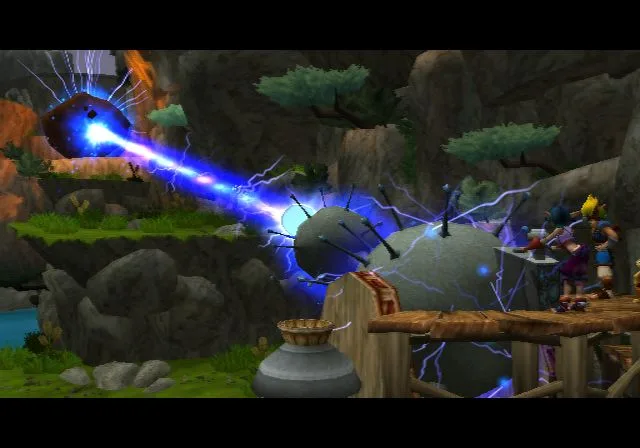
The narrative in Jak and Daxter: The Precursor Legacy kicks off with a classic “don’t go there” scenario that our heroes immediately ignore. Jak and Daxter sneak over to the forbidden Misty Island, only to witness a massive gathering of Lurkers and their mysterious Dark Eco Masters. It’s the kind of trouble that only teenagers in video games seem to find themselves in, right?
During a clumsy scuffle, Daxter takes a header into a glowing pit of Dark Eco. Instead of dying a grizzly death, he pops back out as a fuzzy, orange Ottsel. The transformation is permanent—or so it seems—and provides the primary motivation for the entire journey.
The duo now faces a desperate quest to find a Dark Eco Sage capable of reversing the curse. Little do they know, the very person they seek might be the architect of the world’s destruction. It’s a straightforward tale, but the stellar character chemistry makes every beat land perfectly. FYI, Daxter’s constant complaining about his new height never actually gets old.
Gameplay
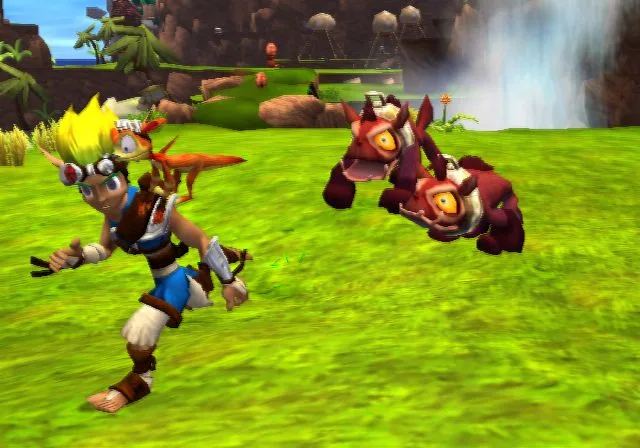
In terms of the actual nitty-gritty, the gameplay loop in Jak and Daxter: The Precursor Legacy feels like a greatest hits album of the genre’s best ideas. Imagine taking the DNA of Super Mario 64 and Banjo-Kazooie, then polishing it until it shines like a Precursor artifact. You’ll spend most of your time exploring massive, vibrant locales while hunting down Precursor Orbs and the much-coveted Power Cells.
Naughty Dog really obsessed over the “feel” of this game, and it shows the second you tilt the analog stick. Jak moves with a crispness that puts other early 2000s protagonists to shame. He’s got an arsenal of moves that make traversal a total blast:
- The essential double jump for reaching those high ledges.
- A spin attack that pays direct homage to Jak’s older brother, Crash.
- The uppercut and power punch for dealing with pesky Lurkers.
- A horizontal launch move that makes you feel like a parkour pro.
All these moves chain together seamlessly, making simple acts like running and jumping feel incredibly responsive. But let’s talk about the real MVP: the camera control. While other developers were still struggling to figure out 3D space, Naughty Dog gave us full, smooth control via the right analog stick on the DualShock 2. Does the camera occasionally get snagged on a rogue palm tree? Sure, but it’s never a dealbreaker because you can fix it in a heartbeat.
In Jak and Daxter: The Precursor Legacy, the Lurkers are really just the opening act. Sure, a well-timed spin kick will send most of those toothy goons packing, but the real boss of the game is the ground beneath your feet—or the lack thereof. Naughty Dog leaned heavily into their Crash Bandicoot roots here, shifting the focus away from complex combat and making the environment itself the biggest obstacle to overcome.
Level Design
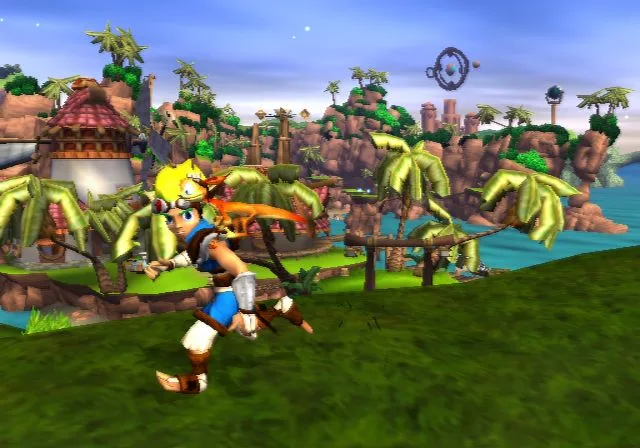
The level design in Jak and Daxter: The Precursor Legacy is a masterclass in variety, even if it occasionally leans into those classic, comfortable platforming tropes we all know and love. You’ve got your slippery ice physics in the snowy peaks that make every step a gamble, and the obligatory moving platforms suspended over bottomless pits of certain doom. However, the game mixes these elements with such flair that navigating the world never feels like a repetitive chore. It’s less about button-mashing through a crowd and more about testing your reflexes and rhythmic precision.
Borrowing the best DNA from Banjo-Kazooie and Super Mario 64, Jak and Daxter: The Precursor Legacy turns the simple act of tidying up an island into a masterclass in progression. Power Cells aren’t just shiny trophies; they are your literal fuel for discovery. Whether you’re powering up Keira’s Heat Shield to cross a deadly lava flow or fixing a bridge to a new continent, the Power Cells are the keys to the kingdom. Each major area hides between two and eight of these bad boys, and you can also pop open the pause menu anytime to see exactly what you’re missing.
Then, there are the Precursor Orbs. Scattered like breadcrumbs across the landscape, these bronze eggs are the game’s primary currency. You’ll be trading stacks of them to local villagers—like the eccentric Mayor or the grumpy Gambler—in exchange for more Power Cells. It’s a simple economy, but it works because it encourages you to poke your nose into every corner of the map.
But the real secret sauce is Eco. This ancient energy comes in four distinct flavors, each temporarily augmenting Jak with superhero capabilities. This constant interplay between scavenging for Orbs and utilizing Eco to solve environmental puzzles creates a rhythm that is impossible to put down. You aren’t just checking boxes; you’re uncovering the secrets of a lost civilization one pop at a time.
Graphics & Sound
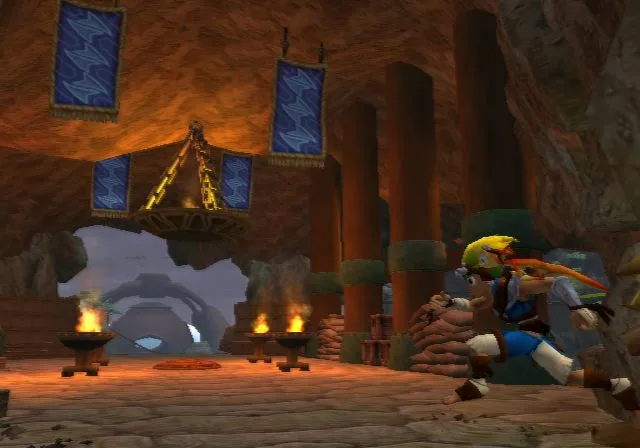
Even though Jak and Daxter: The Precursor Legacy dropped early in the console’s lifecycle, it remains one of the most visually stunning titles on the platform. How did they pull this off? Well, Naughty Dog’s wizards built the game to squeeze every ounce of juice from both of the PlayStation 2’s vector units. This technical heavy lifting allowed the game to maintain a buttery smooth 60 frames per second, a feat that many later PS2 games couldn’t even dream of achieving.
The technical wizardry behind Jak and Daxter: The Precursor Legacy is legitimately mind-blowing for 2001. Naughty Dog’s custom-built GOAL engine (Game Oriented Assembly Lisp) allowed them to create a world with absolutely zero loading screens. You can run from the tip of the Snowy Mountain all the way back to Sandover Village without ever seeing a progress bar.
What’s even cooler is the persistent environmental progress. If you head over to Misty Island to wreck some Balloon Lurkers but get distracted halfway through, the game remembers your hard work. You can leave, explore a volcano, and come back to find those Lurkers still gone. Plus, the draw distance is just incredible for its time. If you stand on a high cliff, you can actually see the landmarks of areas you visited hours ago, which was basically unheard of on consoles back then.
The character animation is equally impressive, with Jak and Daxter moving with a fluid grace that makes traversal a joy. Whether Jak is pulling off a spin attack or Daxter is performing one of his signature victory dances, the fluidity and expression are top-tier. Honestly, as a kid, Jak and Daxter: The Precursor Legacy truly felt like a Pixar movie come to life right in my living room.
Matching that animated movie energy is a soundtrack that feels like it was ripped straight from a Disney or Nickelodeon classic. The background music in Jak and Daxter: The Precursor Legacy is incredibly catchy and does a fantastic job of adapting its theme to match whatever environment you’re currently exploring. It’s light, whimsical, and perfectly underscores the sense of adventure.
The voice acting is the cherry on top. Every character, from the grumpy Sages to the bumbling Lurkers, sounds exactly as they should. Daxter, in particular, is a standout; his vocal performance is so energetic and witty that it’s impossible not to crack a smile. The chemistry between the cast members in Jak and Daxter: The Precursor Legacy is what turns a simple save-the-world plot into something truly memorable.
Final Verdict
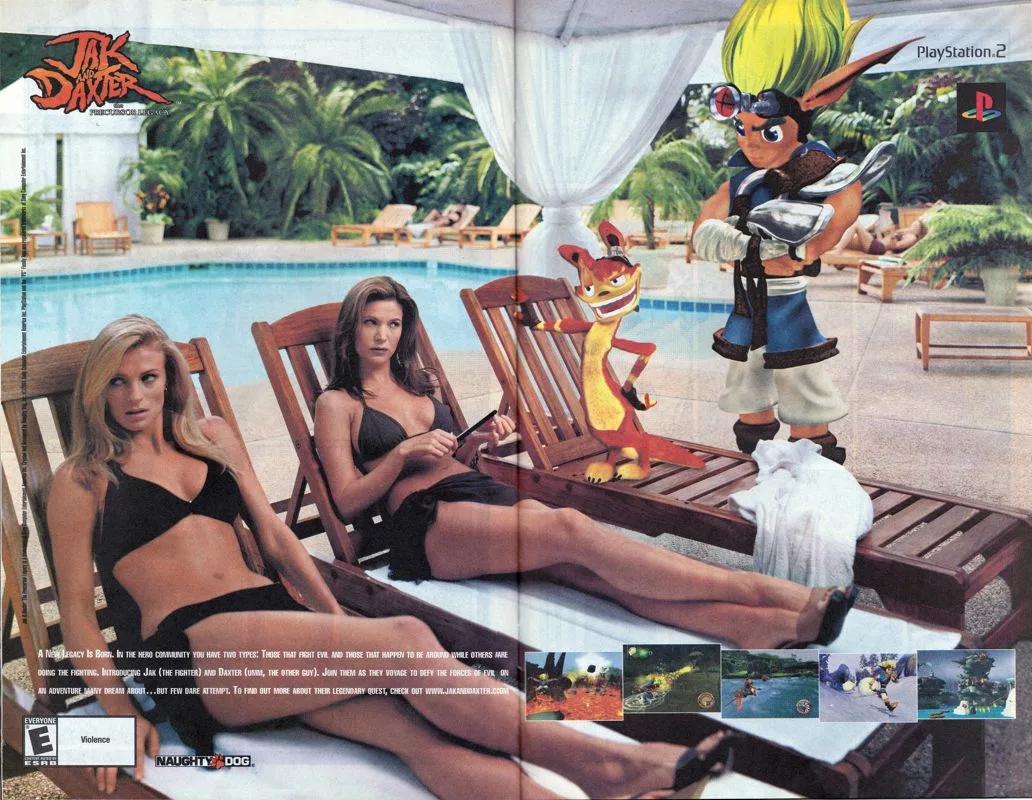
Overall, Jak and Daxter: The Precursor Legacy is an absolute gem of a platformer that truly gave the PS2 the mascot it needed after Naughty Dog moved on from the Crash franchise. It brings me back to a much simpler time in gaming—an era when experiences weren’t bloated with microtransactions or overly ambitious mechanics that failed to land. Replaying this today, I still get that same warm and fuzzy feeling I had the first time I booted it up as a kid.
Everything about this adventure radiates a nostalgic vibe from the peak of the 3D platforming era. It took the most successful elements of its predecessors—the tight jumping of Mario, the collecting of Banjo, and the attitude of Crash—and refined them into a package that still feels incredibly smooth to play today.
If you were to ask me for a foundational example of what a perfect 3D adventure should look like, I’d point you directly to this game. Whether you’re a veteran looking for a trip down memory lane or a newcomer curious about the PS2’s glory days, Jak and Daxter: The Precursor Legacy is a mandatory play.
Verdict
Jak and Daxter: The Precursor Legacy
Masterpiece

At HyperComboGamer, we believe great games deserve great coverage. That means no filler, no clickbait, or fanboyism—just honest, high-quality reviews, features, and guides that put gamers first. Whether you’re a lifelong enthusiast or just starting your gaming journey, you’ll find interesting gaming perspectives that will leave you fully satisfied.