Remember that time you were defending your favorite plastic box like it was a matter of life or death in the comment sections of gaming websites and forums? Yeah, we’re diving back into the glorious PS3 vs Xbox 360 rivalry. It wasn’t just about consoles—it was about loyalty, pride, and proving that your machine of choice reigned supreme. Both systems changed the way we played, connected, and even consumed entertainment, but they did so in wildly different ways.
We’re breaking down every angle—hardware, exclusives, sales, and everything in between—to crown the ultimate winner of gaming’s greatest console war of the late 2000s. Grab your controller of choice and join us as we dive deep into one of gaming’s greatest showdowns!
PlayStation 3: Sony’s Biggest Gamble
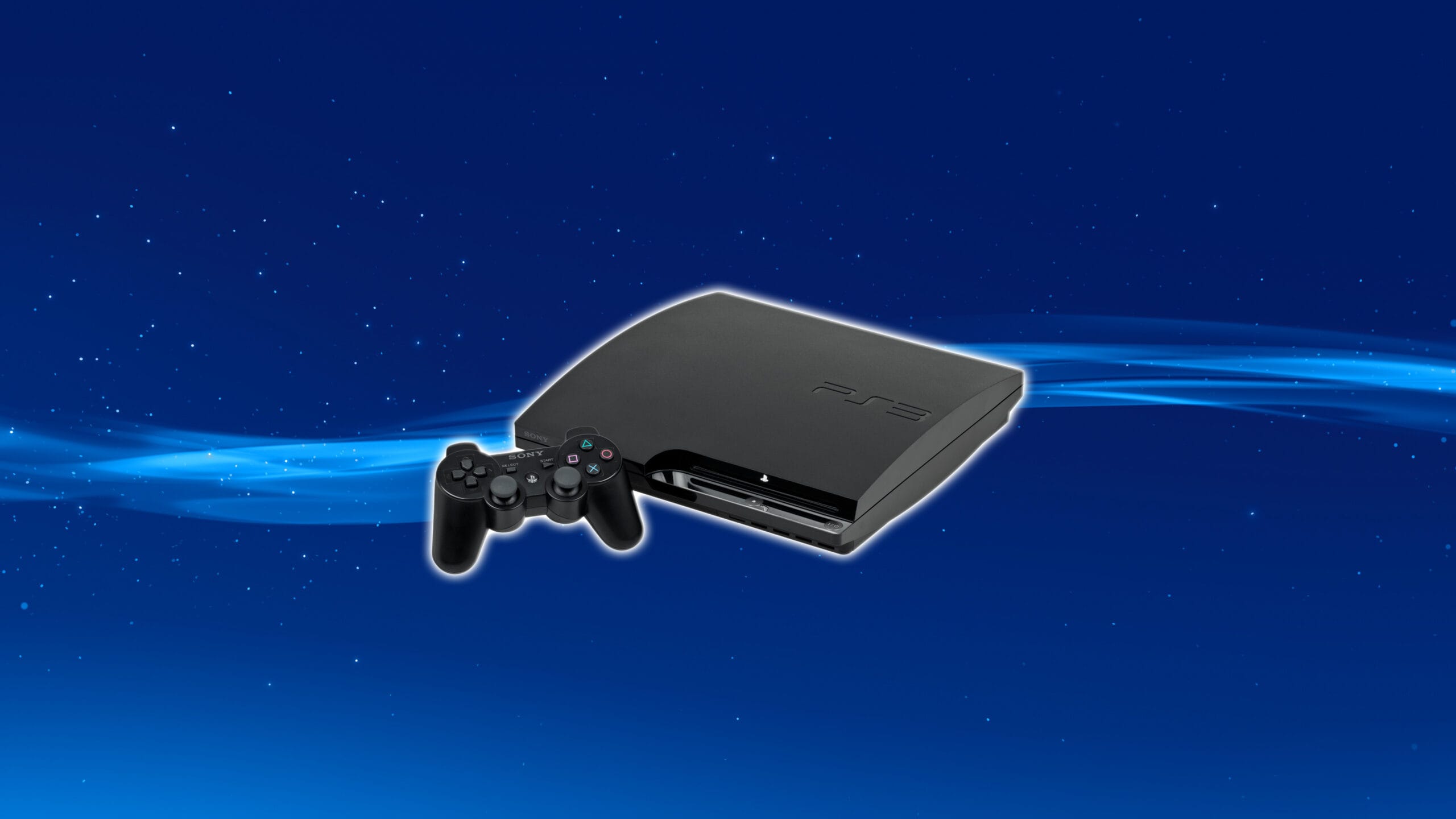
The PlayStation 3 should have been a disaster. Launched into the gaming arena with a jaw-dropping $599 price tag, an infamously convoluted architecture, and a marketing campaign that ranged from overconfident to outright bizarre, Sony’s third console seemed destined for an early knockout. It was outpaced by the more affordable Xbox 360, and outsold by the family-friendly Wii.
Industry analysts wrote it off. Fans doubted its future. The gaming world watched as Sony, once the undisputed king of consoles, found itself stumbling out of the gate. And yet, against all odds, the PlayStation 3 clawed its way back.
As the generation matured, the PS3’s library became an undeniable force, stacked with industry-defining hits. Meanwhile, Sony also embraced affordability. The PS3 Slim, and later the Super Slim, brought the price down to mass-market levels, making the console far more accessible. By the time the PS4 launched, the PlayStation brand had fully regained its dominance, thanks to Sony focusing squarely on what gamers actually wanted.
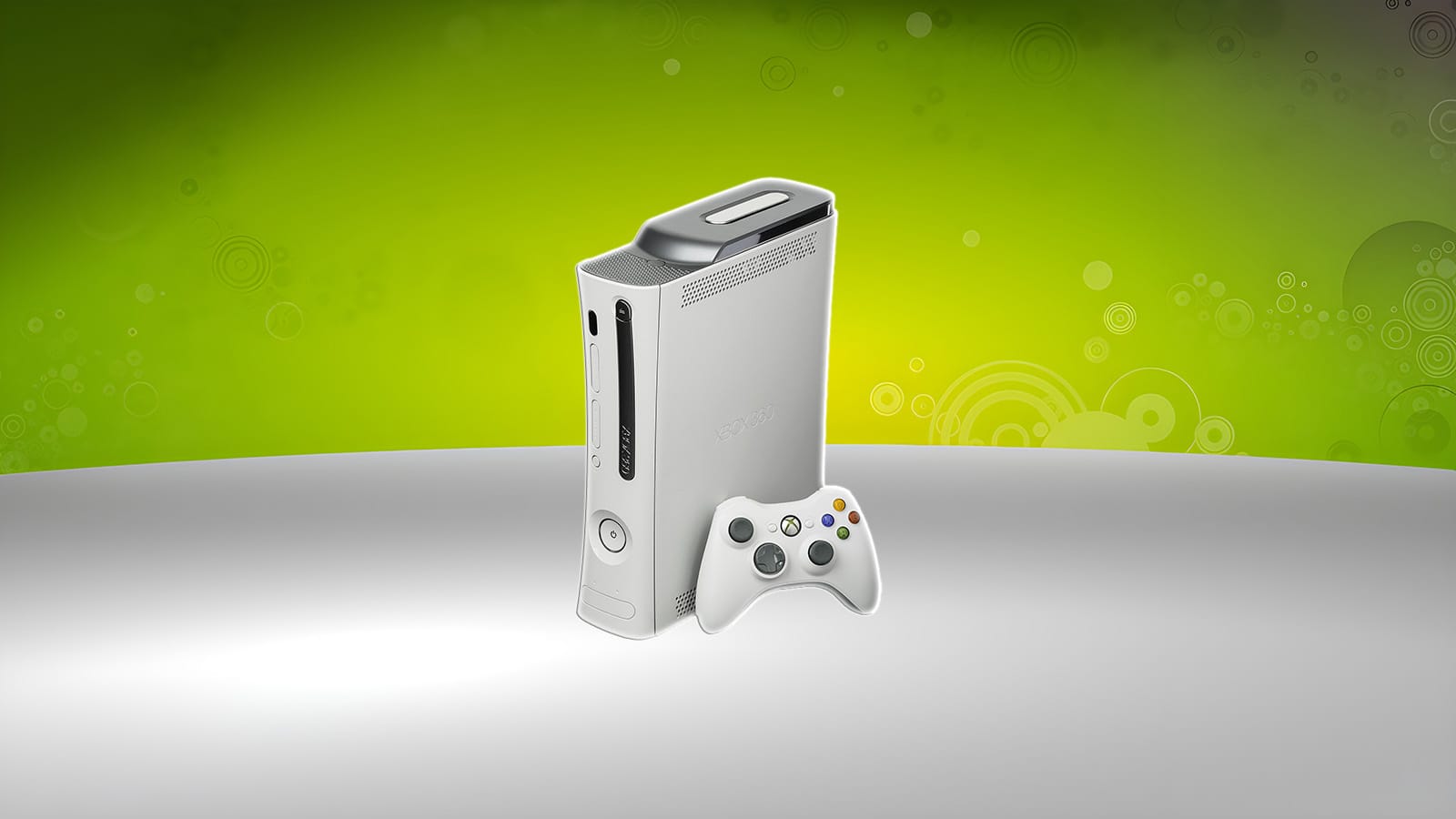
The Xbox 360 will forever be remembered as a console of contradictions — a machine defined by soaring highs and painful lows. On one hand, it was a pioneer, pushing the boundaries of online play, digital distribution, and community features. On the other hand, it stumbled out of the gate with hardware failures so widespread they nearly derailed Microsoft’s gaming ambitions entirely.
Yet for all its cracks in the plastic, the 360 changed the DNA of modern gaming. The Xbox 360 was a transitional machine, the bridge between the offline, cartridge-and-disc past and the connected, digital-first present. For millions of players, it wasn’t just about games — it was about community, identity, and the thrill of being part of a gaming world that suddenly felt bigger than ever.
Hardware Under the Hood
The clash between the PS3’s Cell processor and the Xbox 360’s Xenon CPU summed up the entire generation in one comparison: untamed power versus user-friendly design.
Feature
PlayStation 3
Xbox 360
CPU
Cell Broadband Engine (3.2 GHz, 1 PPE + 7 SPEs)
Xenon 3.2 GHz Tri-Core PowerPC-based CPU
GPU
NVIDIA RSX “Reality Synthesizer” (500 MHz)
ATI Xenos (500 MHz) with unified shaders
System RAM
256 MB XDR Main RAM
512 MB GDDR3 RAM
Video RAM
256 MB GDDR3 (dedicated to GPU)
Shared 512 MB GDDR3 for system & GPU
Storage
20 GB / 60 GB HDD at launch (upgradable)
20 GB HDD at launch (later up to 250 GB)
Optical Drive
Blu-ray Disc (25 GB single layer / 50 GB dual layer)
DVD-Dual Layer (8.5 GB max)
Resolution Output
Up to 1080p
Up to 1080p (limited by DVD storage size)
USB Ports
4 (early models), later reduced to 2
3
Networking
Built-in Gigabit Ethernet & Wi-Fi (802.11b/g)
Ethernet only (Wi-Fi via add-on)
Backward Compatibility
Full PS1, partial PS2 (varied by model)
Partial Xbox support (select titles)
When the PlayStation 3 and Xbox 360 launched, the conversation quickly turned to what was under the hood. On paper, Sony’s PS3 looked like something ripped out of a sci-fi lab. Its Cell Broadband Engine—a collaboration between Sony, IBM, and Toshiba—was notoriously complex, but immensely powerful. Developers often compared it to having a sports car engine with no instruction manual: frustrating to tame, but breathtaking once mastered.
By contrast, the Xbox 360’s triple-core Xenon CPU was far easier to work with. It gave developers a straightforward platform that led to early cross-platform games running better on Microsoft’s system. Accessibility won the battle in the short term. But… that DVD drive? A definite bottleneck. While the PS3 was serving up lossless audio and 50GB Blu-ray discs, the 360 was stuck with 8.5GB DVDs. While that sounded like enough space in 2005, many newer games required more storage to take advantage of the console. Some games even shipped on multiple discs. coughFinal Fantasy XIIIcough. Not exactly sleek.
Winner – PS3

Despite its rocky start, the PS3’s raw specs gave it the edge in the long haul. While the Xbox 360’s straightforward design allowed developers to hit the ground running, Sony’s complex Cell processor and beefy RSX graphics chip offered a ceiling that simply couldn’t be matched as the generation matured. Once studios learned how to unlock that potential, the results spoke for themselves.
The Controllers: DualShock 3 vs. Xbox 360
Let’s be real: the controller is your main connection to the game. If it feels wrong, everything feels wrong. And boy, did these two consoles take wildly different approaches.
Right out of the gate, the Xbox 360 controller felt like it was molded for human hands. Microsoft nailed the ergonomics, with those perfectly offset analog sticks and buttery triggers. Shooters just felt right. That satisfying click of the face buttons? Chef’s kiss. But let’s keep it real: the D-pad was straight-up garbage for fighting games. Trying to pull off a flawless Hadouken in Ultra Street Fighter IV? Good luck with that.
When Sony unveiled the Sixaxis controller alongside the PS3, many complained that it lacked rumble—especially as Xbox 360 owners enjoyed that added layer of immersion. Sony eventually course-corrected with the DualShock 3, which reintroduced vibration while keeping the Sixaxis functionality intact. For millions of players, the symmetrical analog sticks and recognizable button layout felt like home.
But oh man, those triggers. Who thought making them convex and slippery was a good idea? And let’s not even talk about the “Sixaxis” motion controls. There were barely any games that used it properly, and once the PlayStation Move was released, it soon became a forgotten feature.
Winner – Tie

Neither controller fully dethroned the other. Despite their differences, both the DualShock 3 and Xbox 360 controller carved out lasting legacies—and for good reason. The 360 pad set a new standard for comfort, particularly for genres like shooters and racing games. The DualShock 3, meanwhile, thrived on continuity. Its symmetrical sticks, iconic face buttons, and compact frame meant PlayStation veterans could pick it up without a second thought. Both became beloved by the communities they served, ensuring this round ended in a well-earned draw.
The Format Wars: HD DVD vs Blu-ray
When high-definition video discs emerged as the successor to DVDs, the industry found itself split between two competing formats: HD DVD and Blu-ray. Microsoft threw its weight behind HD DVD but in a half-hearted way, offering an external HD DVD drive as a peripheral for the Xbox 360 rather than building it into the console. On paper, it gave players access to cutting-edge movie playback, but in practice, it was clunky. Few wanted to pay extra for an add-on that looked like an afterthought, especially when it didn’t support games.
Sony took the opposite approach to Microsoft’s add-on strategy, baking Blu-ray directly into every PS3. It was a bold, expensive move—one that significantly inflated the console’s launch price—but it paid dividends in the long run. With discs capable of holding up to 50GB, Blu-ray gave developers far more breathing room than the Xbox 360’s 8.5GB DVDs. That extra space meant higher-resolution textures, richer audio, and expansive cinematic sequences could all live on a single disc without compromise.
For a while, the war was neck and neck. Some studios backed Blu-ray, others backed HD-DVD, and early adopters were stuck guessing which way Hollywood’s wind would blow. But the tipping point came in January 2008, when Warner Bros. — the biggest studio still supporting HD-DVD — jumped ship to Blu-ray. That was the death knell. Within weeks, retailers like Walmart and Best Buy cleared HD-DVD from their shelves. With limited studio support and poor consumer adoption, Microsoft quietly discontinued the HD-DVD add-on, leaving Blu-ray as the undisputed winner.
Winner – PS3

By making Blu-ray playback standard on PS3, Sony ensured that every single console doubled as a high-definition movie player at no extra cost. Sony didn’t just future-proof the PS3—it effectively won the format war. As HD DVD fizzled, Blu-ray became the new global standard for physical media, and the PS3 carried it into living rooms everywhere.
Reliability Check: Red Ring vs Yellow Light
Few phrases in gaming history inspire as much dread as the “Red Ring of Death.” For millions of Xbox 360 owners, those three glowing red lights around the power button spelled disaster. The issue stemmed from overheating and design flaws in early models, which caused the console’s internals to warp and fail.
Players dreaded the moment their console might suddenly die mid-session, and “RROD” jokes became part of the gaming lexicon. While Microsoft eventually fixed the issue with later hardware revisions, the stigma lingered, marking one of the most infamous reliability scandals in console history.
While Sony’s console wasn’t immune to failure, the infamous Yellow Light of Death (YLOD) was far less widespread than Microsoft’s Red Ring disaster. The yellow indicator, usually signaling a general hardware failure, could occur from overheating or a faulty power supply—but it never reached epidemic levels.
Most reports suggested that YLOD was significantly rarer, and many units only developed the issue after years of heavy use. Unlike the Xbox 360, the PS3 didn’t suffer a crisis of confidence around reliability. For the majority of players, the system ran without incident, reinforcing the perception that Sony’s machine, while complex, was sturdier in the long haul.
Winner – PS3

The Xbox 360’s early hardware failures forced countless replacements, repairs, and warranty extensions that left a lasting scar on its reputation. Meanwhile, the PS3—while not flawless—was generally seen as the sturdier, more reliable investment. This reliability meant fewer interruptions, less frustration, and more trust in Sony’s hardware. For many gamers, the peace of mind of owning a PS3 quietly tilted the balance in Sony’s favor as the generation wore on.
Online Gaming: Xbox Live vs. PlayStation Network
Microsoft revolutionized console online gaming with Xbox Live, a unified service that set new standards for functionality and integration. Despite requiring a $50-60 annual subscription for multiplayer access (compared to PSN’s free offering), Xbox Live delivered a more robust and consistent experience with features like cross-game party chat, unified friends lists, and superior voice communication. The service attracted a dedicated community, particularly among competitive gamers, with NPD reporting in 2013 that nearly 50% more U.S. gamers played online through Xbox 360 than PS3.
However, Sony’s PlayStation Network fought back with a powerful counter-argument: free online multiplayer and a longer-lasting service. While PSN’s early years were rightly criticized for being barebones—lacking party chat and feeling less integrated—it improved dramatically. PlayStation Plus provided immense value, offering free games before subscription models became the industry norm. By the end of the generation, it had closed much of the feature gap, adding essential social tools and building a strong community of its own.
Winner – Tie

There's no denying that for the majority of the generation, Xbox Live was the superior service. But if we judge it based on the enduring legacy and sustained access to free online play long after the consoles were retired, PlayStation Network emerges victorious. One service defined the standard for features during the generation, while the other provided the gift of longevity after it. For that reason, this fierce competition can only be called a draw.
Backwards Compatibility
The PlayStation 3 started with a monumental advantage. The initial launch models, particularly the 60GB “fat” version, featured hardware-based emulation. This meant it could play nearly the entire library of PS1 and PS2 games with near-perfect accuracy right out of the box. However, Sony’s strategy shifted to cut costs. They first moved to a more limited software emulation model before removing PS2 compatibility entirely in later revisions, frustrating fans and making full backwards compatibility a rare, early-adopter feature rather than a platform-wide standard.
The Xbox 360 took the opposite—and ultimately more forward-thinking—approach. Microsoft implemented a software emulation solution that was continuously updated via system updates. This meant that over time, the list of supported original Xbox games grew, and it was available to all 360 owners, regardless of their console revision. The significant disadvantage was that the list was never comprehensive; it was a curated selection of titles, and even supported games could sometimes suffer from minor graphical or audio bugs.
Winner – Tie

The PS3 offered a more robust and complete solution (hardware-based) but only for a limited time and on specific hardware. The Xbox 360 offered a less complete but more universally available solution (software-based) that improved over time. One console gave you flawless access to a vast library, but only if you bought early. The other gave you curated access to a smaller library, but every owner had it. For preserving the past, both consoles had brilliant strengths and frustrating weaknesses, making this category a draw.
Multimedia Features
The PlayStation 3 didn’t just compete in the multimedia space; it dominated it. From day one, the PS3 had a killer app that the Xbox 360 could never truly match: a built-in Blu-ray player. Beyond physical media, the PS3’s support for DLNA (Digital Living Network Alliance) was a game-changer. This allowed the console to seamlessly connect to and stream music, videos, and photos from any compatible media server on a home network, such as a PC or NAS device.
Furthermore, the PS3 offered unparalleled flexibility for a console with its support for user-installable, standard 2.5″ SATA hard drives, a stark contrast to the Xbox 360’s expensive and proprietary drive units. Speaking of which, the PS3’s ability to copy music, videos, and photos directly from a USB drive to its internal hard drive was a simple yet powerful feature. It treated the console like a true personal media center, allowing users to build their libraries directly on the device for quick and easy access, without always needing a networked PC.
While the Xbox 360 excelled at integrating with Windows PCs and Microsoft services like Windows Media Center, its functionality was more closed and restrictive. Its lack of a next-gen optical drive out of the box and its reliance on proprietary hardware for storage expansions limited its potential as a true media hub.
Winner – PS3

The PS3’s combination of a future-proof Blu-ray drive, open DLNA streaming, and flexible user-owned media and hardware management created a holistic and powerful entertainment experience. It wasn't just a game console that could play movies; it was a truly versatile multimedia powerhouse that rightly earned its place under the TV.
Multiplatform Games
As mentioned before, the Xbox 360’s architecture was far more straightforward. Its triple-core Xenon CPU and unified pool of 512 MB of GDDR3 RAM were much easier for developers to work with, especially those who were also developing for PC. This familiarity and simplicity meant multiplatform games could be developed and optimized for the 360 first, with the PS3 often treated as a more complex and challenging port.
The result was a library of blockbuster titles that, on the 360, routinely featured higher resolutions, more stable frame rates, and fewer technical hiccups. This “performance gap” was a direct consequence of the PS3’s complex Cell processor and its split memory system. Tapping into the full potential of the Cell’s SPEs required immense time, resources, and specialized knowledge that third-party studios, working against tight deadlines, often didn’t have. The 360’s “workhorse” design removed these barriers.
Winner – Xbox 360

For gamers who owned both consoles, or for those deciding which platform to buy a third-party title on, there was one simple, unwavering truth for the vast majority of the generation: the Xbox 360 version was almost guaranteed to run better. While the PS3 boasted superior theoretical power, the Xbox 360's accessible architecture and unified memory made it the unequivocal winner for multiplatform games, delivering a consistently smoother and more reliable experience.
Exclusive Games
The Xbox 360’s early lead was formidable. It built its identity on a foundation of gritty, cinematic shooters and Western RPGs that were perfectly tailored to its audience. However, as the generation progressed, Microsoft’s focus shifted. Many of its key franchises eventually went multiplatform. Its first-party output, while maintaining high quality with series like Forza Motorsport, began to feel less expansive and more focused on a core set of genres. By the end of the generation, the argument for a 360 was often rooted in its past glories and multiplatform performance, not a robust and diverse lineup of new exclusives.
The PS3, on the other hand, experienced a spectacular renaissance. Sony’s first-party studios, after a slower start, embarked on a historic run of creativity and technical mastery. Legendary first-party studios like Naughty Dog, Insomniac, Media Molecule, and Sucker Punch hit their stride with games such as Uncharted, Ratchet and Clank, LittleBigPlanet, and inFAMOUS.
Winner – PS3

While the Xbox 360 started the generation with a powerful barrage of must-have titles, its output of genuine exclusives dwindled significantly in the latter half. The PlayStation 3, however, did the opposite: it built momentum, delivering a breathtaking cadence of generation-defining masterpieces that were not only critically acclaimed but also showcased a diversity of experiences that the 360 simply could not match. For its ability to finish the generation with an undeniable knockout streak of timeless classics, the PS3’s exclusive game library stands as its greatest victory.
Modding and Homebrew
The Xbox 360 modding scene was largely dominated by hardware modifications. The most common goal was to flash the DVD drive’s firmware to allow the playing of copied games, a practice that was widespread but primarily focused on piracy. However, for the true homebrew community, the holy grail was achieving a JTAG or RGH (Reset Glitch Hack) exploit. These hardware-level hacks, once achieved, unlocked the console completely, allowing it to run unsigned code.
This opened the door for a wealth of homebrew applications, from emulators for older systems to custom dashboards and utilities. The advantage of a JTAG/RGH console was its sheer power and flexibility; it was essentially a fully unlocked Windows-based PC. The significant disadvantage was the requirement for precise and risky hardware modification, making it inaccessible and intimidating to most average users.
The PlayStation 3, conversely, had a rollercoaster history with homebrew that eventually led to remarkably user-friendly solutions. Its story is famously tied to hacker George “GeoHot” Hotz, which led to an early era of custom firmware (CFW). Nevertheless, the true game-changer for accessibility was the development of PS3HEN (Homebrew Enabler).
Unlike full CFW, HEN is a hybrid solution that runs on official Sony firmware. Its installation became incredibly simple, often requiring little more than a flash drive and a few minutes to set up. PS3HEN opened the door for a vast range of homebrew software, emulators, fan-made utilities, and game backups without the need to ever open the console or perform a permanent flash. This dramatically lowered the barrier to entry, allowing anyone to softmod their console and explore its potential.
Winner – Tie

The Xbox 360 offered a more permanent and powerful hardware-based solution (JTAG/RGH) for those with the technical skill to achieve it, while the PlayStation 3, thanks to tools like PS3HEN, offered a far more accessible and software-based entry point that appealed to the masses. Neither console could claim a definitive victory, as the Xbox 360 and PS3 provided a distinct set of advantages and limitations that appealed to different types of enthusiasts.
Sales and Long-Term Impact
Microsoft executed a near-perfect launch strategy. By releasing a full year before its competitor and at a more accessible price point ($299 vs. the PS3’s infamous $599), the Xbox 360 built a commanding lead. It capitalized on Sony’s missteps with a strong lineup of exclusives and established itself as the destination for online multiplayer in North America. For years, it seemed the generation was Microsoft’s to lose.
However, Sony’s long-game strategy, built on the pillars of its built-in Blu-ray player and a slowly maturing exclusive games library, began to pay off. Winning the format war transformed the PS3 from an expensive games console into a valuable, multi-purpose entertainment device, justifying its higher cost for a broader audience. This relentless momentum resulted in the PS3 overtaking the Xbox 360 in global lifetime sales, finishing with approximately 87.4 million units shipped to the 360’s 84 million. This comeback was fueled by overwhelming dominance in key markets like Europe and Japan, overcoming the 360’s stronghold in North America.
Winner – PS3

While the Xbox 360 won numerous battles throughout the generation, the PlayStation 3 won the war. Its ability to overcome a year-long head start, a price disadvantage, and widespread criticism to ultimately outsell its rival is a testament to its superior long-term strategy and value proposition. For its historic comeback and greater lasting impact on the PlayStation brand's future, the PS3 claims the final victory in sales and legacy.
Which Console Was Better?
So, after breaking down every category, which console truly won the seventh generation? While the Xbox 360 delivered a phenomenal experience and dominated the first half of the era, the final victory must be awarded to the PlayStation 3. This isn’t to dismiss the Xbox 360’s monumental achievements. Microsoft built a masterpiece of accessibility, with a superior online service, a more consistent multiplatform experience, and a legendary controller that redefined ergonomics. For years, it was the obvious, undisputed king.
But the ultimate winner isn’t just about who started the race fastest; it’s about who finished strongest and left the most enduring legacy. The PS3’s journey from a beleaguered, overpriced underdog to a revered multimedia titan is the greatest comeback story in gaming history. Sony overcame a year-long head start, a $200 price disadvantage, and widespread industry skepticism through sheer, unwavering commitment to a long-term vision.
With its unparalleled exclusive games library, Blu-ray player in every unit, and greater hardware reliability, the PS3 clawed its way back to ultimately outsell the Xbox 360 worldwide, against all odds. The PS3’s victory is a testament to resilience and long-term vision, cementing its place as the true champion of the seventh generation.
At HyperComboGamer, we believe great games deserve great coverage. That means no filler, no clickbait, or fanboyism—just honest, high-quality reviews, features, and guides that put gamers first. Whether you’re a lifelong enthusiast or just starting your gaming journey, you’ll find interesting gaming perspectives that will leave you fully satisfied.