Key Takeaways
| Pros | Cons |
| Unmatched Depth: Every move is calculated, balanced, and feels like real martial arts. | Stiff Learning Curve: This isn’t a party game. Button mashing will get you nowhere fast. |
| Quest Mode Mastery: A massive, addictive RPG-style journey that simulates the arcade scene. | Late-Game Brutality: The AI difficulty spikes in final tournaments can be genuinely soul-crushing. |
| Technical Perfection: A flawless 60 FPS experience with significantly cleaned-up visuals. | Minimal Flash: It lacks the spectacle (fireballs, 100-hit juggles) of other 3D fighters. |
| In-Depth Tutorials: Deep training modes that actually explain the “why” behind the mechanics. | Time Investment: Expect to spend weeks in the lab if you want to be even remotely competitive. |
| Incredible Value: Includes the 10th Anniversary retro mode and tons of character customization. | Tight Roster: Fewer characters than its rivals, prioritizing distinct styles over a huge head count. |
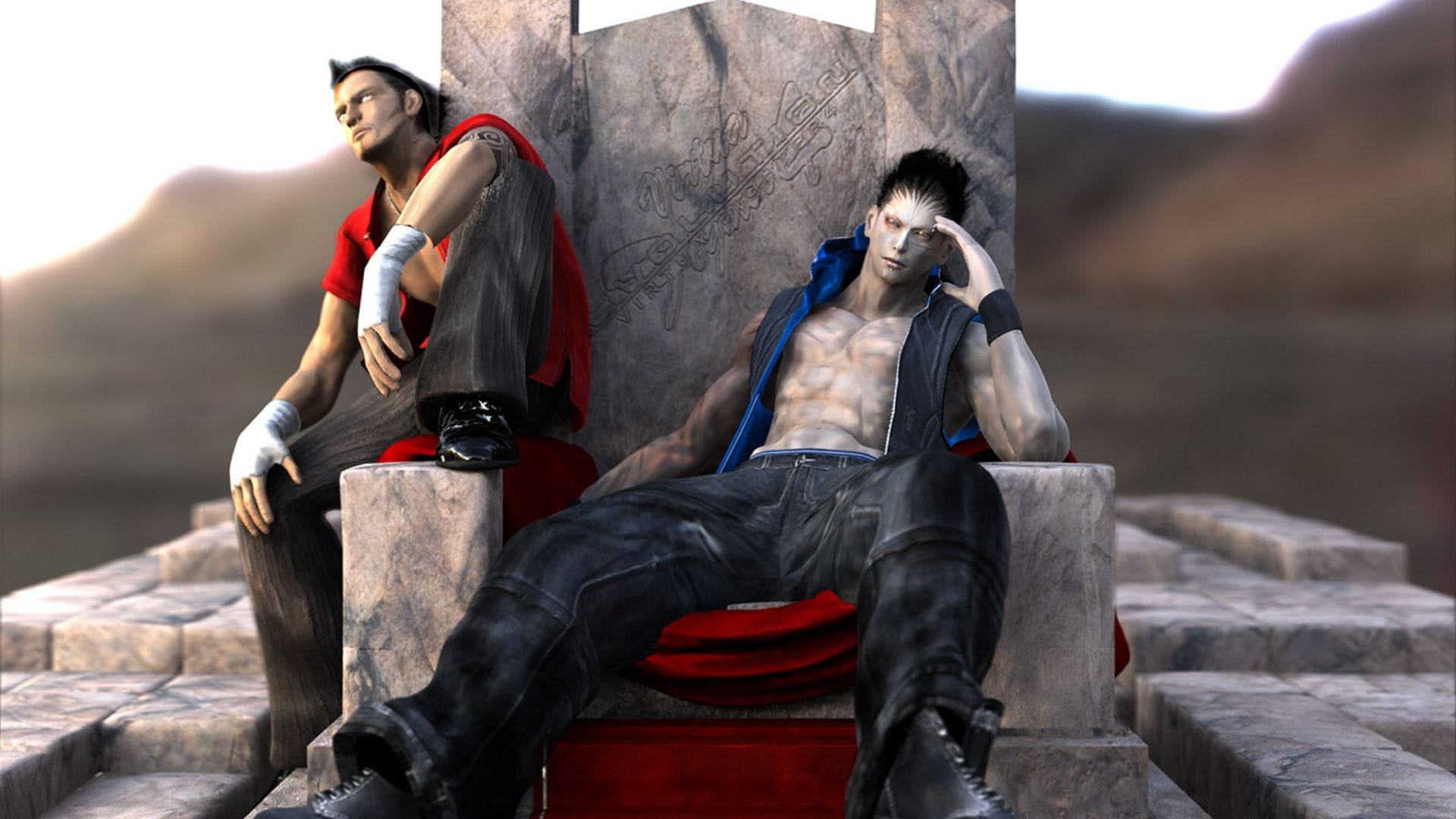
Ever feel like modern fighting games care more about flashy cinematic finishers than actual martial arts? There was a moment in the early 2000s when fighting games were obsessed with spectacle. Flashier supers. Louder characters. Bigger everything. Then Virtua Fighter 4: Evolution arrived on PlayStation 2 and quietly reminded everyone that true mastery isn’t about fireworks.
Building on the already rock-solid foundation of Virtua Fighter 4, Sega’s Evolution update didn’t chase trends or dilute its identity. It was about fundamentals, precision, and consequences. In an era dominated by cinematic flair, VF4 Evo doubled down on realism and balance, offering a purer, more disciplined vision of 3D fighting. In this review, you’ll discover if Virtua Fighter 4: Evolution is still one of the most rewarding fighters on the PS2.
Roster
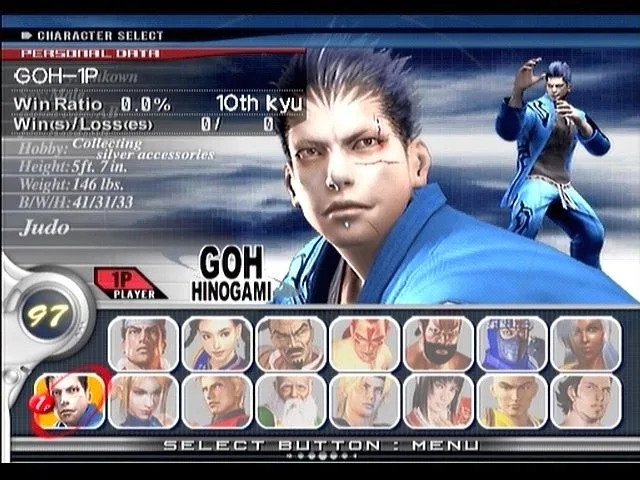
The roster isn’t just a collection of cool outfits; it’s a library of authentic martial arts philosophies. Every limb movement reflects real-world physics and kinetic energy, which is honestly refreshing in a genre full of fireballs. Virtua Fighter mascot Akira Yuki is the ultimate purist pick. His Hakkyokuken style focuses on explosive elbow strikes and devastating close-range palm thrusts. Mastering his frame-perfect inputs feels like earning a real black belt.
Sarah Bryant is a whirlwind of Savate and Taekwondo. If you love high-speed kicks and complex pokes, she’s your go-to. I’ve lost count of how many times her flashy somersaults caught me slippin’. Shun Di is my personal favorite for causing absolute chaos. His Drunken Kung-Fu (popularized in Jackie Chan’s cult classic Drunken Master) uses deceptive stumbles and acrobatic tumbles to tilt your opponent. FYI, the more he “drinks” during a round, the more his move set expands into pure unpredictability.
VF4 Evo wasn’t just a balance patch; it brought two legendary newcomers to the fray. Goh Hinogami introduced a sinister brand of Judo that feels heavy and impactful—perfect for those who love a good “grab and smash” strategy. Meanwhile, Brad Burns brought Muay Thai swagger, utilizing vicious knees and clinches that turn the tide in seconds. Every character feels like a deep dive into a specific discipline, making the learning curve steep but incredibly satisfying.
Gameplay
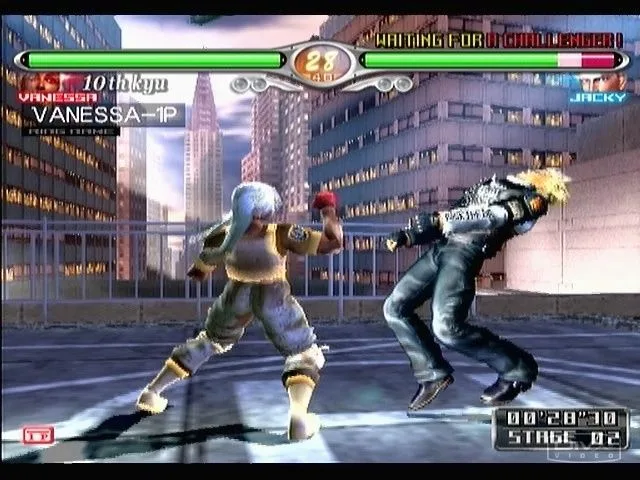
If you think fighting games are just about memorizing “down, forward, punch,” prepare for a serious reality check. Virtua Fighter 4: Evolution operates on a level of granular detail that makes other fighters look like checkers compared to a high-stakes chess match. The system rewards intentionality over frantic mashing every single time, making every victory feel earned rather than accidental.
If you’re a newbie to the world of fighting games, I won’t lie—this game can be intimidating. The barrier to entry feels like a brick wall at first. However, VF4 Evo is actually one of the best fighting games for beginners who actually want to learn mechanics.
Why? Because it features one of the deepest training modes ever coded. It doesn’t just show you a move list; it explains why you use certain moves, the timing for counters, and how to handle specific situations. The only real downside is the time investment. To fully master this game, it will take a long time—even for gamers who have years of experience with other 3D fighters. It’s a marathon, not a sprint.
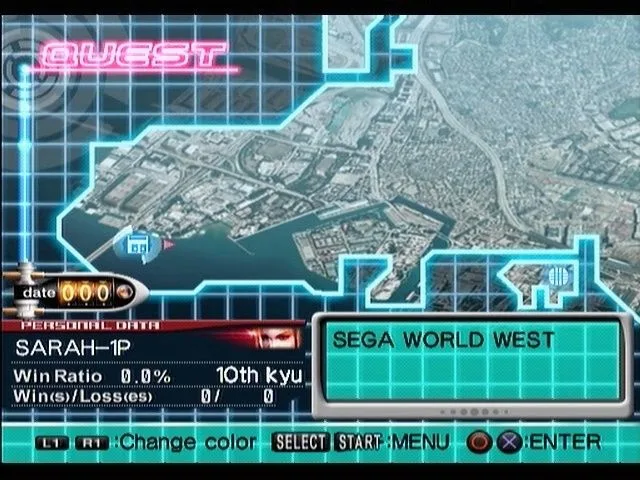
Have you’ve ever felt like modern single-player fighting game modes are just a hollow excuse to unlock a gallery image? Quest Mode in VF4 Evo is going to blow your mind. Back in the day, most developers thought an Arcade Mode with a static ending was enough. Sega looked at that and said, “Hold my drink.” They crafted a deep, RPG-style experience that basically simulates the life of a hardcore arcade rat.
You don’t just pick a character and fight a ladder. You create a profile, name your “player,” and set out on a journey across various virtual game centers. Each arcade has its own vibe, its own local legends, and its own set of challenges. It’s an incredibly immersive way to play, making you feel like you’re part of a living, breathing Fighting Game Community (FGC).
But what’s the point of being a grandmaster if you don’t look the part? As you win matches and tournaments, you earn “Fight Money.” You can blow this cash on a massive array of cosmetic items to customize your fighter. We’re talking different hair colors, sunglasses, specialized clothing, and even weird accessories like a giant fish strapped to your back.
It sounds silly, but it adds a layer of personal attachment to your character. Plus, as you climb the ranks from 10th Kyu to the high-rank titles, your player card changes, signaling to everyone in the virtual arcade that you aren’t a scrub anymore.
Here’s where it gets technically brilliant. To make the world feel alive, Sega took the data from the top Japanese arcade players and infused their specific playstyles into the CPU opponents. This is a game-changer. Some AI opponents are hyper-aggressive, some are masters of the “turtle” defense, and others love to bait you into whiffing big attacks. In layman’s terms, if you get your ass kicked, it’s not because the AI is cheating—it’s because it exploited a hole in your defense. It forces you to “git gud” in a way that feels organic and fair.
Ever wondered why people still talk about this mode twenty years later? It’s because it captures the spirit of the arcade. While the difficulty spikes toward the end are legendary (prepare for some sweaty palms during the final rank-up matches), the satisfaction of seeing your name at the top of the leaderboards is unmatched. IMO, every fighting game made after 2003 should have used this as the blueprint.
Graphics
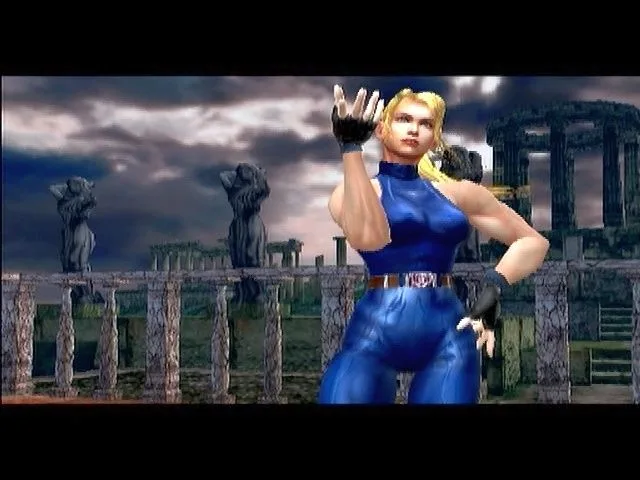
Let’s be honest: in the fighting game world, frames are everything. You can have the prettiest models in the world, but if the game chugs when you pull off a high-level counter, it’s basically unplayable. Sega knew this, which is why VF4 Evo is a pure technical masterclass.
The first thing you’ll notice is how clean everything looks. Sega significantly improved the anti-aliasing, which is just a fancy way of saying they killed off those annoying jagged edges that plagued the original game. The character models look solid, grounded, and incredibly detailed for 2003. When you see the light catch the silk of Lau’s gi or the metallic sheen on Jacky’s jacket, you realize just how much love went into the textures.
The stages aren’t just flat bitmaps either. VF4 Evo features some of the best environmental effects of the era. If you’re fighting in the snow or sand, your characters leave actual footprints and grooves. Slamming someone into the ground creates a satisfying crater that stays there. The way shadows shift as you move around the ring adds a level of depth that makes the fights feel “heavy” and real. The character silhouettes are much smoother here than in the vanilla version, giving the martial artists a more “human” look during their idle animations.
But the real MVP here is the rock-steady 60 frames per second. In a game where some moves have a three-frame execution window, any lag is a dealbreaker. VF4 Evo holds that frame rate like its life depends on it. This isn’t just about “looking fluid”; it’s about the integrity of the gameplay.
The motion is so crisp that you can actually “read” the startup animations of your opponent’s attacks. It’s the difference between guessing a block and actually reacting to a high kick. While it might not have the flashy particle explosions or screen-filling fireballs of Soulcalibur or Tekken, its beauty lies in its mechanical honesty. It proves that you don’t need a million sparks on screen to be a technical marvel.
Replay Value
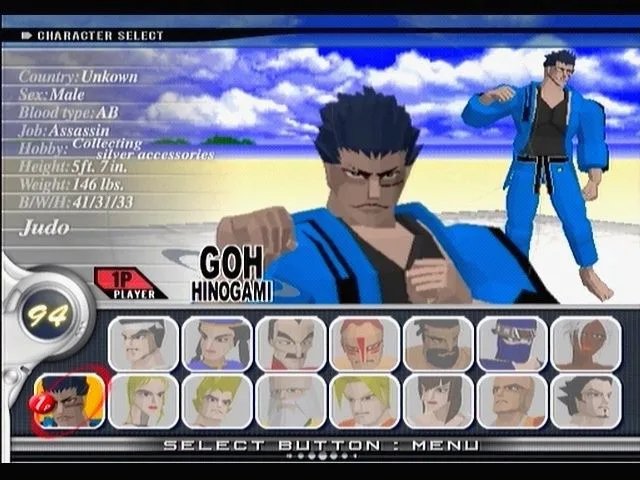
If you think Sega was finished after perfecting the gameplay and graphics, think again. Tucked away in the US version of the game is a massive “thank you” letter to the fans: the Virtua Fighter 4 10th Anniversary mode. It’s essentially a time machine that lets you experience the modern roster through the lens of 1993.
This isn’t just a simple filter though. Every character—including the newcomers like Brad and Goh—gets a low-polygon, flat-shaded makeover to look exactly like the original Virtua Fighter arcade board. It’s a surreal trip to see new characters like Brad Burns or Goh Hinogami reimagined as if they were running on the old Model 1 arcade hardware.
What makes this more than just a visual gimmick? The gameplay actually shifts to mimic the floaty physics and simplified movement of the first game. You’ll find yourself jumping ten feet into the air and landing with that classic “thud” we all remember from the arcades. The health bars and menus switch back to that charmingly primitive aesthetic, and the audio takes a dip in fidelity to match the old-school vibe. It’s a great novelty throwback that adds even more value to an already packed disc.
Final Verdict
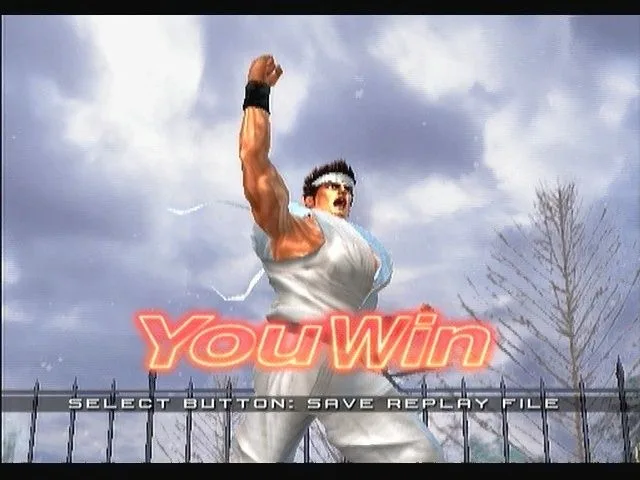
So, does Virtua Fighter 4: Evolution still hold up in an era of 4K resolutions and online matchmaking? Absolutely. It remains a technical masterclass that every fighting game enthusiast needs in their library. It’s a game that respects your intelligence and rewards your patience like few others.
While the difficulty spikes in the later Quest Mode tournaments might make you want to toss your DualShock 2 out the window, the sense of accomplishment is unmatched. Is it the flashiest game on the shelf? Probably not. But IMO, it is the most refined 3D fighter ever polished for a home console.
If you have a PS2 sitting in your closet, or if you’re a fan of the genre looking for the gold standard of martial arts simulators, you owe it to yourself to track this down. It’s tough, it’s deep, and it’s an essential piece of gaming history.
Verdict
Virtua Fighter 4: Evolution
Excellent

At HyperComboGamer, we believe great games deserve great coverage. That means no filler, no clickbait, or fanboyism—just honest, high-quality reviews, features, and guides that put gamers first. Whether you’re a lifelong enthusiast or just starting your gaming journey, you’ll find interesting gaming perspectives that will leave you fully satisfied.