After Yuji Naka and his team polished off the 16-bit masterpiece Sonic & Knuckles in 1994, Naka shifted focus to Sonic X-treme for the Sega Saturn, aiming to deliver the first true 3D experience for the franchise. Unfortunately, development hell and internal setbacks killed the project in 1996, leaving the Saturn without a flagship platformer.
The lack of a “killer app” left fans disillusioned and the brand identity in flux. Even Sega’s own Kazuyuki Hoshino admitted that Sonic felt decrepit and outdated, despite the mascot being only five years old at the time. Shortly after finishing NiGHTS into Dreams, designer Takashi Iizuka proposed a bold shift: an RPG-style Sonic game with a heavy emphasis on storytelling. The team built a prototype for the next Sonic game in 1997 using the NiGHTS engine, but the Saturn’s hardware limits crippled their vision.
The result? When Sega finally launched the Dreamcast, the original Sonic Adventure arrived as a landmark launch title that fundamentally changed 3D game design. It functioned as a technological pioneer, introducing online features and DLC long before they became industry standards. Australian magazine Hyper even claimed the visuals surpassed high-end personal computers of the era.
Two years after Sega officially discontinued the Dreamcast, the company released Sonic Adventure DX: Director’s Cut for the Nintendo GameCube. Does the GameCube version actually deliver the definitive experience, or did the porting process introduce unwanted friction?
Story Overview
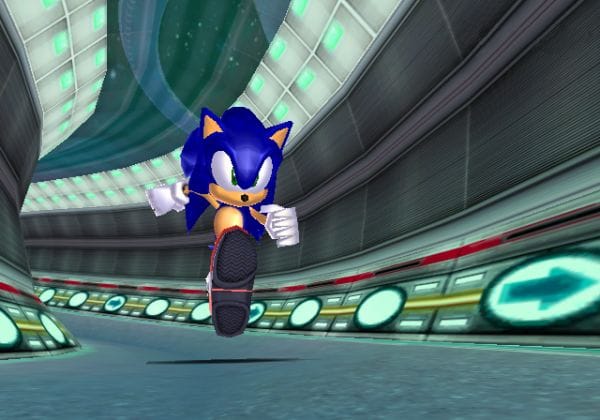
The narrative of Sonic Adventure DX doesn’t just stick you in the red sneakers of everyone’s favorite hedgehog and call it a day. Instead, it throws a narrative curveball by splitting the experience into six distinct perspectives. It’s a bold move that turns a simple “stop the bad guy” plot into a multi-layered drama centered around Dr. Eggman’s latest liquid nightmare: Chaos.
Ever wonder what the “other guys” are doing while Sonic is busy running loops? This game actually shows you. While the overarching goal involves stopping Eggman from feeding the Chaos Emeralds to a water-based deity, each character sees the conflict through a different lens (more on that later).
By today’s standards, the cutscenes might look a bit like a puppet show with a flickering framerate, but in 1998 (and the 2003 DX port), this was groundbreaking stuff. It proved that Sonic wasn’t just a mascot meant for 2D side-scrolling; he could anchor a cinematic world with a sprawling cast.
Gameplay
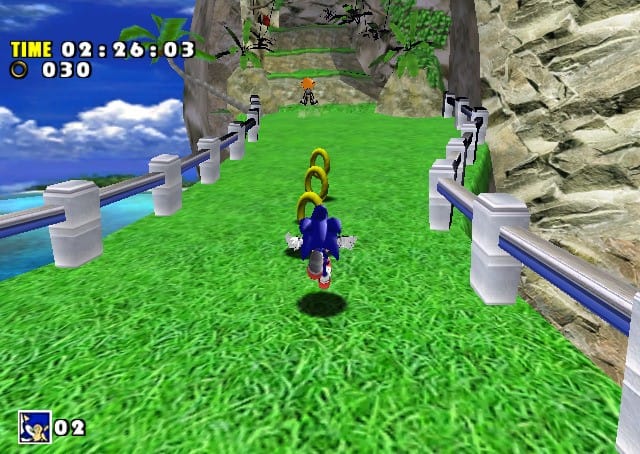
When you think of the blue blur, you think of speed, loops, and a certain attitude that 90s kids couldn’t get enough of. In Sonic Adventure DX, Sonic’s levels are the bread and butter of the entire experience. They are high-octane, spectacle-filled sprints that take you from the sunny shores of Emerald Coast to the neon-drenched heights of Casinopolis.
Have you ever felt that literal rush when the camera shifts and a giant whale starts chasing you down a boardwalk? That’s the “Pure Sonic” charm. These stages are designed to keep you moving forward, utilizing the Homing Attack to bounce between enemies like a caffeinated pinball. It’s glorious, even if the physics occasionally decide to take a vacation mid-jump.
While Sonic Adventure DX tries its best to modernize the experience, it definitely still carries that vintage jank that defined the early era of 3D gaming. Have you ever been mid-jump, perfectly lined up for a homing attack, only for the camera to suddenly pivot 180 degrees and send you plummeting into a bottomless pit?
It’s a rite of passage for every Sonic fan. The GameCube version did introduce a first-person view via a dedicated camera button, but let’s not kid ourselves—it’s a digital band-aid on a much larger wound. Does the camera make the game unplayable? Not by a long shot. But it does mean you’ll need a bit more patience than you would with a modern title.
The camera often feels like a sentient entity that actively hates you. It loves to get stuck behind walls, clip through the floor, or zoom in so close to Sonic’s quills that you can’t see the giant robot standing right in front of you. It’s frustrating, sure, but there’s a certain nostalgic charm to mastering a game that refuses to cooperate with your eyes.
Level Design
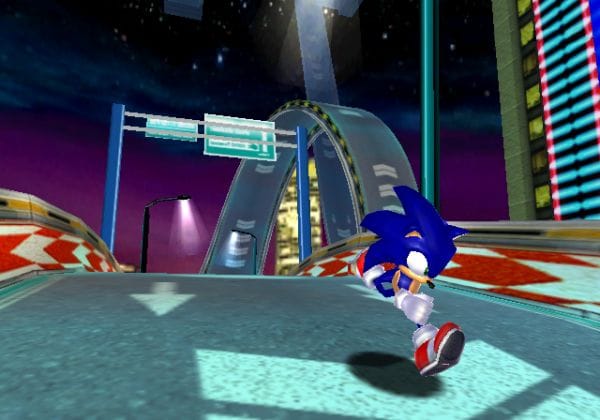
Sega didn’t just want to give us a racing game; they wanted to give us a world. In between the heart-pounding sprints, Sonic Adventure DX breathes through its Adventure Fields. These semi-open hubs act as the connective tissue of the game, trading the “Gotta Go Fast” mantra for a bit of urban exploration and tropical trekking.
Have you ever stopped to wonder what a hedgehog does when he isn’t dismantling industrial robots? Apparently, he hangs out in hotel lobbies and catches the train. These sections—comprising Station Square, Mystic Ruins, and the Egg Carrier—allow the game to pivot into a slower, more atmospheric experience that builds a surprising amount of immersion for a 1998 title.
While the NPCs look a bit like sentient mannequins by today’s standards, they give the world a sense of life that was revolutionary at the time. You aren’t just moving from Level 1 to Level 2; you’re navigating a cohesive map. You’ll find yourself carrying a wind stone through an alleyway or solving a light-mirror puzzle in an ancient temple just to find the next portal.
Station Square is a bustling city hub complete with a city hall, a hotel, and even a burger shop. Mystic Ruins is ajungle-themed area that offers a more traditional platforming vibe, with hidden caves and a workshop belonging to everyone’s favorite two-tailed fox. These fields aren’t just for show; they are packed with vital power-ups and clues.
You’ll hunt for the Light Speed Shoes for Sonic or the Fighting Gloves for Knuckles, which are often hidden just off the beaten path. It turns the game into a bit of a scavenger hunt, rewarding players who take the time to poke around the corners of the map.
I’ve always felt that these hubs provide a much-needed mental break. After the sensory overload of a 300-mph loop-de-loop, there’s something oddly soothing about walking through a rainy station and chatting with a worried train conductor. These areas are also where you’ll find the secret entrances to the Chao Gardens, but more on those little cuties later!
Transitioning into these slower sections might feel jarring to some, but they serve as the foundational structure for the entire Adventure concept. They force you to engage with the environment rather than just reacting to it. Is it a bit clunky to navigate a 3D city with a camera that sometimes gets stuck in a lamp post? Sure. But it adds a layer of “place” that many modern Sonic games sadly lack.
Graphics
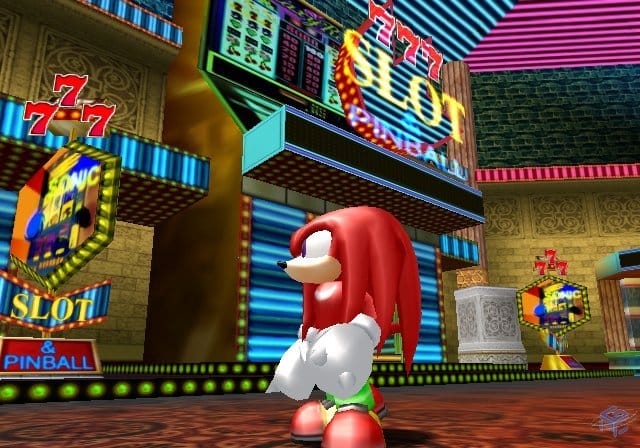
When Sega announced the “DX” upgrade, the big selling point was the visual overhaul. The Dreamcast original was already a technical heavyweight that pushed the PowerVR 2 chip to its absolute limits, but the GameCube version aimed to give our heroes a much-needed spa day. Sonic and his pals received completely new models that look significantly more volumetric and rounded than their 1998 counterparts.
Have you ever looked back at early 3D models and realized everyone had “polygon elbows”? Sega fixed that here. The character models sport a higher polygon count, and the improved lighting effects give Sonic’s fur a vibrant, almost iridescent sheen. It’s a noticeable jump in quality that makes the cast feel right at home alongside other early 2000s icons.
While the characters got the VIP treatment, the environments are a bit of a mixed bag. The textures in areas like Speed Highway or Red Mountain definitely look sharper, but they lack some of the artistic soul found in the Dreamcast version. Some purists argue that the original’s “crunchy” textures had a specific aesthetic that the DX version trades for a cleaner, albeit slightly sterile, look.
The most impactful change isn’t the lighting—it’s the frame rate. The DX edition bumped the performance from a steady 30fps to a blistering 60fps. When you’re boosting through a loop at terminal velocity, that extra smoothness makes a world of difference. It feels more responsive, more kinetic, and just plain better to play.
However, this boost does come with a price. Pushing the engine to run twice as fast on the GameCube hardware resulted in some unintended side effects. You’ll occasionally encounter slowdown during chaotic moments like when a dozen badniks explode simultaneously. Some environmental assets also struggle to keep up, leading to the occasional visual glitch or shimmering effect on distant objects.
Is a rock-solid frame rate more important than raw speed? For a platformer built on reaction times, I’d argue that the higher ceiling of the DX version wins every time. While the Dreamcast version felt more “stable” in its consistency, the GameCube’s enhanced fluidity makes the action feel much more modern. The occasional visual imperfection is a small price to pay for a version that finally matches the breakneck pace of Sonic’s personality.
Editor’s Note: Ever wonder why anti-SEGA fanboys are so eager to call Sonic Adventure ugly? Let’s get one thing straight: retrospectively dunking on a game’s appearance while ignoring historical context is a bit of a low blow. The game literally came out in 1998! Can you name five games that same year that were more ambitious, let alone the entire 20th century? Comparing it to flagship titles that came out years later on the GameCube completely ignores the legacy that this game set for modern gaming today.
Replay Value
You might think you’ve seen the whole story after rolling credits with Sonic, but you’ve actually only scratched the surface. Did you ever wonder why that plane crashed in the background of your level? Or who left that mysterious life belt in the sewer? You won’t get the answers until you jump into the shoes of the other five characters.
Tails offers a slightly different flavor of platforming. His levels are essentially high-speed races against Sonic (or Eggman). While he’s technically a bit slower on foot than his spiky mentor, he has a literal ace up his sleeve—or rather, behind his back. Tails can fly, allowing you to bypass massive chunks of the level that Sonic has to grind through. If a badnik gets too close, Tails can perform a spinning tail attack that clears the area in a heartbeat.
I’ve always found Tails’ stages to be a relaxing palette cleanser. They aren’t as stressful as Sonic’s later levels, and there’s a certain smug satisfaction in hovering over a difficult platforming section while Sonic has to do it the hard way.
If Sonic is the high-speed thrill and Tails is the airborne shortcut king, Knuckles is the guy who forces you to stop and smell the—well, the buried treasure. His levels are basically a giant, open-ended scavenger hunt, where your goal is to locate three shards of the Master Emerald scattered across a wide-open level using a hot-and-cold radar system.
The game only tracks one shard at a time, meaning you could be standing right on top of the second shard, but your radar won’t ping until you’ve collected the first. Have you ever spent ten minutes gliding around a mountain, staring at a blinking red light, only to realize the shard was buried in the very first patch of dirt you walked past? It can be a total pain in the ass at times.
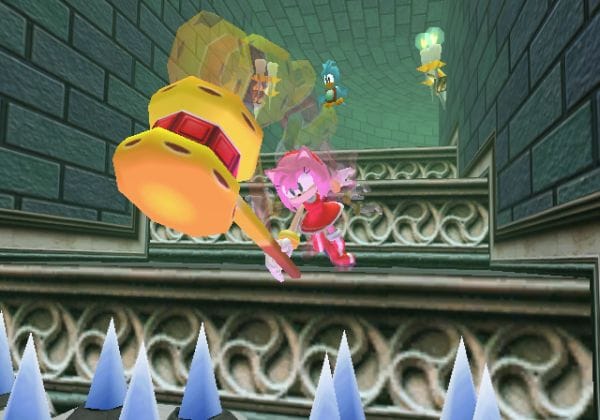
If you thought Sonic Adventure DX was all about blue skies and sunshine, you clearly haven’t played Amy’s campaign lately. While Sonic is out there living his best life, Amy Rose is essentially playing a kiddie version of Resident Evil. Her levels introduce a persistent, terrifying antagonist named ZERO, a hulking green robot that stalks her relentlessly through every stage.
She’s significantly slower than the rest of the cast, and she can’t even perform a homing attack. However, looking back, it’s one of the most creative levels in the game. It forces you to be aware of your surroundings and plan your jumps carefully, because one wrong move means getting flattened by a giant green fist.
E-102 Gamma isa red-clad E-Series robot who decided that he’s had enough of Eggman’s nonsense, and his levels play out like a high-speed arcade shooter dropped into the middle of a platformer. What’s truly wild about Gamma is that despite his arcade carnage gameplay, he has the most poignant and somber story in the entire game. You’re playing as a machine gaining a conscience, hunting down your brothers to set them free from their mechanical prisons.
Big the Cat basically turns Sonic Adventure into a slow-burn fishing simulator, which left many gamers scratching their heads for decades. Big’s levels involve casting your line using the action button, wiggling the lure to attract fish, and then engaging in a high-stakes tug-of-war once you get a bite. The problem is that the physics feel like they belong to a completely different engine, making every successful catch feel more like a stroke of luck than a display of skill.
I’ll give Sega one thing: they knew this wasn’t for everyone. Big only has four levels (though it feels like an eternity when you’re playing them), and his story is the shortest in the game. It’s probably one of the most polarizing chapters in Sonic history. It’s janky, it’s frustrating, and it makes absolutely no sense—but it wouldn’t be Sonic Adventure without him.
Sega essentially bundled a full-blown virtual pet simulator inside Sonic Adventure with the Chao Garden, and honestly? It’s arguably the most addictive part of the entire package. You find Chao Eggs hidden throughout the Adventure Fields, and once they hatch, you’re officially a parent to a digital creature that reacts to how you treat it.
Your Chao aren’t just there to look cute (though they excel at that); they are competitive athletes in the making. By feeding them the Rescued Animals you find in the Action Stages, you transfer that animal’s traits to your Chao. Give them a penguin, and they’ll learn to swim; give them a gorilla, and they’ll start flexin’ those tiny muscles. You can level up Swim, Fly, Run, Power, and Stamina to prepare your little buddy for the Chao Races.
Depending on which character interacts with them and what they eat, they can evolve into Hero, Dark, or Neutral types. Sonic Adventure DX also lets you transfer your Chao to the Tiny Chao Garden on your Game Boy Advance via the Link Cable. It’s a literal portable nursery!
For the completionists out there, the 130 Emblems represent the mountain you have to climb. You earn these by beating levels, winning Chao Races, and completing specific missions. It’s a massive undertaking that forces you to master every single mechanic the game throws at you.
Final Verdict
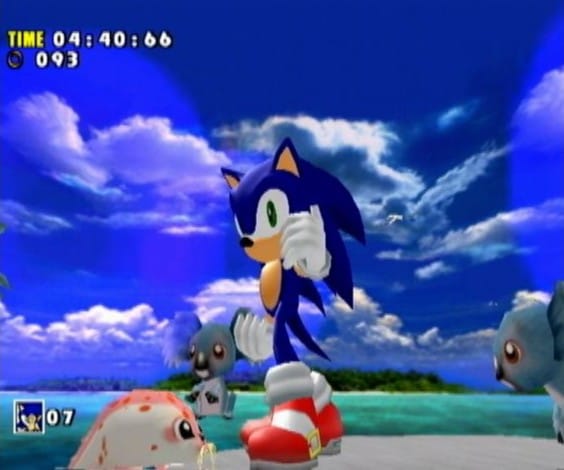
Sonic Adventure DX: Director’s Cut is flawed, quirky, and occasionally maddening, but it’s also brimming with personality and Sega soul. Is it a perfect port? Not exactly. The transition to the GameCube brought some visual compromises and bugs that weren’t present on the Dreamcast.
However, the 60fps boost, the refined character models, and the sheer convenience of having this masterpiece on a Nintendo console make it a must-own for any serious collector. If you can approach it with a bit of patience and an appreciation for its 1998 roots, it’s the definitive way to experience the dawn of 3D Sonic, warts and all.
Verdict
Sonic Adventure DX: Director’s Cut
Good