Insomniac Games conquered the PS1 with Spyro the Dragon, but the arrival of the PlayStation 2 in 2000 demanded something far more bombastic. The studio stood at a crossroads, toying with some bizarre concepts that never saw the light of day. Their first attempt, a title called Monster Knight, withered away in the planning stages without much fanfare. Their second pivot, a project titled Girl with a Stick, drew heavy inspiration from The Legend of Zelda and Tomb Raider.
The team spent six arduous months crafting this adventure, hoping to capture a whimsical, exploration-heavy spirit. However, Sony worried the game wouldn’t find a viable market in the shifting gaming landscape, essentially telling the developers to do what they do best and return to their platforming roots. This rejection could have crushed a lesser studio, but it actually galvanized the team to dream of something much bigger.
A few weeks after the Girl with a Stick funeral, Brian Hastings pitched a sci-fi galaxy-hopping adventure fueled by manga aesthetics, the crude humor of Conker’s Bad Fur Day, and their very own Spyro. This gadget-heavy epic that would eventually become Ratchet & Clank. The pressure was immense, especially with the PS2’s hardware capabilities promising a massive leap in visual fidelity. In this review, you will find out whether this duo could actually mirror the monumental success of the Spyro trilogy.
Story Overview
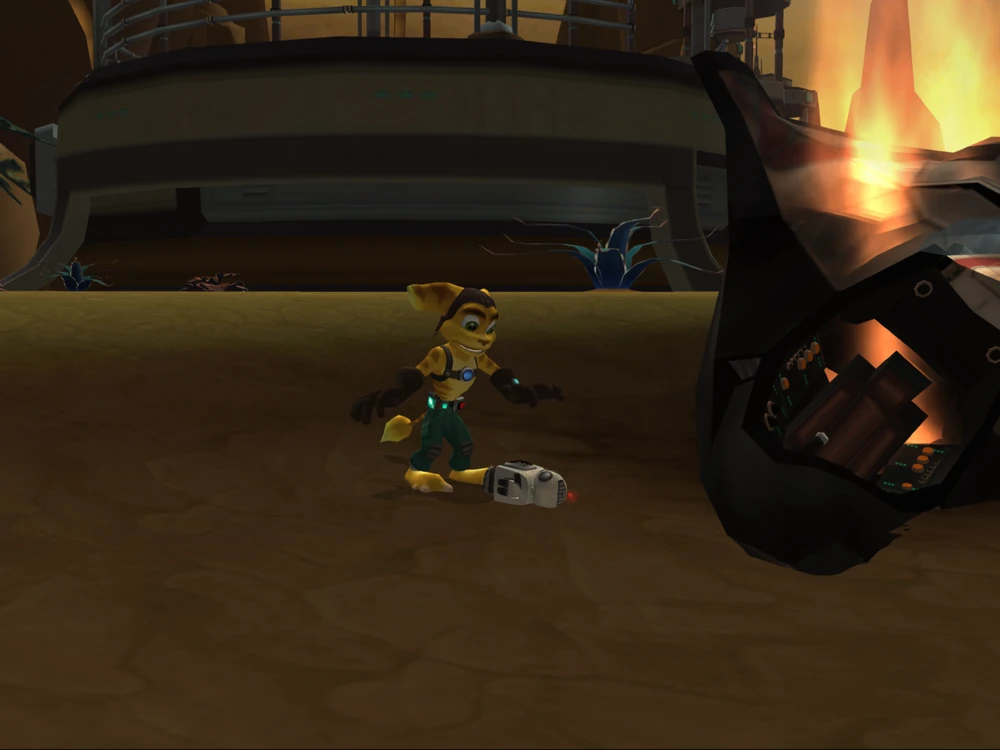
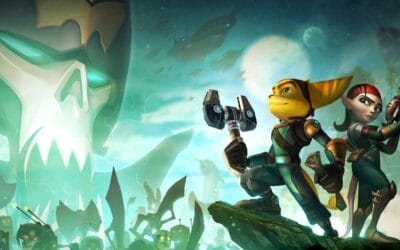
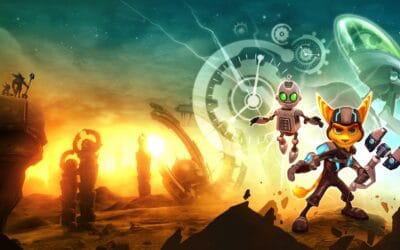
The journey kicks off on the dusty, backwater planet of Veldin, where we meet Ratchet, a furry, feline-like Lombax with a knack for mechanics and a serious case of wanderlust. He’s spent his life tinkering with scraps, dreaming of a life among the stars, but he’s missing one crucial component for his homemade starship: a robotic ignition system. Talk about a “so close, yet so far” situation, right?
The universe, being the chaotic place it is, decides to drop a solution literally out of the sky. A defective but highly intelligent robot escapes a cold, industrial warbot factory on Planet Quartum and crash-lands right in Ratchet’s backyard. After the smoke clears and the little guy regains consciousness, Ratchet bestows upon him the name Clank, and an iconic partnership is born.
Clank isn’t just a shiny new piece of luggage; he’s a fugitive with a dire warning. He carries an encrypted message revealing the sinister plans of Chairman Alonzo Drek, a ruthless corporate shark leading the Blarg race. Drek’s home planet has become a toxic, overpopulated wasteland—mostly thanks to his own terrible management—so his solution is to harvest chunks of other planets to build a custom “perfect” world.
Ratchet initially just wants to use Clank to get his ship off the ground, but he quickly realizes that the stakes involve total galactic annihilation. The duo strikes a shaky, opportunistic deal to track down Drek and stop the Blarg before they tear the galaxy apart piece by piece.
Unlike the “gee-whiz” hero of the modern PS4 remake or the movie, the original PS2 Ratchet is a deeply flawed character with a massive chip on his shoulder. He’s cocky, often selfish, and a sarcastic jerk. But honestly? The game is so much better for it. He isn’t trying to be a hero; he’s just a guy who wants to fix his ship and get off a backwater rock.
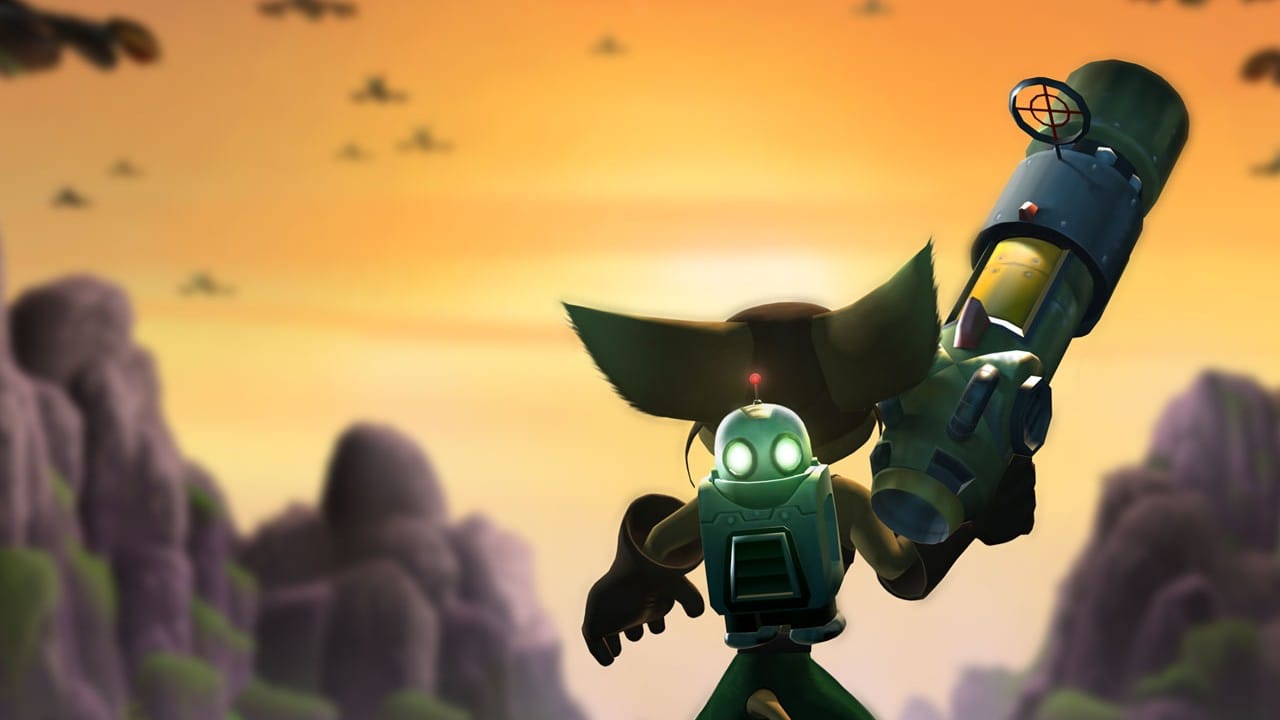
Clank serves as the perfect logical, serious foil to Ratchet’s impulsive, hot-headed energy. He provides the data and the moral compass, constantly reminding him (and us) that there’s a galaxy worth saving. The dynamic works so well because the duo represents two total opposites. They don’t instantly become best friends; they argue, they have conflicting motivations, and they genuinely get on each other’s nerves.
As you progress, the story throws several plot twists that break the tropes you usually see in mascot platformers. The plot might seem like a standard “save the world” quest at first, but the writing is surprising sharp, providing a satirical look at consumerism and corporate greed. It’s a mature take on the genre wrapped in a colorful, cartoony shell, and that’s exactly why it still resonates today.
Gameplay
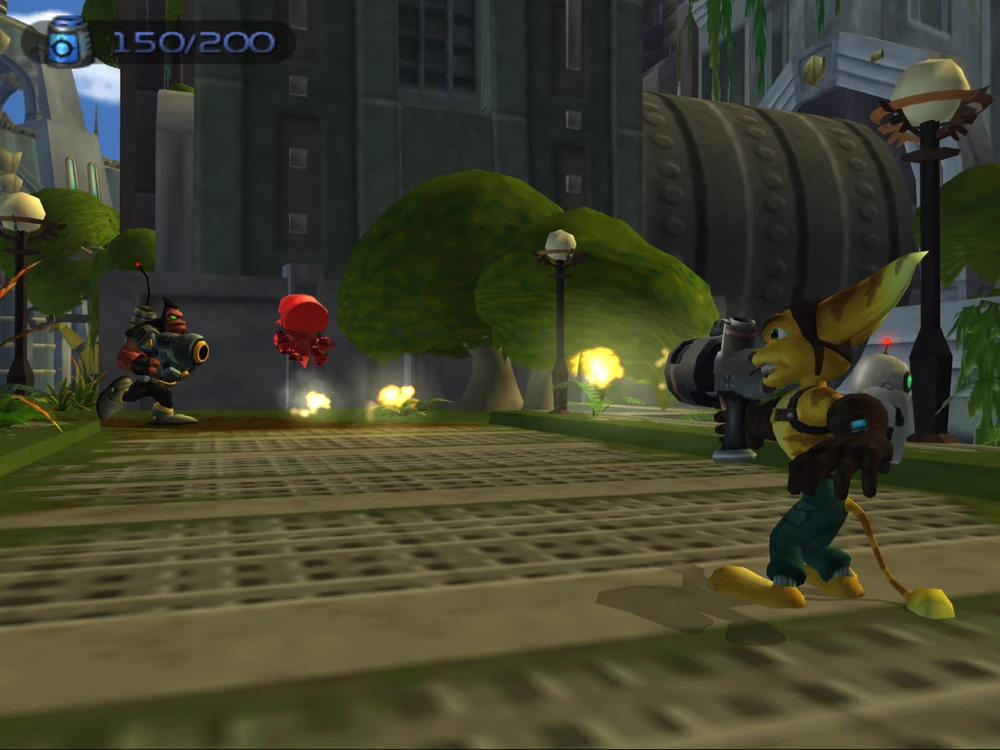
While the narrative sets the hook, the gameplay loop is what truly keeps you tethered to the CRT screen. Insomniac didn’t just give us another “jump and bop” simulator; they handed us a third-person shooter/platformer hybrid that feels like a chaotic, metallic fever dream. You’ll spend your time traversing lush, dangerous environments while carrying a mobile armory that would make a small nation jealous.
The variety of unusual gadgets and weapons at your disposal is staggering. Whether you’re turning enemies into chickens with the Morph-O-Ray or melting them with the Pyrocitor, the creativity on display is pure genius. It’s this constant influx of new tools that keeps the exploration from ever feeling stagnant. Ever wondered why blowing things up feels so much more satisfying here than in other games? It’s all about that explosive personality.
Before you get your hands on the high-end hardware, you’ll become intimately acquainted with the OmniWrench 8000. This isn’t just a basic melee weapon for smashing crates and Blarg heads; it’s an essential tool for environmental puzzles. Need to turn a bolt to bridge a gap or activate a distant elevator? The wrench has you covered.
It’s the Swiss Army knife of the gaming world, providing a satisfying tactile feel whenever you land a combo. Even when you’re swimming in ammunition for your Devastator, you’ll find yourself falling back on the wrench just for the pure, crunchy feedback of a well-timed swing. Plus, it never runs out of ammo—clutch for those moments when you’re totally tapped out.
Ratchet might be the muscle, but Clank is far from just a backpack. Occasionally, the game shifts gears and lets you play as Clank to navigate cramped vents or solve specialized puzzles. These segments offer a refreshing change of pace, requiring a more methodical approach compared to Ratchet’s guns-blazing style.
You’ll command a small army of Gadge-Bots to do your bidding, whether they’re attacking enemies or acting as makeshift power sources. These sections prove that Clank is an equal partner in this adventure, even if he’s the one usually getting lugged around on Ratchet’s back. It’s a great way to break up the action and give the little guy his moment in the spotlight.
I have to be honest with you: the combat shows its age in one very specific, very frustrating way. The biggest flaw is the lack of a dedicated strafe button. When you’re battling a screen full of enemies, the controls feel incredibly clunky as you try to reposition yourself without turning your back on the danger.
It’s a bizarre omission that makes the movement feel a bit archaic compared to the refined sequels. You essentially have to commit to your direction, which leads to some “oops” moments during intense firefights. However, if you can master the jump-flip maneuver, you can mitigate most of the clunkiness. Just don’t expect the fluidity of a modern twin-stick shooter!
Graphics & Sound
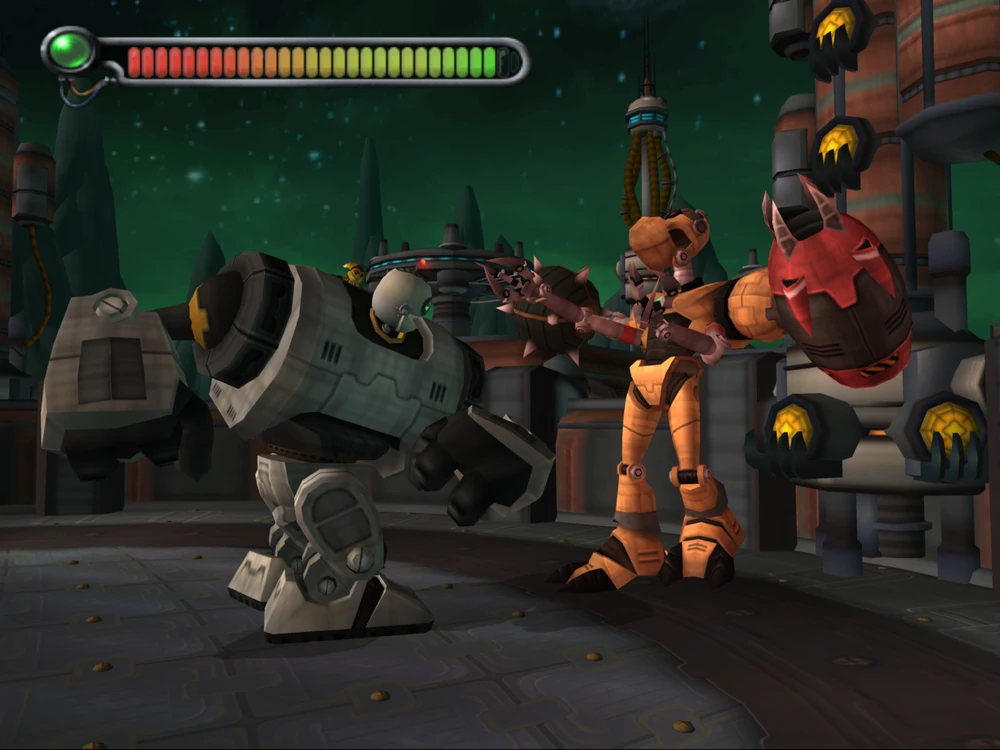
Let’s be real for a second: looking at early PS2 titles can sometimes feel like staring at a bowl of jagged digital soup. However, Ratchet & Clank manages to dodge that ugly duckling phase thanks to some masterful art direction. While the graphics may definitely scream 2002, the cartoony, vibrant design language of the game still holds up.
Standing on a landing pad in Metropolis and watching hundreds of flying cars stream through the skyscrapers felt like stepping into a living, breathing sci-fi comic book. Insomniac utilized a clever low-poly trick for distant objects, allowing them to cram the horizon with dizzying detail without melting your console.
The planet-hopping is the real star of the show here. Each world feels like its own isolated ecosystem with a distinct color palette and architectural style. You aren’t just moving from forest level to ice level; you’re exploring the rain-slicked streets of Blackwater City or the sun-baked, desolate canyons of Oltanis.
This variety prevents the game from ever feeling repetitive. Just when you think you’ve seen it all, the game tosses you onto a frozen tundra or a lush, tropical resort. It’s that constant visual reinvention that makes the journey feel like a true odyssey across the stars.
If the visuals are the body, then David Bergeaud’s soundtrack is the soul of this experience. The OST is, by far, one of the most unique and infectious scores on the PlayStation 2. It blends industrial techno, groovy funk, and cinematic orchestral swells into a space-age sound that I can still hum perfectly over twenty years later.
Each track perfectly captures the vibe of its planet. The music in Metropolis feels energetic and aspirational, while the themes for the Blarg-infested worlds sound heavy, mechanical, and slightly oppressive. It’s a masterclass in atmospheric world-building through audio. If you don’t find yourself nodding along to the Blackwater City theme, you might need to check your pulse.
Replay Value
So, you’ve finally beat the game—what now? In most games of the era, you’d just see a “The End” screen and call it a day, but Insomniac pioneered the Challenge Mode (or New Game Plus) that became the series’ calling card. This feature allows you to loop back to the beginning while keeping your entire arsenal of weapons, every single bolt, and your hard-earned gadgets.
It transforms the experience from a desperate struggle for survival into a glorious victory lap. There is a sublime, almost therapeutic satisfaction in returning to the early planets and absolutely vaporizing those pesky Blarg enemies with a nuclear-grade missile launcher that gave you trouble previously.
The Gold Bolts are hidden collectibles are tucked away in the most devious corners of the map, often requiring late-game gadgets like the O2 Mask or the Hydro-Displacer to reach. FYI, finding them all is the only way to unlock the “Gold” versions of certain weapons, which adds an extra layer of explosive flair to your combat.
No review of this game is complete without mentioning the “big one.” I’m talking about the R.Y.N.O. (Rip Ya a New One). This isn’t just a weapon; it’s a galactic status symbol. It costs a staggering 150,000 bolts—a fortune that usually requires a second playthrough or some serious grinding—and fires a literal wall of missiles that clears the screen in seconds.
Tracking down the shady dealer in Blackwater City to buy this beast is a rite of passage for every PlayStation fan. It’s the ultimate power fantasy, turning once-difficult boss fights into mere speed bumps. Does it break the game’s challenge? Absolutely. Is it the most satisfying thing you’ll ever do in a platformer? 100%.
Final Verdict
Look, I’ll be the first to admit that going back to early-gen PS2 games can be a bit of a culture shock. If you’re expecting the silky-smooth, twin-stick precision of Rift Apart, the original Ratchet & Clank might feel like driving a tank with a broken steering wheel at first. But despite some mechanical gray hairs—mostly that stubborn lack of a strafe button—the original game remains an absolute riot.
Ratchet & Clank remains an absolute joy because it isn’t afraid to let its characters be a little bit unlikable. It possesses a satirical bite and a gritty, industrial charm that sometimes feels missing in the more “sanitized” modern sequels. Watching Ratchet grow from a cynical, self-interested grease monkey into a genuine galactic hero alongside a literal “square” like Clank is a narrative arc that still feels earned and impactful.
So, is Ratchet & Clank still a must-play? Absolutely. While the graphics and the control scheme show their age, the incredible soundtrack, creative weapon variety, and sheer charm are timeless. If you want to see exactly how these two became one of PlayStation’s most iconic duos, you owe it to yourself to experience where it all began.
Verdict
Ratchet & Clank
Great