You remember that specific hum of the Dreamcast starting up? It didn’t just signal a new console; it changed the way in how we played games at home. While other systems fumbled with jagged polygons, Sega’s white box delivered the future.
At the center of that whirlwind stood a single, shimmering 3D fighter: Soulcalibur. Does a game from the turn of the millennium still hold up, or are we just blinded by nostalgic rose-tinted glasses? In this review, you will discover if whether this Dreamcast fighter still has a sharp edge today.
The Evolution of a Weapon-Based Icon
Namco originally struck gold with Soul Edge. That game brilliantly fused the blistering speed of the Tekken series with a high-stakes, weapon-based combat system. The PlayStation version of Soul Edge remains one of the best home conversions in history. It offered an incredible Edge Master mode that gave players a reason to keep fighting beyond the credits. We didn’t know it then, but this was just the beginning for a much larger beast.
The arcade release of Soulcalibur proved that the first game wasn’t just a fluke of timing. It had to refine the clunky movement of its predecessor while maintaining that signature intensity. Imagine having only seven months to port a masterpiece. Hiroaki Yotariyama faced this exact nightmare during the high-stakes lead-up to the Dreamcast’s North American launch.
The hardware differences between the arcade board and the Dreamcast created a formidable technical challenge. Most developers would have settled for a good enough conversion to meet the shipping date. However, Yotariyama described his crew as “obsessed” with exceeding every possible expectation. They ignored the easy path and chose the mountain instead. Could Namco actually top the fluidity and weapon-clashing drama of the original?
Story Overview
“Transcend a history and a world, a tale of souls and swords, eternally retold.” If that iconic narrator’s voice doesn’t give you goosebumps, you might need to check your pulse. The game drops us into a mythic version of the late 1500s, where the dread pirate Cervantes was finally toppled. However, the fragments of the shattered blade didn’t just disappear; they scattered across the globe like poisonous seeds. Now, a new host has claimed the sword, and the world is basically screaming for a hero.
Various warriors from across the globe find themselves drawn into its orbit, either seeking its power or desperate to shatter it into a million pieces. Forget the generic “tournament to be the best” tropes you see in every other fighter. Some want to destroy the evil blade, while others—the more ambitious types—want to harness its power for themselves. This creates a fantastic tension between the characters that goes beyond simple rivalry.
I’ve always loved how Namco infused the series with a sense of genuine gravity that most hit each other in the face games lack. The game cleverly bridges the gap between the original Soul Edge and this new era, making every victory feel like a significant plot point. Even if you aren’t a “lore nerd,” the atmosphere in Soulcalibur is inescapable.
Roster
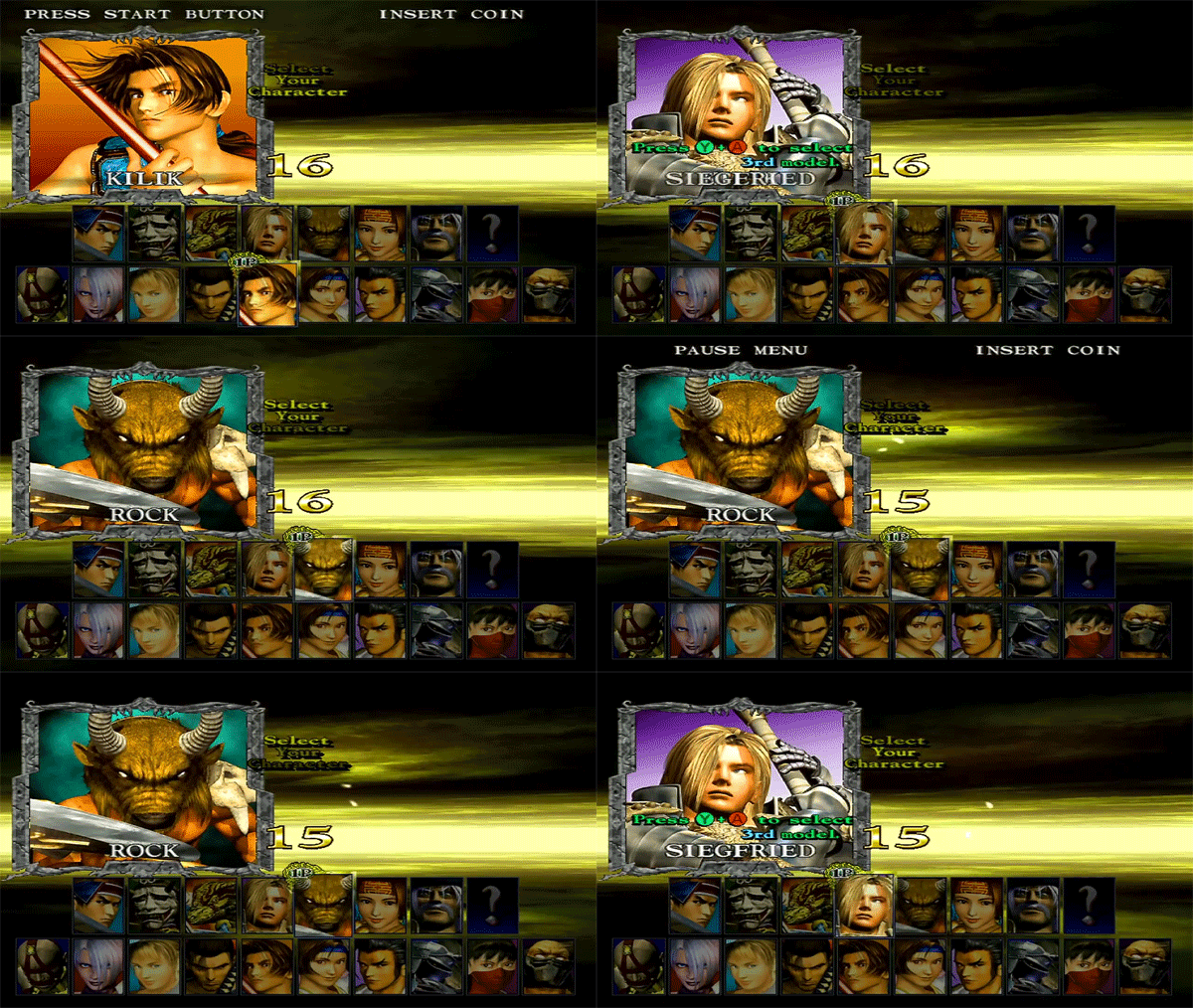
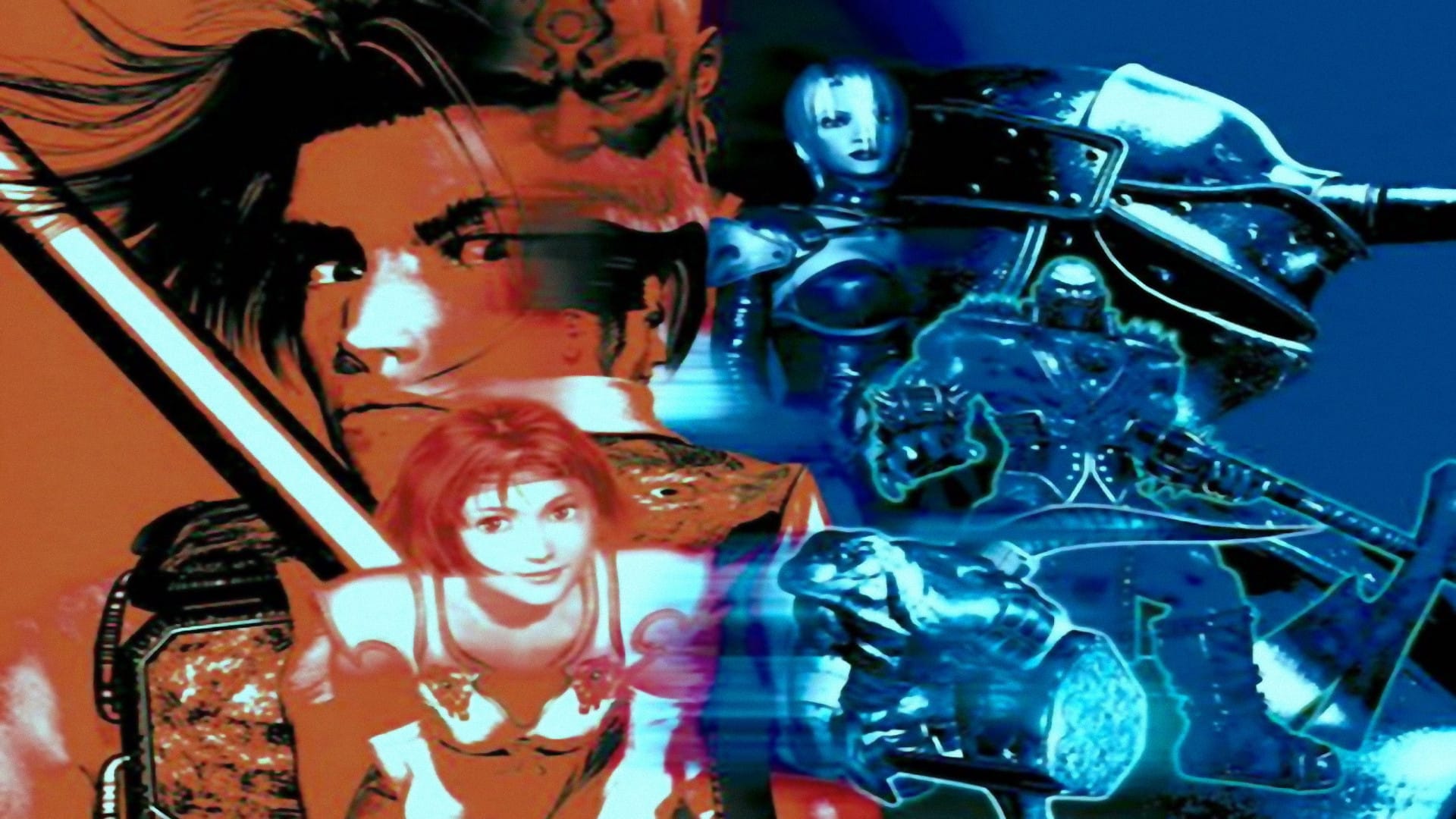
Any fighting game worth its salt needs a legendary cast, and Soulcalibur basically dropped a royal flush on us. It takes the foundation laid by the original Soul Edge favorites and expands it into something truly special. Returning from the Soul Edge days, we have heavy hitters like Hwang, Li Long, and the bendy-straw-man himself, Voldo. Seeing these characters transition from the 32-bit era to the Dreamcast’s power was like seeing a blurry Polaroid snap into high-definition focus.
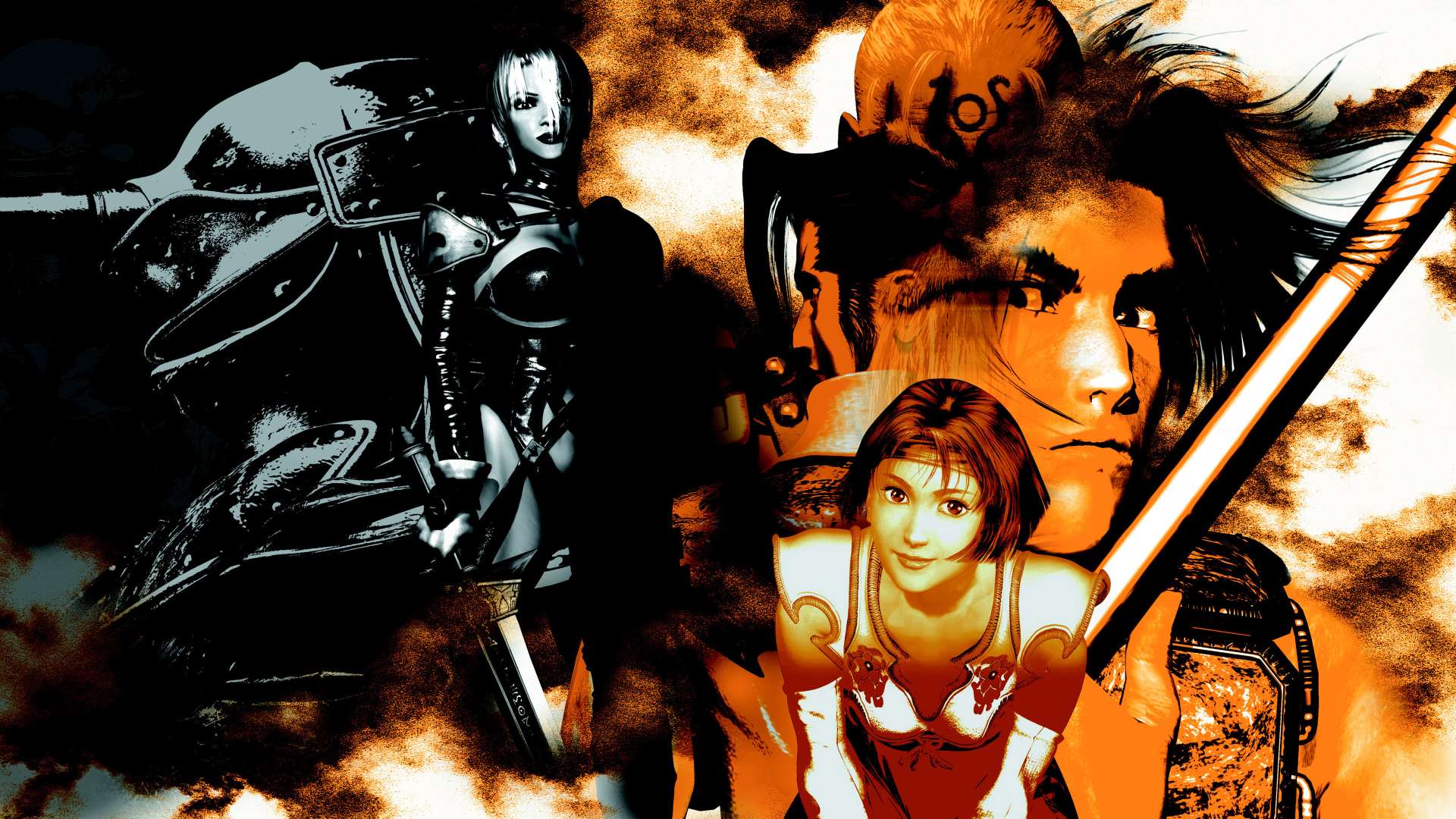
But as much as I love the classics, the newcomers are the ones who truly stole the spotlight and became the faces of the franchise. You’ve got Ivy, the aristocratic dominatrix with the whip-sword, and Xianghua, whose fluid, wushu-inspired style feels like dancing with a blade. Then there’s Astaroth, a massive golem that makes you feel genuinely tiny, and Yoshimitsu, the mechanical ninja who somehow wandered in from the Tekken universe.
If you think every sword-wielder in this game feels the same, you’re in for a massive wake-up call. Namco didn’t just give us a bunch of different skins for the same move set; they crafted a roster where every character feels like a completely different sub-genre of fighting. The diversity here is staggering, ranging from traditional fencing to… well, whatever the heck Voldo is doing.
If you like the classic “hero” archetype, Mitsurugi and Sophitia offer balanced, honest gameplay. If you prefer being a total nuisance, Maxi’s nunchaku strings can overwhelm an opponent before they even realize they’re losing. Ever felt the satisfaction of a perfect parry followed by a flashy counter? That’s the Soulcalibur experience in a nutshell.
Gameplay
If you’ve ever tried to teach a friend a fighting game only for them to get frustrated by “quarter-circle-forward” motions, you’ll appreciate the genius of You can hand the controller to your cousin who’s never seen a Dreamcast, and within minutes, they’ll be pulling off flashy combos that look like a choreographed stunt show.
The control scheme is refreshingly simple: you get a horizontal attack, a vertical attack, a kick, and a block. That’s it. But the interplay between these buttons is where the good stuff happens. Horizontal swings catch those annoying sidesteppers, while vertical strikes deal massive damage but leave you wide open if you whiff.
We also have to talk about the Guard Impact (GI). This is the mechanic that separates the casual sword-swingers from the true masters of the blade. By timing a forward or back input with the guard button, you can repel an incoming attack, leaving your opponent staggering and vulnerable. It’s the ultimate “get out of jail free” card, provided your reflexes are sharp enough.
Landing a successful GI feels like a literal bolt of electricity. It completely halts the opponent’s momentum and screams, “I know exactly what you’re trying to do.” It adds a layer of psychological warfare to every encounter. Are they going to strike, or are they waiting for you to swing so they can parry? Soulcalibur is the ultimate “party fighter” that secretly hides the soul of a competitive juggernaut.
If you’re looking for the heart of the experience, the Arcade Mode is where the journey truly begins. It’s a classic, straightforward gauntlet that pits your chosen warrior against a ladder of increasingly difficult opponents. Your goal? To reach the final stage and claim the Soul Edge—or destroy it, depending on your character’s moral compass.
Graphics
Because the arcade version lived on the Namco System 12, it was inevitably tethered to the limitations of mid-90s tech. Character models had those tell-tale angular shoulders, and textures often looked a bit “crunchy” or pixelated when the camera zoomed in for a finishing move. On the Dreamcast, however, those polygonal rough edges completely vanished into thin air.
The development team took the base assets and leveraged the Dreamcast’s PowerVR2 chip to smooth everything out. This allowed for much higher polygon counts, meaning characters like Mitsurugi or Sophitia suddenly sported rounded musculature and fluid clothing instead of the sharp, pointy limbs of the 32-bit era. It’s one of the few times in gaming history where “bringing the arcade home” actually meant receiving a massive, undeniable visual promotion.
It wasn’t just about the raw numbers, though; it was about the theatrical flair. The Dreamcast port introduced breathtaking facial animations that gave the warriors actual personality during the heat of battle. What’s truly wild is how the game maintains a rock-solid 60fps performance, while juggling complex lighting and high-poly models. Most games from this period would hitch or drop frames the moment a big particle effect exploded on screen.
Instead of the flat, static backgrounds common in the 32-bit era, Soulcalibur featured richly detailed 3D environments. Whether you’re fighting on a raft drifting down a sun-drenched river or in a temple surrounded by cherry blossoms, the world feels “wrapped” around the fighters. It’s an immersive touch that makes every match feel like a scene from an epic movie.
Replay Value
If you thought the Arcade Mode was the meat of the game, think again. The real “time sink” on the Dreamcast is the Mission Mode, a feature so beefy it makes other fighting game extras look like a light snack. It’s essentially a sprawling, map-based RPG disguised as a series of combat trials. You’ll find yourself traversing a massive map, taking on specialized challenges that force you to play the game in ways you never imagined.
Since each mission has specific requirements—like only being able to damage enemies with throws or winning before a poison meter drains your health—you’re forced to master your character’s entire movelist. You can’t just rely on your favorite three-hit combo here. You have to understand reach, timing, and environmental awareness to survive the later “Hard” and “Very Hard” tiers.
What’s the point of all this hard work? Loot, of course! Completing missions earns you points that you can spend in the Museum. This isn’t just some boring menu; it’s a massive archive of everything that makes the series great. You can unlock a massive archive of 338 unique Art Cards. We’re talking character portraits, sprawling landscape concepts, and even high-quality CG renders that were mind-blowing for 1999.
What really hooks me is the “The Vast World” fan art collection. Back in the day, seeing professional-quality, anime-inspired drawings of your favorite fighters felt like finding secret treasure. These aren’t just quick sketches; they are vibrant, soulful pieces that show the characters in entirely new lights
The Museum isn’t just a slide show, though. There’s also a Character Profile section where you can dive into the lore, listen to voice-overs, and even manipulate the camera to see the models from any angle. It’s the ultimate fan service for anyone who wants to know the “who, what, and why” behind the blades. IMO, the Museum is what turned Soulcalibur from a great arcade port into an essential home console experience.
Final Verdict
It’s hard to overstate just how much of a mic drop moment Soulcalibur was for the industry. Entering the year 2000, most of us expected a steady, incremental climb in game quality. Instead, Namco delivered a game that was technically superior and more feature-rich than its arcade parent, raising the bar for what we should expect from our home consoles. It proved that the Dreamcast wasn’t just a toy; it was a beast.
So, here we are, decades after the legend was “eternally retold” for the first time. Does it still hold up? Absolutely. Soulcalibur is more than just a nostalgic trip; it’s a masterclass in game design. It combined cutting-edge tech with a deep, rewarding combat system and topped it off with a mountain of content that keeps you coming back for more. Soulcalibur is the true definition of a masterpiece.
At HyperComboGamer, we believe great games deserve great coverage. That means no filler, no clickbait, or fanboyism—just honest, high-quality reviews, features, and guides that put gamers first. Whether you’re a lifelong enthusiast or just starting your gaming journey, you’ll find interesting gaming perspectives that will leave you fully satisfied.