Do you remember the sheer chaos of Y2K? Pokémon wasn’t just a game; it was a cultural phenomenon. If you didn’t trade Pokémon cards at school, watch the Pokémon series on Saturday mornings, or rewind your Pokémon: The Movie VHS tape a billion times, you didn’t live. Boomers and the mainstream media couldn’t understand how Pokémon gave us so much joy when we were kids.
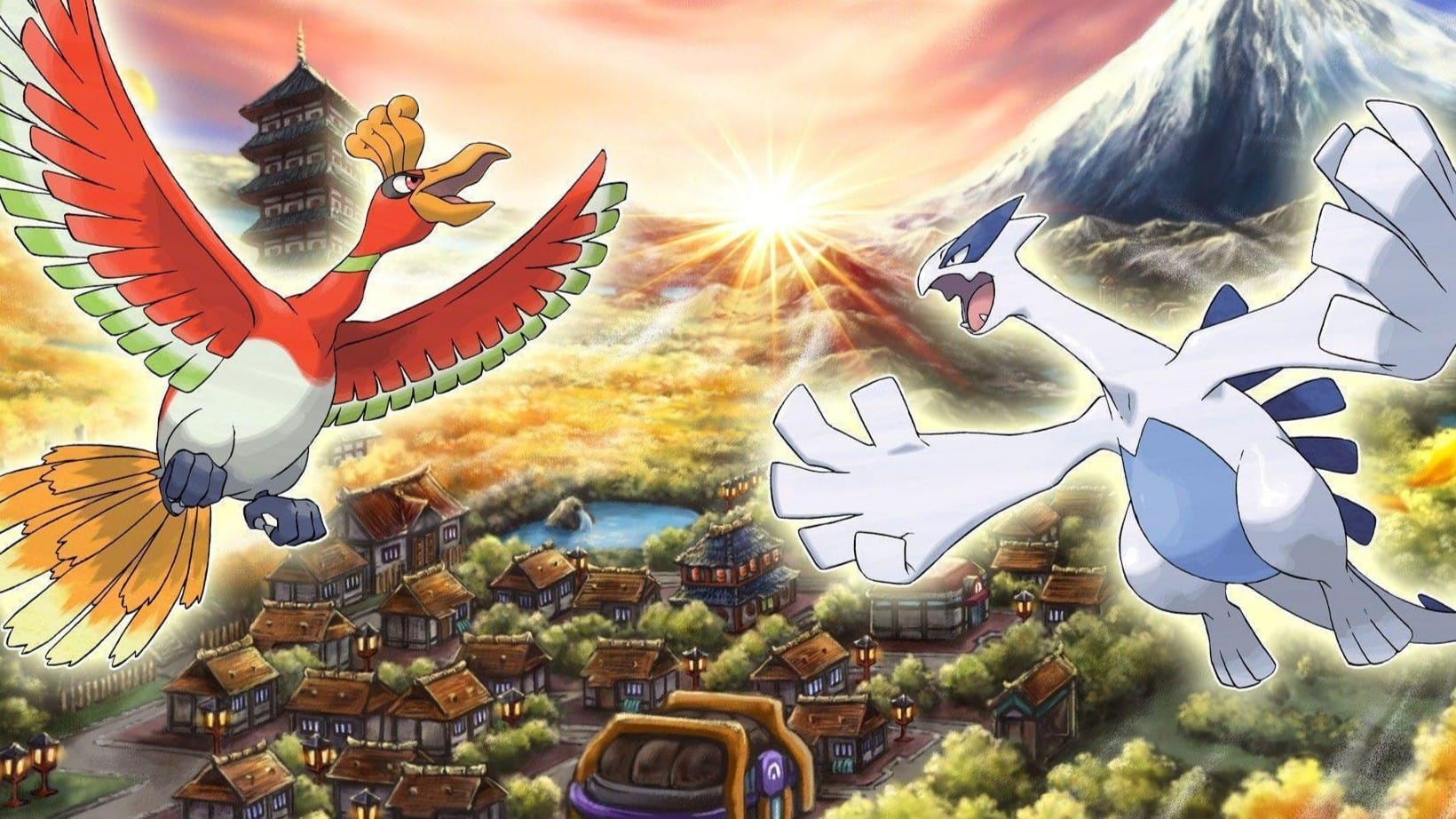
When the original Gold & Silver dropped, that shimmering metallic box art promised a world beyond Kanto, and boy, did it deliver. We were suddenly dealing with a full-color world that actually cared what time of day it was. The roster from this era remains, IMO, the most all-killer, no-filler lineup in history. It felt like the game world lived and breathed even when your handheld was switched off.
For the 10th anniversary of Gold & Silver, Nintendo and Game Freak went back to Johto to release HeartGold & SoulSilver for the Nintendo DS. But did they somehow managed to polish a masterpiece without losing the soul of the 8-bit era? In this review, you will find out whether this DS remake still captures that same lightning in a bottle as the original games did.
Story Overview
The core journey of HeartGold & SoulSilver doesn’t try to reinvent the wheel, and honestly, why should it? You start as a wide-eyed kid in New Bark Town, snag a starter from Professor Elm, and set off to conquer the Johto League. It’s a classic zero to hero arc that feels remarkably snappy. Unlike some of the newer titles that bury you in tutorials for the first three hours, HGSS lets you hit the tall grass almost immediately.
One of the biggest highlights remains your rival—the legendary red-haired mystery man. He’s rude, he’s ambitious, and he’s constantly stealing Pokémon to prove his strength. But let’s be honest: would you prefer a rival who buys you lemonade, or one who motivates you to grind your team into a powerhouse out of pure spite? I’ll take the jerk every single time. It’s a refreshing change of pace from the “friendly rival” trope, making you actually want to grind your team just to wipe that smug look off his sprite’s face.
The progression through the eight gyms feels like a masterclass in world-building. You aren’t just jumping from one arena to the next; you’re exploring a region steeped in tradition and myth. Whether you’re dealing with the Miltank-induced trauma of Whitney’s Gym or navigating the spooky vibes of Morty’s haunt, the variety in challenges keeps the momentum high.
While the plot is essentially a “greatest hits” reel of the original games, it does just enough to keep the gears turning. You’re always one step behind Team Rocket’s latest scheme, and that looming threat keeps the stakes feeling personal. Is it a deep, philosophical meditation on the nature of humanity? Probably not. If you’re the type of player who absolutely needs a deep, tear-jerking story with complex character arcs, you should probably stick to the Mystery Dungeon spinoff games. Those will actually break your heart. But for a Pokémon game, it’s exactly the kind of focused adventure that keeps you glued to your DS until 2:00 AM.
Gameplay
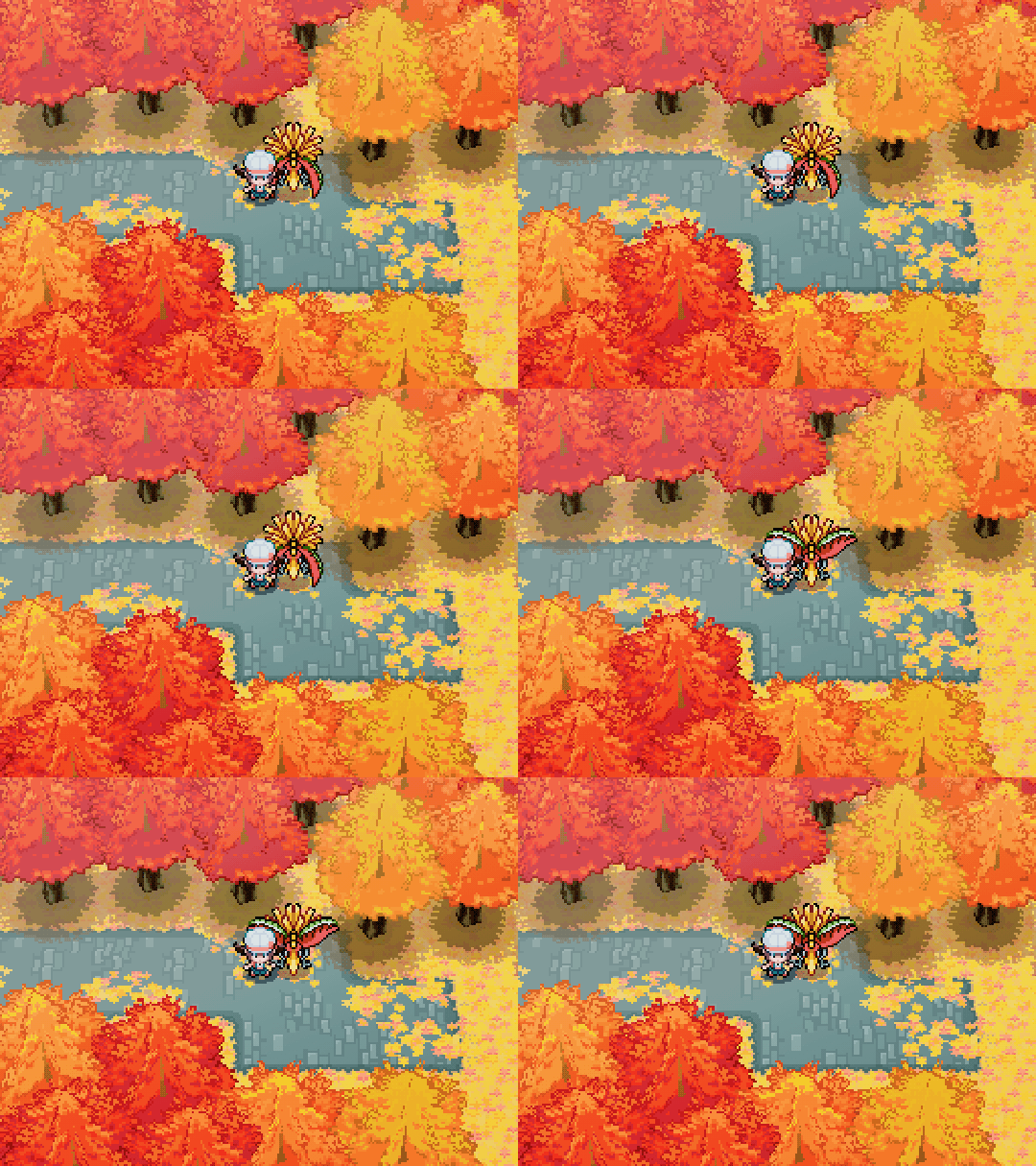
If you poll a group of Poké-fanatics about their favorite feature in the entire series, nine times out of ten, they’ll shout “Following Pokémon!” before you even finish the question. It’s a mechanic that debuted with Pikachu in Pokémon Yellow, but HeartGold & SoulSilver took that concept and dialed it up to eleven. For the first (and sadly, one of the only) times, every single one of the 493 Pokémon can trail behind you in the overworld.
This isn’t just some window-dressing gimmick to make the screen look busy; it fundamentally shifts the emotional weight of the game. Your Pokémon stop being just stats in a menu and start feeling like genuine travel companions. There is an inexplicable hit of serotonin that comes from seeing your tiny Cyndaquil waddle behind you, or watching a massive Lugia hover awkwardly as it tries to fit through the door of a Poké Mart.
Long before Pokémon GO had us all wandering into neighborhood fountains, we had the Pokewalker. This wasn’t some cheap, throwaway plastic toy; it was actually one of the most accurate pedometers of its time, and it came bundled right in the box. You could “beam” a Pokémon from your DS into this little Pokéball-shaped device and take your favorite partner for a stroll in the real world.
The Pokewalker was a stroke of genius for anyone trying to level up their team while, you know, actually having a life. Every step you took earned “Watts,” which acted as a dual currency. You could spend them to catch wild Pokémon or douse for hidden items within the device’s own mini-games. It essentially turned your daily walk to school or a trip to the mall into a productive training session for your Scyther.
Clipping one of these to your belt in 2010 was the ultimate low-key flex. It showed you were dedicated to the grind even when you weren’t glued to your console. It’s a bit of a tragedy that this tech didn’t become a permanent series staple, but for those who lived through the HGSS era, the Pokewalker remains a legendary piece of gaming kit.
When HeartGold & SoulSilver launched, the Nintendo Wi-Fi Connection was the peak of convenience. We were trading Pokémon with people across the globe and battling in the Union Room without a care in the world. However, as many of us know, Nintendo pulled the plug on those servers years ago, leaving the “Global” part of the Global Trade Station (GTS) a bit… empty. :/
But don’t despair! You aren’t totally isolated. If you have a buddy nearby, the local wireless and infrared (IR) connections still work perfectly. There’s something wonderfully nostalgic about sitting on a couch next to a friend and watching your Pokémon travel across the screen during a trade. It brings back that old-school Link Cable energy, minus the actual cable.
For the more tech-savvy trainers among us, the community has kept the dream alive through fan-made servers like the Poke Classic Network. By tweaking your DS connection settings, you can actually get back online to trade and battle with other enthusiasts. It’s a bit of a workaround, but it proves that the love for Johto is so strong that the fans literally refuse to let the multiplayer die.
Graphics & Sound
When Game Freak moved Pokémon to the DS with Diamond and Pearl, things got a little… chunky. The engine was a bit slow, and the 3D environments occasionally felt like they were fighting against the 2D sprites. But by the time they got to HeartGold & SoulSilver, they had mastered the hardware. They took that existing engine and gave it a massive glow-up, proving that you don’t need a total overhaul when a bit of strategic polishing will do the trick.
The visuals in HGSS follow a brilliant “less is more” philosophy. Instead of trying to force the DS to do something it couldn’t, the devs leaned into a hybrid style that feels timeless. They combined crisp, colorful 2D sprites with subtle 3D depth in the buildings and landscapes. It results in a world that feels much more “premium” than the Sinnoh games without losing that classic top-down charm we grew up with.
Everything just feels smoother here. The water actually ripples with a realistic shimmer, the shadows move dynamically, and the weather effects—like the snow on Mt. Silver—look incredible. It’s the kind of visual consistency that makes the world feel like a cohesive place rather than a collection of tiles.
While the jump to full 3D in later generations was inevitable, many fans—myself included—feel like the series lost a bit of its luster when it moved away from sprites. The pixel art on the DS reached a pinnacle here that felt tactile and full of heart. Every Pokémon feels like a carefully crafted illustration rather than a rigid 3D model.
If there’s one thing that can teleport a Pokémon fan back to 1999 faster than a Celebi, it’s the music. The original GBC soundtrack was a masterpiece of 8-bit composition, but the DS remakes take those iconic melodies and give them a symphonic upgrade. Game Freak didn’t just re-record the tracks; they utilized the DS soundchip to add layers of percussion, brass, and strings that the Game Boy could only dream of.
The result? A soundtrack that feels grand and cinematic while keeping that catchy, rhythmic pulse. The Azalea Town theme still feels like a cozy village hug, and the battle music for the Legendary Beasts is an absolute heart-pounding banger. It’s impressive how they managed to maintain the “soul” of the original tracks while making them sound like
But wait—what if you’re a purist who thinks the original bleeps and bloops are untouchable? Game Freak had you in mind, too. Once you conquer all sixteen gyms (yes, sixteen!), you receive a special key item called the GB Player. Turning this on instantly reverts the entire game’s audio back to the original 8-bit GBC chiptunes.
This isn’t just a simple toggle, though. The devs actually went the extra mile and generated brand-new 8-bit tracks for areas and events that didn’t even exist in the original games! It’s a staggering level of detail that shows just how much love went into this remake. Want to hear what a modern DS-era route sounds like through the lens of a 1999 Game Boy? This item is your ticket to a total nostalgia trip. 🙂
Replay Value
If you ever need a break from the constant “grind and battle” cycle, the Pokéathlon is waiting for you near National Park. This isn’t your standard Pokémon Contest; it’s a collection of high-energy, stylus-mashing mini-games that test your team’s speed, power, and stamina. It’s essentially a Pokémon Olympics, and it is surprisingly deep for what could have been a throwaway side activity.
You pick a team of three and compete in events like Disc Catch, Hurdle Dash, and Pennant Chase. Each Pokémon has specific Pokéathlon stats that you can boost using “Aprijuice,” which you whip up using those Apricorns you’ve been hoarding. It’s a fantastic way to see your favorite monsters in a completely different light—who knew a Snorlax could be a competitive high-jumper? 🙂
In the original GBC games, the Goldenrod City Game Corner was filled with slot machines. However, due to changing international ratings, the remakes swapped the slots for a brand-new puzzle game called Voltorb Flip. At first glance, it looks like a simple 5×5 grid of cards, but it quickly reveals itself to be a brutal and brilliant strategy game that blends elements of Minesweeper and Sudoku.
The goal is to flip over cards to find multipliers (2x or 3x) while avoiding the hidden Voltorbs that reset your score to zero. It’s a total “just one more round” experience that can devour your entire evening if you aren’t careful. Since you can’t buy coins with cash anymore, mastering Voltorb Flip is the only way to snag those high-tier prizes like the Thunderbolt TM or a Porygon.
Most Pokémon games roll the credits, give you a little star on your save file, and call it a day. But in Johto? The “The End” screen is basically just the halftime show. Once you’ve conquered the Johto Elite Four, the game cracks wide open and sends you back to Kanto—the region that started it all. We’re talking another eight badges, a whole new set of Gym Leaders to crush, and a drastically different landscape to explore.
This remains the “Holy Grail” of Pokémon post-game content. Walking through a weathered, older version of the Kanto region feels like visiting your hometown after a decade away. You get to see how Blue is handling his role as the Viridian Gym Leader, explore what’s left of Cinnabar Island, and eventually prepare for the ultimate final boss on Mt. Silver. It’s a staggering amount of content that makes some modern DLC expansions look a bit thin by comparison, doesn’t it?
Final Verdict
Pokémon HeartGold & SoulSilver aren’t just great remakes; they are, quite simply, the pinnacle of the Pokémon franchise. The difficulty curve is fair (mostly), the mechanics are refined, and the inclusion of the “following Pokémon” makes the world feel incredibly welcoming. It took a formula that was already near-perfect and added just enough quality-of-life improvements to make it feel modern.
At the end of the day, HGSS works because it understands that Pokémon is about the journey, not just the destination. Between the massive dual-region map, the Pokewalker, and the sheer joy of having your Typhlosion walk behind you, there’s almost nothing to complain about here.
If you’re a veteran who played the originals until your GBC batteries leaked, or a newcomer who has never touched a sprite-based Pokémon game, HeartGold & SoulSilver is the definitive way to experience “classic” Pokémon before the series went full 3D. This isn’t just a trip down memory lane; it’s the gold standard for the entire Pokémon franchise.
At HyperComboGamer, we believe great games deserve great coverage. That means no filler, no clickbait, or fanboyism—just honest, high-quality reviews, features, and guides that put gamers first. Whether you’re a lifelong enthusiast or just starting your gaming journey, you’ll find interesting gaming perspectives that will leave you fully satisfied.