Key Takeaways
| Pros | Cons |
| Visual Masterpiece: Features some of the best Gouraud shading and lighting effects on the PS1; it almost looks like a Dreamcast title. | JogCon Controller Cramp: While innovative, the force-feedback dial controller is notoriously uncomfortable for long sessions. |
| Atmospheric Vibe: A slick, Y2K-era aesthetic and UI that still feels modern and sophisticated today. | AI Rubber-Banding: Like many classic arcade racers, the computer opponents can sometimes feel unfairly fast on the final lap. |
| Massive Replayability: With 320 unlockable cars and multiple team storylines, there is a staggering amount of content. | Sim-Lite Depth: Despite the Grip car option, it lacks the deep mechanical tuning found in Gran Turismo. |
| Iconic Soundtrack: A flawless mix of drum and bass, house, and acid jazz that remains one of the greatest OSTs in gaming history. | Limited Track Count: While the tracks are iconic, there are fewer unique environments compared to its contemporaries. |
| The Bonus Value: Includes a 60fps high-spec version of the original Ridge Racer, essentially offering two games in one. | Link Cable Requirement: Accessing the hidden 4-player mode requires specific hardware that most players didn’t own. |
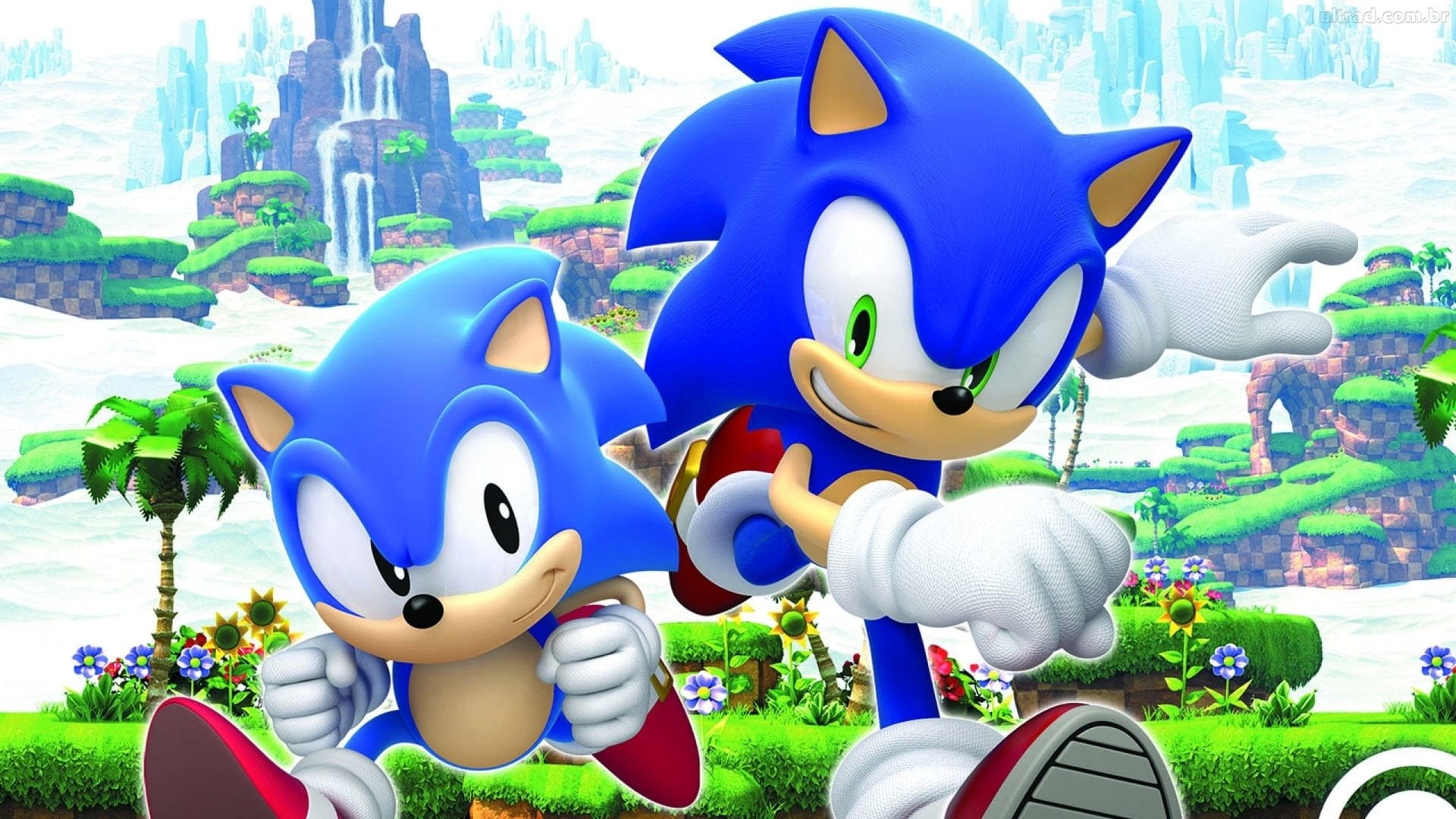
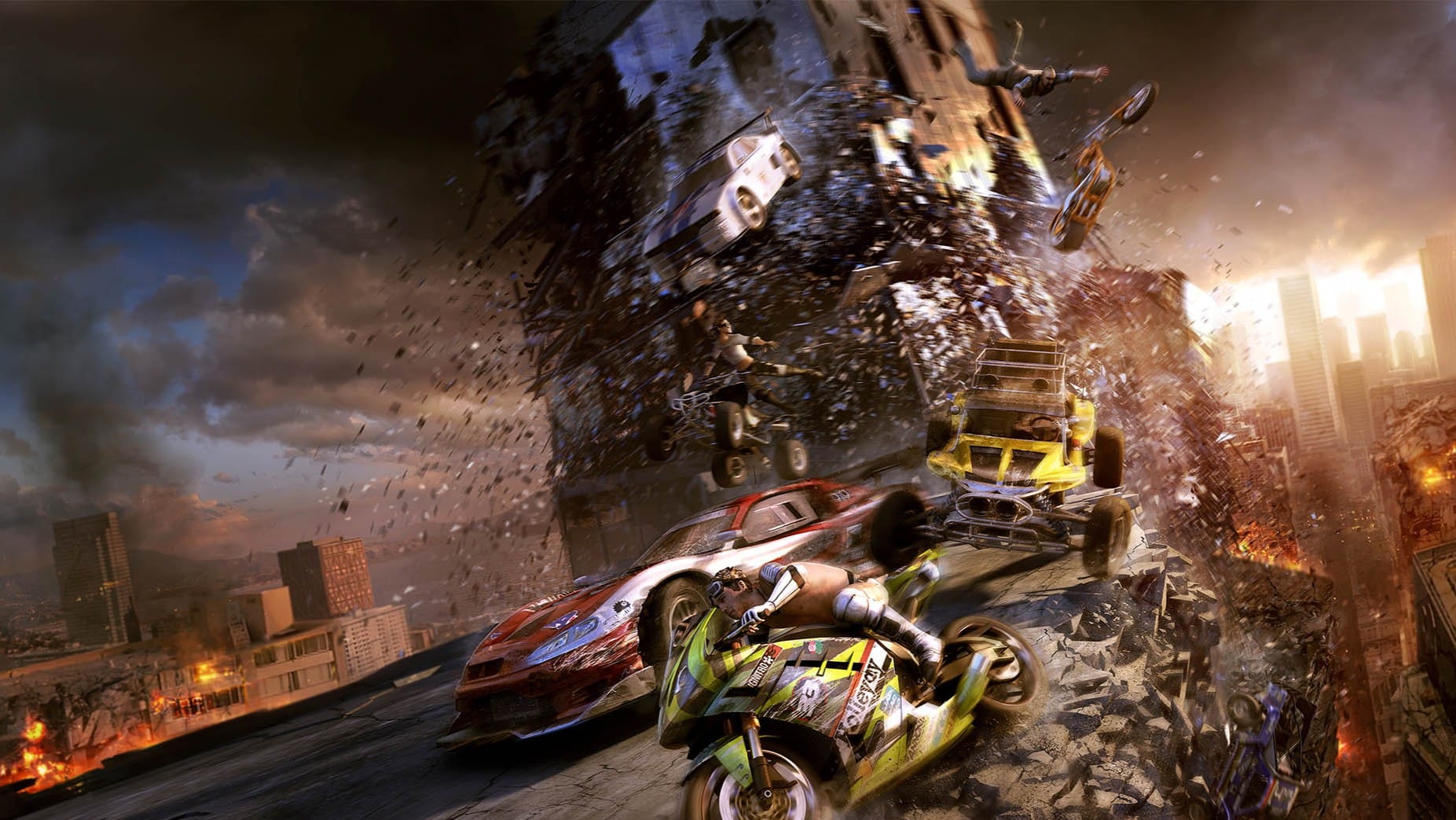
The year is 1998, and the racing genre just entered a collective, high-octane fever dream. Need for Speed III: Hot Pursuit gave us the ultimate adrenaline fix by outrunning the police in exotic supercars, while F-Zero X on the N64 defied physics with its blistering frame rates. Let’s not forget Colin McRae Rally, which basically proved that getting caked in mud was a sophisticated art form.
While Rage Racer was a perfectly fine title, it was criticized by fans for playing it too safe. With the astronomical rise of Gran Turismo, the pressure on Namco reached a total boiling point. How would they adapt for their next sequel to stay ahead of the pack?
Would Namco pivot toward a grueling, realistic sim experience to compete with the new king? Or would they double down on the high-energy arcade formula that made Ridge Racer a household name? Namco’s answer was R4: Ridge Racer Type 4, offering the best of both worlds in one package. In this review, you will find out if this game still claims the throne as one of the best arcade racers of all time.
Campaign
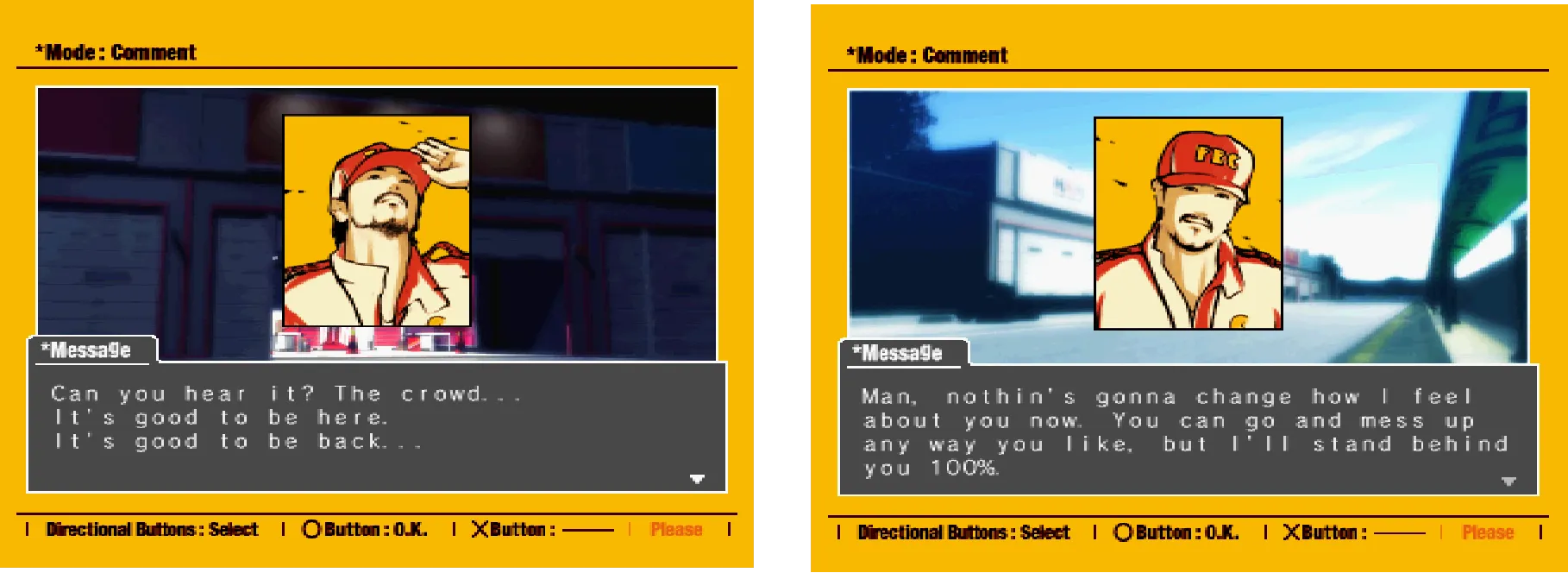
Inspired by the sim-racing craze of the late-90s, the heart of R4 beats within the Real Racing Roots ’99 campaign. This isn’t just a menu of races; it’s a career mode with actual personality. You choose one of four teams, and each comes with its own manager and a distinct difficulty curve. Ever felt like a racing game actually cared if you won or lost? R.C. Micro Mouse Mappy (France) is perfect for beginners who want a smooth ride with Sophie Chevalier. The Pac Racing Club (Japan) is best for gamers who previously had experience with other Ridge Racer gamers. You’ll deal with Shinji Yazaki, a manager who’s all about the results.
Racing Team Solvalou (Italy) is the Hard mode. Enki Gilbert expects perfection, and he isn’t afraid to let you know it. Dig Racing Team (USA) is the Expert mode. This is the underdog story where you start out working with a shoestring budget, meaning your car is often slower than the competition. You’ll need pure skill to keep Robert Milton happy.
Once you’ve picked a team, you choose a manufacturer. This is where the math gets wild. You’ve got Age Solo (French/Grip), Lizard (USA/Drift), Assoluto (Italy/Drift), and Terrazi (Japan/Grip). Your performance in the early heats determines which specific car model you “earn” for the next round.
Gameplay

In R4, your choice of vehicle actually matters for more than just top speed; it dictates your entire philosophy on the track. You have to decide between a Drift car or a Grip car. This simple fork in the road changes your approach to every single corner on the circuit.
Drift Cars are for the stylists who want to kick the tail out and scream through hairpins at impossible angles. One tap of the brake and you’re sideways in a glorious, physics-defying slide. Grip Cars cater to the precision-focused drivers who prefer the “racing line” approach. You’ll need to decelerate properly, find the apex, and power out without losing traction.
Ever wondered why more games don’t give you this kind of mechanical agency? It allows you to steer with your own personal flair. Whether you want to slide like a maniac or carve like a surgeon, the game respects your hustle.

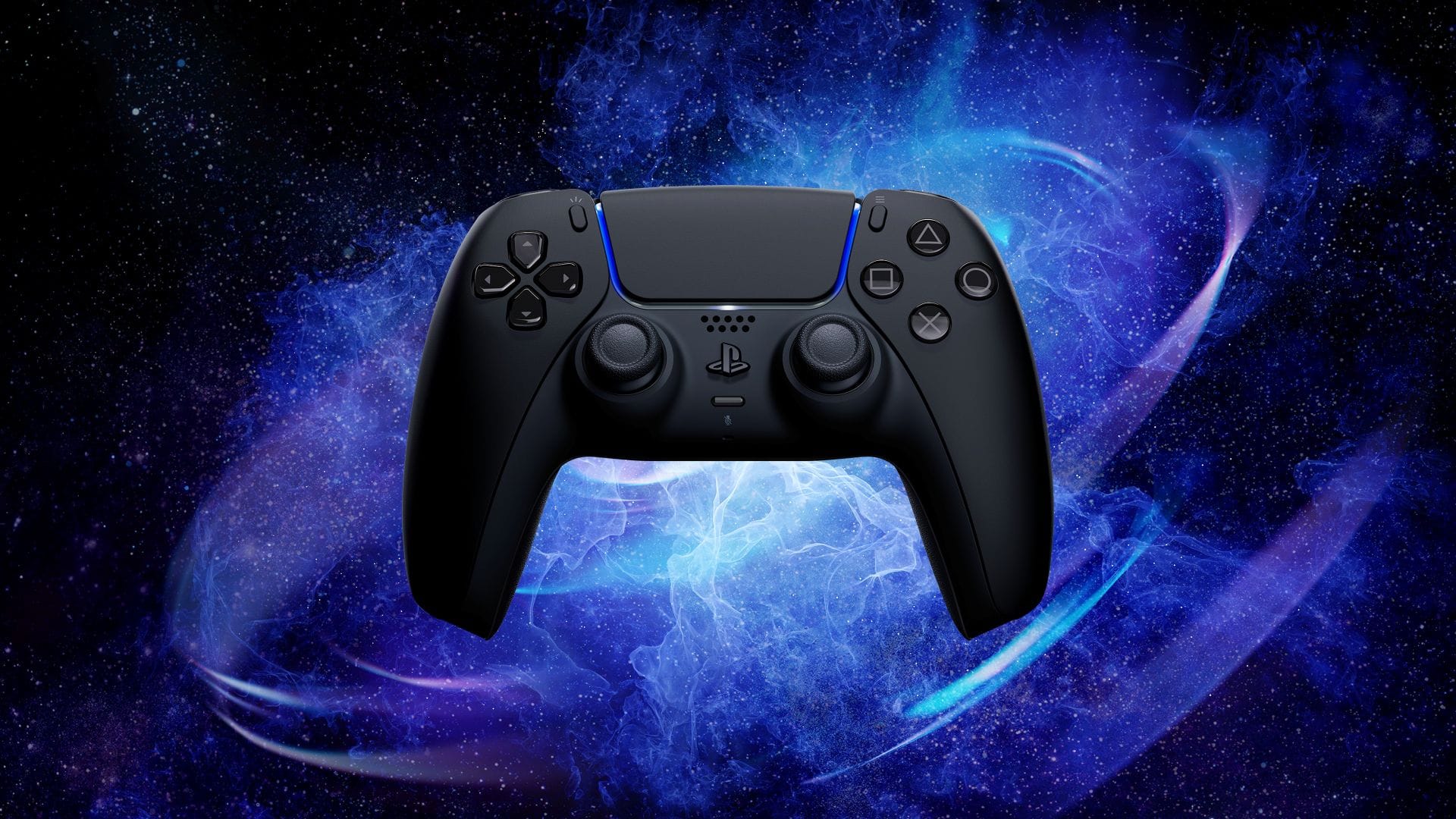
To celebrate the game’s launch, Namco unleashed the JogCon steering controller. It featured a giant weighted dial in the middle of a standard controller to simulate force feedback. While it’s a fantastic novelty collector’s item, it’s an ergonomic nightmare that prioritizes style over substance. If you actually want to win a Grand Prix without developing carpal tunnel, you’re better off sticking to the trusty DualShock. Believe me, your thumbs will thank you.
Graphics

I don’t know what kind of sick engineering the devs at Namco were accomplishing in 1998, but they managed to pull a miracle out of the PlayStation’s aging silicon with this game. By significantly increasing the polygon count and applying a specialized “Gouraud shading” technique, they eliminated much of the jittery, warping texture mess that plagued other 32-bit titles.
Comparing this to the original Ridge Racer feels almost unfair; the first game looks like an outdated tech demo in the rearview mirror of R4. The environments feel solid, the lighting looks baked-in and purposeful, and the draw distance doesn’t hide behind a wall of fog. It’s easily one of the best-looking games on the entire system.
The presentation here is absolutely effortless. While other games were trying to look “gritty,” R4 leaned into a futuristic, Y2K vibe that felt incredibly innovative for its time. From the high-contrast menus to the minimalist typography, you can tell the team borrowed a few notes from the Gran Turismo playbook of prestige UI design.
Everything about the interface feels fast and fluid. It’s not just a racing game; it’s a mood. Even the loading screens have more style than most modern AAA titles. It captures that late-90s optimism—a world of neon lights, chrome surfaces, and endless asphalt.
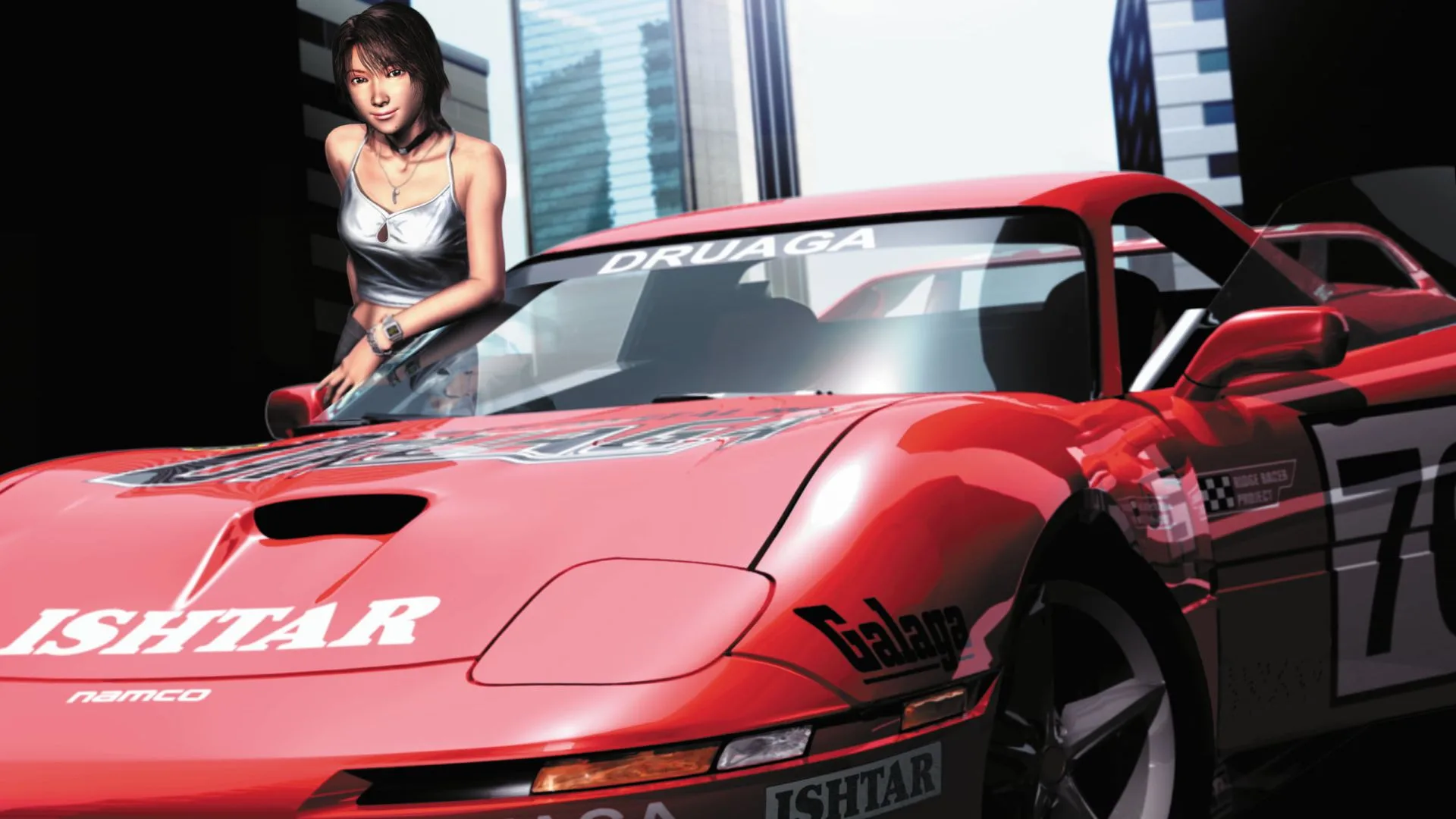
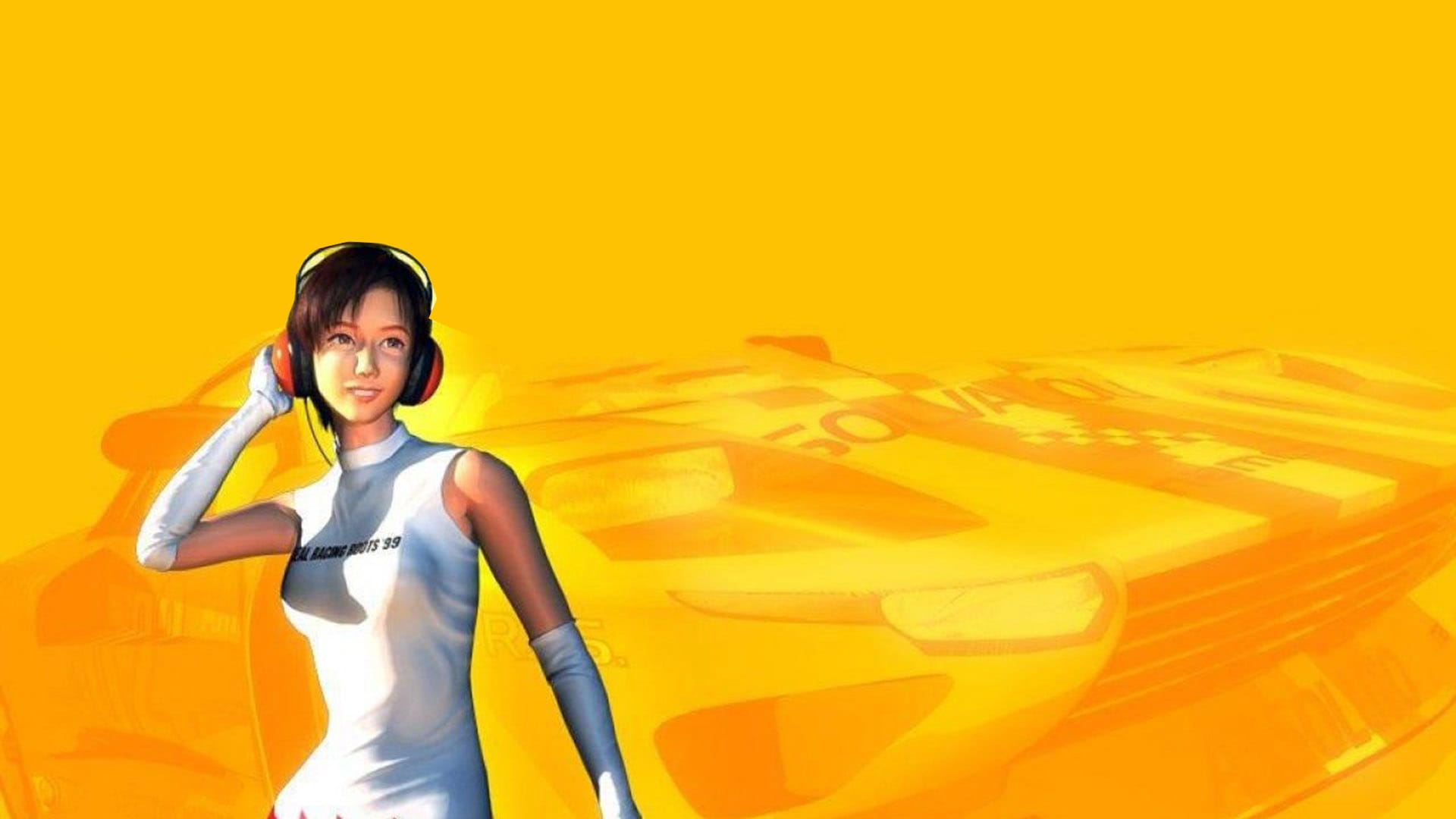
Can we just take a second to talk about the intro movie? It is quite literally the most iconic opening in video game history. Watching Reiko Nagase step out of that car while the theme song kicks in still gives me chills decades later.
Namco understood that to make a classic, you need to sell the fantasy before the player even hits the gas. That FMV wasn’t just eye candy; it set the stakes for the entire “Real Racing Roots” experience. If that intro doesn’t get you hyped to trade some paint, I’m not sure what will.
Sound

If you think a racing game is only as good as its engine sounds, R4 is here to prove you wrong. The soundtrack is an absolute masterclass in late-90s electronic excellence. While previous entries leaned heavily into chaotic rave and hardcore techno, this OST takes a “more mature, more fashionable” turn—as lead composer Hiroshi Okubo put it.
We’re talking a seamless blend of acid jazz, progressive house, breakbeat, and neo-soul. It’s the kind of music you’d expect to hear in a high-end Tokyo lounge, not necessarily while you’re scraping your bumper against a guardrail at 140 mph. Yet, it works flawlessly. Tracks like the catchy drum and bass banger “Silhouette Dance” provide a rhythmic backbone that turns every corner into a choreographed dance.
The standout, of course, is the vocal performance by Kimara Lovelace. Her soulful delivery on the theme song “Ridge Racer (One More Win)” transformed the game from a mere piece of software into a cultural moment. Ever wondered why people still listen to this OST on their morning commute decades later? It’s because it captures a specific brand of optimism and cool that’s almost impossible to replicate.
Whether it’s the laid-back groove of “Pearl Blue Soul” or the high-stakes energy of “Move Me,” each track is meticulously paired with its circuit to elevate the drama. FYI, many fans (myself included) consider this the greatest soundtrack in racing history. It doesn’t just provide background noise; it provides the soul of the entire experience.
Replay Value
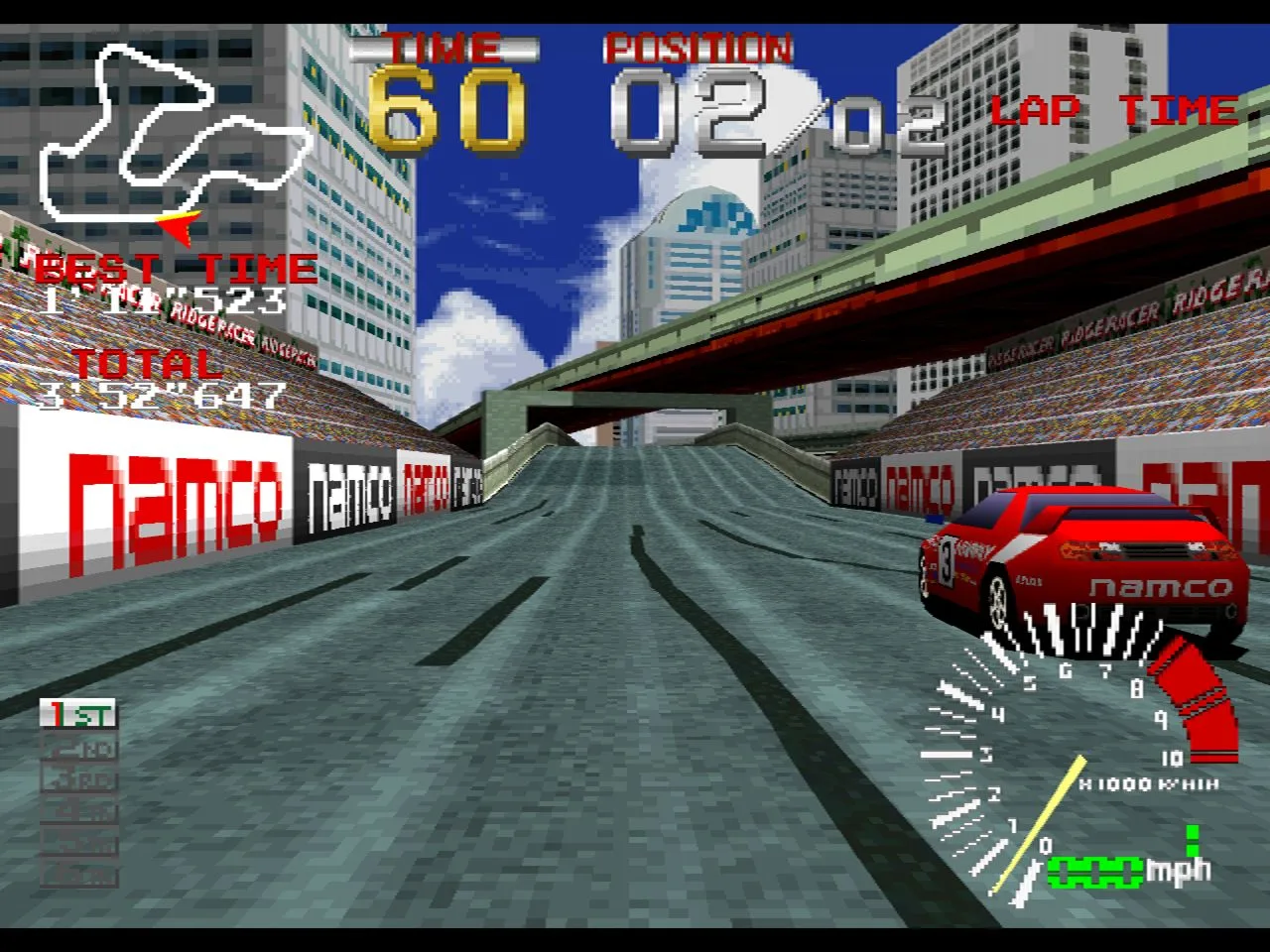
Because there are 4 teams and 4 manufacturers, plus different cars for finishing in 1st, 2nd, or 3rd place, the replay value is off the charts. We’re talking a staggering 320 vehicles to collect. If you are a total completionist (or just have way too much free time), you can unlock the legendary 321st car. This special vehicle is modeled after Pac-Man himself, and it even comes with its own catchy “Eat Em Up” music track.
Is it the fastest car in the game? Not really. It’s basically a Stage 4 car with Stage 3 speeds, but it handles like a dream. Unlocking it is the ultimate “I conquered R4” badge of honor. Honestly, who wouldn’t want to power-slide through a futuristic city as a giant yellow orb?
It’s an undocumented “secret” menu option that only appears when the hardware is connected. While split-screen is great, nothing beats having your own full screen while shouting at three of your friends in the same room. It’s a logistical nightmare to set up today, but man, it was the pinnacle of social gaming back in the day.
Namco didn’t just give us one game; they essentially gave us a history lesson. Most copies of R4 came with a bonus disc featuring a “High-Spec” version of the original Ridge Racer. Why should you care? Because this version runs at a blazing-fast 60fps with enhanced lighting and textures.
Seeing the 1993 classic running with that kind of fluidity on original hardware is a religious experience for tech nerds. It makes the standard version look like a slideshow in comparison. It’s basically the “remaster” before remasters were even a thing. Just keep in mind it’s a stripped-back “Turbo” mode, so don’t expect the full campaign on the bonus disc.
If you were a gamer in Japan (or a very dedicated importer), you could use the PocketStation—Sony’s weird, Tamagotchi-like memory card. This little device allowed you to trade cars with friends wirelessly using infrared.
Since unlocking all 320 cars is a Herculean task, the PocketStation was a literal lifesaver for completionists. Even though the device never officially launched in the West, the code is still tucked away in our versions of the game. It’s a fascinating glimpse into a “connected” gaming world that existed long before we had high-speed internet in our pockets.
Fun Fact: Did you know R4 has a hidden mode that basically turns your living room into a 1990s arcade? It’s called PlayStation Link Mode, and it’s arguably the coolest feature nobody ever used. By connecting two consoles, two TVs, and two copies of the game via a serial link cable, you can actually race with up to 4 players simultaneously.
Final Lap

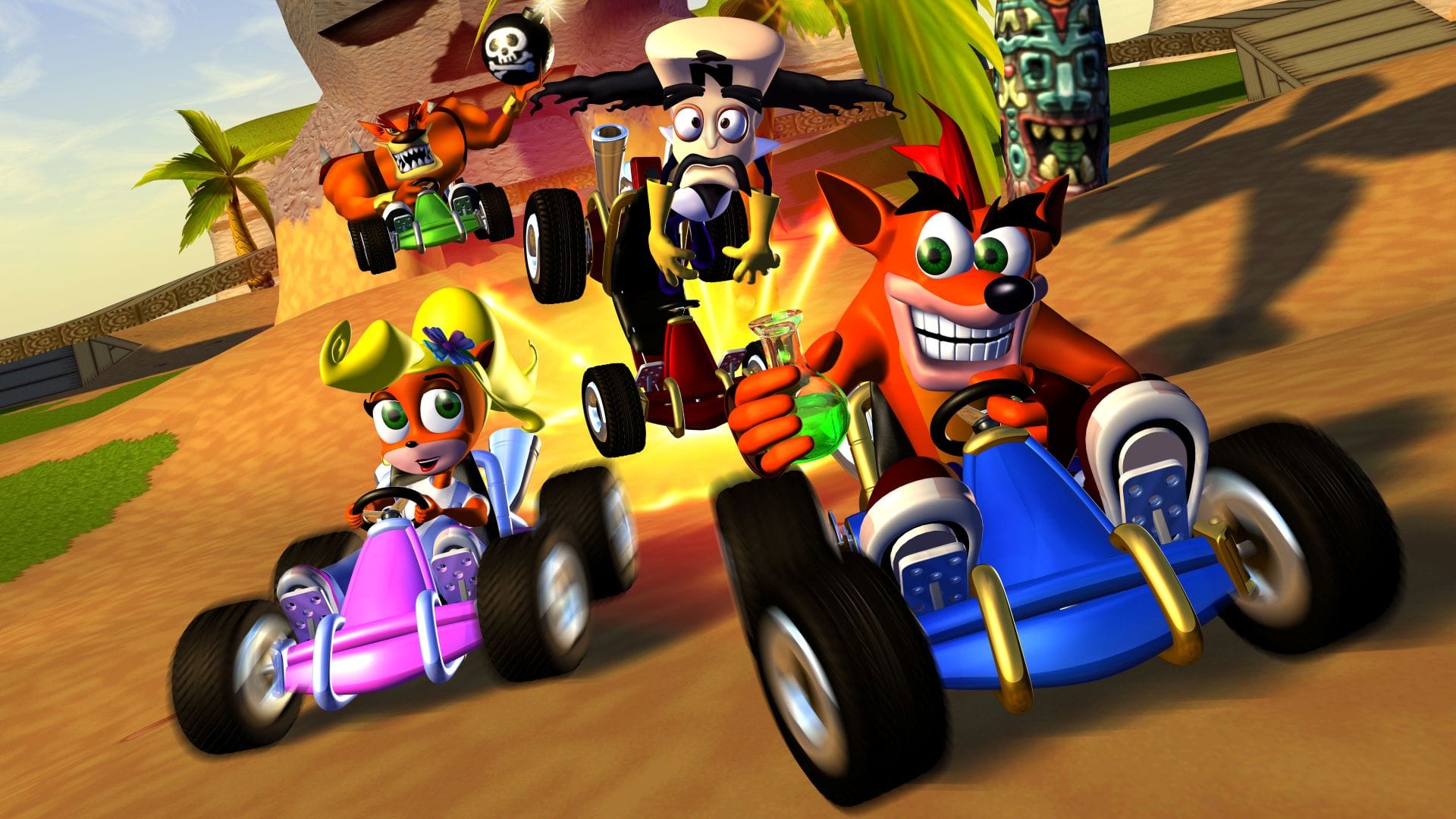
Let’s be real for a second: the competition in the late ’90s was absolutely savage. If Gran Turismo and Crash Team Racing didn’t exist, R4 would’ve easily been the undisputed, definitive king of PS1 racing. It’s not Namco’s fault the console was essentially a localized gold mine for the genre.
Even so, R4 carved out its own unique niche that those other giants couldn’t touch. It remains the high-water mark for the series, balancing the technical prowess of a simulator with the pure, unadulterated joy of a drift-heavy arcade classic.
Honestly, what else can I say? With its gorgeous Dreamcast-like graphics, an incredible soundtrack that still lives rent-free in my head, and addictive gameplay that rewards every single slide, R4 is one of the best racing games of all time. It represents a peak of 32-bit craftsmanship that we rarely see anymore.
R4: Ridge Racer Type 4 is a polished, soulful, and mechanically tight experience that deserves a spot in every gamer’s library. If you haven’t played it lately, do yourself a favor and fire it up—your eyes and ears will thank you. Now if you’ll excuse me, I need to finish one more race for old time’s sake.
Verdict
R4: Ridge Racer Type 4
Masterpiece

At HyperComboGamer, we believe great games deserve great coverage. That means no filler, no clickbait, or fanboyism—just honest, high-quality reviews, features, and guides that put gamers first. Whether you’re a lifelong enthusiast or just starting your gaming journey, you’ll find interesting gaming perspectives that will leave you fully satisfied.