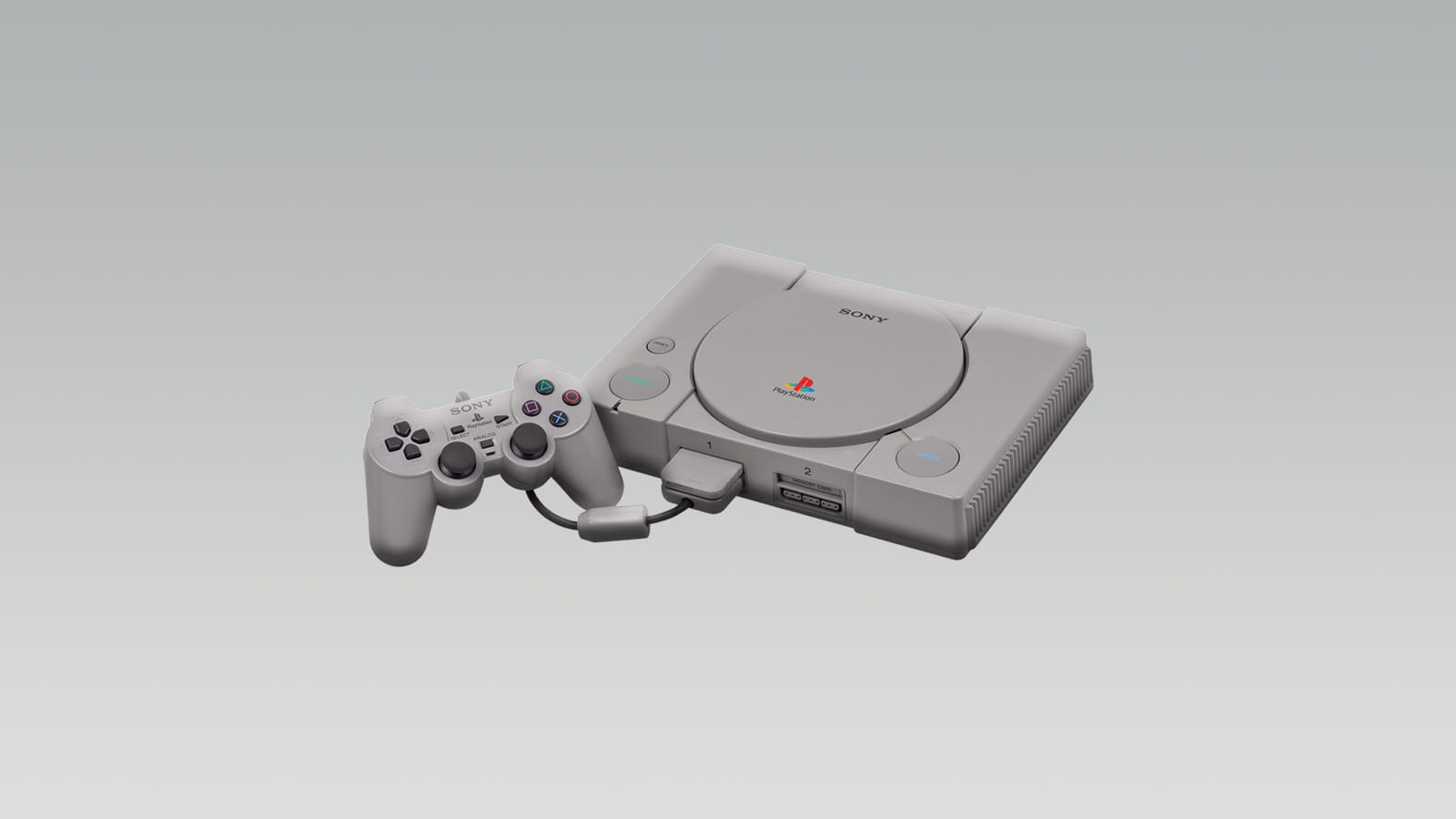
Look, if you grew up with a grey box connected to your CRT television, you knew the PlayStation 1 was the moment racing games grew up. We moved from the flat sprites and Mode 7 trickery of the 16-bit era into a world of texture-mapped polygons, CD-quality soundtracks, and physics that actually made you feel the weight of a car. Whether you were a sim-head obsessed with gear ratios or a chaos-merchant looking to trade paint, the PlayStation was the definitive home for petrolheads.
Today, we’re taking a high-octane trip down memory lane. We’ve rounded up the 40 best PS1 racing games that defined an era of burnt rubber and memory card management. From technical masterpieces to underrated cult classics, these are the titles that made us game until the early hours of the morning. Grab your favorite PlayStation controller, and let’s get into it.
Gran Turismo 2

- Developer: Polyphony Digital
- Release Date: December 23, 1999
Kazunori Yamauchi created a digital encyclopedia of automotive history with Gran Turismo 2. Polyphony Digital crammed over 600 licensed vehicles into this masterpiece, spanning everything from mundane family hatchbacks to fire-breathing Le Mans legends. The physics engine demanded total concentration and punished any hint of hubris with a trip into the gravel traps. Who could possibly forget the Suzuki Escudo Pikes Peak Version? That red monster possessed enough horsepower to make every other vehicle in your garage look like a glorified lawnmower by comparison.
Why It's Worth Playing: The sense of progression in Gran Turismo 2 provides a satisfying loop that modern titles often overcomplicate with microtransactions. You genuinely earn every turbo kit and weight reduction stage through grit and grease. It still remains as a stunning achievement in technical optimization for the aging PS1 hardware. IMO, the soundtrack alone justifies the trip back to 1999.
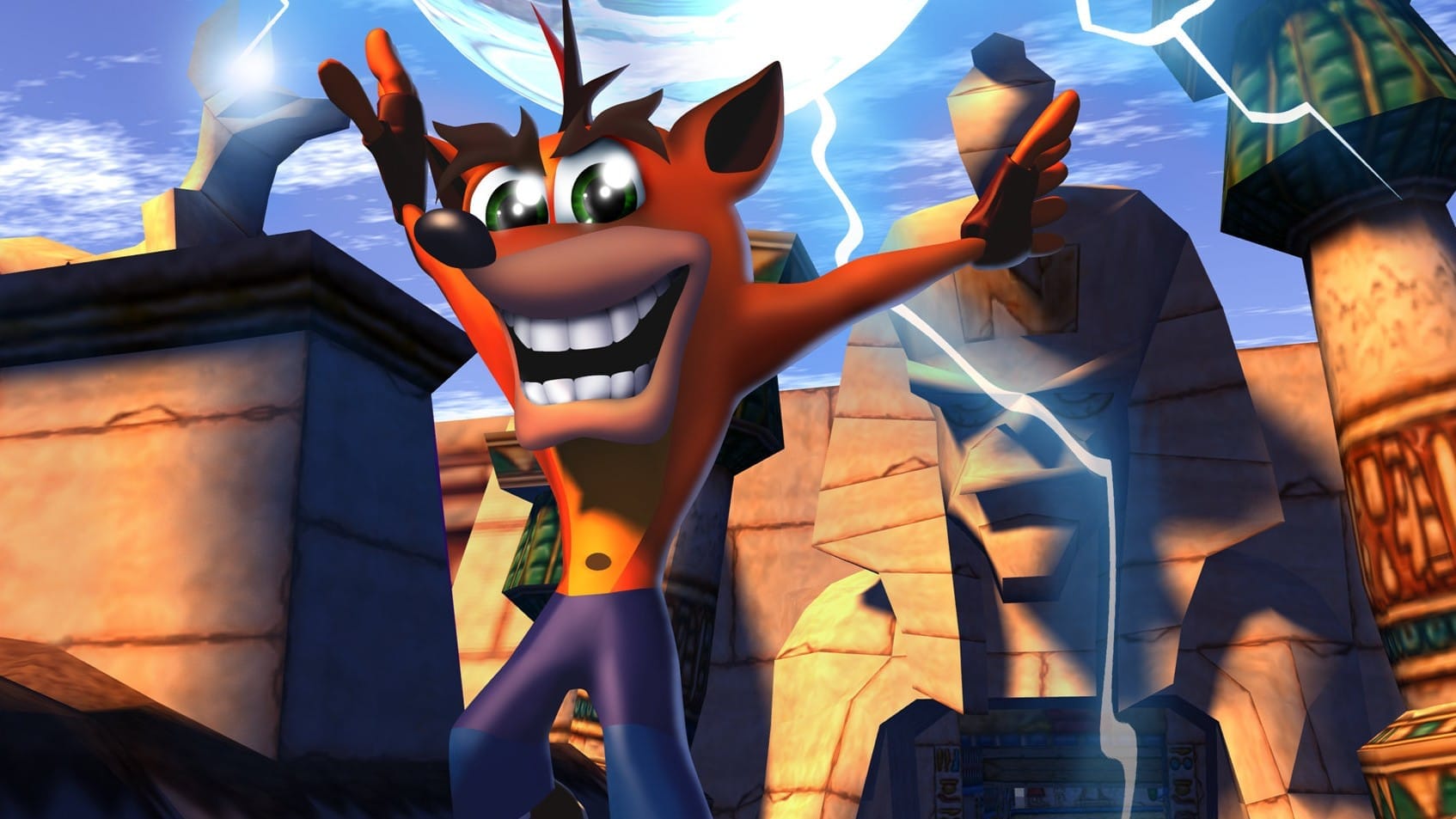
CTR: Crash Team Racing

- Developer: Naughty Dog
- Release Date: September 30, 1999
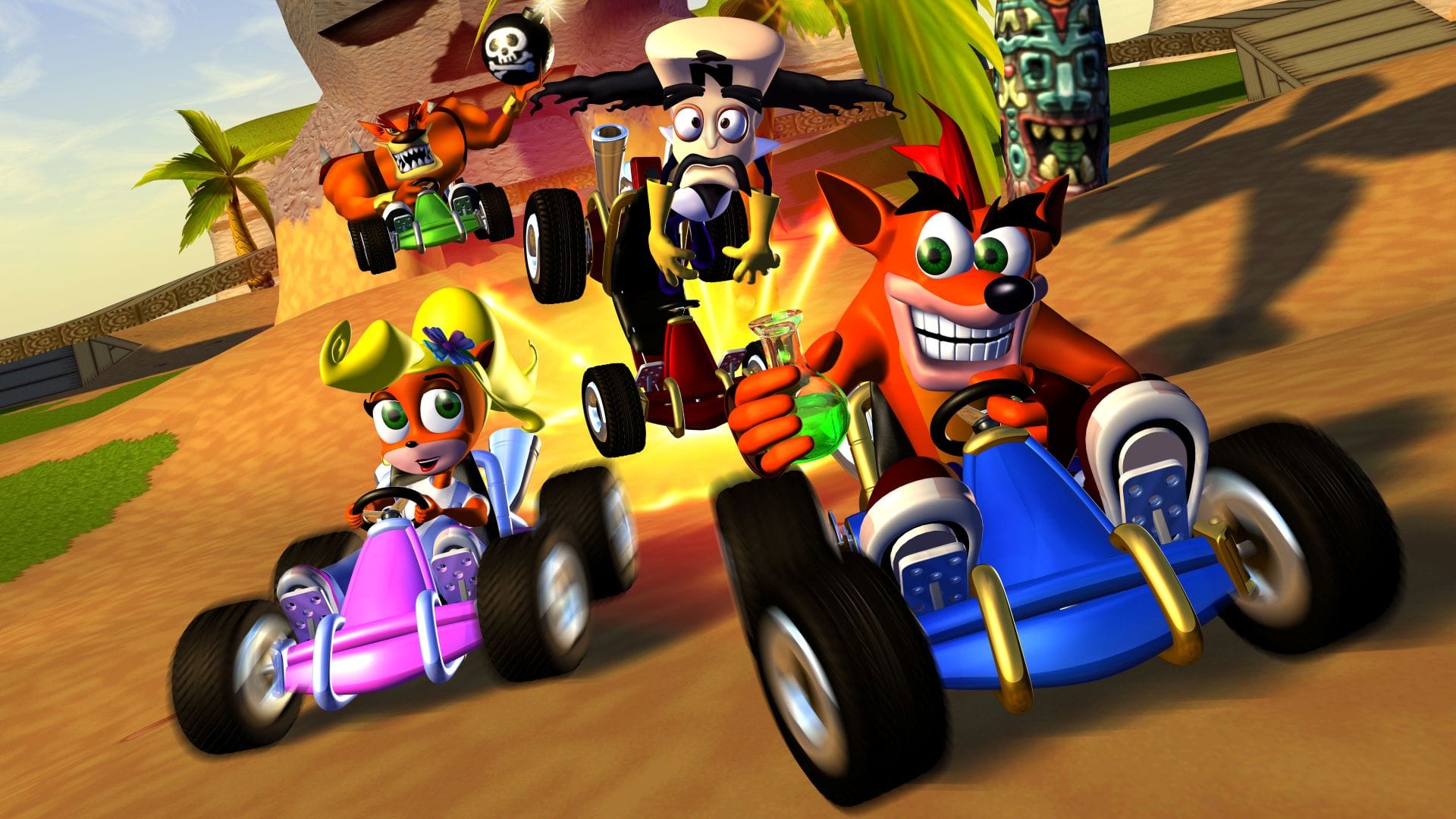
Naughty Dog took the mascot racer formula and injected it with high-octane technicality with CTR: Crash Team Racing. This game introduced a power-slide mechanic that can allow you to execute triple-boosted drifts that shave milliseconds off your lap times. The Adventure Mode added a layer of depth that felt revolutionary for a kart game, making you race against unhinged bosses like Ripper Roo. The character animations drip with personality, and the weapon balance feels remarkably fair, preventing the blue shell frustration that often ruins friendships. If anyone actually believes that Mario Kart 64 holds the crown for the best 32/64-bit kart racer, they definitely haven’t played this game.
Why It's Worth Playing: CTR remains the gold standard for how a mascot racer should handle. The controls feel snappy, the frame rate stays impressively consistent, and the level design pushes the PS1's hardware to its absolute limit. It proves that party games can still possess deep, competitive souls.
Wipeout 3: Special Edition

- Developer: Psygnosis
- Release Date: September 8, 1999
Wipeout 3: Special Edition pushed the PlayStation’s hardware past its intended limits. The speed in this game feels genuinely dangerous, demanding a level of zone-like focus that few other racers require. If you lose your rhythm for even a second, the wall becomes your best friend. This title introduced a High Resolution mode that rendered the game with a crispness that seemed impossible for a console from 1994. Combine that with a soundtrack featuring Sasha and Underworld, and you have a game feels like racing inside a high-end electronic music video. The Special Edition tweaks the difficulty curve to feel much fairer, and adds eight tracks from Wipeout and Wipeout 2097.
Why It's Worth Playing: Wipeout 3: Special Edition is the most complete racing package on the system. By combining the best tracks from the entire trilogy with the most polished engine Psygnosis ever built, it effectively renders the earlier versions obsolete. This version never saw a North American release, which is a tragedy because it serves as the definitive swan song for the series on the PS1.
R4: Ridge Racer Type 4

- Developer: Namco
- Release Date: December 3, 1998
R4: Ridge Racer Type 4 radiates a level of late-90s vibe that most modern developers would sell their souls to replicate. Forget about brakes; in R4, you live and die by the drift. Tapping the decelerate button at just the right moment sends your car into a sweeping, graceful slide that defies the laws of physics in the best possible way. The branching Real Racing Roots story mode forced you to choose between four distinct teams and four manufacturers, with each path offering a different narrative perspective. Visually, R4 has some of the most beautiful lighting effects on the platform. From the acid-jazz soundtrack to the sleek, minimalist menus, everything about this title feels intentional and sophisticated.
Why It's Worth Playing: R4 is pure vibes before that term became an internet cliché. The combination of its buttery-smooth visuals and the most iconic soundtrack in the genre makes it a therapeutic experience. BTW, unlocking all 320 cars is a monumental task that will keep your memory card busy for months.
Need for Speed: High Stakes

- Developer: EA Canada
- Release Date: March 18, 1999
Before the series became obsessed with neon underglow and street cred, Need for Speed: High Stakes focused on the thrill of high-end sports cars and police chases. This entry introduced a revolutionary damage model where a poorly timed collision actually hampered your car’s performance. Seeing your hood crumpled and your steering pulling to the left added a level of tension that the previous games lacked. The High Stakes mode was the ultimate friendship-ender, which could make you literally lose your car to your opponent in a head-to-head race. The career mode felt like a globetrotting adventure, taking you from the snowy peaks of Canada to the rural roads of Germany. The Hot Pursuit mode also returned, allowing you to play as the cops and drop spike strips on unsuspecting speeders. It hit that perfect balance between arcade fun and simulation depth.
Why It's Worth Playing: High Stakes perfectly balances arcade thrills with consequence-based gameplay. The career progression feels incredibly rewarding, and the physics provide a satisfying sense of weight and momentum. IMO, it’s the peak of the classic Need for Speed era.
NASCAR Rumble

- Developer: Electronic Arts
- Release Date: February 4, 2000
What happens when EA takes the stock car license and throws it into a blender with Mario Kart? You get NASCAR Rumble, a high-octane, arcade-style fever dream. The game swaps boring ovals for open tracks that wind through gold mines, swampy bayous, and dusty ghost towns. But the real star of the show? The power-ups. There is nothing—and I mean nothing—more satisfying than calling down a literal tornado to sweep your rivals off the track just as they’re about to cross the finish line. The physics are floaty, the speed is blistering, and the shortcuts are absolutely essential if you want to take home the gold.
Why It's Worth Playing NASCAR Rumble represents the peak of EA’s experimental arcade era. The power-ups feel satisfyingly meaty, and the sense of speed remains impressive for a late-cycle PS1 title. It’s the perfect "party" racer for people who find simulators a bit too dry.
Sled Storm

- Developer: EA Canada
- Release Date: July 31, 1999
Long before SSX dominated the mountain, Sled Storm carved its own path through the fresh powder. It brought snowmobile racing to the masses with a grit that felt totally unique at the time. The game introduced a trick system that rewarded you with extra boost, turning every hill into a tactical decision. The branching paths on tracks like Pine Valley added a layer of strategy to every lap. The career mode featured a surprisingly deep upgrade system. You could dump your hard-earned prize money into better treads, snappier engines, or improved steering. The sleds felt heavy and unpredictable on the ice, forcing you to master the lean mechanic to avoid a face-full of slush.
Why It's Worth Playing: Sled Storm captures that extreme sports vibe perfectly without feeling dated or cheesy. It offers a unique heavy physics feel that distinguishes it from the floaty kart racers of the era. The combination of high-speed racing, trick-based boosting, and a killer industrial soundtrack makes it an essential experience for fans of extreme sports.
Re-Volt

- Developer: Acclaim Studios London
- Release Date: August 31, 1999
Re-Volt gave us a world where you’ll navigate through suburban neighborhoods, gloomy museums, and toy stores that feel like massive, sprawling cities from a miniature perspective. The physics engine here was way ahead of its time, capturing that specific, jittery “bounce” that makes radio-controlled cars so tricky to master. From the balanced “Rookie” cars to the “Pro” monsters like the Acclaim or the lightning-fast Zipper, the sheer variety of the vehicles was impressive. It even featured a track editor, which let us create our own death-defying circuits long before user-generated content was a marketing buzzword.
Why It's Worth Playing: Re-Volt offers a unique perspective that most racers ignore. It’s quirky physics, imaginative level design, and a killer toy box aesthetic makes it stand out in a library crowded with realistic sims. It’s a nostalgic trip that reminds you why you loved your RC cars in the first place.
Colin McRae Rally 2.0

- Developer: Codemasters
- Release Date: December 8, 2000
While the first game broke ground, Colin McRae Rally 2.0 polished everything to a mirror finish. This wasn’t a game for people who wanted to drive with one hand; it was a grueling test of endurance. You actually had to listen to your co-driver’s pace notes or risk launching your Ford Focus into a very permanent-looking tree. The physics struck a perfect balance between accessibility and hardcore simulation. You could feel the difference between the loose gravel of Greece and the slick asphalt of Italy. The car models looked stunning, especially when they started losing bumpers and hoods after a nasty roll. It featured a minimalist, white-themed UI that screamed professionalism and focus.
Why It's Worth Playing: Colin McRae Rally 2.0 remains one of the most focused and atmospheric racing games ever made. The clean aesthetic and demanding gameplay create a timeless experience that rally fans still adore. If you want to feel like a genuine WRC pro without leaving your couch, this is the definitive off-road experience on the 32-bit hardware.
Need for Speed III: Hot Pursuit

- Developer: EA Canada
- Release Date: March 25, 1998
Need for Speed III: Hot Pursuit lets you step into the shoes of the law, using sirens and roadblocks to take down illegal street racers. You weren’t just racing against a clock or seven other drivers; you were desperately trying to outrun a police force that had absolutely zero chill. If you got busted three times, it was game over, which added a genuine sense of stakes to every run. The tracks were gorgeous, featuring dynamic weather and lighting that felt cutting-edge in 1998. The car roster featured icons like the Italdesign Scighera and the Lamborghini Countach, and it also included a Showcase mode that felt like owning a digital car magazine that you could actually drive.
Why It's Worth Playing: Hot Pursuit offers the purest cat and mouse gameplay in the series. It’s licensed supercars, atmospheric tracks, and the constant threat of the law creates a loop that never gets old. If you want to experience the exact moment Need for Speed became a cultural phenomenon, this is the starting line.
Gran Turismo

- Developer: Polyphony Digital
- Release Date: December 23, 1997
Gran Turismo single-handedly birthed the sim-racing genre on consoles, forcing players to respect the laws of physics instead of just bouncing off walls. One of the coolest parts was starting with almost no money and buying a used, beat-up car. You had to work your way up, winning races to buy better parts like new tires or a better engine. It turned car maintenance into something actually fun and rewarding. It felt like you were building a real car collection in your own digital garage. Every win felt earned because the physics made the cars feel heavy and realistic. The graphics were also way ahead of their time. The cars looked shiny and detailed, and the replays looked like something you’d see on TV.
Why It's Worth Playing: Gran Turismo is the best way to see where modern racing games started. The gameplay loop of buying, tuning, and racing is still incredibly addictive today. It’s a piece of gaming history that actually holds up and rewards you for being a better driver.
Chocobo Racing

- Developer: Square
- Release Date: March 18, 1999
Square looked at the kart racing craze, took a break from making massive RPGs, and decided to release Chocobo Racing, a bright and happy game that feels like the perfect break after playing something super serious.Instead of cool sports cars, you’re racing as a Chocobo, a Moogle, or even a tiny Behemoth. While the racing doesn’t feel quite as fast as CTR, it makes up for it with tons of charm. The Story Mode uses a charming pop-up book aesthetic to narrate your journey. The music is full of remixes of famous Final Fantasy tunes that will definitely get stuck in your head. Plus, there are secret characters to find that will make any RPG fan smile.
Why It's Worth Playing: Chocobo Racing offers a unique RPG-lite flavor to the kart racing genre. The ability customization allows for a variety of playstyles, making it a great pick for Final Fantasy fans and casual racers alike. IMO, it's the ultimate comfort food of PS1 racers.
Driver: You Are the Wheelman

- Developer: Reflections Interactive
- Release Date: June 25, 1999
Driver: You Are the Wheelman captures that gritty, cinematic vibe where the car isn’t just a vehicle—it’s the protagonist. You play as Tanner, an undercover cop who drives like he stole the car (which, to be fair, he often did). The physics engine is delightfully boaty, encouraging you to throw your car around corners with massive slides. You get to tear through open-world versions of Miami, San Francisco, Los Angeles, and New York. The police AI is relentlessly aggressive; they don’t just want to pull you over, they want to turn your car into a metal pancake. Who could ever forget that legendary parking garage tutorial? It was the ultimate skill check that prevented half of us from even seeing the rest of the game back in the day!
Why It's Worth Playing: Driver offers an atmosphere that modern open-world games often miss. The focus is entirely on the art of the getaway, making every mission feel like a scene from The French Connection. If you want a game that makes you feel like a Hollywood stunt driver, this is your ride.
Wipeout 2097

- Developer: Psygnosis
- Release Date: September 30, 1996
Wipeout 2097 (or Wipeout XL for my friends in the States) was aggressive, loud, and undeniably cool. Psygnosis smoothed out the handling, making the anti-gravity ships feel less like bumper cars and more like precision jets. It leaned hard into a dark, industrial aesthetic that made you feel like you were racing inside a high-speed nightclub. This entry introduced the famous Piranha ship, a beast that had no weapons but possessed enough speed to melt your eyeballs. The tracks were tighter, the music was louder, and the sense of speed was genuinely dizzying. The soundtrack featured heavy hitters like The Prodigy and The Chemical Brothers, which perfectly complemented the 400-mph chaos.
Why It's Worth Playing: Wipeout 2097 offers a perfect balance between challenge and style. The balance between using weapons and maintaining raw speed is perfect, and the vibes are unmatched. If you want to see the absolute peak of 90s gaming culture, just pop this disc in.
Micro Machines V3

- Developer: Codemasters
- Release Date: March 21, 1997
Codemasters took the top-down racing formula and shrank it down to the size of a breakfast table with Micro Machines V3. You race tiny vehicles across everyday environments like pool tables, science labs, and garden ponds. The isometric perspective keeps the action tight and the frustration levels high in the best way possible. The weapon system adds just enough mayhem to keep things interesting without feeling unfair. Since the game focuses on Screen Points—where you win by driving far enough ahead to push your opponents off the screen—the tension never lets up. The transition to 3D polygons allowed for much more verticality and creative level design.
Why It's Worth Playing: Micro Machines V3 is arguably the best local multiplayer game on the system. The simple controls and inventive tracks make it accessible to everyone, regardless of their racing experience. It’s pure, distilled fun that fits in the palm of your hand.
Destruction Derby 2

- Developer: Reflections Interactive
- Release Date: October 31, 1996
Developed by the same wizards behind Driver, Destruction Derby 2 perfected the art of the wreckage. Cars didn’t just dent; they performed spectacular, physics-defying somersaults and shed parts like a cat sheds fur in summer. The tracks moved away from simple flat bowls and into massive, high-speed circuits with jumps that would make a stuntman sweat. The commentary by Paul Page added that extra layer of frantic energy that made every smash feel impactful. Did anyone else love just sitting in the Total Destruction pits to see who would be the last hunk of metal standing?
Why It's Worth Playing: Destruction Derby 2 is the ultimate stress-reliever. There’s a visceral satisfaction in the metal-on-metal violence that few games have replicated since. If you enjoy games that reward you for being a menace on the road, this is a mandatory play.
C3 Racing: Car Constructors Championship

- Developer: Eutechnyx
- Release Date: June 11, 1999
Known as Max Power Racing in some regions, C3 Racing: Car Constructors Championship is a bit of a hidden gem for the true enthusiasts. It focuses on the “constructor” side of the sport, letting you tweak and tune a variety of cars across global locations like London and Egypt. The handling is surprisingly stiff and demanding, which might throw you off if you’re used to arcade drifters. The variety of environments is the real winner here. One minute you’re navigating the tight, rainy streets of a British city, and the next you’re kicking up sand in the desert. It has this very specific European “tuner” vibe that feels distinct from the polished sheen of Gran Turismo.
Why It's Worth Playing: C3 Racing: Car Constructors Championship one of the most underrated racers in the PS1 library. The focus on customization and the wide variety of international locations gives it a unique flavor. It’s a solid, well-built racer that rewards those looking for something outside the usual suspects.
Driver 2

- Developer: Reflections Interactive
- Release Date: November 13, 2000
Driver 2 was a massive deal when it launched because it did something the first game didn’t: it let you get out of the car. Being able to hop out and hijack a different vehicle—like a bus, a fire truck, or a faster sports car—felt like a huge step forward. The mission design stepped up significantly, too. You weren’t just escaping cops; you were tailing suspects, chasing down planes, and engaging in multi-car pileups. Does it have some PS1 jank? Absolutely. But the sheer cinematic scale makes you forget the shaky performance. BTW, the curved roads in this game were actually a major technological upgrade over the first game’s square grid!
Why It's Worth Playing: Driver 2 is one of the most ambitious games on the PS1. The atmosphere in Havana and Rio is incredible, and the ability to switch cars on the fly adds a layer of freedom that was mind-blowing at the time. It’s a landmark title that helped bridge the gap between simple driving games and the massive open-world games we have today.
Need For Speed: Porsche Unleashed

- Developers: Eden Studios, EA Canada
- Release Date: March 24, 2000
Need For Speed: Porsche Unleashed (or Porsche 2000 in Europe) isn’t just a racing game; it’s a historical documentary you can drive. The Evolution mode takes you through the decades, starting with the classic 356 and ending with the high-tech monsters of the early 2000s. You actually feel the technology change—cars go from being tail-happy and dangerous to precision-engineered speed machines. The tracks are some of the best in the entire NFS series. You’ll drive through the French Riviera, the Alps, and the Autobahn, all rendered with a level of beauty that pushed the PS1 to its breaking point. The Factory Driver mode also added a series of stunt challenges that required absolute mastery over the cars.
Why It's Worth Playing: Porsche Unleashed is arguably the most sophisticated and grown-up Need for Speed on the console. The career mode is satisfying because you feel like you’re building a legacy over 50 years of car history. Whether you are a Porsche fan or just like a well-made racing game, the attention to detail here is incredible.
S.C.A.R.S.

- Developer: Vivid Image
- Release Date: September 30, 1998
Take the fun of a kart racer, swap the go-karts for cars that look like robotic animals, and add a heavy dose of combat—that’s S.C.A.R.S. in a nutshell. Instead of Ferraris, you’re choosing between cars modeled after creatures like a Cobra, Mammoth, or Shark. Each animal has different stats, so the Mammoth is tough and heavy, while the Cheetah is lightning fast but easy to push around. The combat is much more aggressive than your average mascot racer. You’re constantly juggling shields, turbos, and weapons while trying to navigate tracks that feature some pretty wild jumps and drops. It has a very 90s feel to it, with clean graphics and a fast frame rate that keeps the action smooth and responsive.
Why It's Worth Playing: S.C.A.R.S. is a fantastic alternative for people who want a combat racer that feels a bit more tough than Chocobo Racing, but isn't as stressful as Wipeout. The animal themes give it a unique personality, and the car designs are still super cool today. It’s definitely one of the more memorable hidden gems on the PlayStation.
Formula 1 97

- Developer: Bizarre Creations
- Release Date: September 30, 1997
Developed by the team that later made Project Gotham Racing, Formula 1 97 was a huge technical leap. It featured all the real drivers and tracks from the 1997 season, but what really set it apart was the TV-style feel. It had legendary commentator Murray Walker shouting with excitement, making every race feel like a real Sunday afternoon broadcast. The rain effects were especially famous; when a storm hit, the track got slippery and it became very hard to see. The graphics were some of the best on the system, with detailed cars and tracks that felt very accurate to the real world. Even if you aren’t a huge fan of the sport, the sense of speed is so intense that it’s hard not to have fun.
Why It's Worth Playing: Formula 1 97 is the gold standard for classic open-wheel racing. The combination of great commentary, realistic weather, and a fantastic sense of speed makes it an immersive racer. If you want to know why Formula 1 became so popular on the PlayStation, this is the reason.
Road Rash: Jailbreak

- Developer: EA Redwood Shores
- Release Date: January 5, 2000
Road Rash: Jailbreak isn’t about crossing the finish line; it’s about surviving the brawl while weaving through highway traffic and dodging the police. This is a combat racer where you ride motorcycles and use clubs, chains, and your own boots to knock rivals off their bikes. This version added a hilarious Co-op mode where one player drives a motorcycle with a sidecar while the other player sits in the sidecar to fight and shoot. It also introduced a Five-O mode, letting you play as a cop to chase down and bust the law-breaking bikers. The physics are pure arcade fun—if you hit a car or a cow at high speed, you’ll go flying through the air in a giant, dramatic crash.
Why It's Worth Playing: Road Rash: Jailbreak is the ultimate party game for people who want a break from serious racing. The combat is simple to learn, and the constant chaos makes it a blast to play with a friend. It’s less about perfect lap times and more about who can swing a chain the best.
Vanishing Point

- Developer: Clockwork Tortoise
- Release Date: January 24, 2001
While most racing games are about beating a pack of opponents, Vanishing Point focuses on technical precision. It features a unique staggered start system where you are often racing against the clock and the ghosts of other drivers rather than a crowded grid. The physics engine feels much more advanced than your average arcade racer, with cars that have a real sense of weight and suspension. If you hit a curb too hard, your car will bounce and tilt realistically. The game also features a great selection of licensed cars, from the Ford Focus to the Alfa Romeo GTV. The visuals are crisp and clean, with a high frame rate that makes the sense of speed feel very smooth.
Why It's Worth Playing: Vanishing Point is one of the last hurrahs for the PlayStation 1, and it shows just how much power developers could squeeze out of the aging hardware. It rewards you for learning the tracks and understanding how your car reacts to the road. If you enjoyed the technical side of Gran Turismo but wanted something that felt a bit more like a sleek, European arcade game, Vanishing Point is a perfect choice.
Bomberman Fantasy Race

- Developer: GraphicResearch
- Release Date: August 6, 1998
Most people know Bomberman for trapping friends in mazes with explosives, but Bomberman Fantasy Race takes the characters out of the arenas and onto the racetrack. Instead of driving cars or karts, you ride iconic creatures from the series: Louies (the kangaroo-like animals) and Tirras (the rhino-like ones). The gameplay is unique because you aren’t just steering; you have to manage your creature’s stamina. You can make them dash for a burst of speed, but if you push them too hard, they’ll get tired and slow down. You also get to use classic Bomberman items, like throwing bombs behind you to trip up opponents or using Line Bombs to create a wall of fire.
Why It's Worth Playing: Bomberman Fantasy Race is a bright, cheerful racer that feels a bit like a mix between a horse race and a platformer. The stamina management and the ability to jump and dash make the racing feel more active. If you love the Bomberman universe or just want a cute, animal-based racing game, this is a very charming choice.
Moto Racer 2

- Developer: Delphine Software
- Release Date: September 29, 1998
If you can’t decide between sleek street racing and muddy dirt biking, Moto Racer 2 gives you both in one package. It features Superbike racing on smooth asphalt and Motocross racing on bumpy dirt tracks. The two styles feel completely different: on the street, it’s all about high speed and leaning into corners, while on the dirt, you’re managing big jumps and sliding through the mud. The game also runs very smoothly, which makes the high-speed racing feel great. The coolest part of this game is the Track Editor. For a game from 1998, this gave players almost endless things to do.
Why It's Worth Playing: Moto Racer 2 offers a ton of variety. Since you get two different types of motorcycle racing and a track builder, you really get your money's worth. It’s fast, colorful, and very easy to pick up and play.
Jet Moto 3

- Developer: Pacific Coast Power & Light
- Release Date: August 31, 1999
Jet Moto 3 remains one of the most unique racing series on the PlayStation because you aren’t on wheels or tracks—you’re on hoverbikes that can glide over land, sea, and even through the air. The physics are notoriously floaty and wild, making it feel like you are wrestling with a powerful jet engine at every turn. You’ll race through high-speed volcanic tunnels, South American ruins, and even a futuristic version of the Sequoia forest. This third entry significantly improved the graphics and frame rate over the previous games, making the environments look much more detailed. It also kept the series’ extreme personality, featuring real-world sponsors like Mountain Dew
Why It's Worth Playing: Jet Moto 3 offers a type of racing you just can't find anywhere else. The combination of land-and-water racing with the unique grappling system makes it a great challenge for players who find traditional car games too easy. It’s fast, punishing, and incredibly fun once you master the "float."
Hot Wheels Turbo Racing

- Developer: Stormfront Studios
- Release Date: August 31, 1999
If you ever owned a box of die-cast cars as a kid, Hot Wheels Turbo Racing is basically your childhood imagination brought to life. It features 40 classic cars, including legendary designs like Twin Mill and Sharkruiser. It’s a high-speed arcade spectacle filled with loops, giant jumps, and orange tracks that wind through bedrooms, construction sites, and volcanic caves. The gameplay is all about the Stunt System. You can pull off tricks to fills your Turbo meter, which you’ll need to blast past opponents on the long straights. Featuring high-energy rock from bands like Primus and Metallica, it perfectly matches the extreme vibe of the late 90s.
Why It's Worth Playing: Hot Wheels Turbo Racing is one of the best examples of how to turn a toy brand into a genuinely great video game. The physics feel surprisingly good, and the focus on stunts adds a layer of skill that sets it apart from other arcade racers. It captures exactly what made playing with Hot Wheels so great: speed, stunts, and zero gravity.
Hydro Thunder

- Developers: Midway, Eurocom
- Release Date: March 20, 2000
Originally a hit in the arcades, the PlayStation port of Hydro Thunder managed to capture the over-the-top energy of the original, delivering massive waves, huge jumps, and secret shortcuts that made every race feel like a theme park ride. The game is all about Boost. You collect blue and red icons scattered across the water to fuel your thrusters, which allow you to jump over obstacles or reach incredible top speeds. The tracks are huge, cinematic set pieces—you’ll race through the flooded ruins of a Lost Island, blast past Viking shipwrecks in the Arctic, and even take a 1,000-foot plunge down the Nile River. The water physics are surprisingly bouncy, making every wave a potential ramp.
Why It's Worth Playing: Hydro Thunder is the ultimate Midway Arcade experience. It doesn't worry about being a realistic simulation; it just wants to give you the most exciting water-based racing possible. If you want a game that feels like a summer blockbuster movie, Hydro Thunder is the one to play.
Rage Racer

- Developer: Namco
- Release Date: December 3, 1996
Rage Racer was the moment the series took a hard turn into a darker, more sophisticated style. This was the first game in the franchise to feature a deep career mode, where you earned credits to buy new cars and upgrade their engines and handling. Rage Racer perfected the powerslide mechanic that the series is known for, but added a layer of difficulty with steep hills and tight, technical corners. The presentation is incredibly stylish, featuring a Gothic-chic UI and an industrial, breakbeat soundtrack. It also introduced the iconic mascot Reiko Nagase to the series, who would go on to become the face of Ridge Racer for years to come.
Why It's Worth Playing: Rage Racer feels like a more grown-up version of the Ridge Racer formula. The ability to customize your car's paint and logo, combined with the challenging track designs and rewarding progression system, makes it one of the most satisfying driving experiences on the PS1. It’s the perfect bridge between the arcade style of the early 90s and the deeper sims that followed.
V-Rally 2: Championship Edition

- Developer: Eden Studios
- Release Date: October 31, 1999
V-Rally 2: Championship Edition (known as Need for Speed: V-Rally 2 in North America) is an incredibly fast, technical rally racer that features over 80 tracks across several countries, and a massive roster of officially licensed WRC cars. The Track Editor was one of the most robust editors on the PlayStation, allowing you to generate random tracks or manually sculpt every bump and turn. The career mode is also quite deep, requiring you to manage repairs between stages—if you smash your gearbox in the first half of a race, you’re going to have a very difficult time finishing the second half! The visuals were cutting-edge for 1999, featuring realistic lighting and cars that actually got covered in mud and dust as the race progressed.
Why It's Worth Playing: V-Rally 2 is one of the most technically impressive racing games on the PS1. Between the massive amount of content, the smooth four-player split-screen mode, and the creative freedom of the track editor, it stands toe-to-toe with Colin McRae Rally as a must-play for off-road fans.
Rollcage Stage II

- Developer: Attention to Detail (ATD)
- Release Date: March 24, 2000
Rollcage Stage II pushed the PS1 hardware so far that it almost looks like an early PS2 title. The cars are essentially dual-sided rockets with wheels, and the physics engine is so robust that you can transition from the floor to a vertical wall and back again without losing a shred of momentum. The weapons are more varied, and the physics feel slightly more weighted, giving you better control during those dizzying transitions from floor to ceiling. The game also introduced Scramble mode, a series of puzzle-like obstacle courses that require precision driving rather than just raw speed. Combined with a pounding breakbeat and techno soundtrack, it remains one of the most cool and intense experiences in the PS1 library.
Why It's Worth Playing: Rollcage Stage II is arguably the fastest racing game on the system, maintaining a blistering frame rate even with explosions, debris, and four-player split-screen action. It demands fast reflexes and a strong stomach, but once you master the 360-degree freedom of the tracks, every other racing game feels a bit too flat by comparison. It is the peak of futuristic racing on the PS1.
TOCA 2: Touring Cars

- Developer: Codemasters
- Release Date: November 27, 1998
Based on the 1998 British Touring Car Championship (BTCC), TOCA 2 brought a level of grit and realism to the PS1 that was unheard of at the time. Long before it was standard, this game featured a highly detailed damage model. Bumpers would sag, hoods would fly off, and if you took a hard hit to the wheel, your suspension was ruined for the rest of the race. The cockpit view is particularly immersive for the era, featuring a dashboard that actually works and a driver who shifts gears in sync with your inputs. The Tiff Needell commentary and the TV-style replays made it feel like you were part of a real broadcast.
Why It's Worth Playing: Often considered the grandfather of the modern Grid and Dirt series, TOCA 2 offers a level of intensity that is hard to find elsewhere. It’s not about flashy stunts or futuristic weapons; it’s about the skill of the "perfect lap" and the aggression of professional door-to-door racing. If you want a serious challenge that rewards patience and practice, TOCA 2 is a must-play.
Muppet RaceMania

- Developer: Traveller’s Tales
- Release Date: April 21, 2000
Muppet RaceMania isn’t just a budget licensed game; it is a massive love letter to Jim Henson’s legacy. It features a staggering 25 Muppet characters (from Kermit and Miss Piggy to obscure favorites like Doozer from Fraggle Rock) and tracks based on every major Muppet movie, including The Muppet Christmas Carol and Muppet Treasure Island. The gameplay is surprisingly deep. Each character has a unique vehicle that handles differently, and the tracks are filled with secret paths that can only be unlocked by completing specific Stunt or Battle challenges. By winning races and completing objectives, you unlock actual footage from the films, which was a huge technical feat for a PS1 disc.
Why It's Worth Playing: Muppet RaceMania is one of the most content-heavy games on the PlayStation. For Muppet fans, the nostalgia is off the charts, but even for casual players, the clever track designs and adventure-lite mechanics make it feel much deeper than your average clone of Mario Kart. It’s a polished, funny, and surprisingly challenging title from the studio that would later create the LEGO game series.
WRC: FIA World Rally Championship Arcade

- Developer: Unique Development Studios
- Release Date: November 22, 2002
WRC: FIA World Rally Championship Arcade features the official 2001 roster of drivers and cars, including legends like the Ford Focus RS WRC and the Subaru Impreza WRC. Unlike Colin McRae Rally, which punishes every mistake, this game encourages you to drive like a maniac. The tracks are wider, the drifts are easier to initiate, and the physics are designed to keep you moving at top speed. Visually, the game is remarkably clean for a PS1 title, using all the late-gen tricks to keep the frame rate smooth. The tracks are condensed versions of real-world locations, from the dusty roads of Cyprus to the muddy forests of Great Britain.
Why It's Worth Playing: WRC is the perfect rally game for people who find Colin McRae Rally too difficult. It strips away the stress of car repairs and complex tuning, leaving you with just the pure joy of sliding a turbocharged car through the dirt. If you want to blast through the mud and snow with the official cars of the early 2000s, this is a fantastic arcade experience.
Tokyo Highway Battle

- Developer: Genki
- Release Date: May 3, 1996
Before the series became known in the West as Tokyo Xtreme Racer, it began its journey on the PlayStation with Tokyo Highway Battle. Produced in association with real-life Drift King Keiichi Tsuchiya, this game had a level of street-cred that other racers lacked. You can choose from a stable of iconic JDM cars—referred to by their chassis codes like the AE86, S14, and R33. The game’s Drift mechanics were quite advanced for 1996. Instead of a simple button press, you have to manage your entry speed and angle carefully. The game features a unique “Evolution” system where you earn points to upgrade your car’s parts, moving from a street-legal commuter to a dedicated drift machine.
Why It's Worth Playing: Shutokou Battle Drift King is historically significant because it was one of the first to truly focus on the illegal midnight street racing scene on Tokyo’s Shuto Expressway. The aesthetic is pure 90s, complete with a high-energy soundtrack and menus that feel like a car tuning catalog. If you want to see where the legendary Genki racing formula began—and test your skills against a digital version of Keiichi Tsuchiya—this is a must-play for JDM enthusiasts.
Option Tuning Car Battle 2

- Developer: Jaleco Entertainment
- Release Date: February 18, 1999
Option Touring Car Battle 2 includes an impressive lineup of iconic 90s JDM (Japanese Domestic Market) cars, including the Nissan Skyline GT-R, Toyota Supra, and Mazda RX-7. What makes this game stand out is the tuning depth. You aren’t just changing the color of your car; you are tweaking gear ratios, suspension, and aerodynamics to shave milliseconds off your time. The physics are a bit more arcade-sim hybrid, requiring you to understand weight transfer if you want to slide a Silvia or a Supra around a tight mountain hair-pin without spinning out. Featuring real tuning shops and parts brands, it added a level of authenticity that JDM enthusiasts will really appreciate.
Why It's Worth Playing: Option Touring Car Battle 2 is a time capsule of 1990s Japanese street and circuit racing culture. It captures that specific late-90s JDM aesthetic perfectly, and it feels less like a corporate racing game and more like a passion project for gearheads. If you love 90s Japanese cars and want a racer with a distinct personality and a killer soundtrack, this is a fantastic hidden gem.
Side by Side Special 2000

- Developer: Taito
- Release Date: December 21, 1999
Released only in Japan, Side by Side Special 2000 is a high-speed tribute to the “drift” culture made famous by series like Initial D. The game is a “Special” edition for a reason: it combines the tracks and cars from the previous Side by Side games into one ultimate package. The car list is filled with legendary 90s Japanese icons like the Toyota AE86, Nissan Skyline R32, and Mazda RX-7 (FD3S). One of the coolest features is the variety of times and weather. You can race the same mountain pass at noon, sunset, or in the middle of a rainy night, which completely changes the visual atmosphere. The handling is pure arcade bliss, and the graphics are very sharp for the PS1.
Why It's Worth Playing: Side by Side Special 2000 is the ultimate Touge (mountain-drifting) simulator for the PS1. It captures the atmosphere of midnight racing perfectly, with a high-energy Eurobeat-adjacent soundtrack and tight, technical gameplay. If you’ve have a soft spot for Japanese mountain racing, Side by Side Special 2000 is a dream come true.
Initial D

- Developer: Kodansha
- Release Date: January 7, 1999
Based on the legendary manga and anime by Shuichi Shigeno, Initial D for the PlayStation 1 captures the early excitement of Takumi Fujiwara’s rise through the world of illegal street racing. Unlike the more simulation-heavy racers, Initial D uses a mechanics-heavy system where you must master the clutch kick and braking drift to navigate the tight hairpins of Mt. Akina. You can play through a Story Mode that follows the plot of the series, challenging members of the RedSuns and the NightKids. The soundtrack is a major highlight, featuring high-tempo Eurobeat tracks that are synonymous with the franchise. While it was only released in Japan, the menus are fairly easy to navigate for English speakers.
Why It's Worth Playing: Initial D is the ultimate fan experience for Initial D lovers. It captures the "spirit" of the series perfectly—the tension of the night races, the screech of tires on the pass, and the underdog story of the Trueno. For fans of Takumi, Keisuke, and Ryosuke, it’s a nostalgic trip back to where the legend began on home consoles.
Racing Lagoon

- Developer: Square
- Release Date: June 10, 1999
Ever wondered what would happen if the creators of Final Fantasy made a street racing game? Racing Lagoon is the answer. Set in 1999 Yokohama, you play as Sho, a new member of a street racing team trying to uncover the mystery of The Fastest Legend, while navigating a street noir atmosphere and jazz-fusion music. The game features an open-world map where you battle other drivers by flashing your high beams at them. Once a race begins, the game switches from an RPG-style map to a 3D racer. The coolest mechanic is the Get Rewards system: if you win a race, you can literally rip parts off your opponent’s car—engines, mufflers, chassis—and install them on your own.
Why It's Worth Playing: Racing Lagoon blends the character growth and storytelling of an RPG with the adrenaline of a street racer. If you love 90s car culture, moody soundtracks, and deep customization, Racing Lagoon is a legendary experience that defies genre. A dedicated fan-made English translation was completed recently, allowing a whole new audience to experience this cult classic.
Touge Max G

- Developer: Cave
- Release Date: December 18, 1997
Touge Max G blends serious technical driving with a massive, branchy Story Mode that plays out like a visual novel. You navigate social circles, deal with rivalries, and make choices that feel like they belong in a high-stakes drama—all centered around the local mountain pass. The technical racing is surprisingly sharp, especially considering it was developed by Cave, a studio legendary for their bullet hell shooters like DoDonPachi. The game features an impressive roster of licensed Japanese cars and some of the most technical track designs on the system. The inclusion of a Gymkhana mode—where you have to navigate tight obstacle courses—adds even more variety to the package.
Why It's Worth Playing: Touge Max G represents the soul of Japanese racing games on the PS1. balanced the visual novel elements with the simulation-leaning driving, it perfectly encapsulates the late-90s obsession with street racing culture. It’s a deep, rewarding, and incredibly stylish way to end our journey through the PS1's iconic racing library.
Frequently Asked Questions (FAQ)
Which racing game actually sold the most?
You probably guessed this one, but Gran Turismo absolutely crushed the competition. It moved over 10 million copies, which is wild when you think about it. Gran Turismo 2 followed closely behind, proving that people really, really liked spending hours tweaking suspension settings on a virtual Nissan Skyline.
Which racing game looks the best?
If we’re being honest, some 32-bit games aged like milk. But R4: Ridge Racer Type 4 still looks incredible. Namco used some lighting wizardry that made those polygons look silky smooth. Wipeout 3: Special Edition also holds up surprisingly well with its sharp, minimalist UI—it’s basically the high-fashion model of the racing world.
Are these games available on the PlayStation Store?
Only if Sony decides to be cool. You can find a handful of gems like R4 or Jet Moto on the PS Plus Classics catalog, but the vast majority of this list is MIA on modern consoles.
Is there a "Holy Grail" for collectors?
Looking for something rare? Keep an eye out for Racing Lagoon or Side by Side Special 2000, which often require importing from specialty retro shops. In the West, finding a clean, non-scratched copy of C3 Racing can be a bit of a headache.
Does anything support four players for a couch party?
Remember the Multitap? That weird gray wing let you plug in extra controllers for the ultimate weekend. Crash Team Racing and Micro Machines V3 are the kings of 4-player chaos. Just be prepared for someone to throw a controller when you hit them with a warp orb right at the finish line.
Finish Line
We just blasted through forty-two of the most influential, bizarre, and technically ambitious racers to ever grace a grey plastic box. Looking back, the PlayStation 1 pioneered entire sub-genres that we still obsess over today. Ever wonder if modern racers lost a bit of that “anything goes” charm? I certainly do. Today’s triple-A titles look incredible, but they rarely take the wild risks we saw in games like Rollcage or Jet Moto.
The PS1 racing library is a beautiful testament to a time when the horizon felt limitless. Whether you preferred the surgical precision of a sim or the absolute carnage of an arcade brawler, the 32-bit era had your back. I hope this trip down memory lane sparked some nostalgia or maybe even gave you a few new titles for your must-play backlog. Happy gaming!

At HyperComboGamer, we believe great games deserve great coverage. That means no filler, no clickbait, or fanboyism—just honest, high-quality reviews, features, and guides that put gamers first. Whether you’re a lifelong enthusiast or just starting your gaming journey, you’ll find interesting gaming perspectives that will leave you fully satisfied.