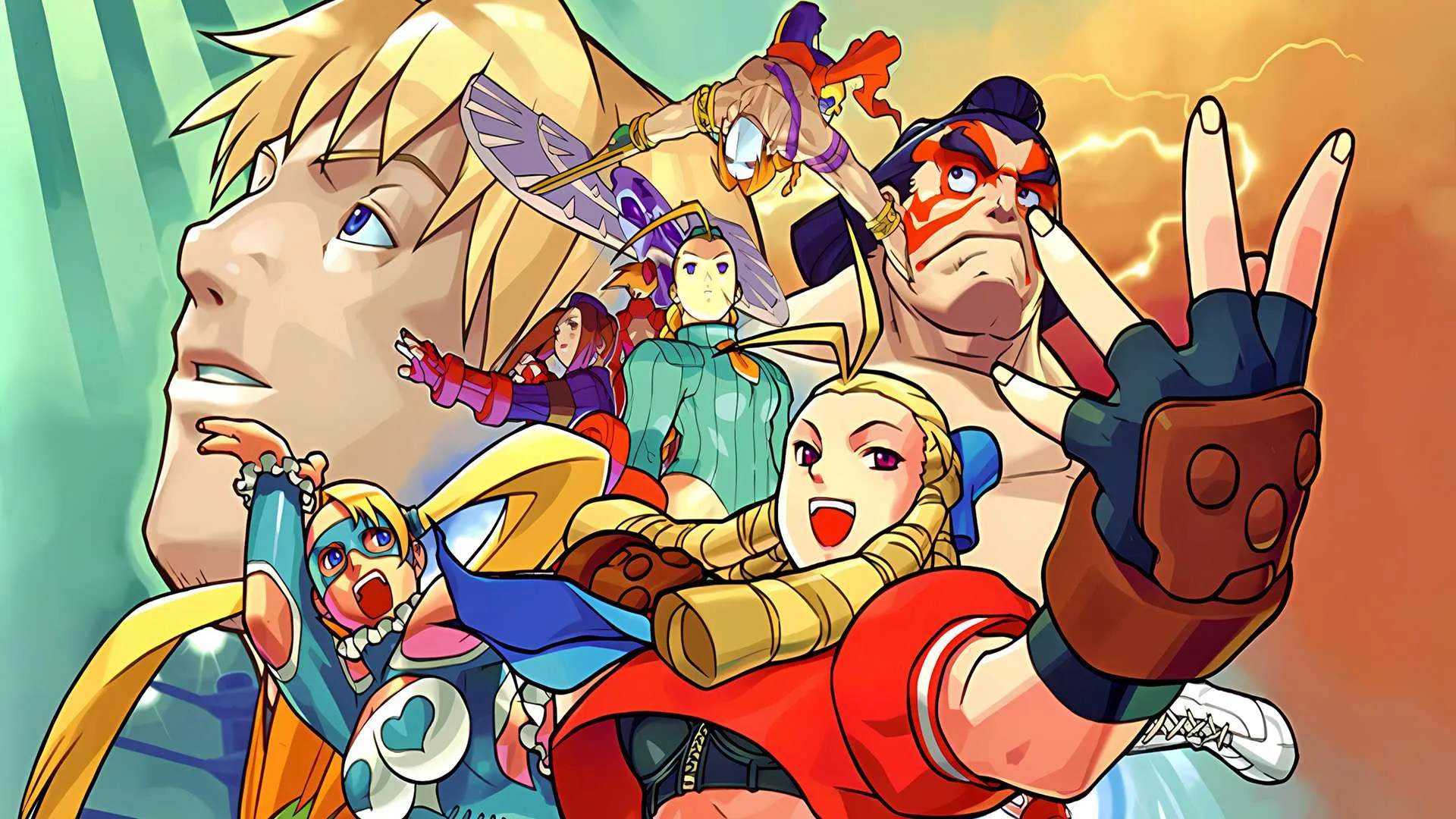
The PlayStation delivered an unmatched arcade experience that felt illegal to own at home. I still vividly remember hearing the Sony Computer Entertainment startup sound for the first time. It signaled the start of digital low-poly greatness that still hits me to my core decades later.
Why did we tolerate those jagged edges and the occasional mid-fight disc read error? Simple. The 32-bit era represented a massive shift in competitive gaming. We witnessed the birth of 3D juggernauts and the final, glorious refinement of 2D sprite-work. The PS1 fighting library remains a masterclass in experimental design, turning casual button-mashers into frame-data nerds overnight.
This list curates the absolute cream of the crop from Sony’s debut machine. I’m talking about the titles that changed the industry forever, and the hidden gems that don’t get talked about enough. Dust off your Memory Cards and find that RCA cable, because we are ranking the 30 best PS1 fighting games that defined the grey box’s legendary lifespan.
Tekken 3
- Developer: Namco
- Release Date: March 26, 1998
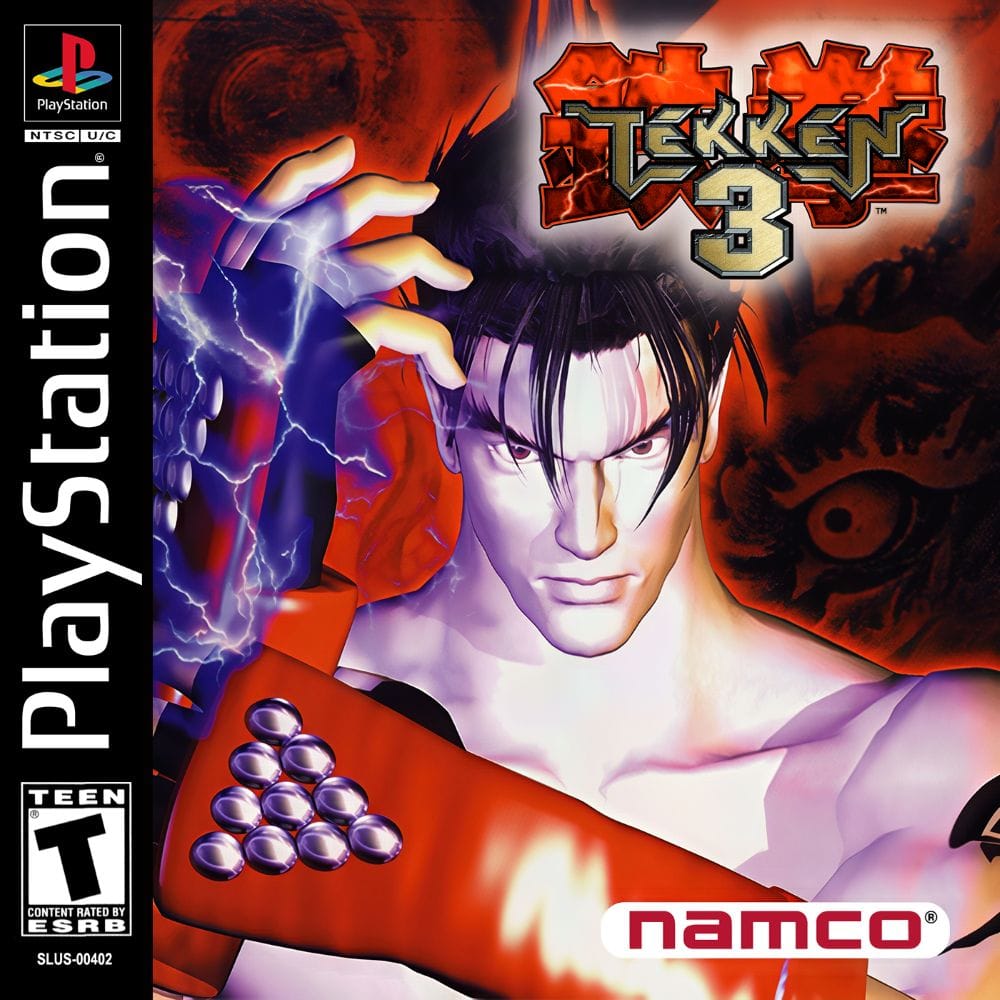
Namco absolutely shattered every existing expectation with Tekken 3, reinventing the 3D fighting genre entirely. The new sidestep mechanic was a game changer, forcing us to think beyond the simple “forward and back” mentality of the 2D era. The roster remains the stuff of legend, introducing heavy hitters like Jin Kazama, Hwoarang, and Ling Xiaoyu. Each character feels distinct, offering unique fighting styles that range from traditional karate to rhythmic capoeira. Aside from the core fighting, Namco packed in Tekken Force and Tekken Ball modes, providing a refreshing break from the intense one-on-one matches.
Why It’s Worth Playing: Tekken 3 is the definitive PlayStation fighter because still plays like a dream today. You won't find many retro titles that balance technical depth with pure, pick-up-and-play fun so effortlessly. IMO, the soundtrack alone justifies a replay, as those high-energy techno beats perfectly capture the spirit of the 90s.
Rival Schools: United by Fate
- Developer: Capcom
- Release Date: July 30, 1998
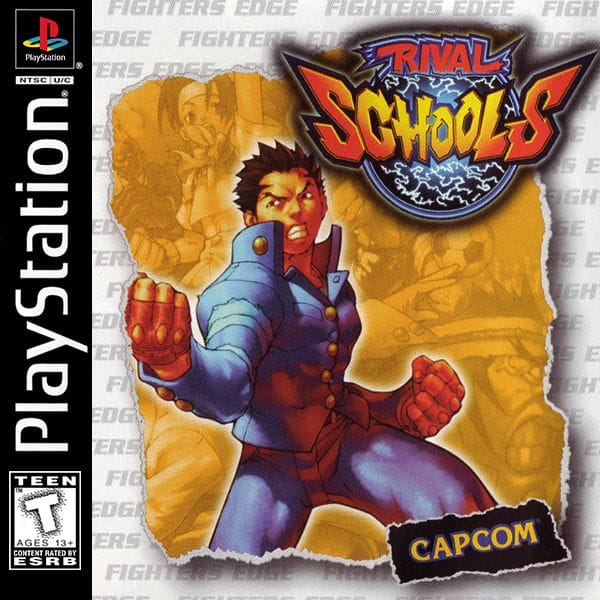
Capcom dropped us into the middle of a high school turf war with Rival Schools, a vibrant, loud, and energetic fighter. The controls are incredibly snappy, favoring a four-button layout that makes pulling off massive aerial raves feel like second nature. The Team Up Technic system allows you to call in a secondary character for a cinematic, two-person assault. What really sets the PS1 version apart is the Evolution Disc, a second disc full of mini-games and an entire sim mode that made the world feel lived-in.
Why It’s Worth Playing: Rival Schools trades the grim seriousness of other fighters for a sense of style and humor that is genuinely infectious. Plus, the tag-team mechanics offer a layer of strategy that feels fresh even decades later. It’s a loud, proud, and incredibly fun reminder of when Capcom wasn't afraid to get a little weird.
Soul Blade
- Developer: Namco
- Release Date: December 20, 1996
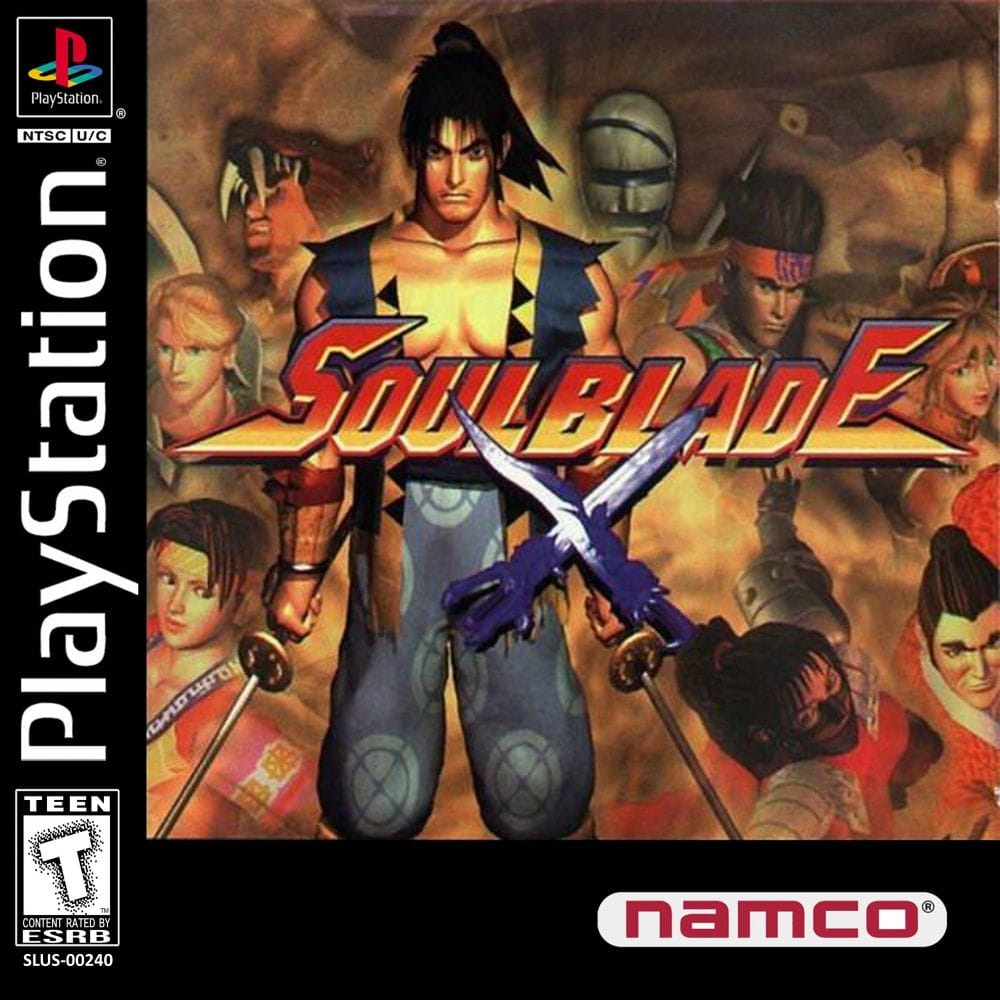
Before it became the world-renowned SoulCalibur, this weapon-based epic arrived on the scene as Soul Blade, and gave us an epic historical fantasy where the weapons felt as heavy and dangerous as the polygons suggested. The Weapon Gauge mechanic added a layer of tension that most button mashers lacked. If you played too defensively or let your guard get pummeled, your weapon would shatter, leaving you to fight with your bare fists like a desperate amateur. You traveled across a map, earned unique weapons with different stats, and fought under bizarre conditions like the floor is poison. From that legendary opening FMV to the clash of cold steel, it felt like a massive leap forward for the genre.
Why It’s Worth Playing: Soul Blade is the definitive weapon-based fighter on the system, offering a perfect blend of cinematic flair and tight, responsive gameplay. The sheer amount of unlockable content and lore ensures you’ll be busy for weeks. It’s a gorgeous, sweeping adventure that proves a fighting game can be so much more than just a health bar and a timer.
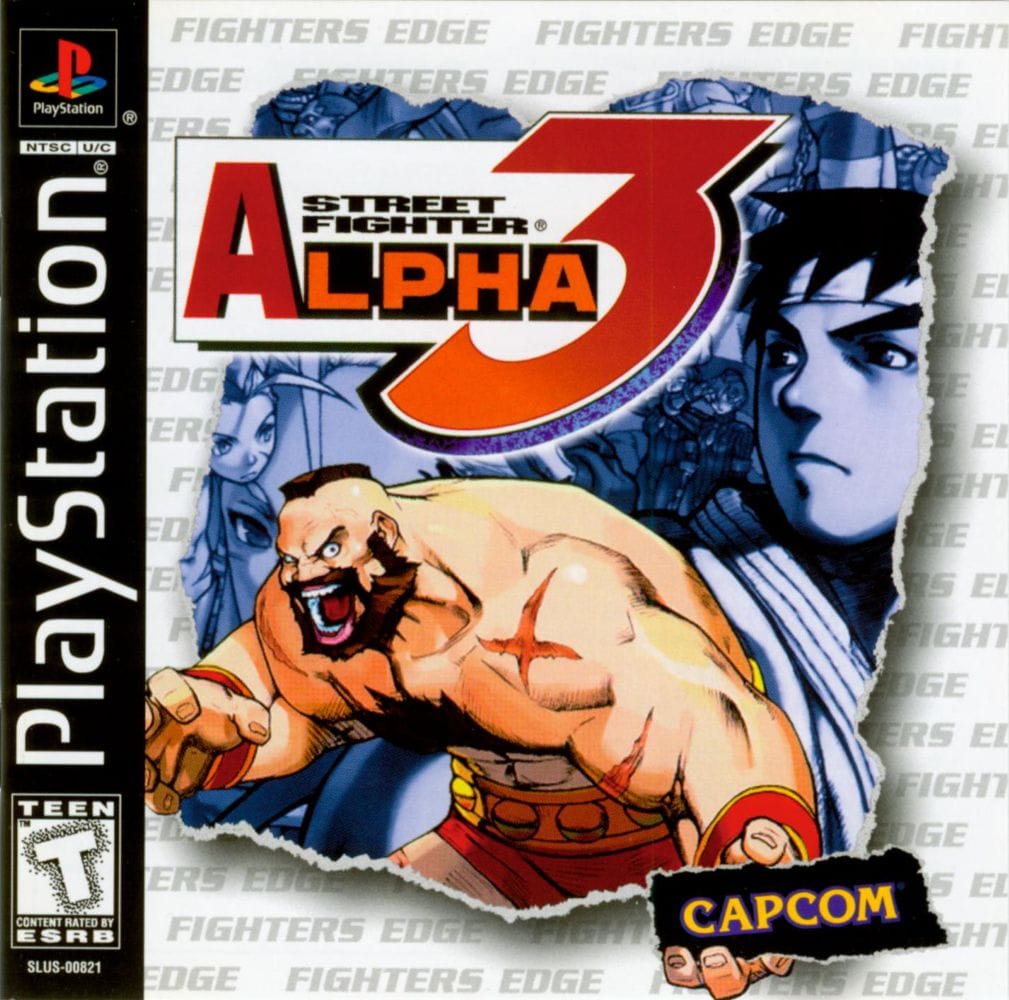
Street Fighter Alpha 3
- Developer: Capcom
- Release Date: May 4, 1999
Street Fighter Alpha 3 is the most complete package Capcom ever delivered on the original PlayStation. The introduction of the Triple “ISM” system allows you to choose between three distinct fighting styles that completely change how your character handles. The PlayStation port gave us the World Tour Mode. You can travel the globe, level up your characters, and unlock perks that makes your character a certified boss. The roster here is absolutely massive, bringing back everyone from the classic Street Fighter II era while adding newcomers like the wrestling powerhouse R. Mika and the rapid-fire Karin.
Why It’s Worth Playing: Street Fighter Alpha 3 is the definitive 2D experience for the PS1, offering more replay value than almost any other fighter in the library. The World Tour mode alone provides dozens of hours of single-player content, while the triple-style ISM mechanics ensure that the competitive ceiling is astronomically high. It’s fast, gorgeous, and an absolute essential for any self-respecting fighting fan.
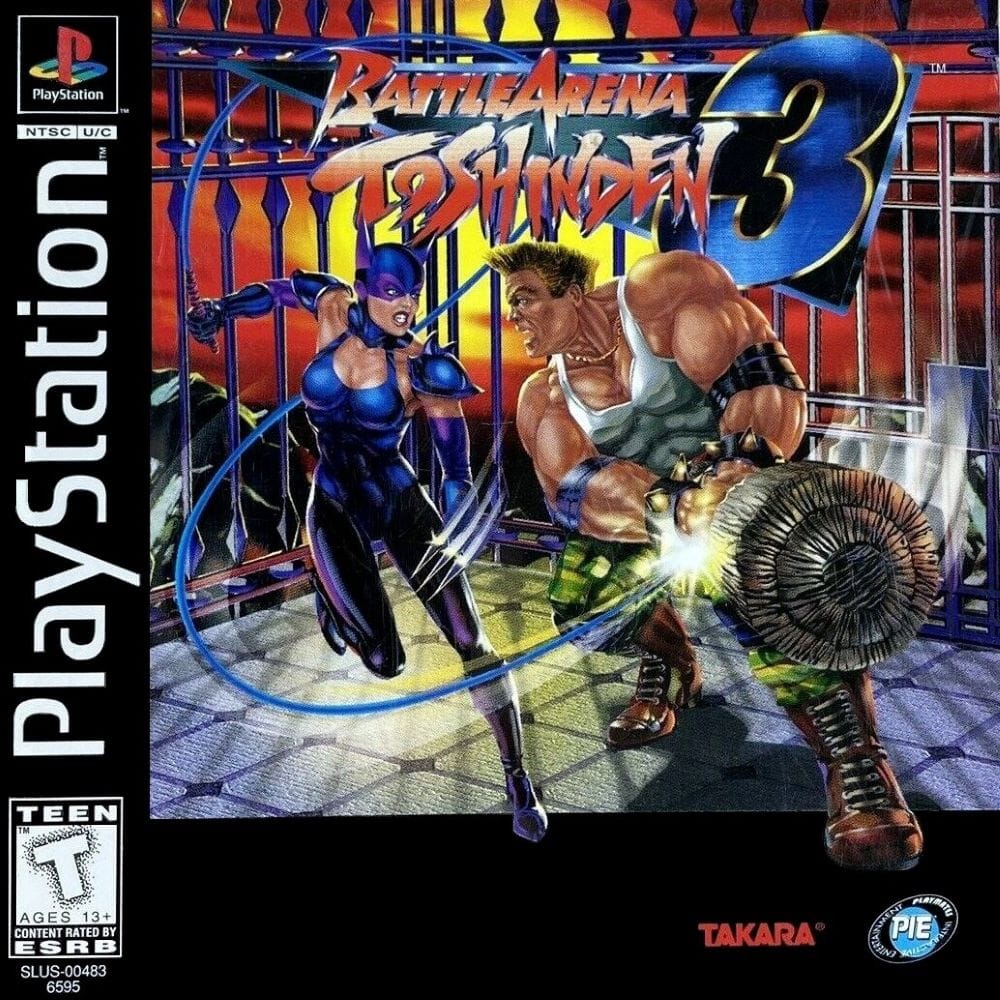
Battle Arena Toshinden 3
- Developer: Tamsoft
- Release Date: December 27, 1996
Battle Arena Toshinden 3 was the moment the franchise decided to go absolutely off the rails, fully leaning into its own brand of beautiful, weapon-based absurdity. The roster doubled in size, giving us a chaotic mix of classic heroes, bizarre new sub-bosses, and secret characters such as a Michael Jackson impersonator. The gameplay took a wild turn by introducing enclosed arenas, meaning you could actually slam your opponents into walls or the ceiling for extra damage. The game also features a 60fps mode that sacrificed some texture detail for silky-smooth action.
Why It’s Worth Playing: Battle Arena Toshinden 3 offers a pure shot of 90s arcade adrenaline without the steep learning curve of other fighters. The combo system is forgiving, the special moves are spectacular, and the roster size is genuinely impressive for the era. If you want a fighter that doesn't take itself too seriously but still offers a ton of content to unlock, this is a trip down memory lane you shouldn't skip.
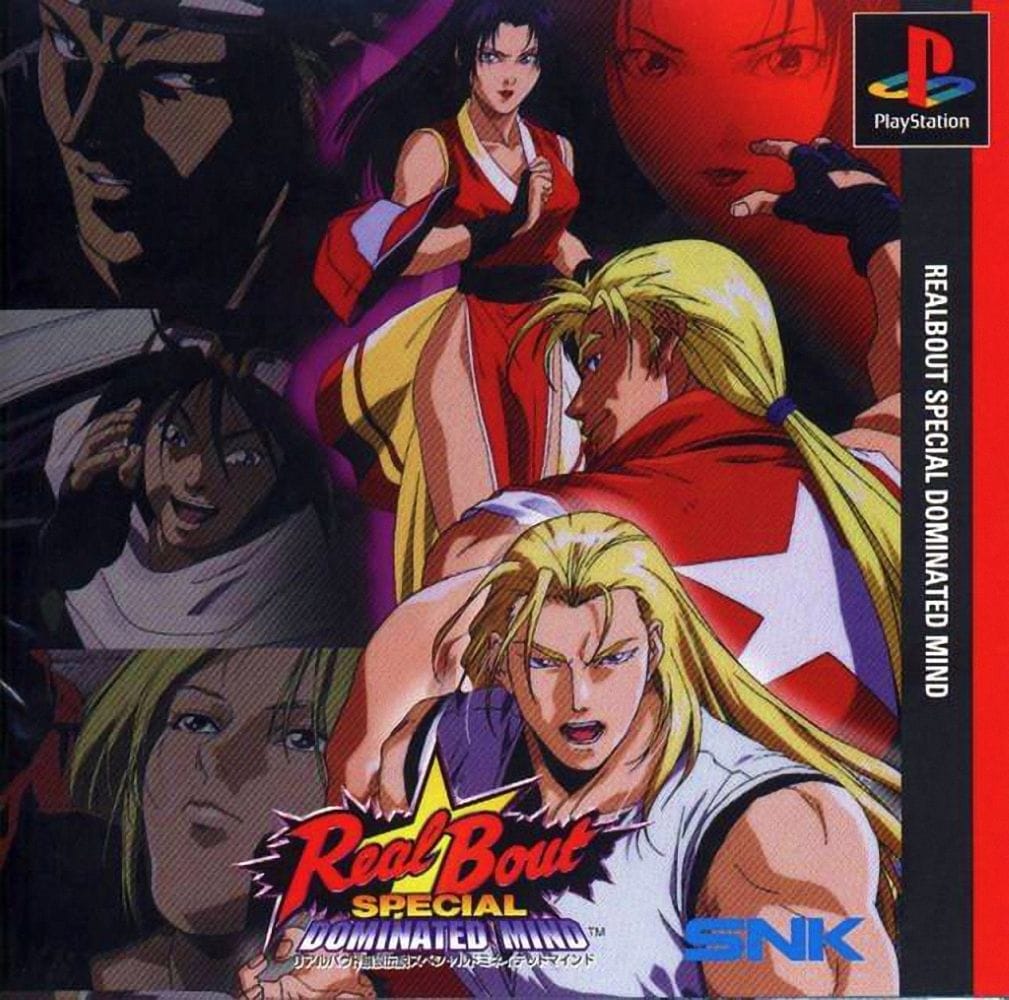
Real Bout Fatal Fury Dominated Mind
- Developer: SNK
- Release Date: June 25, 1998
SNK leaned into the PlayStation’s strengths with Real Bout Fatal Fury Dominated Mind, a focused, high-octane brawler that feels unique. Do you actually miss the confusing multi-plane movement from the arcade version? I don’t, and SNK felt the same way when they ditched the lane-swapping system entirely here. The game introduces a creepy new antagonist named White, and the developers also included a fully voiced story mode that adds significant heft to the standard arcade loop. I still marvel at how SNK crammed these massive, expressive sprites into the PS1’s measly amount of RAM without catching fire.
Why It’s Worth Playing: Real Bout Fatal Fury Dominated Mind is the absolute pinnacle of 2D fighting on the PlayStation hardware. It offers a unique mechanical "what if" scenario for the Fatal Fury formula that you simply won't find on the Neo Geo. The snappy controls and gorgeous sprite-scaling prove that 32-bit hardware still held plenty of charm for 2D purists.
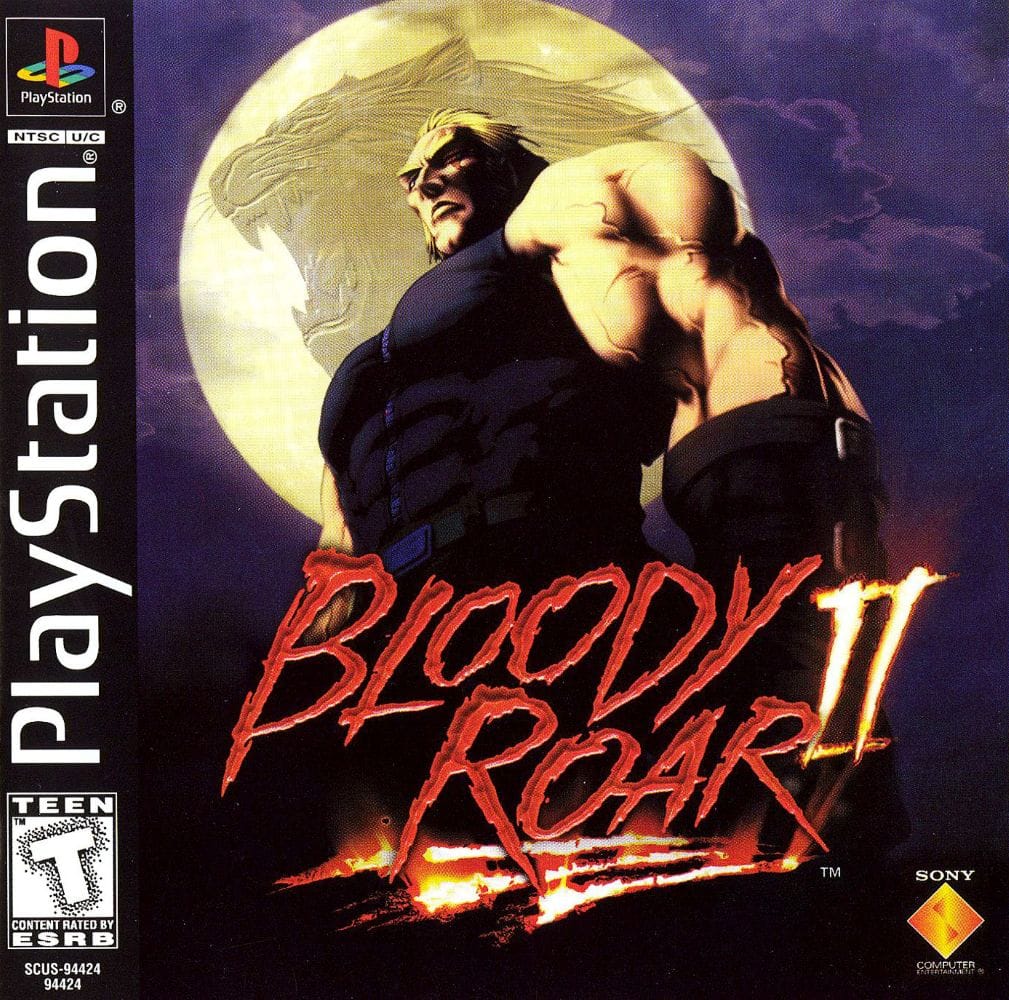
Bloody Roar 2
- Developer: Raizing
- Release Date: January 28, 1999
If you ever thought traditional fighting games were a bit too “human,” Bloody Roar 2 is the hyper-aggressive answer you’ve been waiting for. The Beast Gauge remains the absolute heart of this experience. Transforming grants you regenerative health and devastating new combos, but a single mistake can knock you back into vulnerable human form, forcing players to strategize their fighting tactics. The roster grew in all the right ways, introducing fan favorites like Shenlong and Bakuryu the mole. The developers also polished the visuals to a mirror sheen, making this one of the best-looking 3D titles on the console.
Why It's Worth Playing: Bloody Roar 2 is a loud, proud, and incredibly punchy brawler. It’s one of the few fighters that manages to be accessible enough for button-mashing at a party while offering deep, combo-heavy gameplay for the hardcore crowd. If you want a fighter that trades the typical martial arts tournament tropes for pure primal energy, this is the undisputed king of the pride.
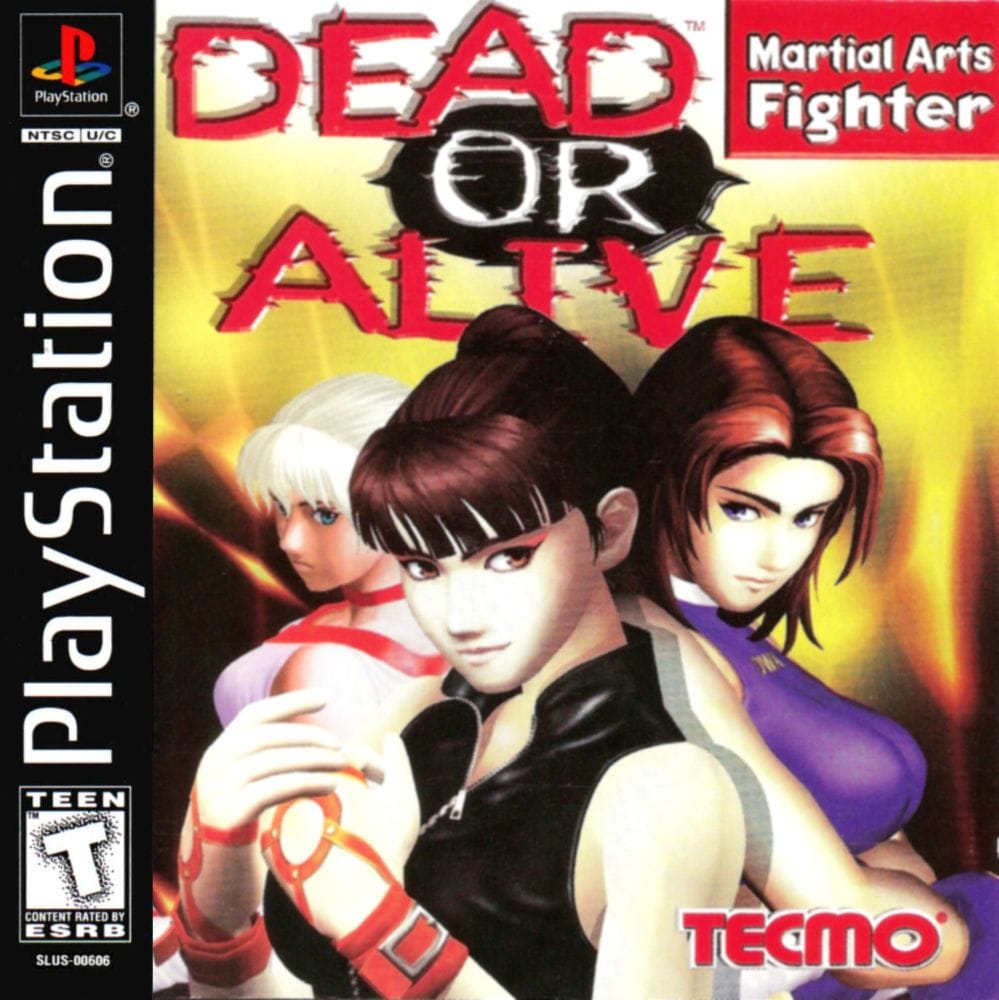
Dead or Alive
- Developer: Team Ninja/Tecmo
- Release Date: March 12, 1998
While Sega and Namco were busy fighting for dominance, Tecmo crashed the party with Dead or Alive, a fighter that felt remarkably distinct and dangerously fast. This game introduces the legendary Hold System, which allows you to actively read your opponent’s height and timing to execute a devastating counter-throw. We also have to talk about the Danger Zones—those explosive floor perimeters that send fighters skyrocketing into the air for massive juggle damage. The PS1 port actually outshines the original Saturn version in several ways, featuring better backgrounds and much faster loading times.
Why It's Worth Playing: Dead or Alive is the origin story of one of the most technically polished fighting franchises in history. It offers a distinctively aggressive flavor of 3D combat that feels remarkably different from the Tekken or Soul Blade ecosystems. Plus, seeing how Team Ninja squeezed this much detail out of the PlayStation hardware is a treat for any retro tech enthusiast.
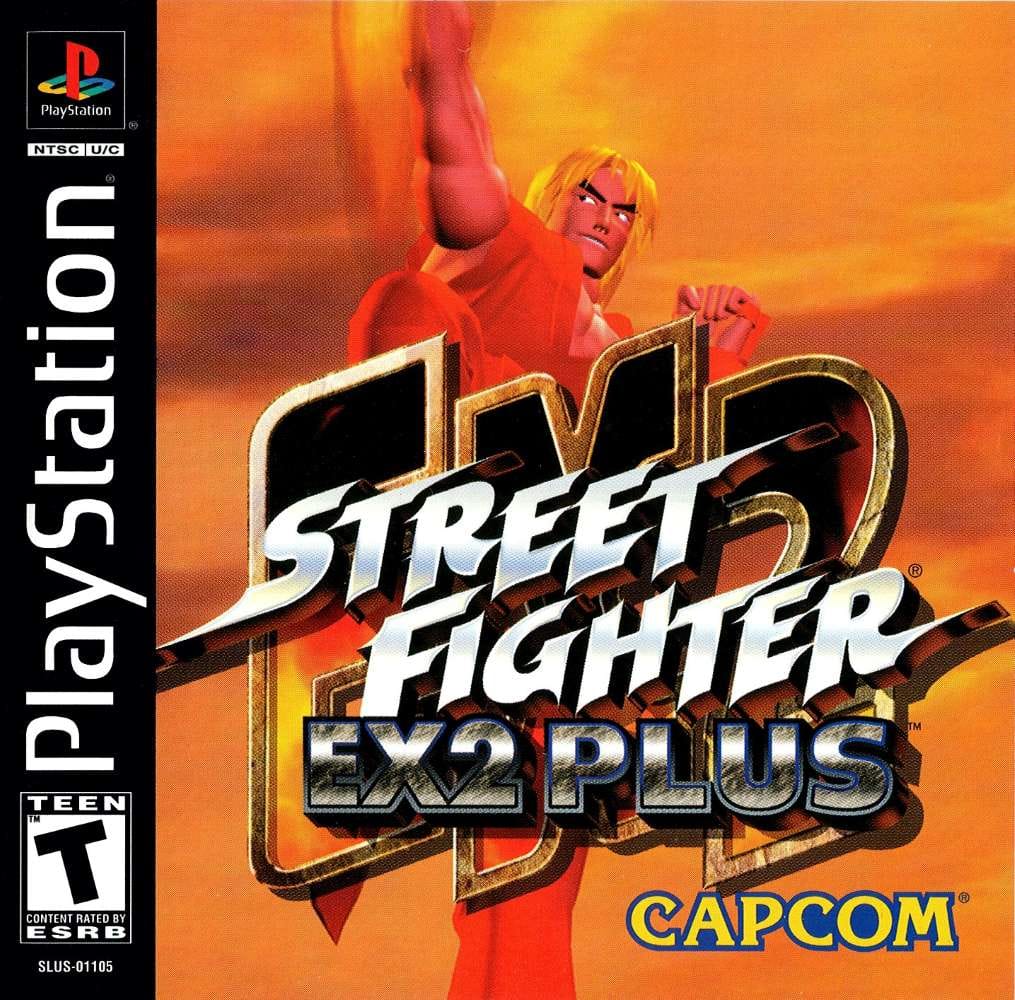
Street Fighter EX2 Plus
- Developer: Arika
- Release Date: December 24, 1999
Street Fighter EX2 Plus is a technical marvel that proved Street Fighter can thrive outside of two dimensions. This game introduces the Excel Combo system, which basically turns off the laws of physics, allowing you to chain any attack imaginable. Arika also brought a roster of weirdos that actually outshone the main cast. Characters like the Skullomania or Garuda added a bizarre, tokusatsu-inspired energy that the mainline series lacked. The PlayStation port specifically is a triumph, featuring a Maniac Mode that challenges you to pull off increasingly complex trials.
Why It's Worth Playing: Street Fighter EX2 Plus is a stylish, underrated masterpiece that feels entirely distinct from Street Fighter II or Alpha. It’s the perfect bridge for fans who love 2D precision but crave the visual weight and flair of a 3D brawler. Plus, the soundtrack is an absolute jazzy, synth-heavy banger that will live in your head rent-free for weeks.
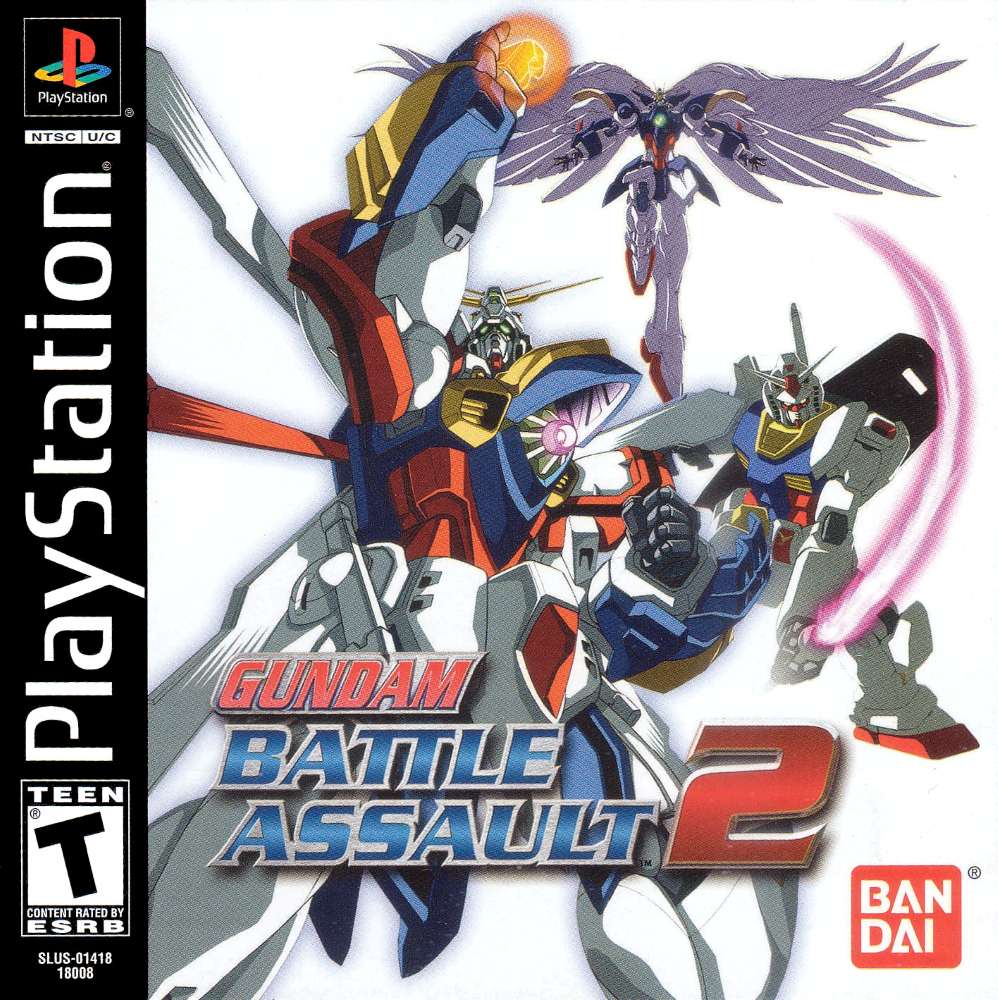
Gundam Battle Assault 2
- Developer: Natsume
- Release Date: July 18, 2002
While most developers were moving toward the PS2 in 2002, Natsume dropped Gundam Battle Assault 2, an absolute behemoth of a 2D fighter late in the PS1’s life cycle. This game feels heavy in the best way possible. Every step your Mobile Suit takes shakes the screen, and every beam saber clash feels like a tectonic event. You can’t just spam jumps or dashes; you have to plan your aerial maneuvers carefully or risk being a sitting duck on the ground. The roster is very deep, spanning from the original Mobile Suit Gundam to G Gundam and Gundam Wing, and the sprite work here is some of the most detailed work ever put on a disc.
Why It's Worth Playing: Gundam Battle Assault 2 isn’t just a good Gundam game, it’s one of the best 2D fighters on the PS1. It’s the perfect blend of fan service and legitimate competitive depth, wrapped in a gorgeous 2D aesthetic. Whether you’re a hardcore Newtype or just someone who likes big robots hitting each other, this game provides a spectacle that few other 32-bit titles can match.
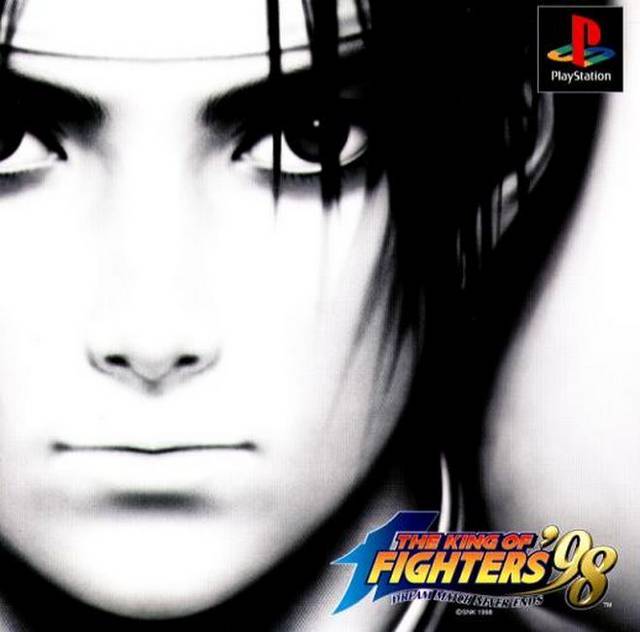
The King of Fighters ’98
- Developer: SNK
- Release Date: March 25, 1999
The King of Fighters ’98 the ultimate greatest hits collection, ditching the Orochi saga for a massive, roster-spanning brawl. What sets ’98 apart is the Advanced and Extra modes, giving you two completely different ways to engage with the combat engine. Advanced mode rewards the aggressors with stocks and rolls, while Extra mode caters to the old-school crowd with manual charging and side-stepping. The backgrounds are vibrant and full of life, the animation remains incredibly expressive, and the arranged soundtrack is a total chef’s kiss moment for the ears.
Why It's Worth Playing: The King of Fighters '98 is arguably the most mechanically balanced and refined entry in the entire series. It’s a pure celebration of SNK’s history, stripped of narrative baggage and focused entirely on the thrill of the fight. If you want to see what happens when a developer is at the absolute top of their 2D game, this slugfest is the undisputed heavyweight champion.
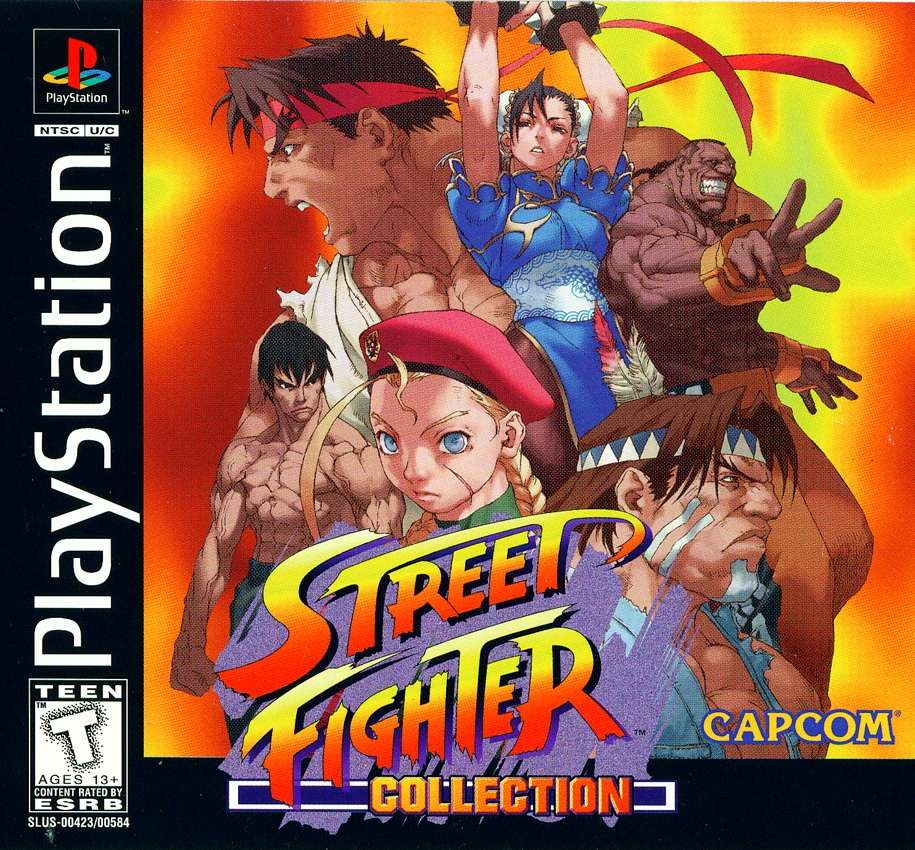
Street Fighter Collection
- Developer: Capcom
- Release Date: October 31, 1997
Before every game had a Remastered edition, Capcom dropped Street Fighter Collection, a treasure trove featuring Super Street Fighter II, Super Turbo, and the console debut of Street Fighter Alpha 2 Gold. Disc one handles the II series with surprising reverence, featuring the iconic Super iterations that defined the 90s.The real star of the show is Street Fighter Alpha 2 Gold, a refined tuning of an already legendary game. This game adds Cammy to the roster, while tweaking the balance to near perfection. The animation is vibrant, and the Custom Combo system feels as snappy as ever.
Why It's Worth Playing: Street Fighter Collection serves as the ultimate historical archive for the most important fighting franchise in history. It offers a level of variety that single-game releases just can't match, providing hundreds of hours of tactical depth. Whether you’re a frame-data nerd or a casual button-masher, this collection is the foundation of any serious fighting game library.
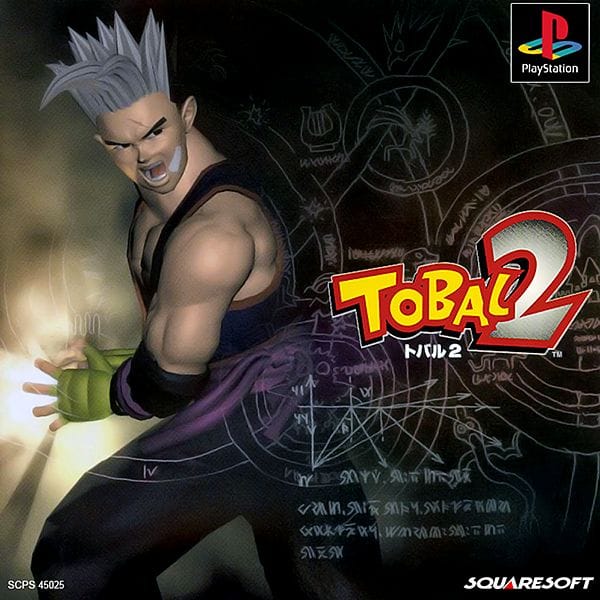
Tobal 2
- Developer: DreamFactory
- Release Date: April 25, 1997
Tobal 2 pushed the PlayStation hardware into a different dimension, featuring high-resolution 640×480 visuals running at a rock-solid 60 frames per second. The character designs come straight from the pen of Akira Toriyama, making every fighter look like they just stepped out of a Dragon Ball chapter. The controls are incredibly deep, utilizing a uniquely intuitive guard button that allows for precise high/mid/low defense. Plus, the Quest Mode is an absolute beast—a full-blown randomly generated RPG where you can capture a staggering 200 playable characters.
Why It's Worth Playing: Tobal 2 is quite possibly the most technically impressive fighter on the entire console. It offers a level of mechanical depth and variety that most 3D fighters wouldn't catch up to for another two console generations. Even if you don't speak a word of Japanese, this game is an essential experience for any fighting game connoisseur.
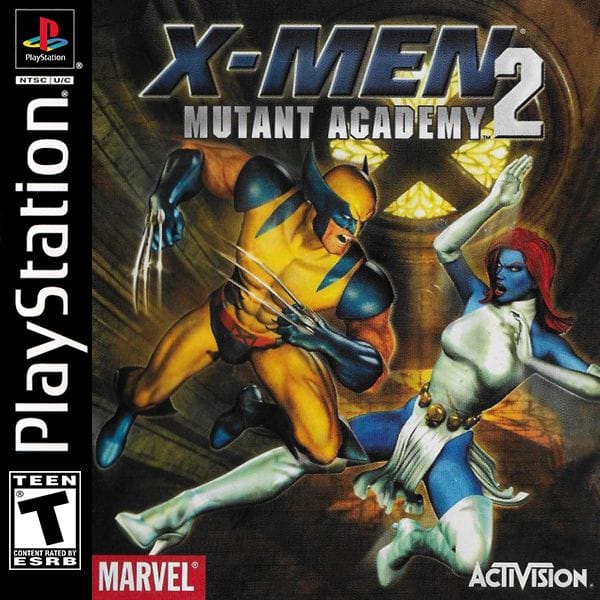
X-Men Mutant Academy 2
- Developer: Paradox Development
- Release Date: September 18, 2001
X-Men Mutant Academy 2 is a vibrant and comic-accurate 3D fighter, packed with an incredible amount of fanservice. The roster expanded to include heavy hitters like Nightcrawler, Rogue, and Havok, and even Spider-Man as a secret playable character. The gameplay saw a massive overhaul, introducing a much more fluid “Aerial Rave” system that allowed you to launch opponents and continue the beatdown mid-air. The stages are interactive are packed with interactive elements and cameos, making the world feel lived-in and dangerous.
Why It's Worth Playing: X-Men Mutant Academy 2 is easily the best 3D X-Men fighter ever produced. It offers a robust training mode, a massive roster of 18 characters, and some of the most polished 3D visuals on the console. FYI, if you manage to unlock Professor X, you get to fight from a hover-chair, which is exactly as ridiculous and awesome as it sounds.
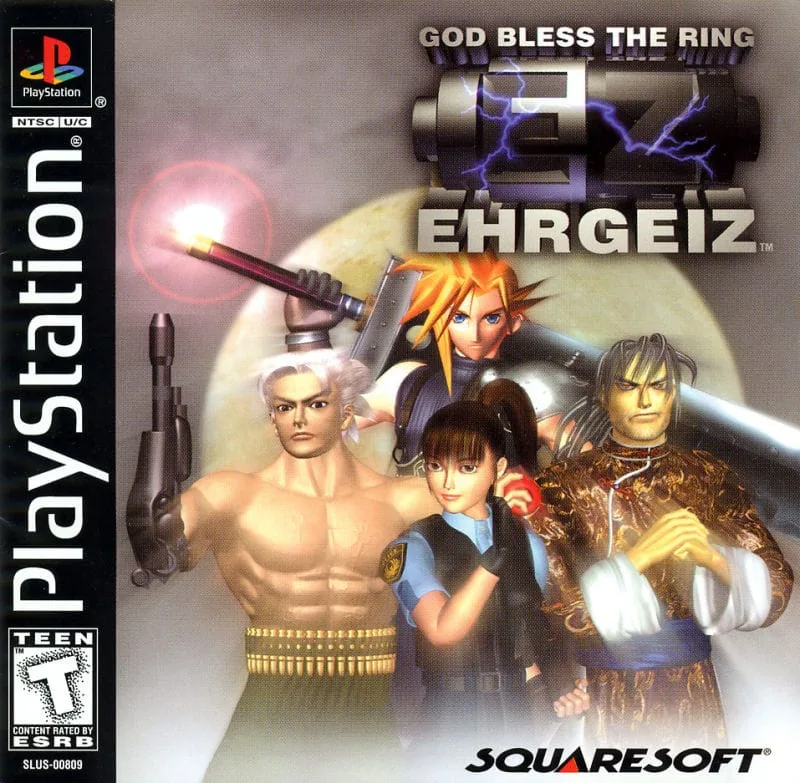
Ehrgeiz: God Bless The Ring
- Developer: DreamFactory
- Release Date: December 17, 1998
Squaresoft and DreamFactory teamed up to create Ehrgeiz: God Bless The Ring, an ambitious brawler that allowed you to duke it out with your favorite Final Fantasy VII characters in a fully 3D wrestling ring. You have full 360-degree movement, allowing you to run around the arena, hop onto crates, and pick up actual weapons to chuck at your opponent’s head. But wait, there’s more! Ehrgeiz bundled in a massive Action-RPG Quest Mode, a full-blown dungeon crawler with hunger mechanics, loot, and leveling systems. Why don’t modern fighters come with a secret 20-hour RPG anymore?
Why It's Worth Playing: Ehrgeiz proved fighting games didn't have to follow the Tekken or Street Fighter blueprints to be great. Whether you’re here for the Final Fantasy cameos or the surprisingly deep dungeon looting, it offers a variety of gameplay that most modern titles still can't match. It’s messy, ambitious, and legendary for all the right reasons.
Star Gladiator
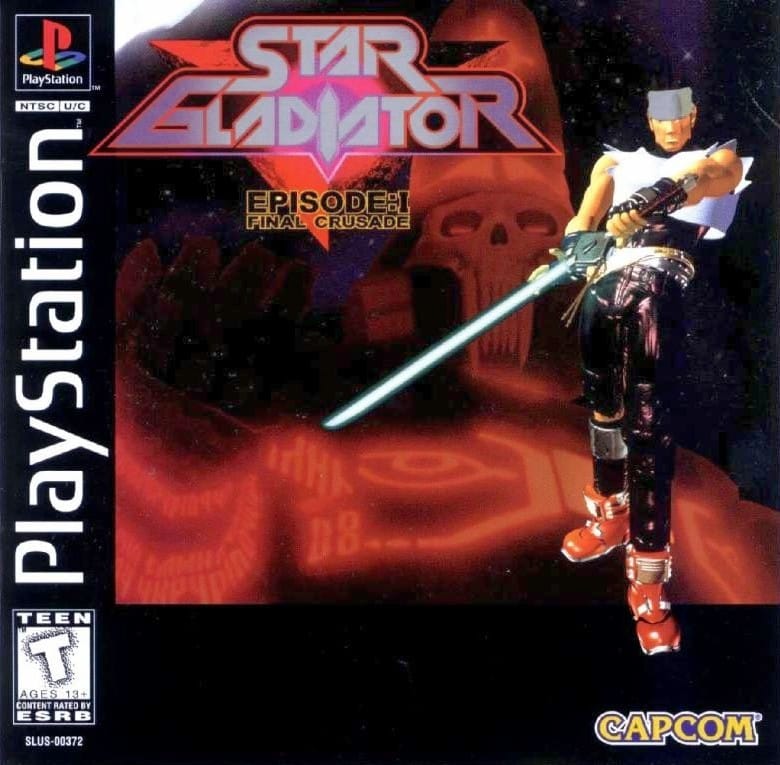
- Developer: Capcom
- Release Date: October 31, 1996
Capcom launched us into the far reaches of the galaxy with Star Gladiator, a fighter that discards traditional fireballs for high-velocity weapon-based combat. You control Hayato, a futuristic swordsman who wields a Plasma Blade with terrifying speed. The engine utilizes a four-button layout that prioritizes Plasma Combos, which allows you to string together flashy hits with almost zero hesitation. The PlayStation port also includes several exclusive modes and a vibrant arranged soundtrack that perfectly captures that 90s space opera vibe.
Why It's Worth Playing: Star Gladiator because it’s a fascinating look at Capcom’s early attempts to navigate 3D space with weapons. It’s colorful, fast-paced, and doesn't take itself too seriously—a refreshing change of pace from the gritty realism of later 3D brawlers. If you’re a fan of vibrant sci-fi designs and satisfyingly combat, this cult classic deserves a slot in your retro gaming backlog.
Pocket Fighter
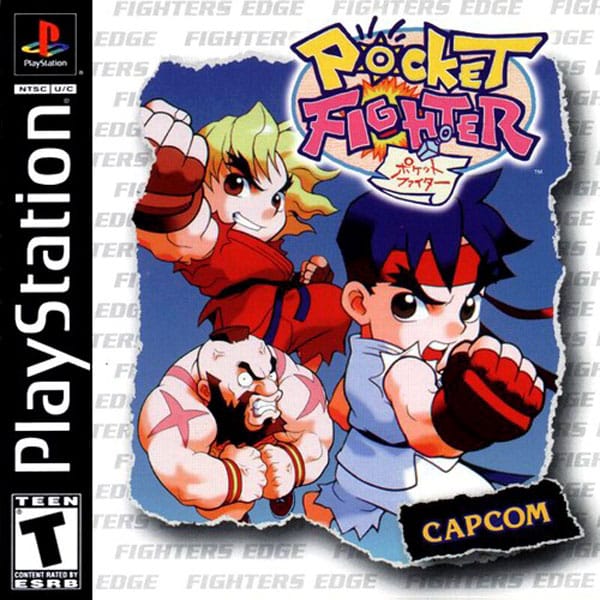
- Developer: Capcom
- Release Date: June 11, 1998
Capcom shrunk their iconic warriors down into adorable chibi versions in Pocket Fighter, a surprisingly competitive fighter. The game introduces a hilarious Flash Combo system, where mashing a single button creates a choreographed string of costume-changing attacks. But the real meat of the combat involves the Gem System. Red, blue, and yellow gems fly out when you smack up your opponent like a piñata, and collecting them levels up your special moves. The backgrounds are an absolute treasure trove of Capcom fanservice, and there is a sheer amount of charm packed into these 32-bit sprites.
Why It's Worth Playing: Pocket Fighter is the rare "easy-to-play, hard-to-master" gem that appeals to literally everyone. It offers a highly accessible leveling system and a visually stunning 2D art style that has aged significantly better than most 3D games of the era. If you want a fighter that will actually make you laugh out loud while you play, Pocket Fighter is the undisputed champ of the PS1 library.
Tatsunoko Fight
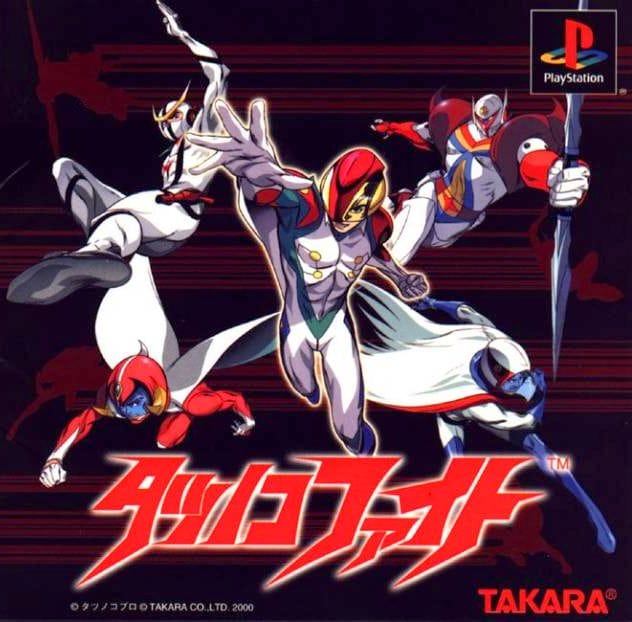
- Developer: Electronics Application
- Release Date: October 5, 2000
Tatsunoko Fight is one of the most vibrant throwbacks to classic anime, bringing together legends from Gatchaman, Casshan, and Tekkaman to trade blows in a gorgeous 2D arena. The gameplay features a surprisingly accessible three-button layout that prioritizes cinematic flair over blistering technicality. What really sets this apart is the Original Story Mode, which features beautifully drawn cutscenes and even a new, game-exclusive team called the Volter. IMO, the nostalgic sound effects and high-energy Japanese soundtracks provides a pure shot of adrenaline.
Why It's Worth Playing: Tatsunoko Fight is the essential precursor to the more famous Tatsunoko vs. Capcom, offering a refined and accessible 2D fighting engine that anyone can pick up. It boasts a stunning visual style that mimics the look of classic anime better than almost any other game on the hardware. It’s a rare, celebratory fighter that prioritizes fun and nostalgia, making it a must-play for otakus and fighting game fans.
Advanced V.G. 2
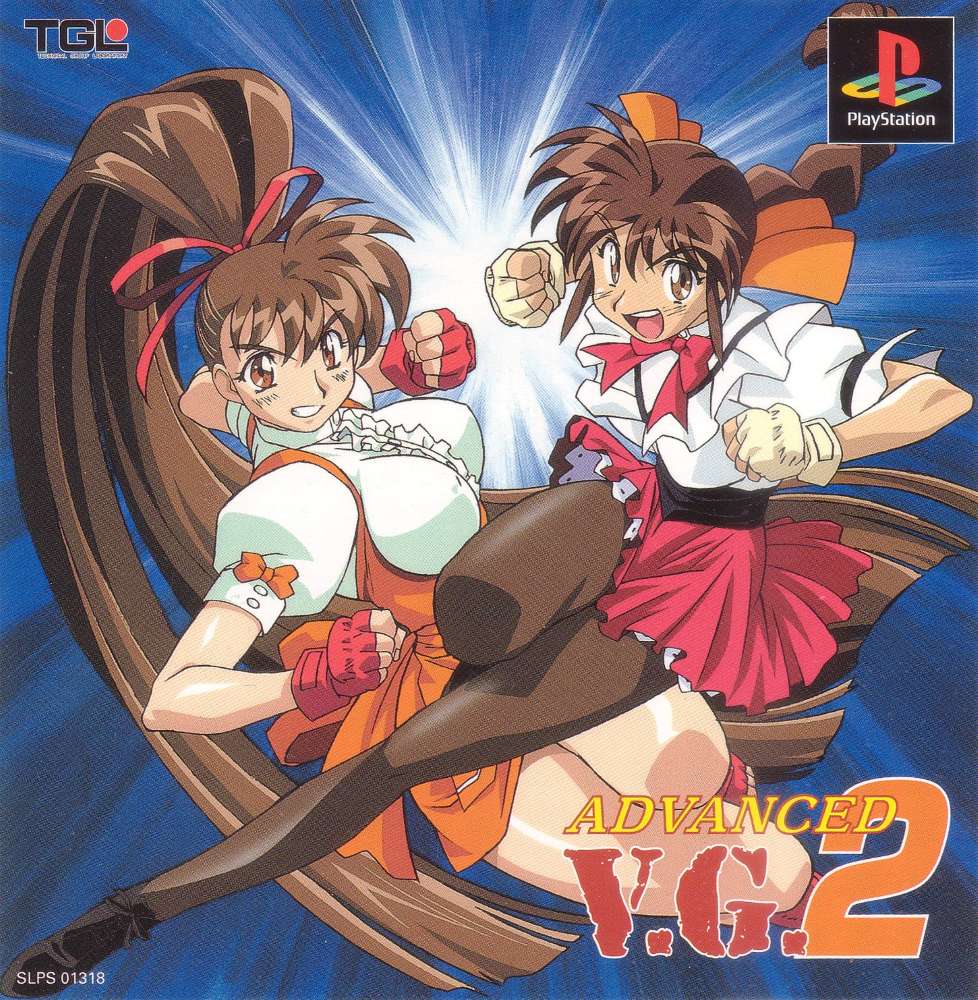
- Developer: TGL
- Release Date: September 23, 1998
Advanced V.G. 2 takes the concept of high-stakes martial arts tournaments and turns it into one of the most fluid 2D fighter on the PlayStation. The combat features a shining-fast combo system and a Guard Crush mechanic that punishes anyone trying to play too defensively. The roster features a diverse cast of women, each representing different fighting styles such as heavy grapplers to zoning specialists with projectiles. Visually, the game is a feast of lushly animated sprites and vibrant, hand-drawn backgrounds that capture that late-90s OVA aesthetic perfectly.
Why It's Worth Playing: Advanced V.G. 2 is the definition of a hidden gem that rewards anyone willing to dig past the surface-level fanservice. It offers lightning-fast 2D combat and an extremely high skill ceiling for those who love mastering complex combos. If you're a fan of Street Fighter Alpha or Guilty Gear, you absolutely owe it to yourself to track down this import classic.
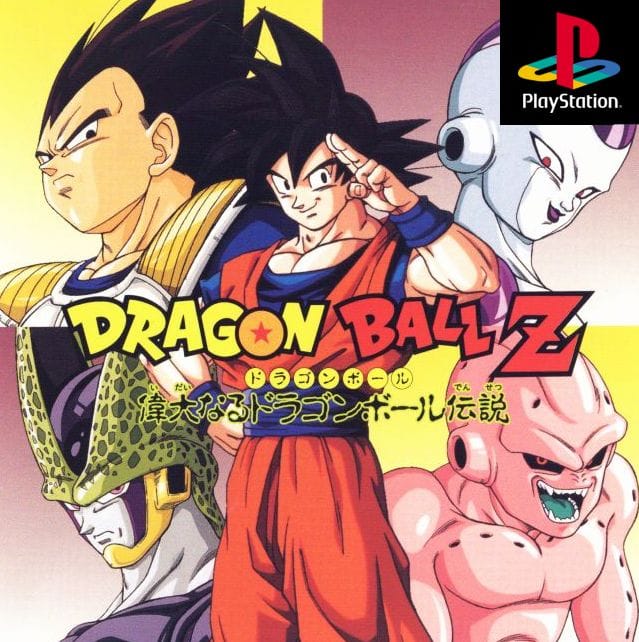
Dragon Ball Z: The Legend (Idainaru Dragon Ball Densetsu)
- Developer: TOSE
- Release Date: May 31, 1996
Dragon Ball Z: The Legend (Idainaru Dragon Ball Densetsu in Japan) ditches the previous Street Fighter clones to deliver high-speed combat that actually feels like the anime. The gameplay lets you engage in 3-on-3 aerial dogfights, where you can zip and blast each other into oblivion across massive, open landscapes. You don’t win by chipping away at a life bar; you win by pushing the Power Balance entirely in your favor to unleash a cinematic Meteor Attack that levels the landscape. The sprite work is surprisingly detailed and efficient, allowing the engine to handle six characters on screen at once without the PlayStation kicking the bucket.
Why It's Worth Playing: Dragon Ball Z: The Legend is the most authentic adaptation of the source material on the original PlayStation. It offers a unique team-based combat system that prioritizes tactical positioning and ki management over memorizing complex inputs. If you want a DBZ fighter that makes you feel like a Legendary Super Saiyan, this import classic is a mandatory play.
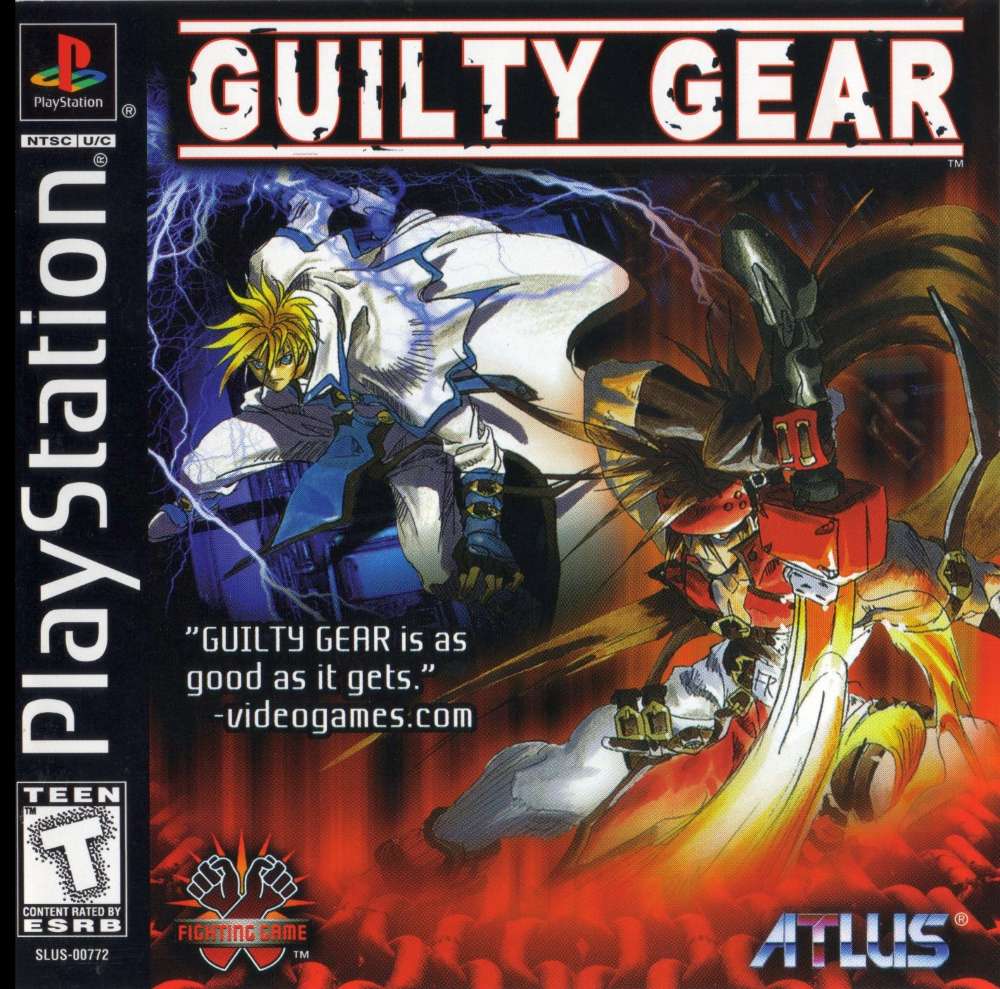
Guilty Gear
- Developer: Arc System Works
- Release Date: May 14, 1998
Before it became a globe-spanning franchise, Guilty Gear was a rebellious fighter that unleashed a high-speed, rock-and-roll apocalypse on the PS1. The gameplay introduced the world to the Gatling Combo system, allowing you to chain attacks together with a fluidity that made other fighters feel like they were stuck in molasses. But the real game-changer? The Instant Kill mechanic. If you land one of these flamboyant finishers, the round ends immediately—no questions asked. The hand-drawn sprites are incredibly detailed, and every frame of animation drips with personality.
Why It's Worth Playing: Guilty Gear is the essential starting point for anyone who wants to see where the anime fighter sub-genre truly found its soul. It offers a wildly aggressive combat engine that rewards players who aren't afraid to get in their opponent's face. If you want a game that looks like a manga and sounds like an Iron Maiden concert, this is your absolute jam.
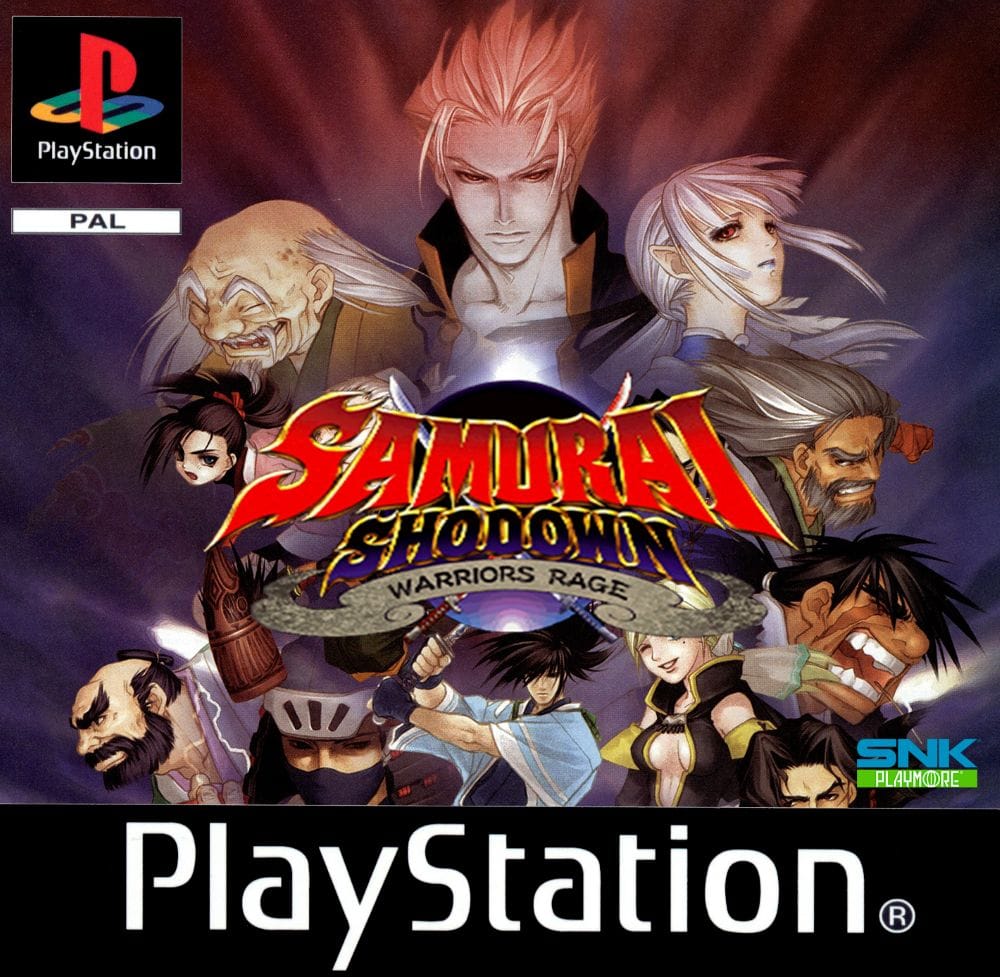
Samurai Shodown: Warriors Rage
- Developer: SNK
- Release Date: November 21, 1999
Samurai Shodown: Warriors Rage takes the legendary franchise into the third dimension, featuring an aged Haohmaru and a cast of fresh faces. The gameplay shifts the series’ focus toward a stamina-based combat system that rewards patience over button-mashing. You can’t just swing your katana wildly; you have to manage your gauge or risk becoming a sitting duck. It also introduces a Sub-Weapon system that allows for diverse tactical setups, giving every duel a layer of depth. While the 3D polygons are definitely a product of their time, the character designs here are genuinely top-tier.
Why It's Worth Playing: Samurai Shodown: Warriors Rage is a fascinating look at how SNK attempted to evolve their formula for a new generation of hardware. It offers a high-stakes fighting engine that stands out from the combo-heavy crowd of the late 90s. If you want a fighter that prioritizes the "art of the kill" and moody storytelling, this 3D experiment is a cut above the rest.
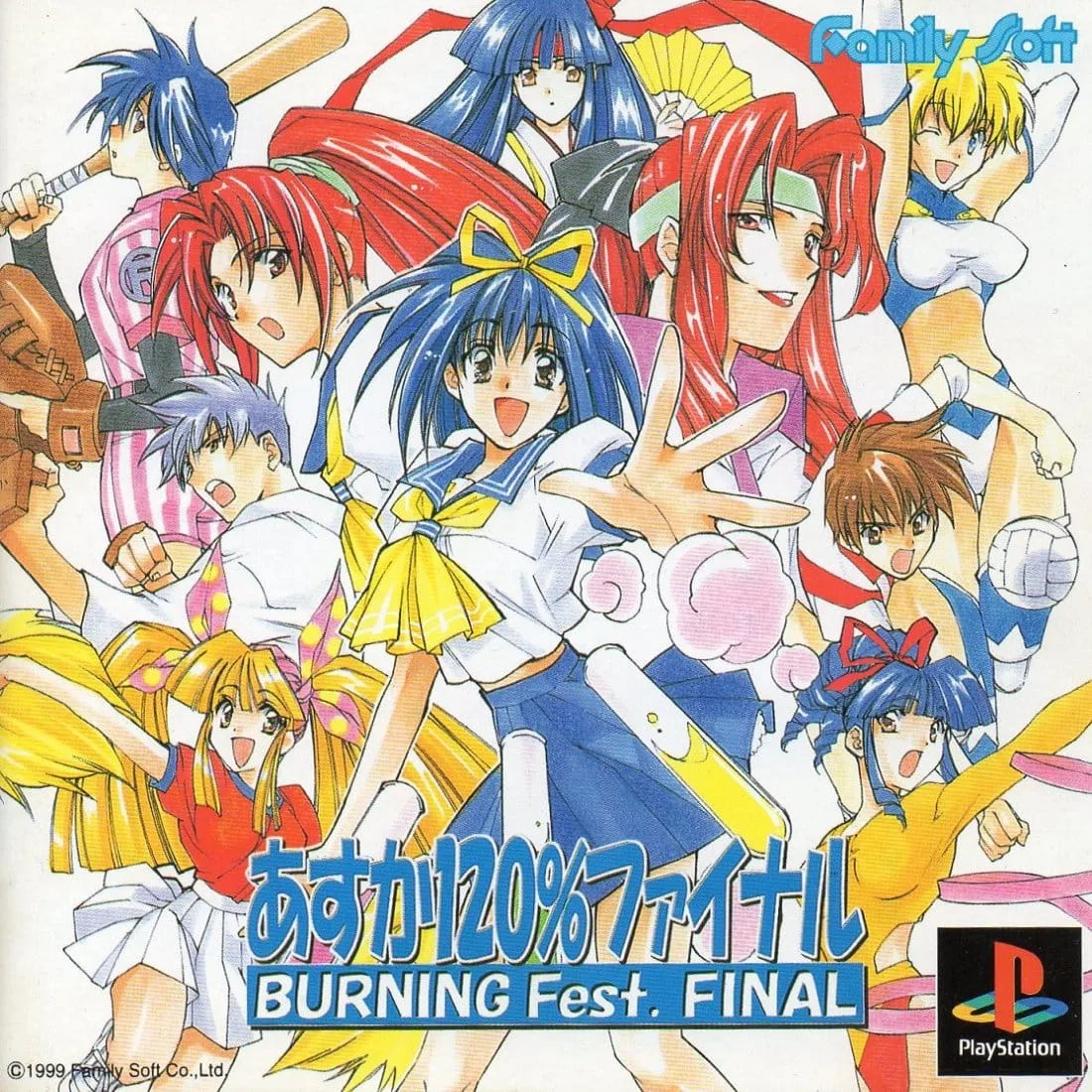
Asuka 120% Final BURNING Fest.
- Developer: Fill-in-Cafe
- Release Date: May 27, 1999
Asuka 120% Final BURNING Fest. is the absolute pinnacle of a series that turned school club rivalries into high-octane warfare. This game features a revolutionary clashing system where opposing attacks can cancel each other out, and the “Burning” in the title refers to your meter, which allows for infinite specials when it fills up to 120%. The PlayStation version is arguably the definitive way to play, boasting rebalanced mechanics and some of the smoothest 2D animations the gray box ever pushed. IMO, the soundtrack is a 32-bit jazzy pop masterpiece that captures the after-school brawl vibe perfectly.
Why It's Worth Playing: Asuka 120% Final BURNING Fest. is one of the best-kept secrets in the PlayStation library. It offers a unique projectile-clashing mechanic that adds a layer of strategy you won't find in Street Fighter or Tekken. If you want a fighter that’s fast, incredibly charming, and surprisingly technical, this is the graduation ceremony you don't want to miss.
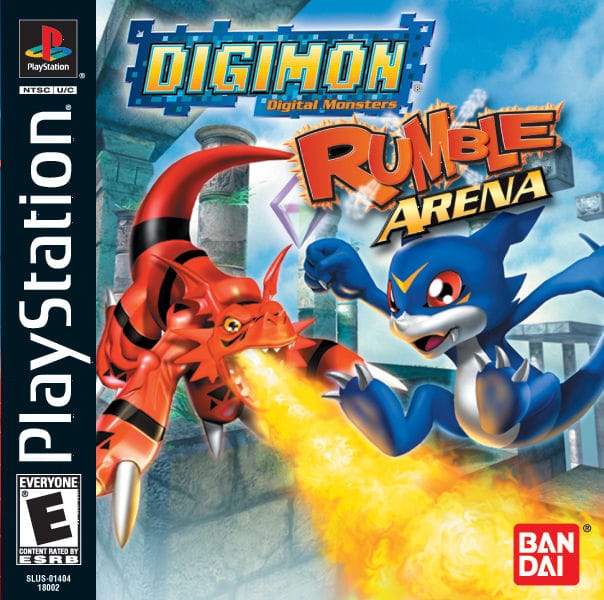
Digimon Rumble Arena
- Developer: Bandai
- Release Date: December 6, 2001
Digimon Rumble Arena is a platform-based brawler that gives players the chance to prove their favorite Digital Monster is the strongest in the Net. The gameplay borrows a page from the Smash Bros. playbook but adds a distinctly Digimon flavor via the Digivolution Gauge. As you deal and take damage, your meter fills, allowing you to transform into your Mega form mid-match. The stages are just as dangerous as the monsters, and you can pick up random power-ups that freeze your enemies or boost your speed, adding a layer of chaotic party-game energy to the combat.
Why It's Worth Playing: Digimon Rumble Arena is the perfect bridge between a serious fighter and a casual multiplayer riot. It offers a unique transformation system that rewards aggressive play and keeps the momentum shifting constantly. If you’re looking for a brawler that prioritizes flashy powers and high-energy fun over frame-counting, this is the ultimate evolution of the genre.
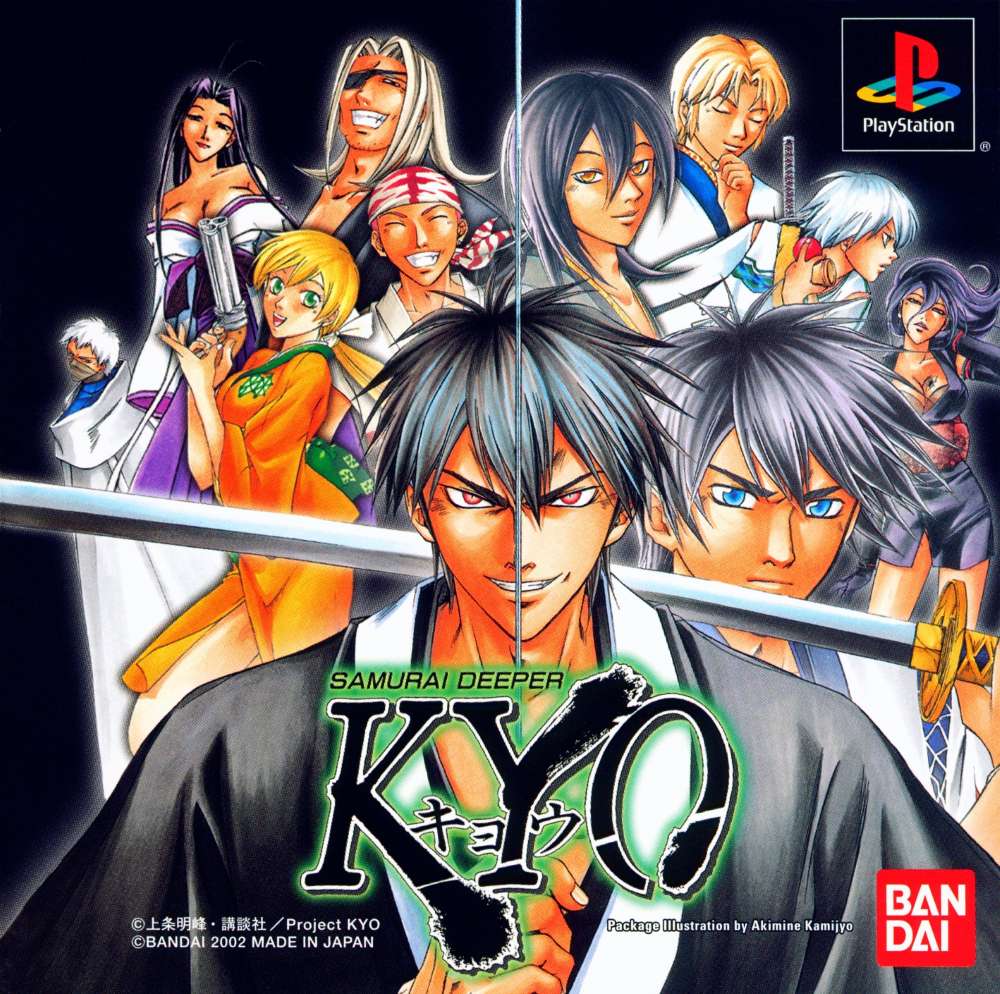
Samurai Deeper Kyo
- Developer: Bandai
- Release Date: December 12, 2002
Based on the classic manga and anime series, Samurai Deeper Kyo is a stylish, 2D weapon-based fighter that proves that the PlayStation 1 still had plenty of gas left in the 32-bit tank. The combat feels reminiscent of the Samurai Shodown school of design, but with a much faster, anime pace. You can execute high-speed dashes and flashy specials that fill the screen with jagged, hand-drawn effects. The roster features 17 fighters, including fan favorites like Kyoshiro, Yuya, and the intimidating Benitora. IMO, the hand-drawn backgrounds and sprite work are some of the most refined on the PS1.
Why It's Worth Playing: Samurai Deeper Kyo is a fantastic pick for anyone who loves high-speed swordplay but wants something a bit more frantic than the typical SNK fighter. It offers a striking visual style and a surprisingly deep combo system that rewards aggressive, technical play. If you want a 2D fighter that makes you feel like you’re playing through a manga chapter, this blade-swinging gem is an absolute must-play
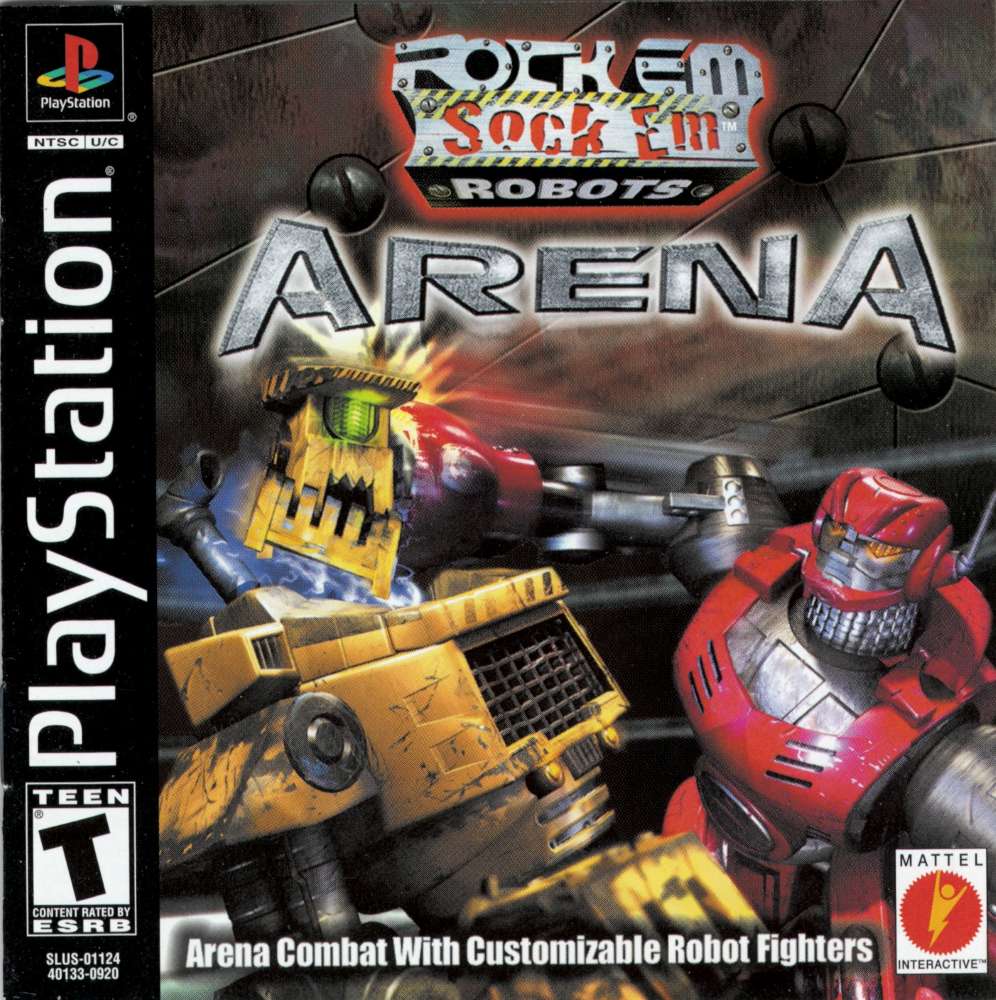
Rock ‘Em Sock ‘Em Arena
- Developer: Paradox Development
- Release Date: December 11, 2000
Rock ‘Em Sock ‘Em Arena transforms the tabletop gimmick into a full-blown 3D robot combat game where you can customize your metal brawler from the treads up. The gameplay introduces a surprisingly deep part-based destruction system, where you can actually knock the limbs, armor, and—yes—the heads off your opponents. You can even scavenge parts from fallen foes to upgrade your bot, turning a standard fighter into a custom-built engine of destruction. Visually, the game leans into a heavy industrial aesthetic that makes every hit feel impactful.
Why It's Worth Playing: Rock 'Em Sock 'Em Arena is a hidden gem that offers a refreshing take on the 3D brawler by emphasizing strategy and customization over simple combos. It offers a deep customization suite and a physics-based damage system that makes every impact feel weighty and significant. If you want a fighter that lets you unleash your inner grease monkey, this robot rumble is a hidden gem worth digging up.
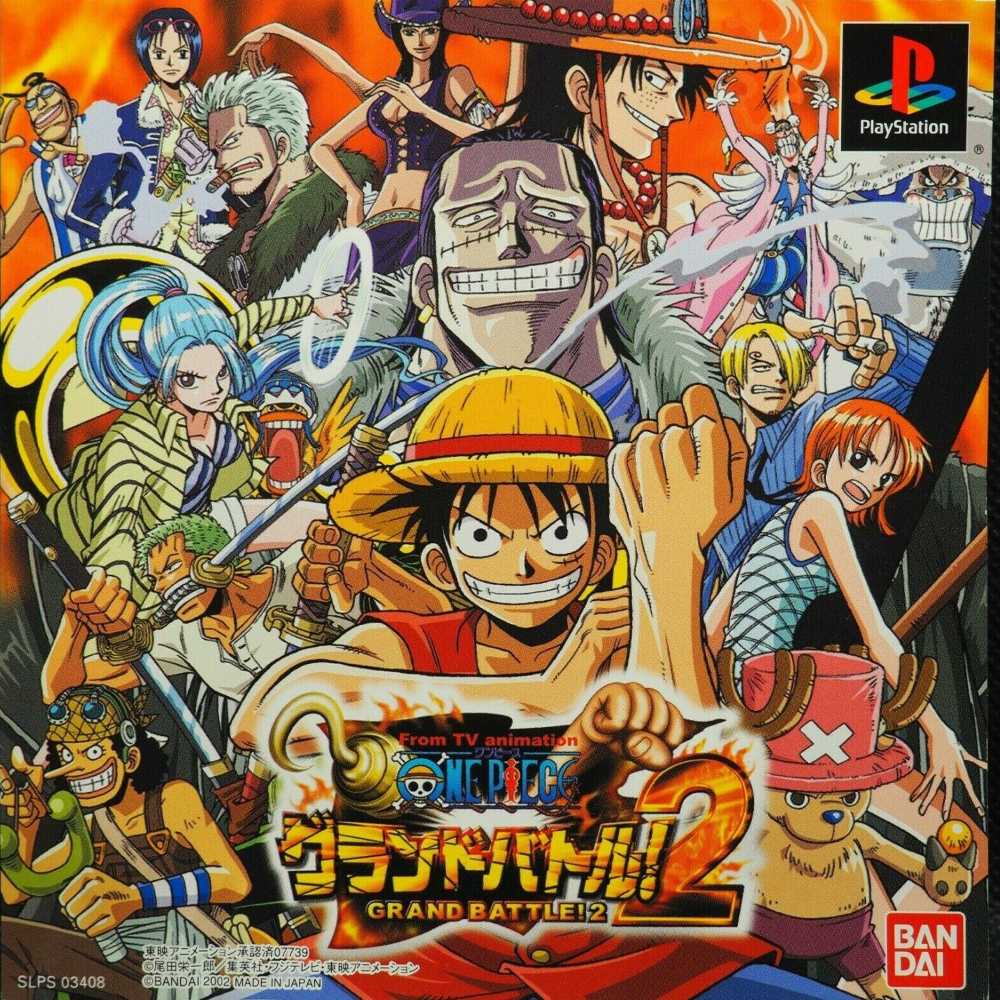
From TV Animation: One Piece Grand Battle! 2
- Developer: Ganbarion
- Release Date: March 20, 2002
One Piece Grand Battle! 2 takes the high-seas adventure and squashes it into a chaotic, item-heavy arena fighter that feels like an interactive episode of the anime. The gameplay utilizes a simple but deep two-button combat system that makes it incredibly easy for anyone to pick up. You aren’t just managing your health bar; you’re dodging falling debris and smashing open treasure chests for power-ups that can swing the match in a heartbeat. The roster is a massive step up from the first game, boasting 24 playable characters that cover the best of the East Blue and Arabasta sagas.
Why It's Worth Playing: One Piece Grand Battle! 2 is the definitive party-fighter for the PlayStation 1, offering a huge variety of unlockables and mini-games that keep the experience fresh. It offers a perfect balance of fanservice and fun, making it accessible to kids and seasoned fighting game fans alike. If you want a fighter that prioritizes laughter and high-energy brawling, this is the ultimate treasure on the Grand Line.
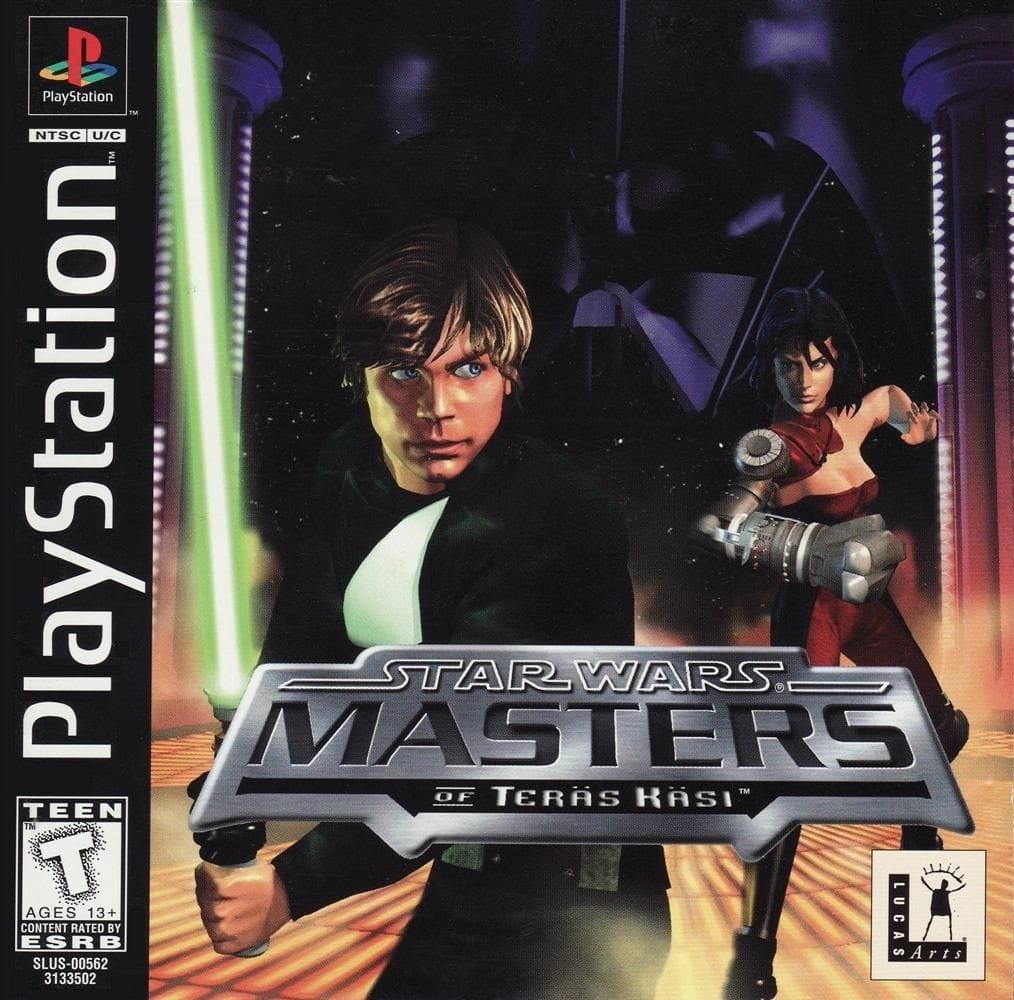
Star Wars: Masters of Teräs Käsi
- Developer: LucasArts
- Release Date: November 25, 1997
Star Wars: Masters of Teräs Käsi brings the galaxy far, far away into a 3D fighting arena, where Jedi Knights and bounty hunters can settle their differences with lightsabers and thermal detonators. The gameplay leans heavily into a weapon-based combat system, where lightsabers actually feel dangerous—well, as dangerous as mid-90s hitboxes allow. You can toggle between fighting with your weapon or your bare hands, which adds a layer of tactical choice to every encounter. While the polygons are a bit pointy by today’s standards, the authentic Star Wars atmosphere is absolutely off the charts.
Why It's Worth Playing: Masters of Teräs Käsi is an essential piece of Star Wars history for anyone who loves the expanded universe. It offers a pure hit of nostalgia with iconic sound effects and locations that look great for the hardware. If you can embrace the jank and just enjoy the spectacle of a lightsaber duel in 32-bit glory, it's a journey worth taking.
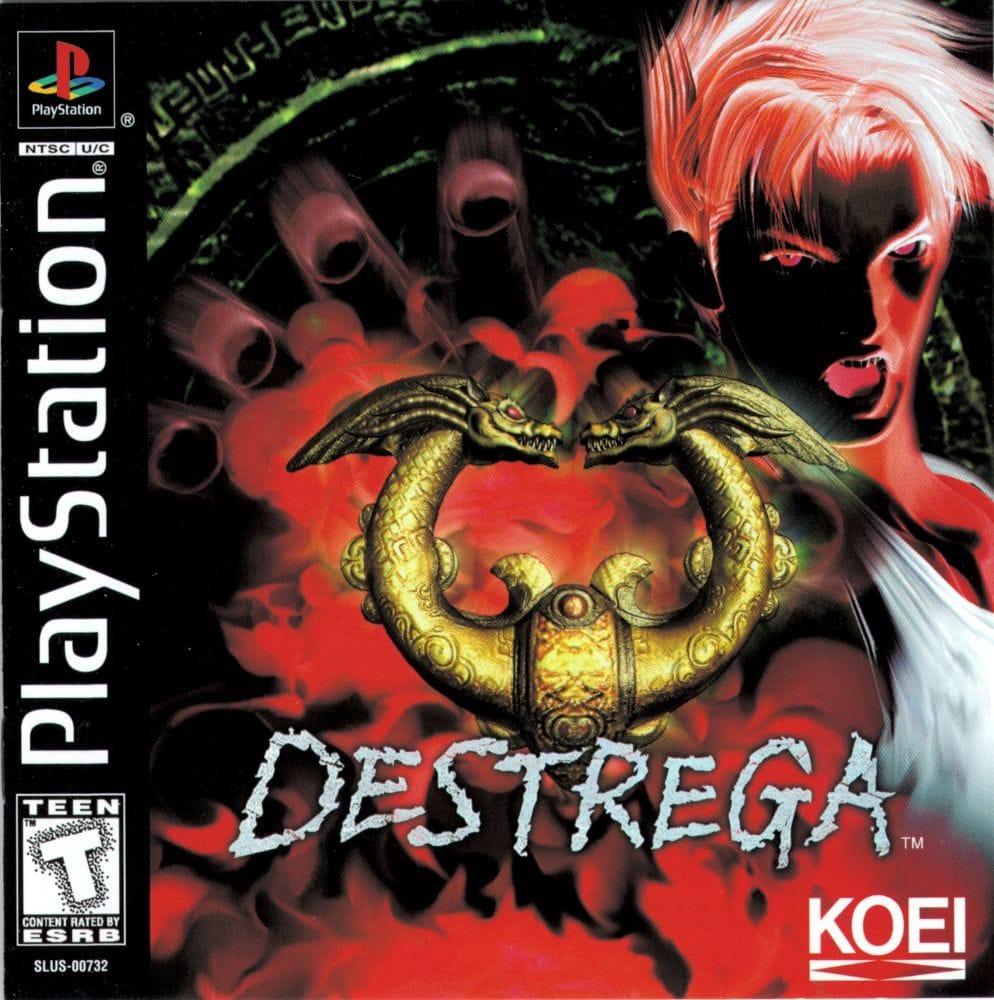
Destrega
- Developer: Omega Force
- Release Date: September 23, 1998
Made by the creators of Dynasty Warriors, Destrega is a high-speed, long-range tactical fighter that dares to be different, allowing you can summon earthquakes and homing fireballs in a massive 3D environment. The gameplay ditches traditional combos in favor of a three-button rock-paper-scissors system based on Power, Speed, and Spread attacks. You’ll have to constantly charge up your meter to unleash devastating elemental strikes while diving behind pillars for cover. The game was a technical showpiece, featuring fully destructible arenas and particle effects that really made the hardware sweat.
Why It's Worth Playing: Destrega is a fascinating precursor to modern arena shooters that offers a refreshing break from standard fighting game tropes. The rock-paper-scissors balancing makes it surprisingly fair, even if your friend is a button-mashing menace. If you’re looking for a fighter that prizes brains and reflexes over raw execution, this experimental gem is a total blast.
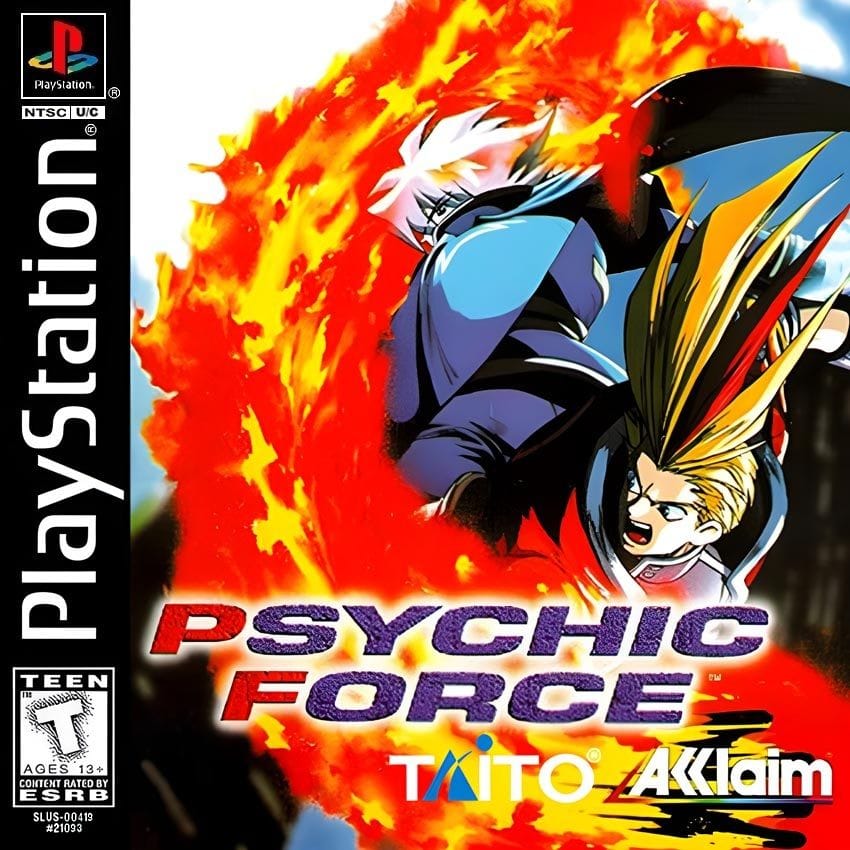
Psychic Force
- Developer: Taito
- Release Date: October 4, 1996
Psychic Force ditches the ground entirely, featuring high-stakes dogfights where every character is a human fighter jet. Forget the floor. Instead of focusing on high/low blocks, you have to manage your Psycho Gauge and distance. If you spam your long-range projectiles, you’ll run out of energy and become a sitting duck. The aesthetic is pure 90s cyberpunk anime, and the character designs are sharp. The voice acting—even in the localized versions—has that classic, slightly over-the-top charm that makes retro gaming so special.
Why It's Worth Playing: Psychic Force is a fascinating relic for anyone tired of gravity-bound fighters. It offers a unique aerial combat engine that hasn't really been replicated with the same style since. If you’re tired of being grounded and want to unleash some psychic devastation, this Taito classic is a literal breath of fresh air.
Frequently Asked Questions (FAQ)
How many of these games support 4 players?
While most are traditional 1v1 brawlers, a few offer unique multiplayer twists. Digimon Rumble Arena and One Piece Grand Battle! 2 lean more into the party brawler territory.
Are these games playable on a modern PS4 or PS5?
Unless they are specifically featured on the PlayStation Plus Classics catalog, you typically need original hardware or a PS3 (which features hardware/software BC for PS1 discs) to run them.
Why are so many of these games Japanese exclusives (imports)?
During the late 90s, Western publishers often thought anime-style games were too niche for the US and European markets. Games like Asuka 120% and Advanced V.G. 2 were considered “too Japanese,” leaving Western fans to rely on modchips and grey-market import shops to get their fix.
Does Rival Schools have a secret mode?
The Japanese version of Rival Schools included a second disc featuring a full dating sim/RPG mode where you created your own student. Sadly, this was stripped from the Western release because Capcom thought translating the massive amount of text was too expensive.
Who composed Guilty Gear’s soundtrack?
The creator of Guilty Gear, Daisuke Ishiwatari, didn’t just design the characters and write the story—he also composed the entire heavy metal soundtrack and provided the original voice for the main character, Sol Badguy. Talk about main character energy.
Did Star Wars: Masters of Teräs Käsi become canon?
Even though the game is a bit of a cult meme now, the fighting style “Teräs Käsi” actually became official Star Wars canon! It was mentioned in the movie Solo: A Star Wars Story as the martial art Qi’ra used to take down enemies.
How was Dragon Ball Z: The Legend able to fit six active fighters?
To fit six active fighters on the screen at once in Dragon Ball Z: The Legend, the developers had to use very small sprites. However, they used a scaling trick where the sprites get more detailed as they fly closer to the camera, creating an illusion of high-definition combat that was very advanced for 1996.
Final Round
Looking back at this lineup, it’s clear that the PlayStation 1 acted as the true home for fighting game innovation. Developers were throwing every wild concept at the wall to see what stuck, and honestly, the results totally rocked. We transitioned from the 2D perfection of Street Fighter Alpha 3 to the weapon-heavy 3D of Soul Blade without missing a single beat.
Whether you were a fan of high-school brawlers like Rival Schools, massive licensed crossovers like X-Men Mutant Academy 2, or hidden gems like Advanced V.G. 2, these 30 PS1 fighting games offered something for everyone. So, dust off that old controller, pick your character, and remember: in the world of 32-bit fighters, the only thing that matters is who’s left standing when the “K.O.” hits the screen.

At HyperComboGamer, we believe great games deserve great coverage. That means no filler, no clickbait, or fanboyism—just honest, high-quality reviews, features, and guides that put gamers first. Whether you’re a lifelong enthusiast or just starting your gaming journey, you’ll find interesting gaming perspectives that will leave you fully satisfied.