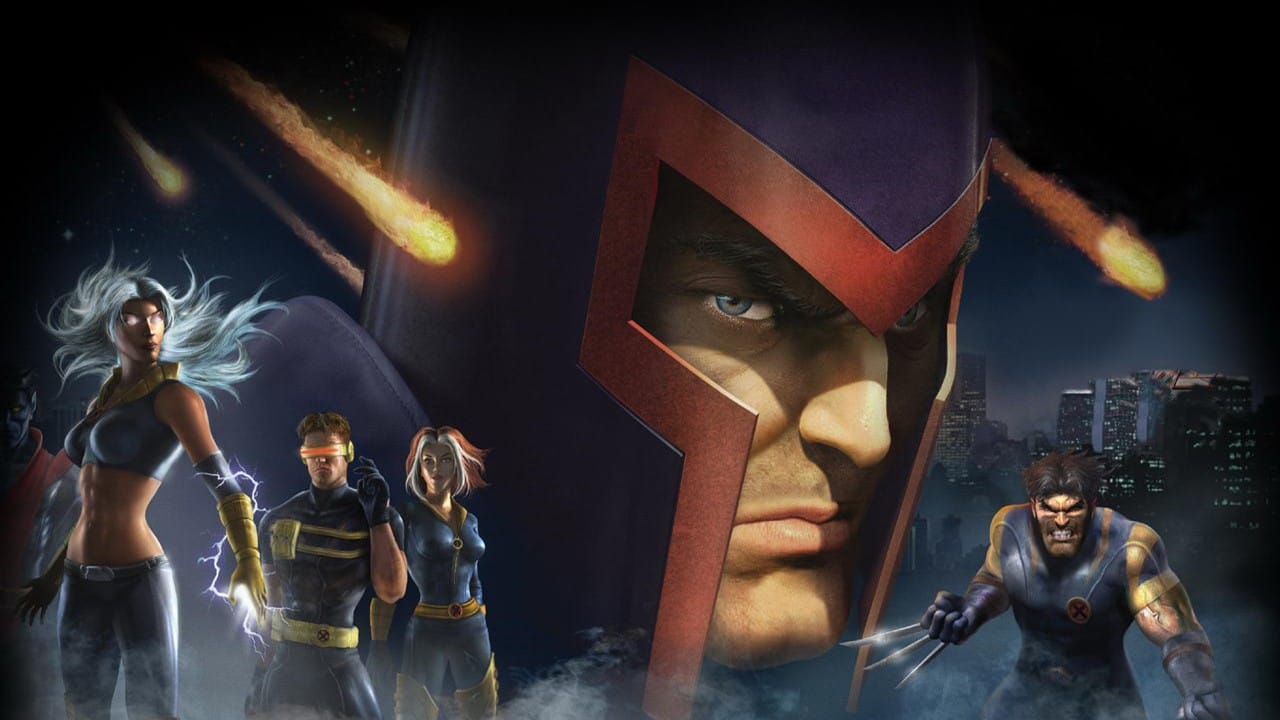
If you were around in the early 2000s, you lived through a total mutant revolution. Thanks to the massive success of the movies, the X-Men experienced a major boom in popularity that touched every corner of nerd culture. You probably remember racing home after school to catch X-Men: Evolution on TV, or maybe you were keeping up with the Ultimate X-Men comic run (a relic of its time that most of us would definitely want to forget). On the gaming front, we were mostly eating steady diets of fighters and beat ’em ups like X-Men: Mutant Academy and the somewhat clunky X2: Wolverine’s Revenge.
But in 2004, everything changed. Raven Software, a developer primarily known for gritty PC shooters, decided to pivot. They didn’t want to make just another brawler; they wanted to make an X-Men RPG. The result was X-Men Legends, a game that blended deep RPG mechanics with visceral combat. Did this gamble pay off? In this review, you will find out whether X-Men Legends still sets the blueprint for what a superhero game should be.
Story Overview

The game hits the ground running with a narrative that feels like a classic “pilot episode.” X-Men Legends starts off with Alison Crestmere, a character created specifically to bridge the gap between the player and the dense, often intimidating world of mutant politics. As a teenage girl suddenly manifesting tectonic powers, she is a blank slate, and her abduction by the shadowy Genetic Research and Security Organization (GRSO) serves as the ultimate catalyst for the adventure.
As the GRSO attempts to transport Alison, the Brotherhood of Mutants—led by a menacingly bulky Blob and the ever-deceptive Mystique—intervenes with a violent hijack. This isn’t just a rescue mission; it’s a tug-of-war for the soul of a new mutant. When Wolverine and Cyclops crash the party to secure Alison, they safely escort her back to the Xavier Institute for Higher Learning. The mansion serves as a massive, interactive hub where the lore truly begins to breathe.
Alison becomes our “eyes and ears” into the world of the X-Men. As she begins to train and discover more about her hidden powers (she’s a magma-manipulator, by the way), the player learns the ropes alongside her. Even though the game isn’t based on any specific comic book canon, the story is incredibly well-handled. Written by the veteran collective Man of Action (the minds behind Ben 10 and Generator Rex), the plot does an excellent job of introducing newcomers to character origins and the philosophical rivalry with the Brotherhood without feeling like a boring history lesson.
Gameplay

Believe it or not, X-Men Legends almost looked a lot more like Final Fantasy than the chaotic brawler we eventually got. Raven Software originally prototyped the game as a Turn-Based RPG, which makes total sense when you look at the deep stats hidden under the hood. However, they eventually pivoted to an Action RPG format to capture that kinetic, cinematic energy the movies were popularized for. Honestly, can you imagine waiting for a menu bar to fill up while a Sentinel is trying to turn you into a mutant pancake? Neither could they.
Despite the move to real-time combat, the developers didn’t just abandon the “strategy” part of the equation. This isn’t a mindless “mash the B button until everyone stops moving” kind of experience. Raven baked tactical synergy into the very foundation of the gameplay. You lead a four-person squad, and while you control one hero, the AI handles the other three—unless, of course, you have a few buddies over for some of the best four-player local co-op the GameCube ever saw.
The environment itself is a puzzle that requires a specific lexicon of mutant powers to solve. A powerhouse like Colossus can rip a radiator off a wall or hurl a massive crate to crush enemy cover, but he can’t navigate the high-altitude rafters. Iceman is essentially your “navigator” for the team. He can freeze water or create literal ice bridges to reach isolated platforms that are otherwise inaccessible. You’ll frequently encounter obstacles that require Cyclops to weld a circuit shut or Storm to power up a generator with a lightning bolt.
This design philosophy forces you to curate your team based on the mission at hand rather than just picking your four favorites. It creates a fantastic loop where you’re constantly swapping heroes at extraction points to find the perfect balance of raw DPS (damage per second) and utility. Ever wondered why some levels feel impossible? It’s probably because you forgot to bring a flyer or a telepath to handle the crowd control.
The Combo system also rewards you for being more than a lone wolf. If you and an AI teammate trigger your powers at the exact same moment on the same enemy, you’ll see a Combo notification pop up on the screen, dealing massive bonus damage. It turns every fight into a coordinated strike, making you feel less like a guy with claws and more like a member of a world-class strike team.
Think you can just breeze through the main campaign and ignore the training sessions? Think again. In X-Men Legends, the Danger Room isn’t just a fun piece of fan service tucked away in the mansion’s sub-basement; it is a brutal necessity. If you treat these missions as “optional side content,” the game will eventually introduce your face to the floor with zero remorse.
Many players can get cocky because they steamrolled through the early Morlock missions. But here’s the kicker: the game loves to throw brutal difficulty spikes at you the moment you feel comfortable. One minute you’re a powerful Omega-level mutant, and the next, a group of Sentinels is treating your squad like a light snack. The difficulty curve isn’t a smooth slope; it’s a jagged cliff, and the only way to climb it is by grinding out those Danger Room discs you find scattered across the levels.
By the time you reach the final act, the bosses become downright “cheap.” We’re talking massive health pools, devastating area-of-effect attacks, and the ability to wipe your team in seconds if you aren’t prepared. Honestly, the difficulty is so high that you’ll often find yourself looking for loopholes or tactical exploits just to survive.
Graphics and Sound

Let’s be honest: looking at X-Men Legends today is a bit like looking at your high school yearbook photos. You can see what they were going for, but some of the choices are… questionable. Raven Software went with a cel-shaded aesthetic, which was a stroke of genius for longevity. By giving everyone thick black outlines and vibrant colors, they managed to make the game feel like a living comic book rather than a failed attempt at photorealism.
While the cel-shading helps, the character models still sport that blocky, PS1-style design that can be a bit of an eyesore during cutscenes. When the camera zooms in for a dramatic dialogue moment, you’ll notice textures that look a bit smeared and hands that resemble digital mittens. Is it enough to ruin the experience? Not at all, but it definitely reminds you that you’re playing a relic from 2004.
Despite the lackluster close-ups, the game performs like an absolute champ when the action kicks off. The GameCube version is surprisingly robust; even when the screen is a chaotic mess of optic blasts, lightning bolts, and exploding Sentinel parts, the frame rate remains steady.
If the graphics are the mixed bag, the audio is the prize at the bottom. We are talking about a hall-of-fame voice cast here. Having Patrick Stewart reprise his role as Professor X lends a massive amount of weight to the story. And let’s not forget Steve Blum, who provides the definitive Wolverine growl, or John DiMaggio bringing the thunder as Juggernaut. Ever noticed how a great voice performance can make you forget about blocky textures? The acting here is so top-notch that the characters feel alive even when their faces aren’t moving much.
Final Verdict
X-Men Legends often gets lost in the shadow of its successor, Marvel Ultimate Alliance. While that sequel went bigger by including the entire Marvel roster, it lost some of that tight, concentrated mutant focus that makes this game so special. Does it have flaws? Sure. The difficulty can feel incredibly cheap, and missing a single Danger Room session can lead to hours of frustration later on. The graphics haven’t aged perfectly, and the inventory management can be a bit of a headache.
But man, when this game clicks, it really clicks. Raven Software clearly poured their hearts into this project, and it shows in every lore-heavy conversation and every perfectly timed combo. The graphics haven’t aged like fine wine, but the core gameplay loop is still incredibly addictive.
X-Men Legends remains one of the best superhero games of all time because it gave the team a game that truly represents why they are iconic: teamwork, family, and overcome overwhelming odds. If you’re an X-Men fan, a superhero buff, or just want to experience a truly underrated RPG, you owe it to yourself to play this hidden gem.
Verdict
X-Men Legends
Good

At HyperComboGamer, we believe great games deserve great coverage. That means no filler, no clickbait, or fanboyism—just honest, high-quality reviews, features, and guides that put gamers first. Whether you’re a lifelong enthusiast or just starting your gaming journey, you’ll find interesting gaming perspectives that will leave you fully satisfied.