If you didn’t own at least one neon-colored piece of TMNT merchandise in 1990, did you even exist? The 1987 animated series didn’t just capture our attention; it fundamentally hijacked an entire generation of kids. That cartoon’s astronomical success birthed three live-action movies, turning four brothers named after Renaissance artists into global icons. The sheer ubiquity of the brand made a high-quality video game inevitable, yet nobody expected the absolute heater Konami was about to drop.
Originally, Teenage Mutant Ninja Turtles IV: Turtles in Time devoured quarters in smoky arcades across the globe. When Konami announced a port for the Super Nintendo in 1992, skeptics wondered if the home console could handle the heat. To be fair, transitioning a massive arcade board to a 16-bit cartridge often resulted in a watered-down mess, right? In this review, you will find out whether the SNES port of Turtles in Time is just as exciting to play as the original arcade version.
Story Overview
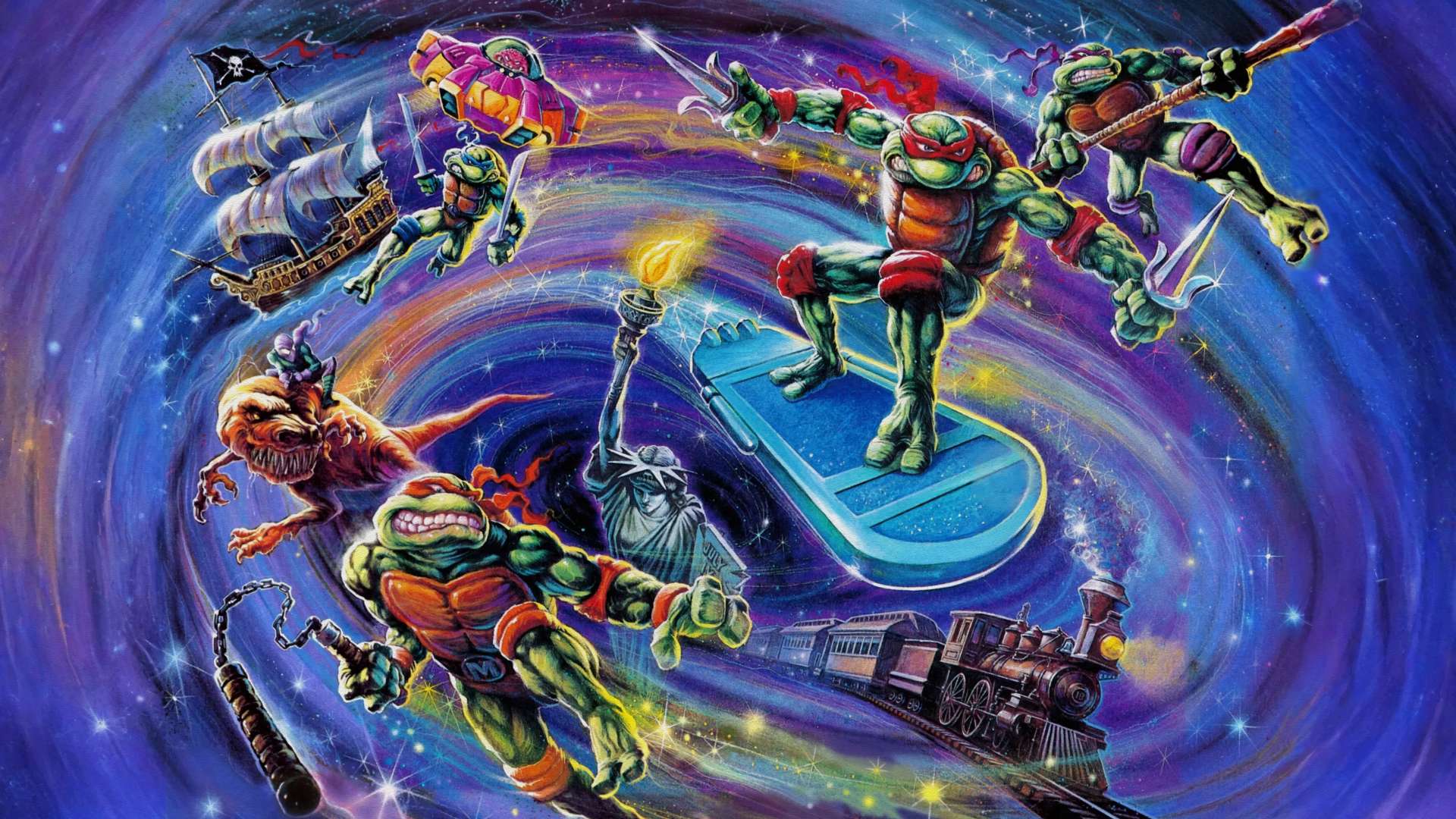
The game opens with a sequence that starts with the Turtles chilling, watching April O’Neal do her thing on the news, when the morning takes a turn for the bizarre. A colossal, android-bodied Krang stomps through the skyline and literally yanks the Statue of Liberty right off its base. Before the shock even wears off, Shredder hijacks the broadcast to taunt the Turtles with that classic villainous bravado we all know and love.
After a frantic scuffle through the Big Apple’s grime, you finally corner the Chrome Dome himself, but Shredder isn’t interested in a fair fight. With a wave of his hand and a surge of technocratic trickery, he rips open a time warp that swallows our heroes whole.
Does it make any sense? Not a lick. Does it immediately make you want to grab a katana and start swinging? You bet your shell it does. This narrative setup perfectly mirrors the absurdity of the 1987 animated series, providing just enough context to justify a global—and eventually chronological—brawl.
It’s the ultimate Saturday morning hook—simple, punchy, and delightfully over-the-top. The stakes are high, the villain is gloating, and the transition from cutscene to gameplay is seamless. Ever wondered why modern games need forty hours of exposition when Konami could set the stage in forty seconds?
Gameplay
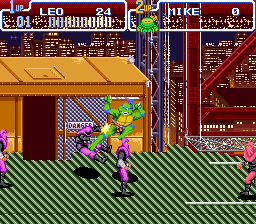
Choosing your champion is the first real test of your brotherhood. While some games treat character selection as a mere palette swap, Konami gave each turtle a distinct combat profile that fundamentally alters how you approach a brawl. Whether you prefer the surgical precision of a long-range weapon or the high-octane chaos of close-quarters combat, there’s a turtle tailored to your specific playstyle.
Donatello is basically the Easy Mode of this game, and I say that with nothing but love. His bo staff offers a ridiculous amount of reach, allowing you to poke enemies from a safe distance before they even think about touching your precious health bar.
On the flip side, Raphael and Michelangelo are the speed demons of the group, trading that safety for blistering attack frames. Raph might have the reach of a toothpick with his twin sai, but his movement speed is unparalleled, making him perfect for players who love to dance around the opposition.
Leonardo sits comfortably in the middle, offering a balanced “Jack-of-all-trades” experience with his katanas that feels just right for newcomers. Ever tried switching characters mid-run just to see how much the game feel shifts?
While the arcade original allowed for a chaotic four-player buffet of shells and steel, the SNES version trims the guest list down to a two-player tag team. I know, I know—missing out on that four-way mayhem feels like a bit of a bummer at first glance. However, this hardware compromise actually tightens the experience, turning the game into a focused, cooperative masterpiece rather than a crowded screen of indistinguishable sprites.
Playing with a buddy transforms the strategy from “hit whatever moves” into a coordinated dance of destruction. You can cover each other’s backs, split up to handle crowd control, or double-team a particularly stubborn boss. There is an undeniable magic in the shared nostalgia of sitting on a living room floor, tethered to the console by those glorious controller cords, screaming about who gets the next pizza power-up.
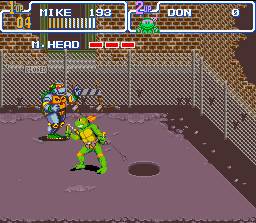
While you could technically survive the first few minutes by frantically hammering the ‘Y’ button, you’ll soon realize that Turtles in Time hides a surprisingly deep tactical layer under its hood. Depending on your movement and timing, your turtle will transition from standard swings to sliding kicks or diving somersaults. It turns every screen into a miniature puzzle where the solution is a well-timed foot to the face. Ever wondered why some players look like they’re choreographed while others just look like they’re flailing? It’s all in the flow.
If you haven’t experienced the sheer joy of the screen throw, have you even played the SNES? By walking into a stunned Foot Soldier, you can literally grab them and hurl them directly at the camera. It’s a spectacular use of the console’s Mode 7 hardware that makes the enemy sprite grow until it “hits” your television screen and slides off.
But it isn’t just a flashy gimmick—it’s a core survival mechanic. When the screen gets cluttered with different-colored Foot Soldiers, grabbing one and slamming him repeatedly into his buddies like a fleshy sack of potatoes is the most efficient way to clear a path. This “pummel” move provides invincibility frames, which are absolute lifesavers when you’re cornered. FYI, mastering the rhythm of the throw is the secret to beating the game on Hard mode without losing your mind.
When the odds truly stack against you, it’s time to break out the unique special attacks. Each brother has a signature move—like Leo’s spinning 360-degree blade strike—that clears out anyone foolish enough to stand within striking distance. However, these aren’t “free” wins; using your special drains a small portion of your life bar, adding a high-stakes layer of resource management to the fray.
Level Design
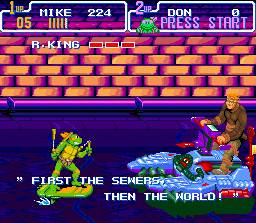
The level progression in this game is a fever dream of creative set pieces and vibrant palettes. Konami didn’t just give us different backgrounds; they crafted distinct atmospheres that make every leap through the time warp feel like a genuine event.
From the futuristic highways to the muddy trenches of the past, the variety is staggering. I’ve always appreciated how the game doesn’t linger too long in one place. Just as you’re getting used to the rhythm of a specific era, the game yanks you into a completely different aesthetic, keeping the gameplay loop feeling incredibly fresh.
The journey begins with a classic New York romp—think “Big Apple, 3 AM”—before diving into the prehistoric madness of 600,000,000 B.C. One minute you’re dodging yellow cabs, and the next, you’re jumping over literal lava pits and fending off pterodactyls.
Set in the year 2020, Neon Night-Riders breaks up the standard walking-and-punching segments as you zip along futuristic tracks on hoverboards. Ever wondered how the Turtles manage to look so cool while surfing through a digital void?
Each stage feels like a mini-adventure, packed with enough environmental hazards and unique enemies to keep you on your toes. Whether you’re sliding across ice or dodging falling debris on a moving train, the level design ensures you’re never just going through the motions.
Graphics
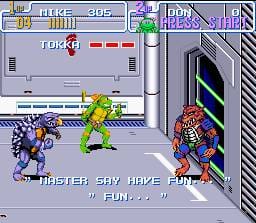
When we talk about the Super Nintendo’s hardware superiority over the Genesis back in the day, this is usually the exhibit we bring to court. Konami absolutely flexed the console’s Mode 7 capabilities—a fancy bit of tech that allowed the background layer to rotate and scale, creating a pseudo-3D effect. It wasn’t just a technical gimmick; it was the secret sauce that made the game feel next-gen before that term even existed.
The graphics are undeniably lush, boasting a color palette that makes the arcade original sweat. While the arcade had more raw processing power, the SNES version feels more vibrant and polished, with chunky sprites that pop against the detailed backdrops. I love how the animations are so fluid; seeing the Turtles’ expressions change as they take a hit adds that layer of personality you just didn’t get in other brawlers of the era.
Ever wondered if the SNES was actually “weaker” just because of its lower clock speed? One look at the Technodrome elevator sequence or the smooth scaling of a Foot Soldier’s face as you launch him into your living room says otherwise. It’s a visual feast that proves Konami knew exactly how to squeeze every drop of power out of that gray box. FYI, the way the water ripples in the sewer levels is still a total “chef’s kiss” moment for retro fans.
Sound
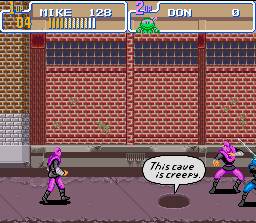
If the visuals are the pizza, then the soundtrack is the extra-large soda that washes it all down perfectly. Konami’s sound team was essentially the Dream Team of the 16-bit era, and they absolutely outdid themselves here. Every track is a high-energy anthem that pulses with the kind of frantic energy a ninja brawl requires. I’ve lost count of how many times I’ve found myself humming the stage themes while doing something as mundane as grocery shopping.
The SNES’s Sony-designed sound chip gets a serious workout, delivering rich, slap-heavy basslines and crisp percussion that rival the arcade’s FM synthesis. It’s one of those rare soundtracks where there isn’t a single “skip” in the bunch. From the bluesy, nocturnal vibes of the opening level to the frantic, heroic chords of the final confrontation, the music acts as the emotional heartbeat of the entire experience.
One of the most impressive feats is how Konami managed to translate the iconic 1987 cartoon theme into a lyric-less MIDI masterpiece. Even without the “Heroes in a half-shell” vocals, your brain fills in the gaps the second that melody kicks in. It’s an instant hit of nostalgia that sets the tone before you even press Start.
But it’s not just about the theme song. The original compositions, like the fan-favorite “Big Apple, 3 AM”, have become iconic pieces of gaming history in their own right. These tunes don’t just sit in the background; they drive you forward, pushing you to keep punching until the screen is clear.
Replay Value
Let’s address the elephant in the room: you can absolutely demolish this game in under an hour. If you’re a seasoned brawler, you might even see the credits roll before your pizza delivery guy knocks on the door. But honestly? That’s exactly why we still talk about it decades later.
Turtles in Time offers a concentrated blast of dopamine that makes it the perfect weekend warrior title. You can fire it up on a Friday night, crank the difficulty down to “Easy” for a relaxing power trip, or challenge yourself on “Hard” to see if your reflexes are still up to snuff. I’ve found that the shorter length actually encourages me to come back more often—it’s the ultimate “just one more run” experience.
Ever wondered why some massive, 100-hour RPGs feel like a chore while this 30-minute romp feels like a gift? It’s all about the pacing. Konami trimmed every bit of fat, leaving only the prime cuts of action. Whether you’re playing solo to master the mechanics or tethered to a friend for some couch co-op chaos, the replayability factor is off the charts.
Final Verdict
Was Turtles in Time better than Streets of Rage 2? This is the million-dollar question that fueled countless playground debates back in the 90s. Honestly, comparing them is like choosing between a gourmet burger and a premium slice of New York pizza—they’re both incredible, and your preference usually comes down to which console was plugged into your TV in 1992.
At the end of the day, TMNT IV: Turtles in Time isn’t just a great licensed game; it’s a masterclass in game design. It captures the essence of an era where Konami could do no wrong. It’s short, punchy, and visually stunning, offering a level of polish that few games on the system can match.
It’s a rare gem that has aged like a fine wine (or a perfectly aged parmesan). The combat remains crisp, the music still slaps, and the satisfaction of hollowing out a Foot Soldier with a screen-throw hasn’t diminished one bit. If you haven’t played it lately, do yourself a favor: grab a friend, order a pepperoni pizza, and take a trip through time. You won’t regret it.
Verdict
Teenage Mutant Ninja Turtles IV: Turtles In Time
Excellent